What You'll Find in This Post
Quick Madeira Facts
- Currency: Euro (EUR, €)
- Getting Around: Rideshare (mostly Funchal area only), bus, car rental, or organized tour
- Highlights: Hiking, historical sights, beaches, viewpoints, old towns
- Phone Data: Maya Mobile eSIM - quick, easy connectivity without the hassle!
Pro Tip: Rent a car or book a tour to reach remote locations like PR1 and PR9 hikes!
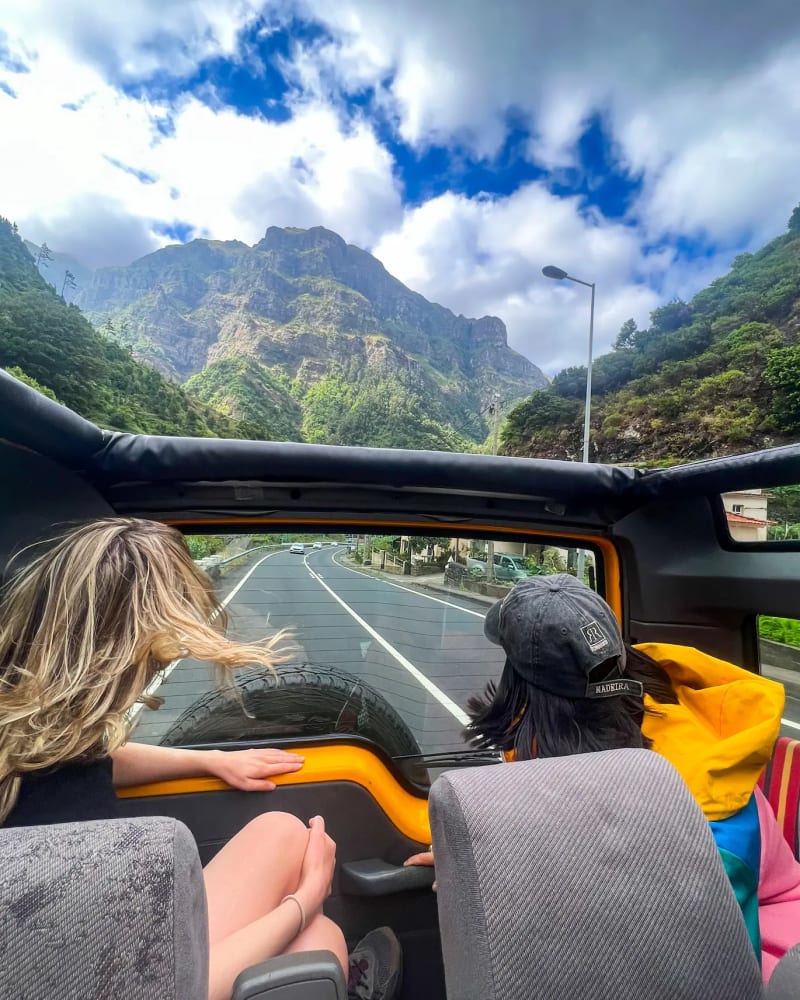
Though Madeira Island is rather small (it only takes about 1.5 hours drive from one side to the other), it's packed with endless beauty that naturally brings endless adventure. You'll discover lush mountains, picturesque villages, and beautiful beaches, with activities ranging from hikes in the forest to sightseeing in historic old towns.
If you're like me, you want to pack as much as possible into a trip without feeling rushed. I spent a full month on Madeira, giving me plenty of time to have a wide variety of adventures. That helped me separate the true "bucket-list" must-dos from the "only-if-you-have-times". These are the bucket-lists: the absolute essentials you shouldn't miss!
Visit my Madeira Viator shop to book the BEST tours & activities on the island! 🇵🇹⛰️
Where to Stay in Madeira
I recommend starting in the capital city of Funchal for at least 3 nights (ideally in the charming Old Town/Zona Velha area), then moving to Seixal for 2–3 nights, and finishing with 1 night in Santana. In Funchal, stay somewhere in the Old Town (Zona Velha). In Funchal (where I was located for the entire month), I stayed in a beautiful Airbnb that I adored, so I can vouch for that spot personally. That said, after exploring the island on foot and by car, I passed many nice hotels, apartments, and resorts—I can confidently say there are plenty of lovely options.
The island's only airport is Cristiano Ronaldo International Airport, about a 20-30 minute drive from Funchal's Old Town. It's notoriously challenging for pilots due to strong crosswinds, unpredictable weather, and the dramatic terrain—crews are required to undergo specialized training to land here, and it's often ranked as one of the worlds scariest approaches. The weather can sometimes force planes to attempt multiple landings, or even head to the Canary Islands until conditions improve. My flight landed smoothly on the first try, but friends who arrived the same week had to circle and divert for a few hours. Whatever happens, it's all part of the adventure!
Top 7 Things to Do on Madeira Island
1 Seixal Beach
On the north side of the island, nestled in the village of Seixal, is a long stretch of black sand called Seixal Beach. It's surrounded by high, rugged cliffs painted in dense green forests, and is one of the few sandy beaches on Madeira (as opposed to pebbles), making it one of the most beautiful and comfortable places to spend the day. If you've ever heard Madeira Island referred to as the "Hawaii of Europe," this gem is a huge reason why! It's truly my favorite beach on the entire island. It's a nice place for swimming when the sea is calm (but be very careful when it's not), or even to try surfing—the north coast waves are perfect for both beginners and intermediates, and there are a few local spots to rent boards or book lessons.
Adjacent to the beach is the Piscinas Naturais do Seixal (Seixal Natural Pools); these are natural rock pools formed by volcanic lava filled with seawater—super safe and fun for swimming, especially with kids. They've got facilities like changing rooms, showers, and a snack bar, and best of all, entry is free!
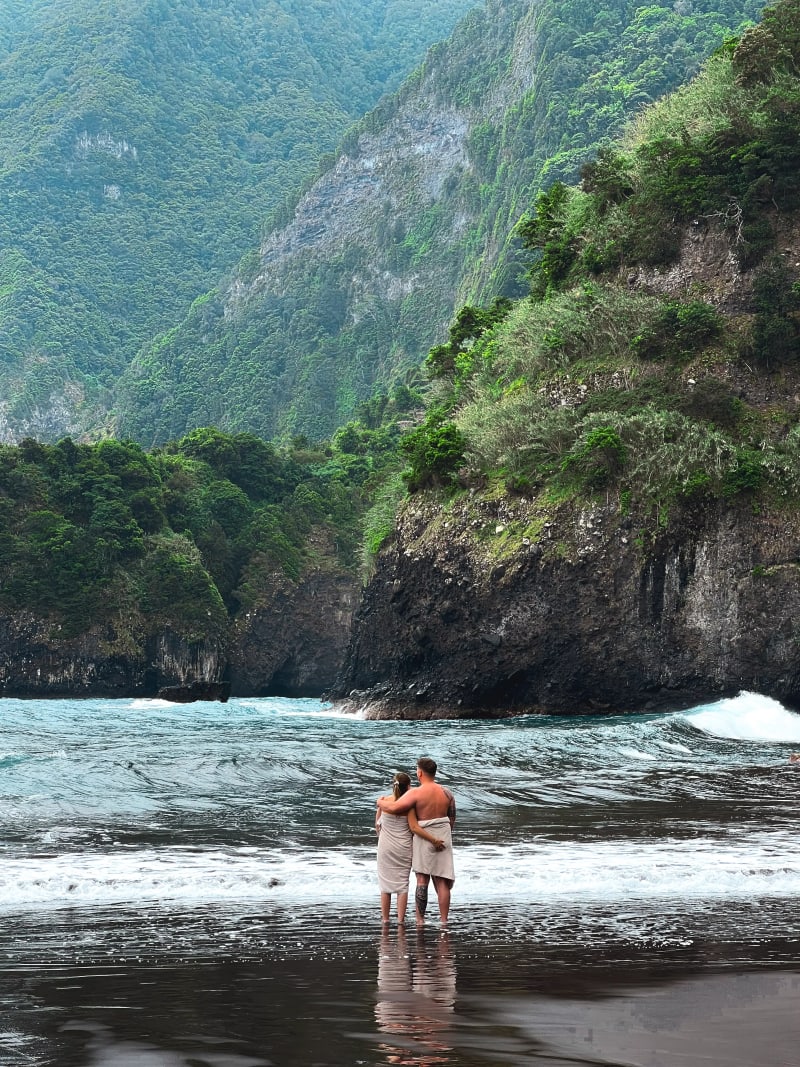
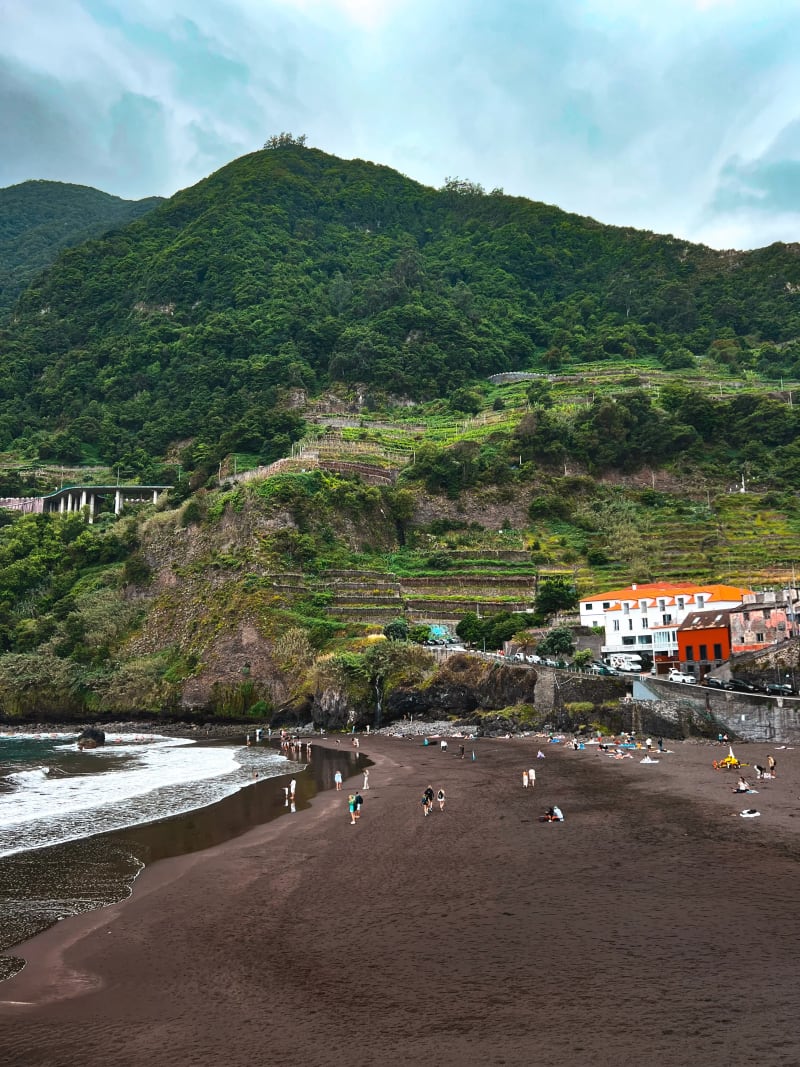
Beyond hanging on the black volcanic sand (which gets nice and toasty under the sun) or swimming in the pools, there's plenty else to do. Seixal itself is a super charming, laid-back coastal village part of the Porto Moniz municipality. There are narrow, winding streets, a small fishing harbor, and a handful of local restaurants. If you're into wine, this area is known for its crisp Seixal wines made from local grapes (specifically Sercial, one of the classic whites used for Madeira's famous fortified wines). The north coast has a cooler, wetter microclimate with more rain, cloud cover, and milder temps than the south—perfect conditions for growing these grapes, which develop sharp citrusy notes and a refreshing acidity.
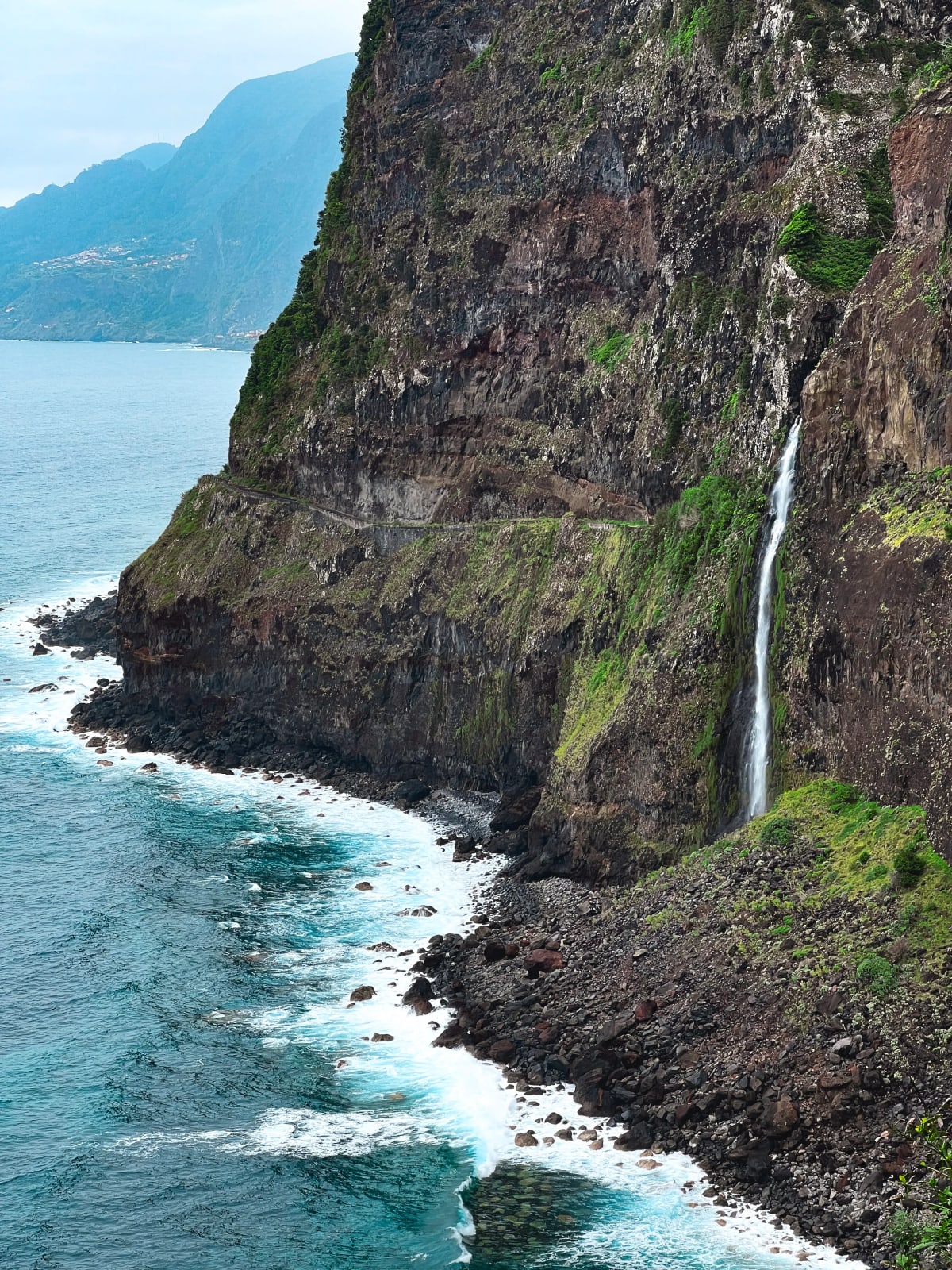
Wander around, pop into the small church (Igreja de Seixal) with its simple architecture but beautifully decorated inside featuring azulejo tiles and altars, and grab a glass of that wine at a seaside bar. For beautiful views, drive or hike up to the Miradouro de Véu da Noiva viewpoint nearby; it's a great spot where a waterfall cascades into the ocean, looking like a bride's veil (that's what "Véu da Noiva" means). Seixal is one of those places where you can easily fill a full day mixing beach time, village exploration, and light adventures.
2 Porto Moniz Natural Pools
About a 20-minute drive from Seixal brings you to the bigger, more famous natural pools in Porto Moniz—these are one of Madeira's most iconic spots. They stand out from the Seixal natural pools for their scale, dramatic setting, and unique shapes: they're a massive complex of volcanic lava pools (over 3,800 m² of swimming area!) that get constantly refreshed by Atlantic seawater, with waves crashing against the outer rocks while you float safely inside. There are incredible views of the north coast and little Ilhéu Mole islet offshore, so it feels more open than the cozier, more tucked-away one in Seixal.
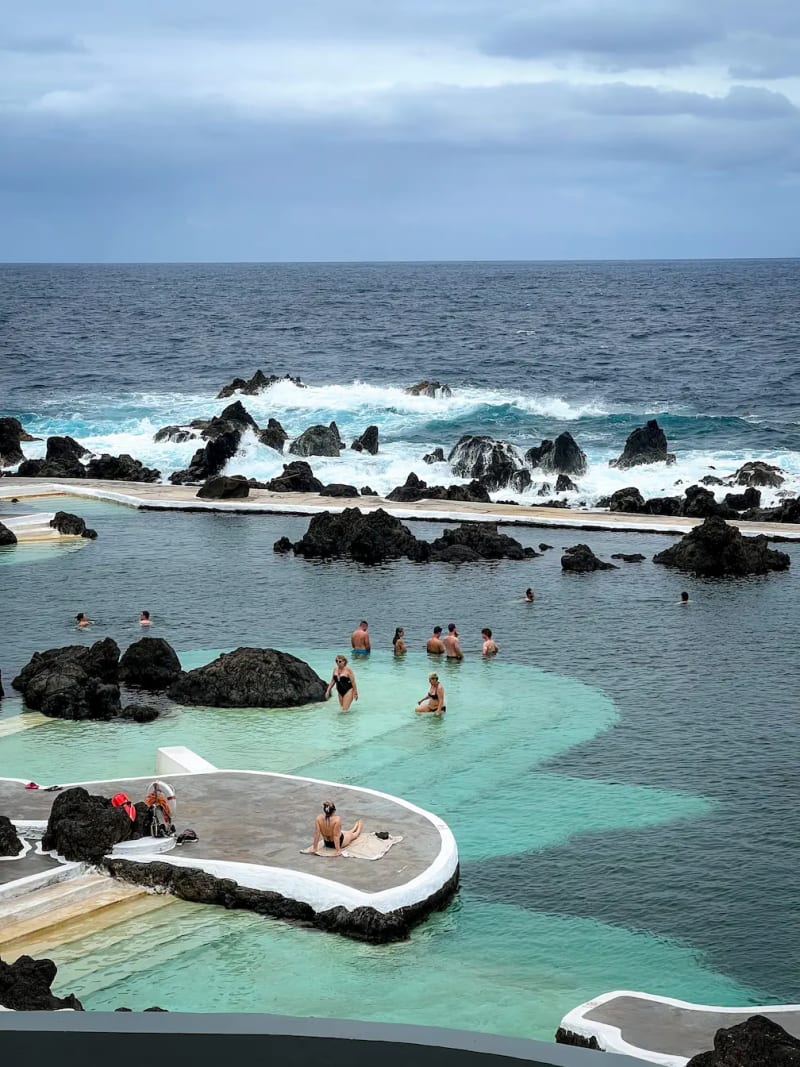
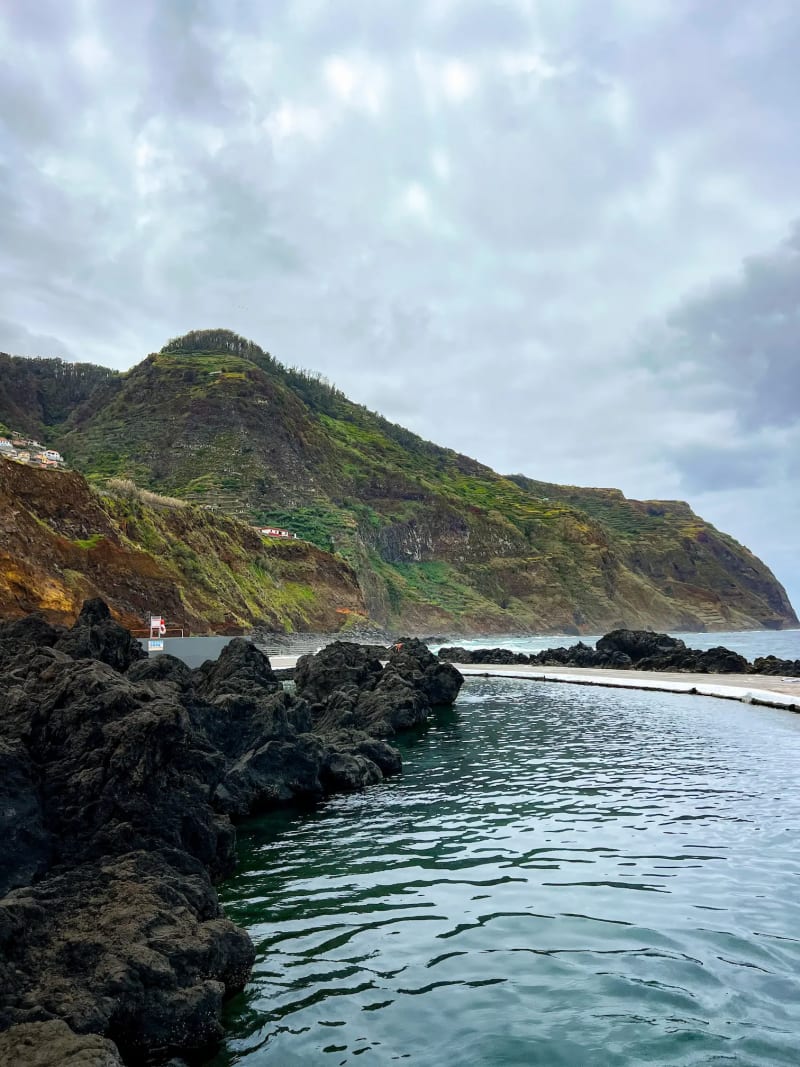
There are two main areas: the free pools (called the Aquarium pools, Piscinas Naturais Velhas or Cachalote pools; more natural and rugged, scattered along the [1]promenade with basic concrete spots to sit), and the paid complex (€3/adult, free for kids under 3, €1.50 for seniors/disabled—super reasonable). I preferred the paid side because it has facilities like:
- changing rooms
- bathrooms
- showers
- sun loungers for rent
- lifeguards
- kids' pool area
The water's usually calm and cold (refreshing in the sun, but freezing if it's cloudy), and it's family-friendly.
The town of Porto Moniz surrounds the pools, with a handful of restaurants and bars for fresh lunches or just a drink with ocean views. There's a seafront [1]promenade (Porto Moniz Promenade): a short, scenic walkway (~800 m) that runs along the coast from the paid natural pools eastward to the free Aquarium pools. It's lined with benches, some small gardens, and cafés—perfect for a post-swim stroll.
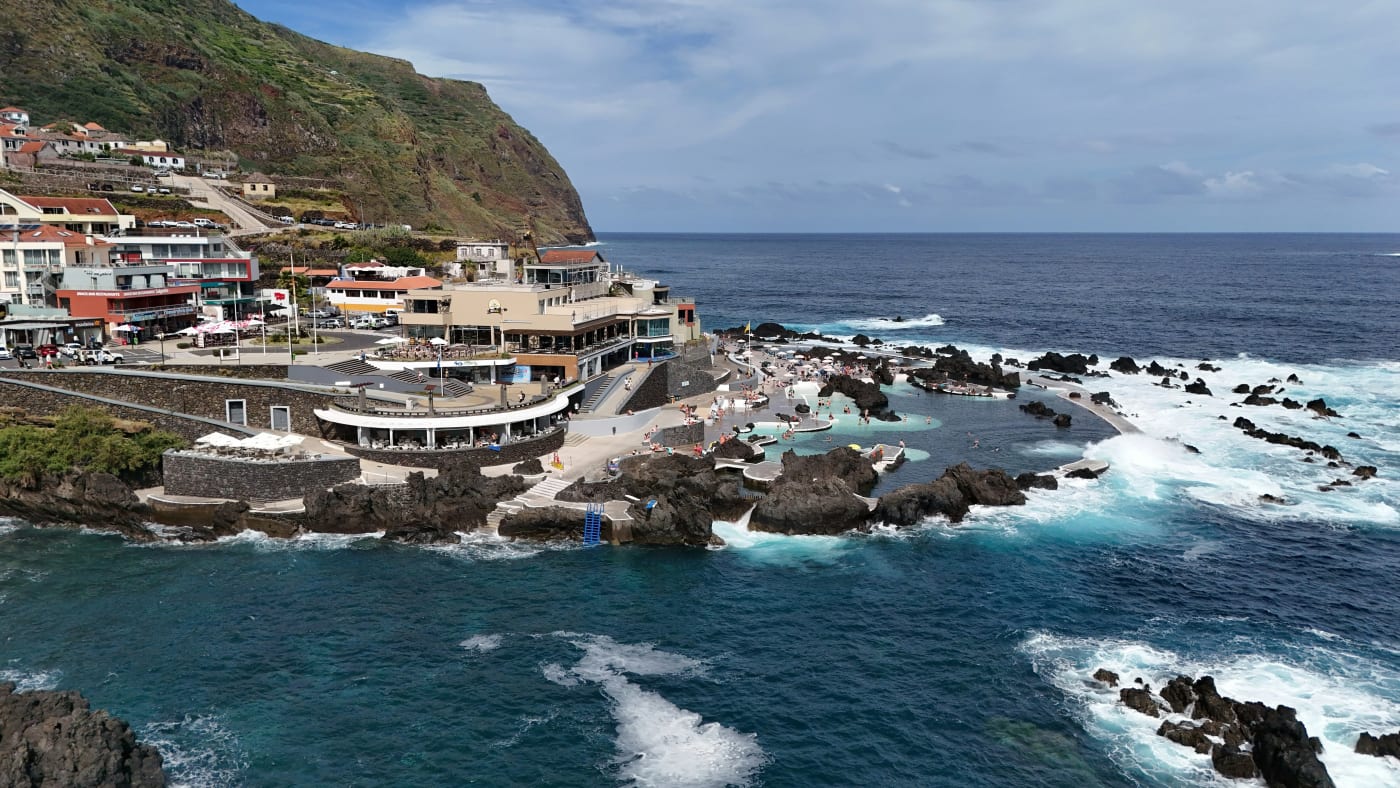
Right at the end, near the Aquarium pools, you'll find the Aquário da Madeira—a small aquarium in a historic fort with local marine species (like sharks, rays, and reef fish); entry is around €7-8, and it's a fun little stop if you want!
Overall, the town has a lively but still authentic energy. Definitely worth a visit, especially for the bucket-list pools.
3 Câmara de Lobos & Cabo Girão Skywalk
Located about a 10-15 minute drive west of Funchal is the seaside municipality of Câmara de Lobos: a lively fishing village-turned-town featuring a picturesque horseshoe-shaped bay, colorful traditional fishing boats (known as 'xavelhas'), steep hills dotted with houses, and dramatic cliffs. If you're deciding where to start, head towards Porto de Câmara de Lobos.
Due to the strong fishing heritage, it's one of the best places on Madeira Island to try some seafood, particularly espada (black scabbardfish), a strange-looking deep-sea fish that's a local delicacy (often served with banana). Speaking of banana, you'll see many plantations terraced on the hillsides, as it's one of the prime spots for growing bananas on Madeira. These bananas are a pretty big deal—they're a protected designation (DOP) product with a unique sweet, creamy flavor thanks to the island's conditions... a must-try!
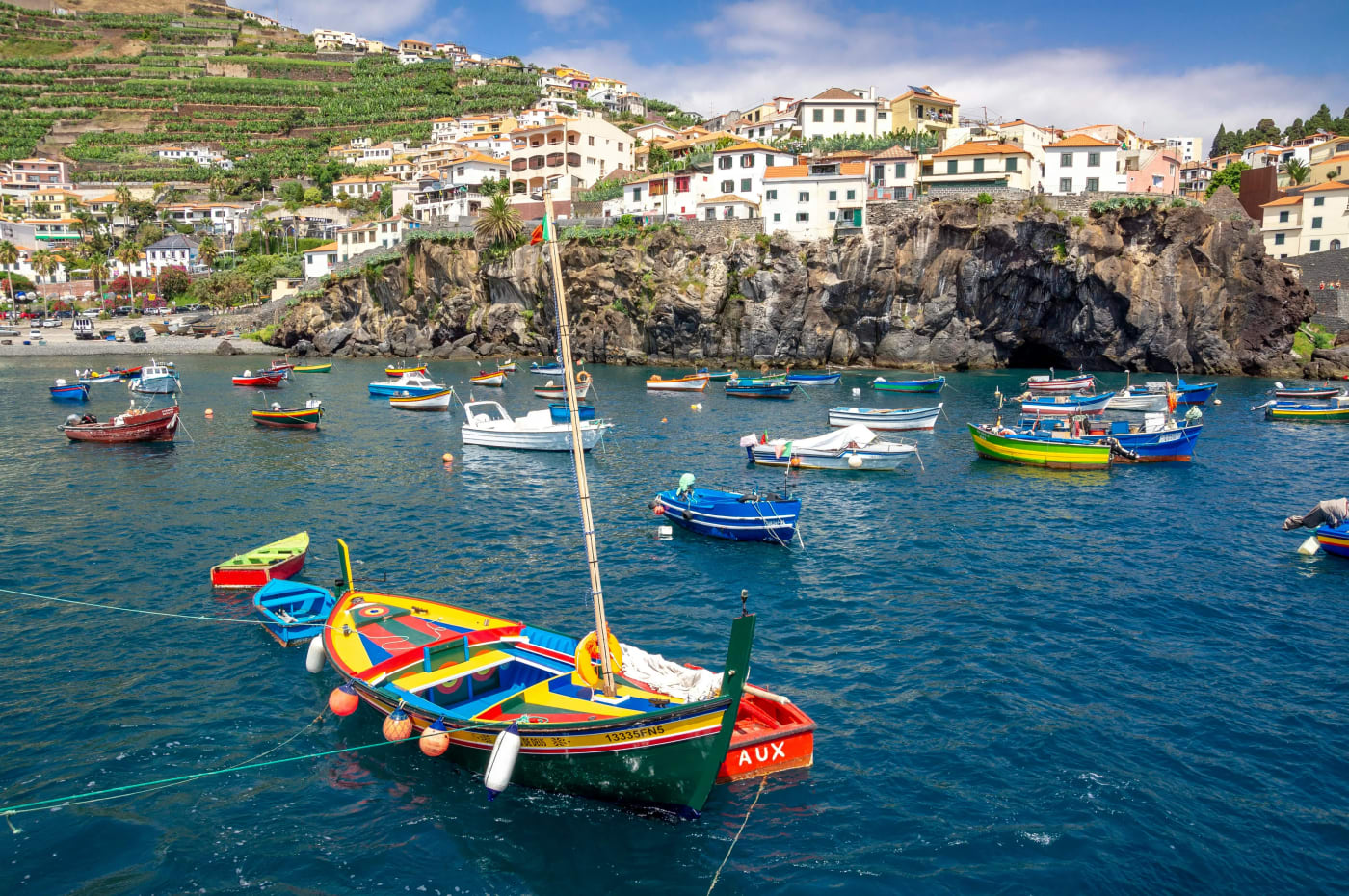
Sugarcane (used for the rum) also thrives in these warm southern lowlands—because of this, it's also known for being the birthplace (or at least the top spot) for poncha, Madeira's iconic rum-based drink mixed with honey, citrus and other fruit—many people (including myself) say the best poncha on the island is found in the town's lively bars. Explore here a few hours—it's so beautiful and relaxed.
In Câmara de Lobos, about a 6-7 km drive (or 20-30 min on bus line 7/similar local buses) from the main town & fishing harbor, you'll find the Cabo Girão Skywalk: a viewing platform with a section of glass flooring on one of the highest sea cliffs in all of Europe. Set 580m above sea level, you'll find some of the most beautiful oceanside views on the island—you can see back east toward Câmara de Lobos' bay, the banana terraces along the cliffs, and fajãs (small farming plots) at the base.
It's open daily from 8:00 a.m. to 8:00 p.m. and costs €5 for visitors over 12 (free for kids ≤12 and residents). There are a few little tourist shops here, but I don't recommend buying anything because I feel they're just overpriced, basic souvenirs. Instead, shop for more authentic items in the main town or one of the many other beautiful villages on the island.
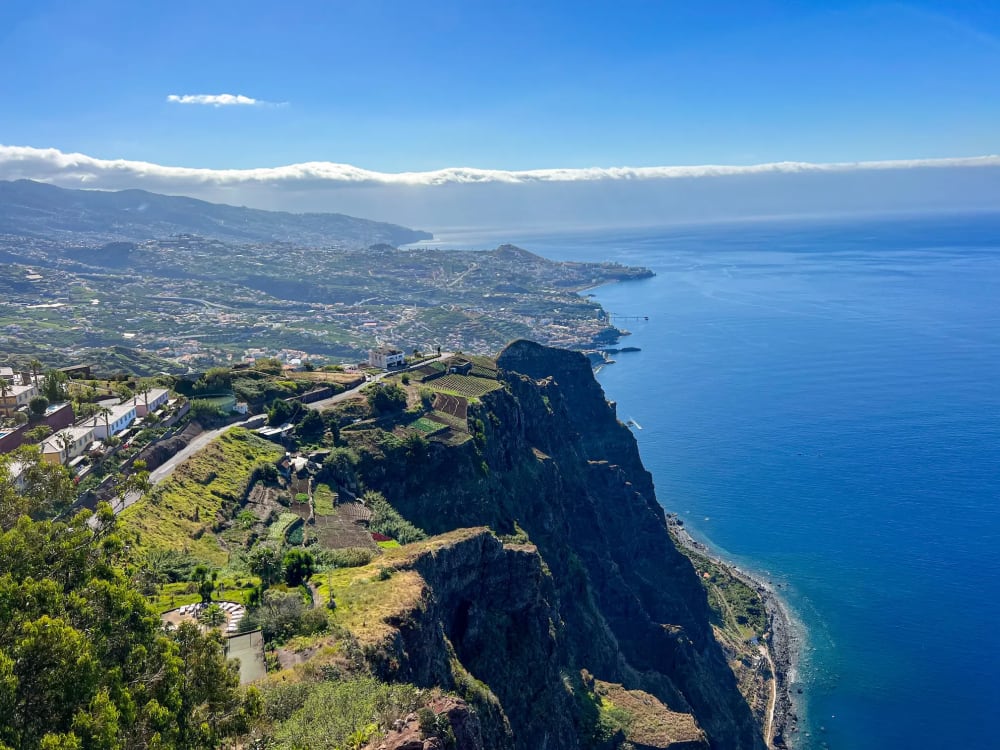
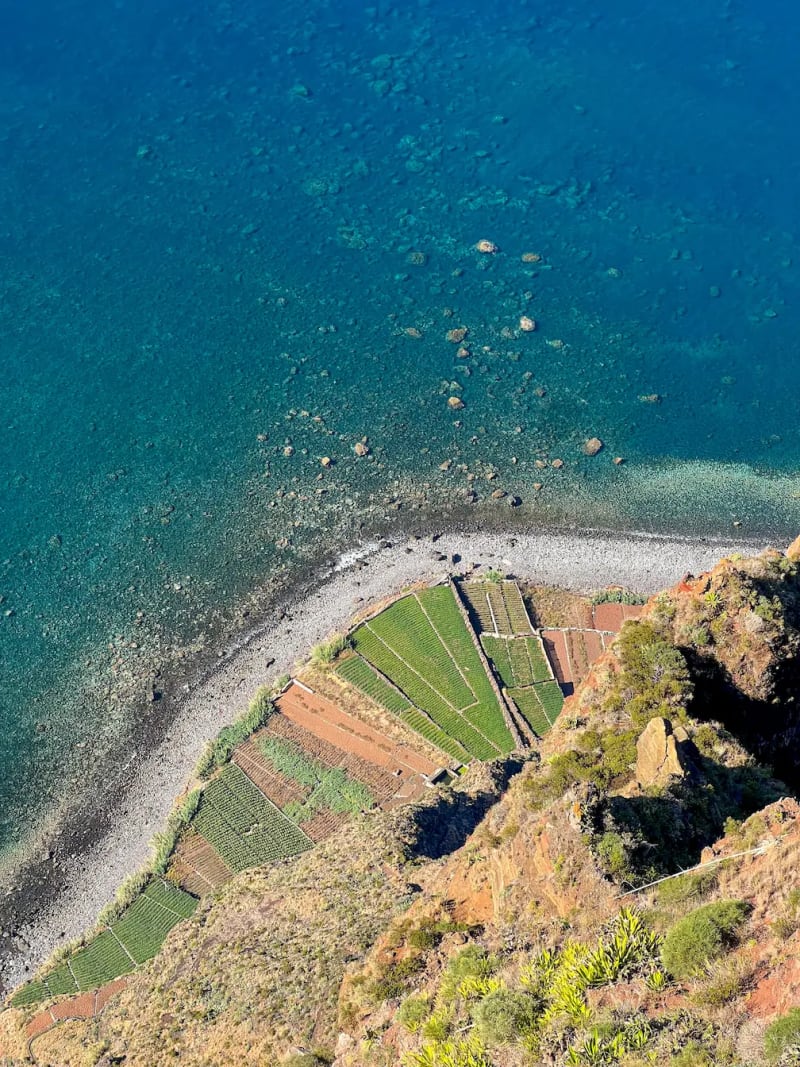
Views from Cabo Girão Skywalk
I was searching for 'Câmara de Lobos' on Google one day, and SO many photos of wolves popped up—I was so confused. I found out the name literally translates to "Chamber of Wolves" or "Wolves' Chamber" in Portuguese, and I wondered what the municipality had to do with wolve. Since we were planning tons of hikes by ourselves, I'd already looked up any terrestrial threats to make sure we were safe, and Madeira has zero large wild land amimals—just stuff like rabbits, rats, ferrets, cats, and stray dogs, and the usual farm animals like cows. So again, what the heck does it have to do with wolves?
Well, as it turns out, it's a bit of a historical and linguistic quirk: the "lobos" actually refers to "lobos-marinhos," the Portuguese word for monk seals (nicknamed "sea wolves" due to their appearance and behavior). Apparently, when the area was discovered around 1419, the bay was teeming with these seals, so they named it after them!
Sadly, the seals were hunted extensively for their skins and oil, leading to their near-extinction on the main island by the 19th century. Today they're critically endangered worldwide (fewer than 500 left), but there's a small recovering population in the Madeira archipelago, primarily on the protected Desertas Islands southeast of the main island. They're occasionally spotted along Madeira's southern coast, especially in remote caves or beaches, but only if you're super lucky—sightings are rare due to their shy nature.
4 Ponta do Sol
Ponta do Sol, known as "Sun Point," is a picturesque coastal village renowned for having more sunshine hours per year than anywhere else on the island. Ponta do Sol Beach sits in a sheltered cove right in front of the town center, framed by tall cliffs and terraced mountainsides dotted with banana plantations and subtropical plants. Unlike many of Madeira's more rugged beaches, this pebbly shore has shallow, calm waters perfect for swimming—definitely one of the best spots for families or peaceful dips, since most other beaches have rougher conditions.
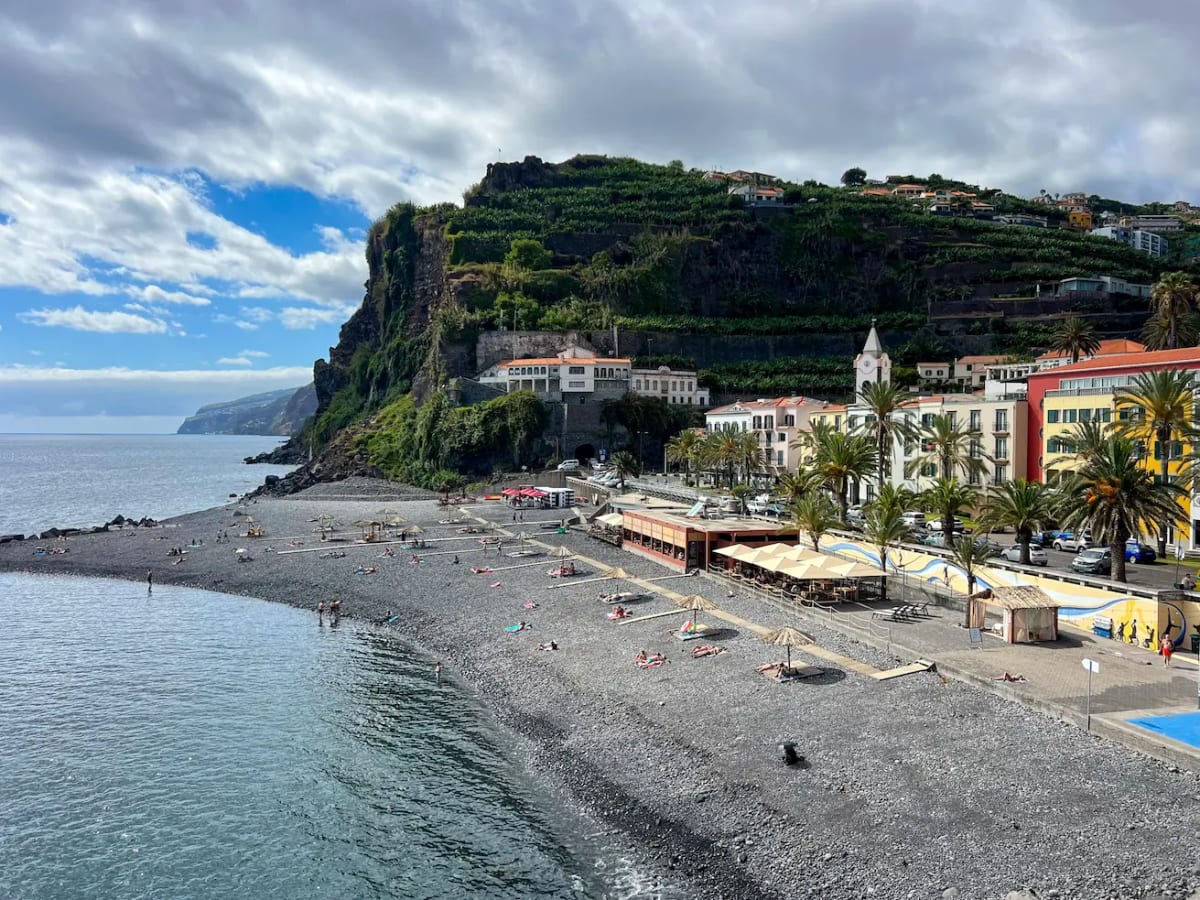
One its best features is the excellent water quality and visibility, making Ponta do Sol a top spot for snorkeling. You can see colorful fish, sea urchins, and an ocasional octopus hiding in the rocks. The beach is equipped with sun loungers and umbrellas for rent, nearby showers, and a scenic promenade that hugs the coastline—most definitely worth a stroll.
Hang at the beach, grab some lunch, and don't miss heading to Sol Poente restaurant—perched on the cliffs overlooking the shore—to try some traditional Madeiran drinks. The Nikita here is a MUST...it's a blend of beer, pineapple juice, and ice cream—just trust me, I know it sounds like a crazy combo, but it's freaking amazing.
5 Go Hiking
There are so many beautiful hikes on Madeira Island, each magical and with its own unique charm. The island's trails mix dramatic ridges, ancient misty forests, lush levadas, and rugged coastlines—a bucket-list destination for anyone who loves the outdoors. I have separate full hiking guides for three out of four of my favorites, linked here:
- PR8 - Vereda da Ponta de São Lourenço
- PR1 - Pico do Areeiro to Pico Ruivo
- PR9 - Levada do Caldeirão Verde
Sunrise "Stairway to Heaven" Hike: PR1
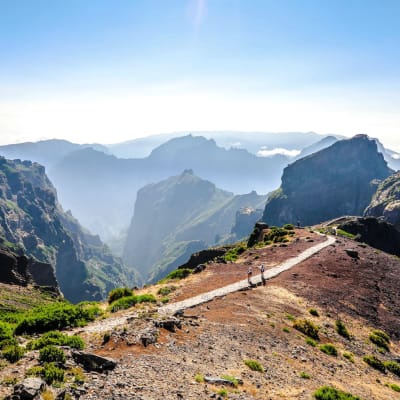
One of the most famous hikes, the "Stairway to Heaven" trail (PR1 - Vereda do Areeiro) is easily among the top things to do on Madeira Island. Wake up very early and head to Pico do Areeiro to watch the sun rise above the clouds. This majestic hike winds through the mountains for about 10km one-way (4-5 hours total, point-to-point), ending at Pico Ruivo - the island's highest mountain peak at 1862m.
This hike is more difficult than others on the island (steep stairs/climbs, narrow paths), but the scenery makes it infinitely worth it. As long as you're in decent physical shape, you'll do just fine! Bring snacks or lunch, extra water, and layers (it goes from windy/cold in the morning to hot/sunny in the afternoon). Since it’s point-to-point and no public transportation runs in the area, it can be a little confusing to get there. I highly recommend reading my full guide for tips to have a smooth visit!
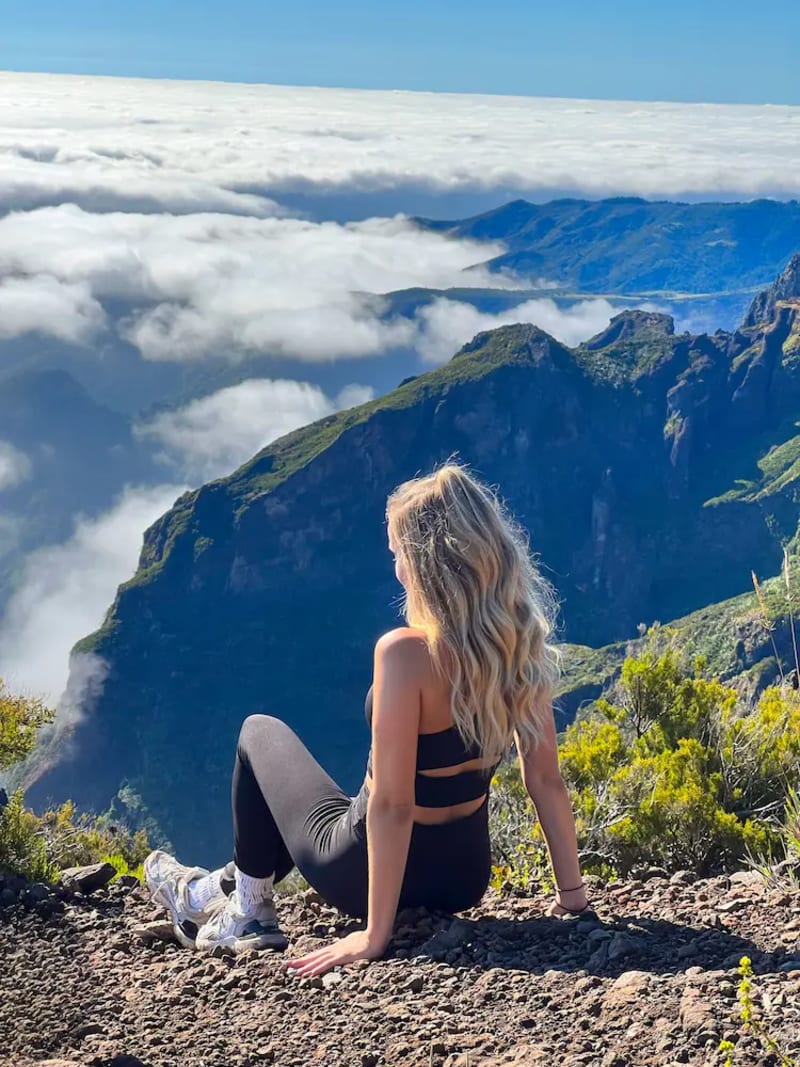
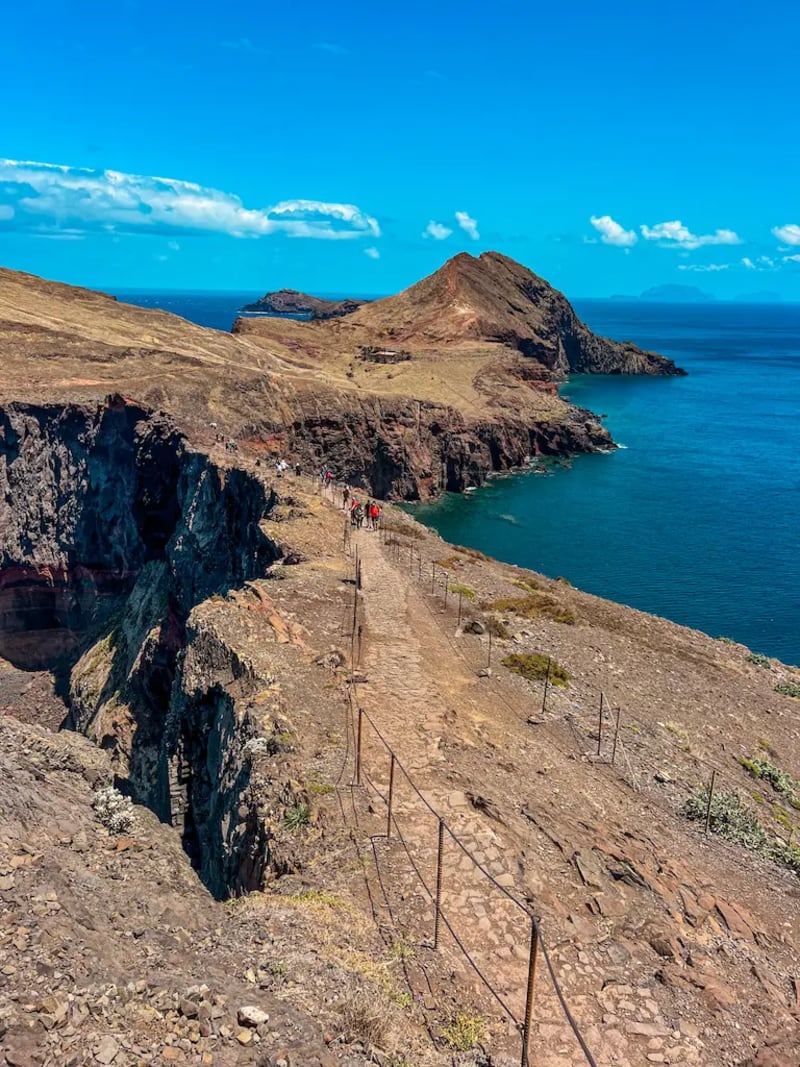
(L) PR1 (R) PR8
PR8's Arid Peninsula
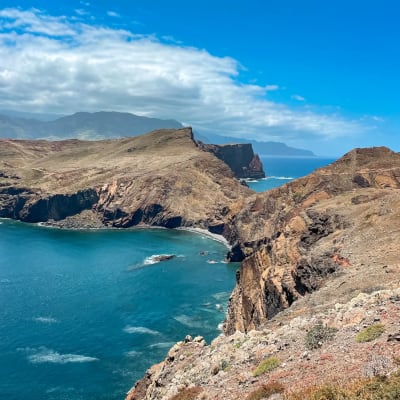
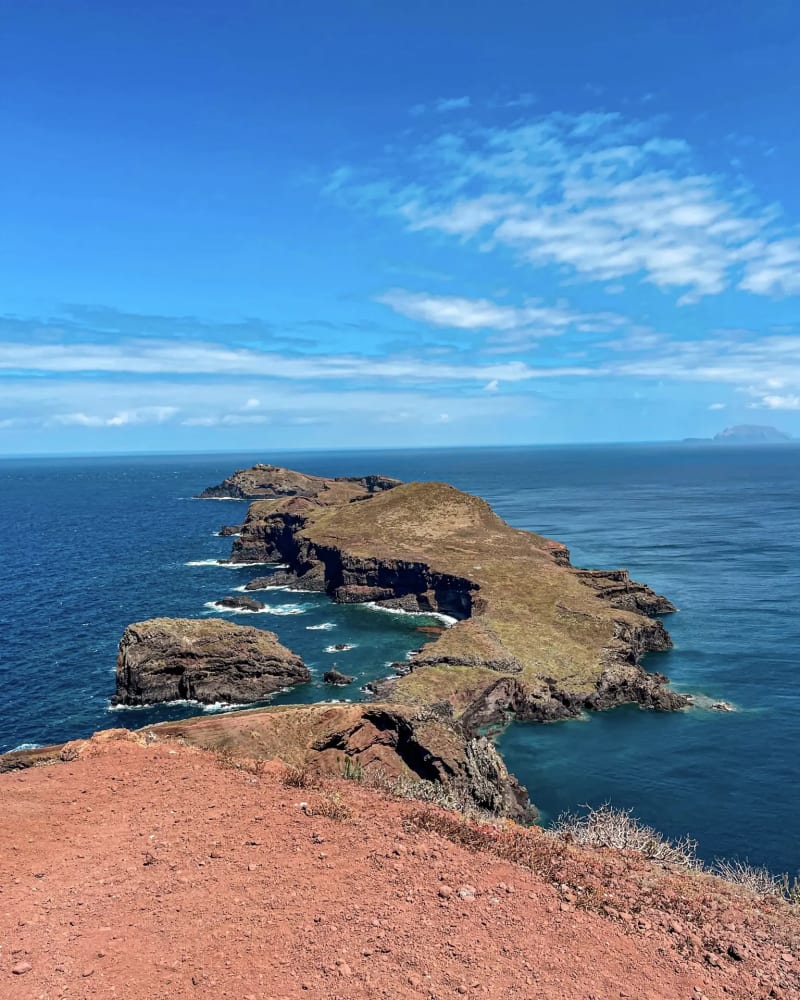
"Vereda da Ponta de São Lourenço," on the easternmost tip of Madeira, is a beautiful 6-7km out-and-back hike (moderate difficulty, 2.5-3 hours). This peninsula has breathtaking panoramic views of the Atlantic crashing against the jagged cliffs—one of my favorites on the island. It has super easy access from Funchal: drive (35-45 min) or take the public SIGA/CAM bus #113 (1-1.5 hr) to the final stop 'Baia D'Abra,' right at the trailhead.
Mystical Fanal Forest: PR13
The Fanal Forest is centuries old and looks like something straight out of a fairytale. It's part of the UNESCO-protected Laurisilva Forest, which is around 20 million years old. Fanal is the single most mystical location I've ever seen, especially when thick fog rolls in, which happens often here and is personally my favorite time to see it. Among the forest are unique ancient trees, each reaching through the sky in wild directions as if they were dancing before they became frozen in time.
The full PR13 route, "Vereda do Fanal", is a moderate 11km point-to-point (3-4 hours), starting from Paúl da Serra (above Rabaçal Valley) and descending through the Laurisilva Forest, ending down in Fanal. Lots of people just drive to the Fanal parking area and do shorter out-and-back loops among the ancient trees, which is still magical without the full trek and perfect if you're shorter on time.
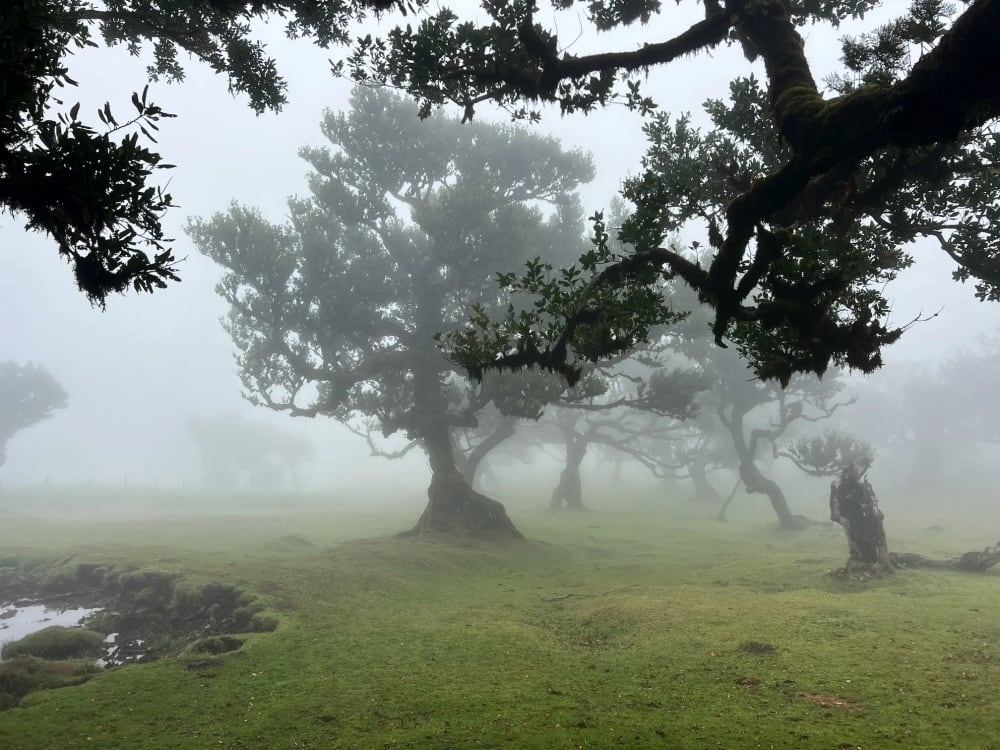
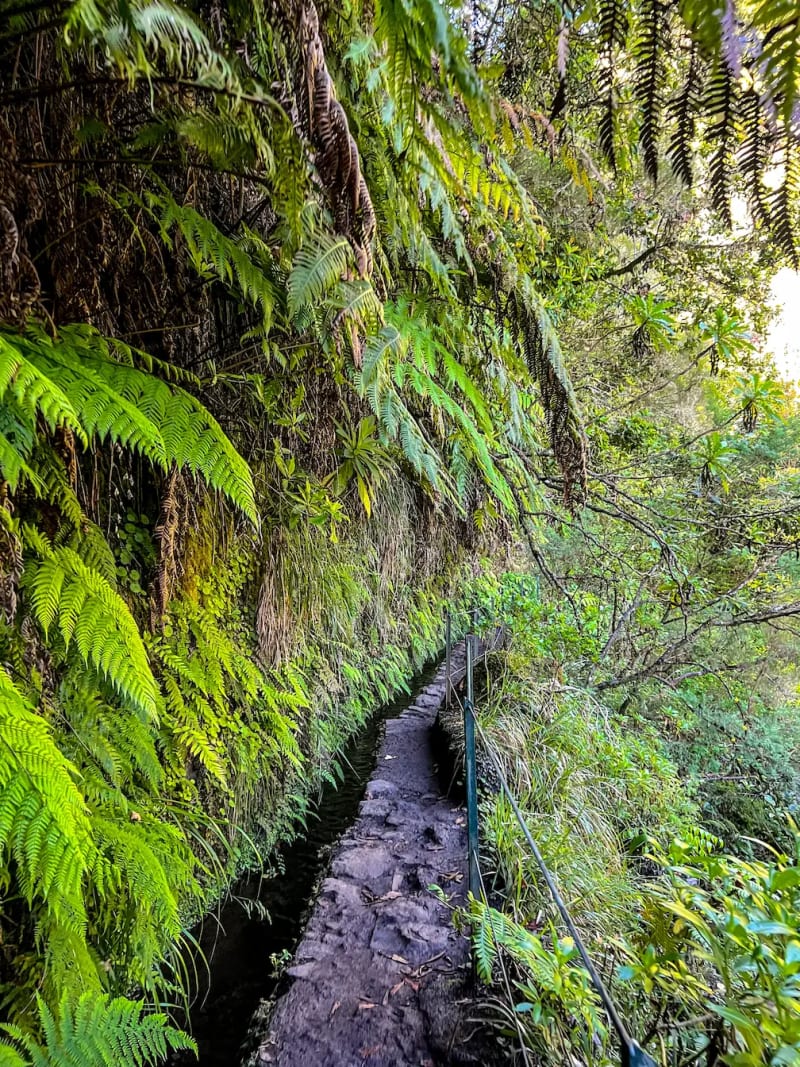
(L) PR13 (R) PR9
"The Green Cauldron" Levada & Waterfall: PR9
The "Levada do Caldeirão Verde" hike winds through the Queimadas Forest Park in Santana on the northeastern side of the island. Named for its thick emerald forest, this area of Madeira thrives on frequent rain, creating a vibrant, moss-draped trail. What makes it unique is its mix of narrow paths hugging the mountainside, sheer drop-offs, and dark tunnels carved right through the rock. It's an out-and-back of about 14km round-trip (4-5 hours, easy-moderate, flat), ending at a stunning 100m-high waterfall.
6 Explore the Village of Santana
Santana is a charming, historic village on Madeira’s north coast. It's steeped in rich culture, which is reflected in its vibrant community and iconic architecture. You can't miss the Casas Típicas de Santana—with their bright colors and thatched roofs, these houses are among the island’s most distinctive buildings. They were originally built by early settlers using local materials like wood, wheat, or rye; many have been preserved, either housing local villagers or converted into a museum for visitors. But Santana's more than just culture—it's a UNESCO Biosphere Reserve. There are stunning waterfalls, coastal viewpoints, and forest parks, representing the sustainable harmony between humans and nature, where adventure and tradition collide.
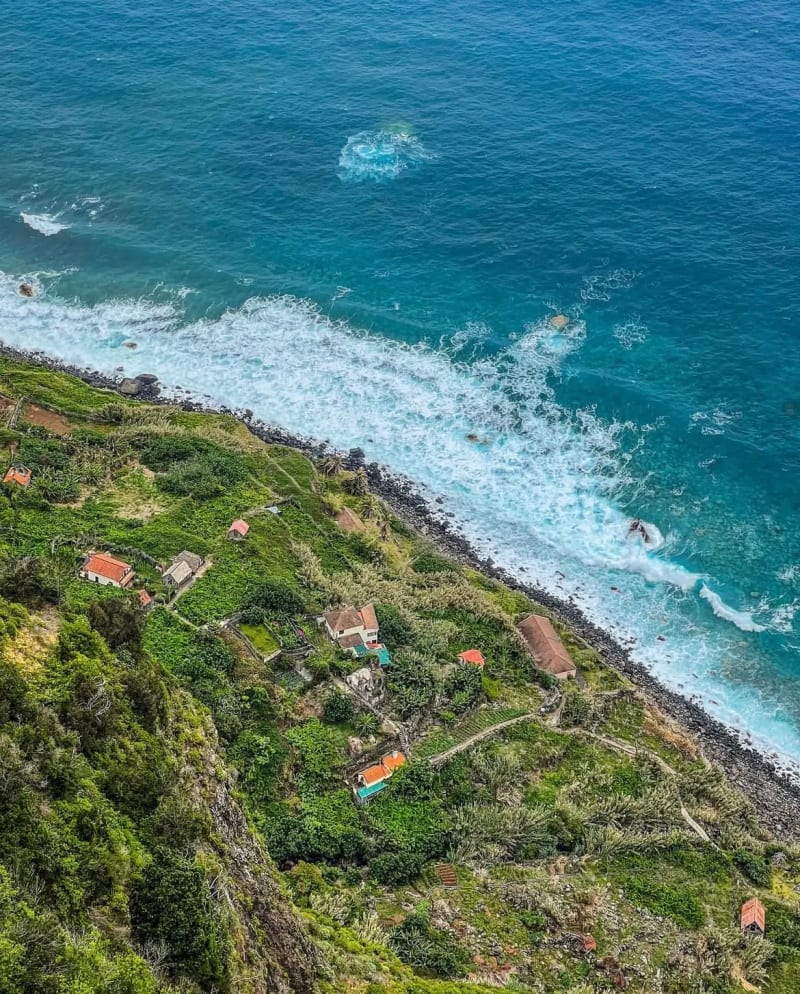
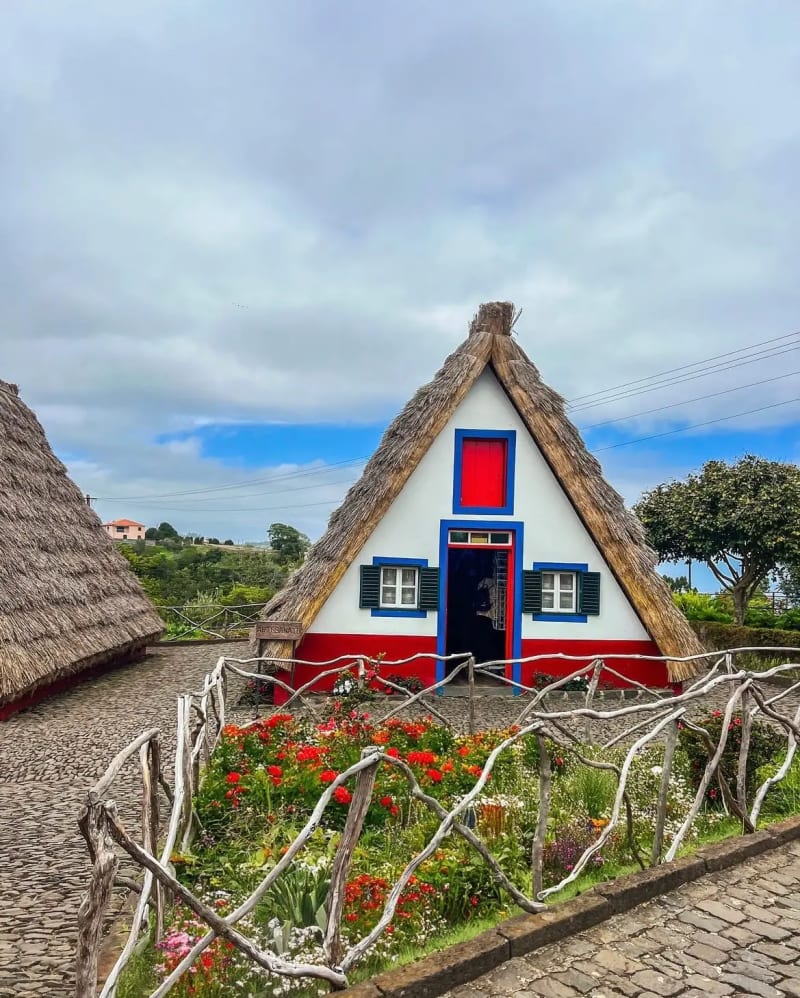
Some of the other top things to do in Santana are:
- Explore the Madeira Theme Park (Parque Temático da Madeira)—family-friendly spot with exhibits on island history, mini landmarks, gardens, and a small zoo. Interactive & relaxed.
- Reserva Natural da Rocha do Navio—coastal reserve with dramatic cliff views, seabirds, and an islet lookout. Easy to access via car or short path.
- Santana Church (Igreja de Santana) and the Town Center—wander into the pretty white church and surrounding streets. Check out the farmers' market (most weekends) for fresh local produce, poncha, and village desserts—super authentic!
- Visit easy-access miradouros like Miradouro do Guindaste and Miradouro de Santo António—beautiful north coast scenery: crashing waves, green hills, high cliffs.
The village is compact and easy to explore in a half-day or full day, especially if you have a base in the north. To add more history to your day, you can pair it with a quick drive to the nearby town of São Jorge (just north) for the Ruins of St. George—old sugar mill remnants with sea views—or Faial (just south) to see the Fortress of Faial—an 18th century fortress turned scenic viewpoint over the coast.
7 Explore Funchal & Its Old Town (Zona Velha)
Funchal's old town is known for narrow cobblestone streets, old picturesque buildings, rich culture, historical attractions, and a vibrant atmosphere. For a full, detailed 3-day itinerary in Madeira's capital city (including a breakdown of everything listed below), check my post on the top things to do in Funchal!
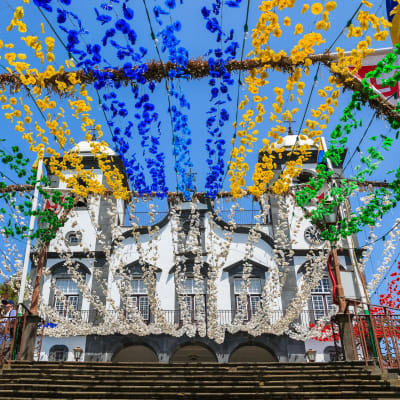
If you happen to be in the old town in the summer (which I definitely recommend), check my blog on summer events in Funchal to see if you'll be there for any annual festivities! Weekly fireworks, vibrant flower parades, and classic car shows are some of the fun community activities that take place.
Wander the Cobblestone Streets & Visit Historical Sights
One of the top things to do in Funchal is to walk around and get lost on the beautiful streets! Follow my easy walking tour that I created on Google Maps and really get to know the Old Town. The route hits every popular street with stops at parks & gardens, churches, and a historic fortress. I recommend stopping at one of the restaurants in the art district along Rua de Santa Maria, where every door on the street is painted with a gorgeous mural done by local and international artists.
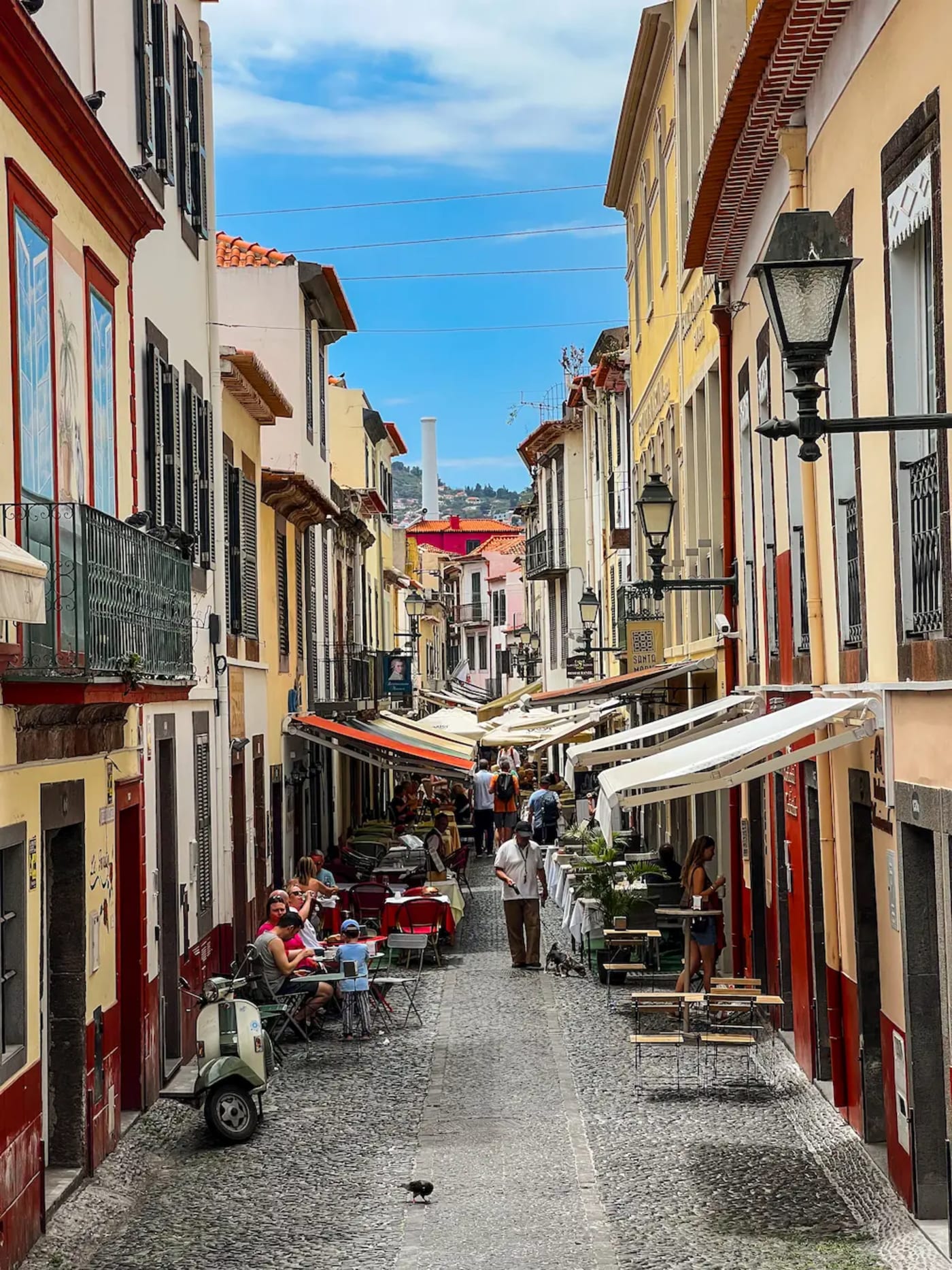
Cable Cars, Botanical Gardens & Toboggans
Take the Funchal cable cars (Teleférico do Funchal) up to the beautiful mountaintop area of Monte. At the cable car station in the Old Town, purchase a €15.50/adult one-way ticket that includes entrance to the botanical gardens. The panoramic views are incredible - you'll be riding above the orange-roofed traditional Madeiran houses with views of the ocean!
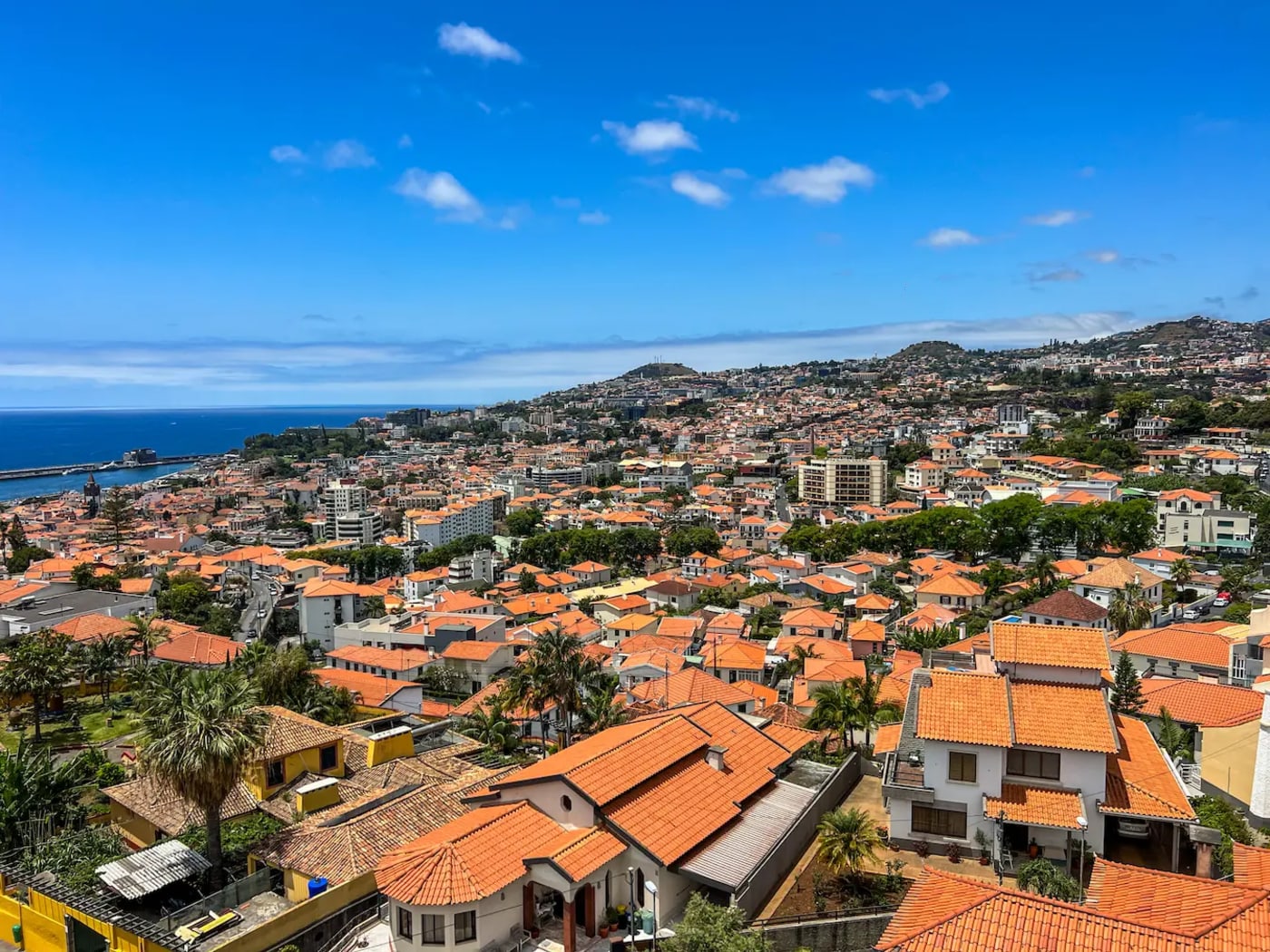
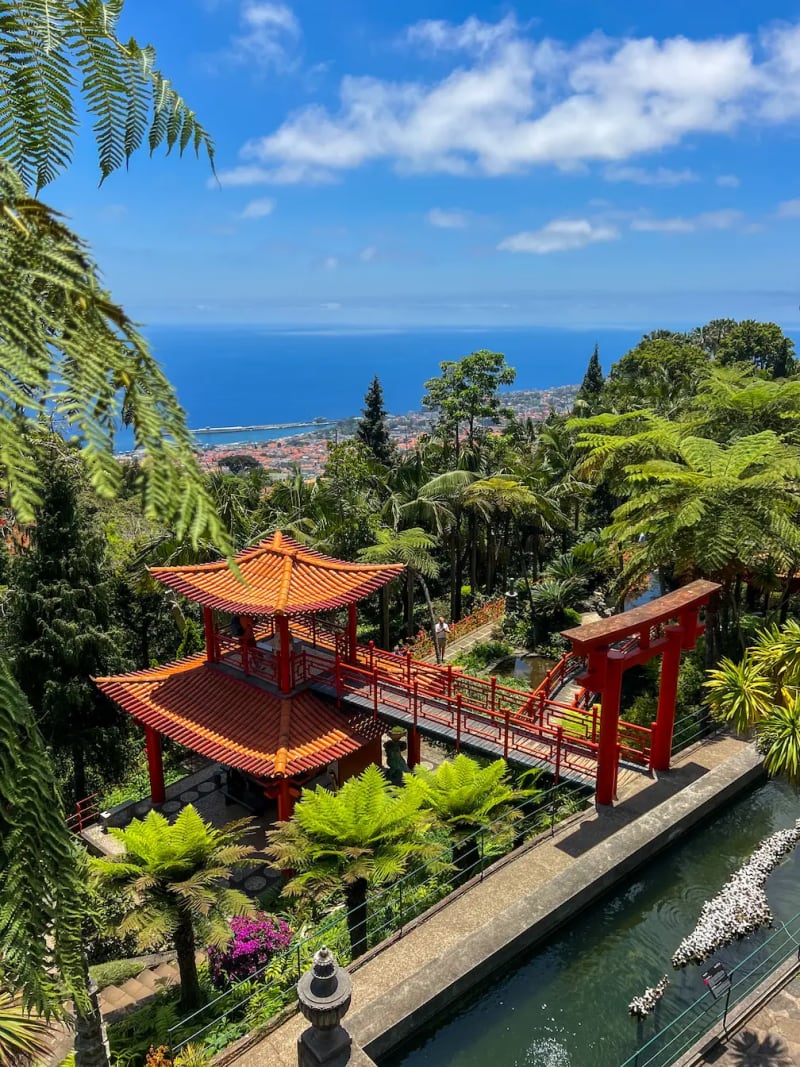
When you get to the top after a 20-minute ride, visit the Monte Palace Botanical Gardens - Asian-inspired gardens located directly next to the cable cars in Monte. It's a hidden tropical paradise with diverse flora, beautiful statues, and even live flamingos.
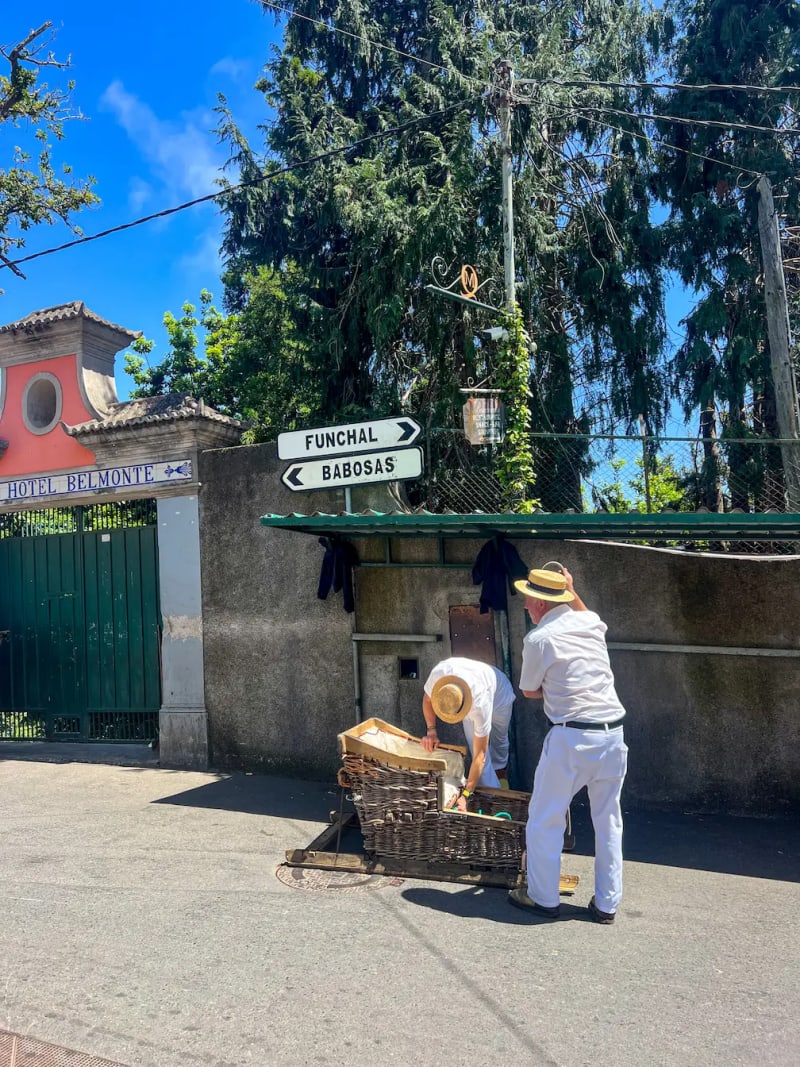
Considered one of the most unique things to do in Funchal, take a toboggan ride back down towards the old town—you'll ride in a wicker sledge while two drivers (Carreiros) guide it down the steep mountain roads for 2km.
Beaches
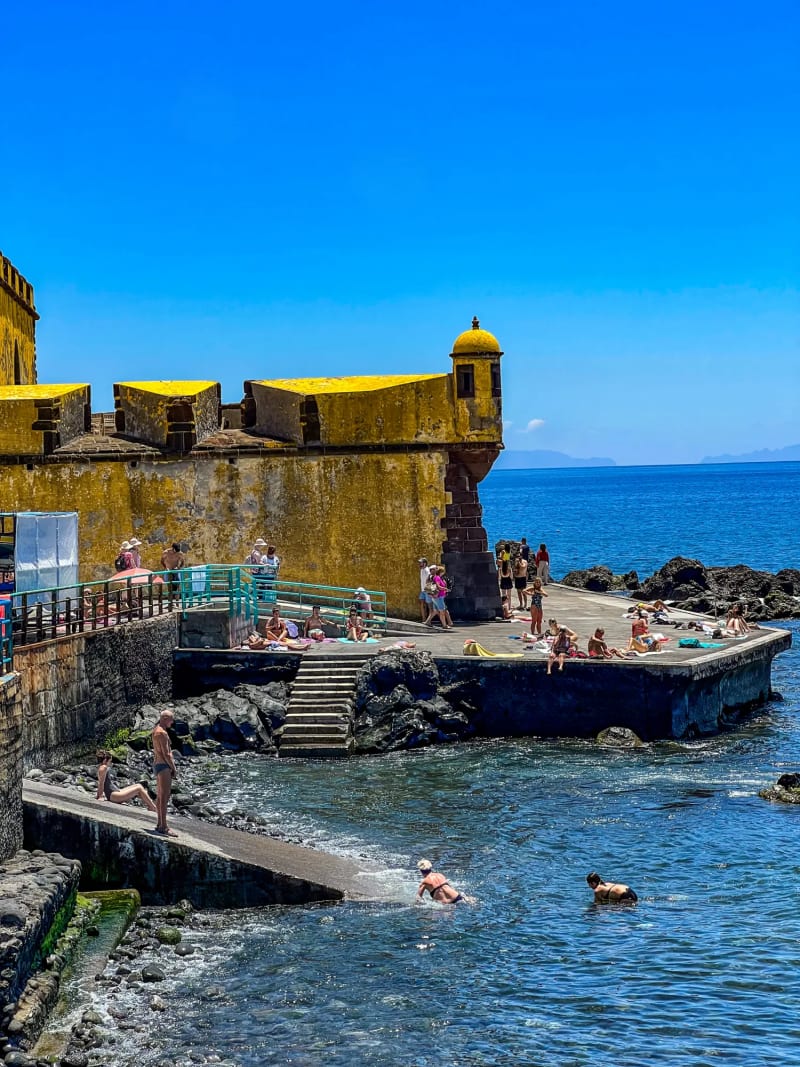
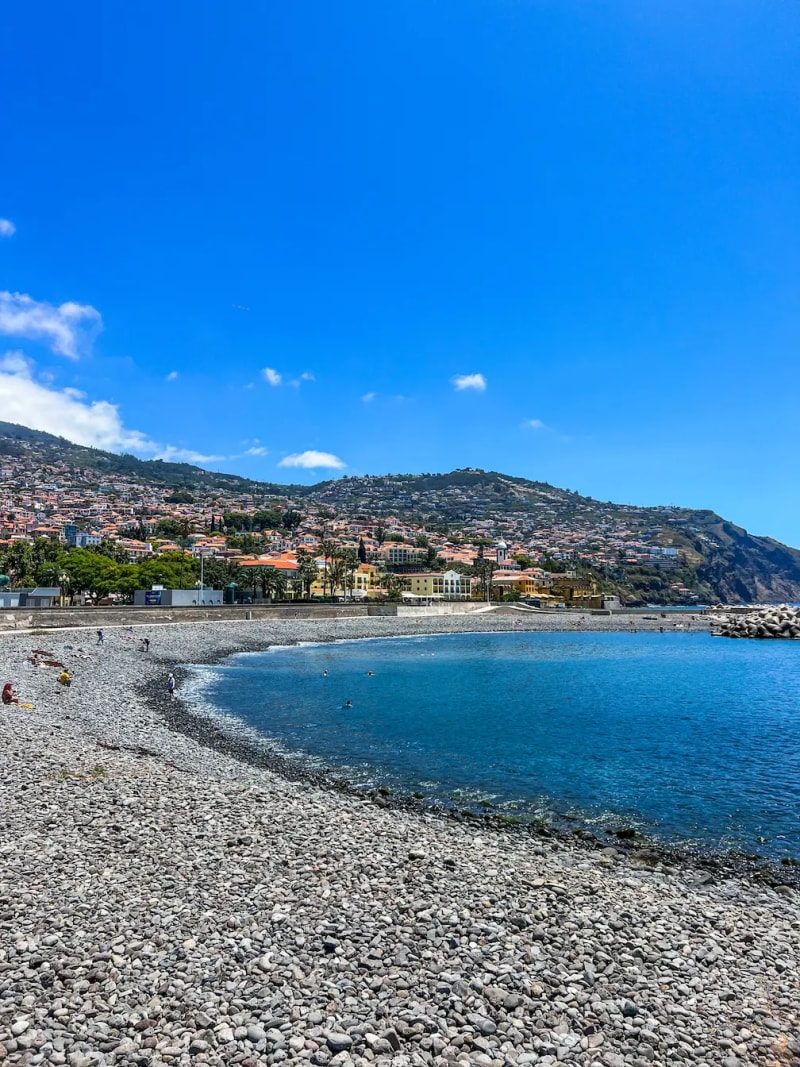
(L) São Tiago (R) Almirante Reis
There are a few nice pebbled beaches among Old Town Funchal. São Tiago Beach is right in front of the historic yellow Fort of São Tiago and is my personal favorite. Other options are Almirante Reis Beach, a long stretch of pebbles with a jetty that has beautiful views of the Funchal coast, or Toco Beach, a hidden gem along a cliffside with old fisherman homes and caves.
Dolphin & Whale Watching Catamaran Cruise
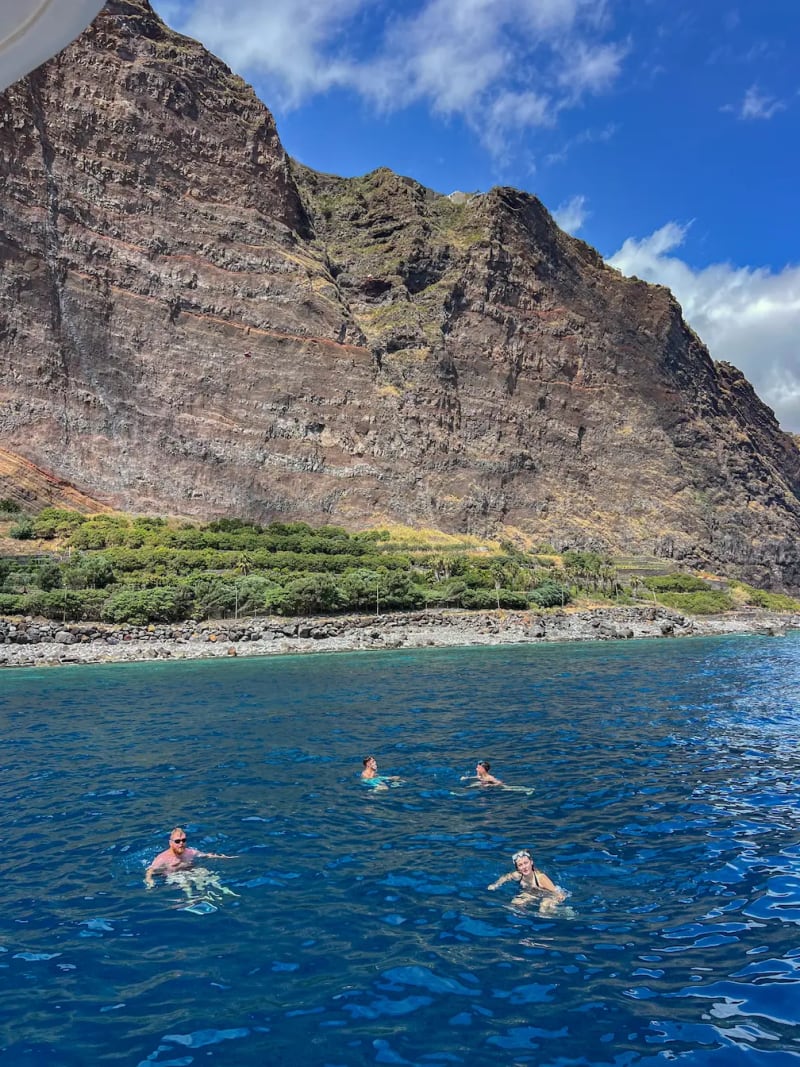
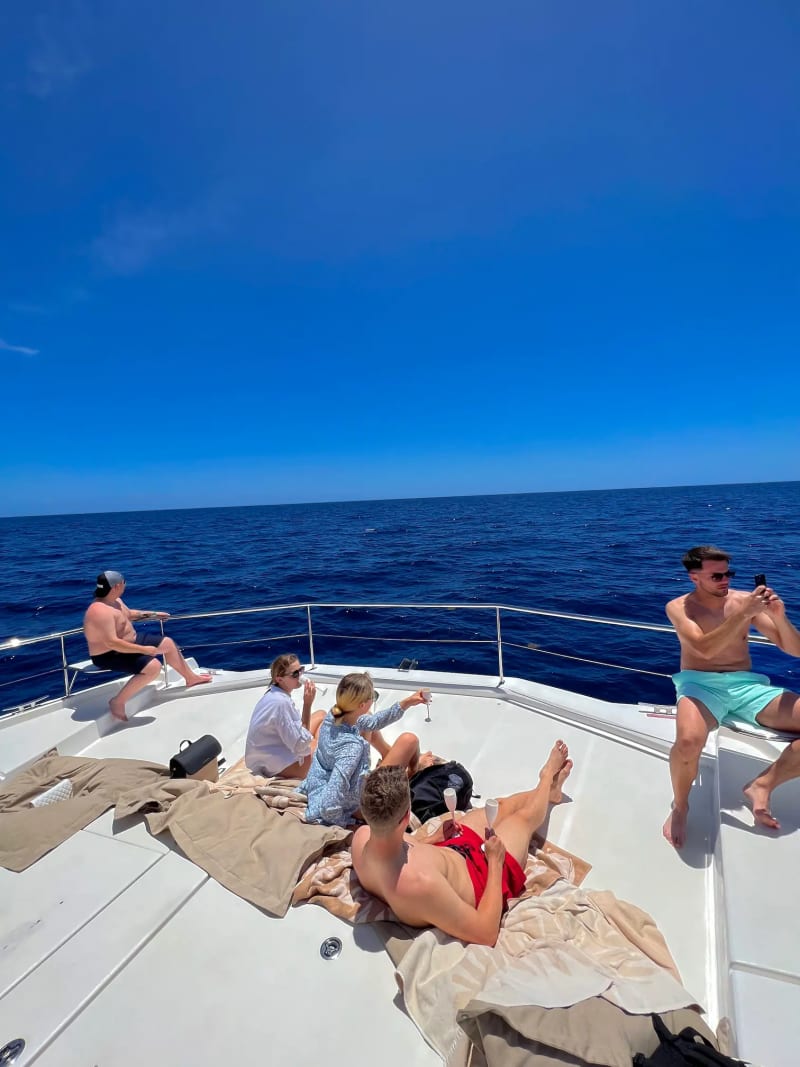
Catamaran Cruise
Located at the Funchal marina is the departure point for boat tours (day & sunset) with marine-life watching! They can be booked either online or in-person at the various tour operator stands along the marina. The island has beautiful sunsets, and nothing ends the day like witnessing one from the sea. Alternatively, you can take a day tour where snorkeling with fish in the clear blue waters is included! I recommend taking a catamaran tour with a limited number of people so you can sit comfortably and not be in a crowded, smaller boat.
Save this guide to plan your visit to one of Portugal's most beautiful islands! Enjoy every second of its allure and have an incredible time! 🩷