What You'll Find in This Post
Quick Facts About Cusco
- Elevation: 11,152 ft (3,400 m) — Much higher than Machu Picchu; take it slow!
- Language & Currency: Spanish | Peruvian Sol (PEN). Carry small change (Soles) for markets and bathrooms!
- Best Time: May–October (Dry season), though April and November are great for fewer crowds.
- Getting Around: Uber & InDrive are safe/cheap ($2–$4). Walking locally is best, but prepare for steep stairs!
- Day Trips: Use organized tours for Rainbow Mountain or Sacred Valley; car rentals are available but driving in the city is chaotic.
- Phone Data: Maya Mobile eSIM - always reliable during my travels!
Pro Tip: Drink Coca or Muña tea as soon as you land, and avoid alcohol/heavy meals on your first night to help with altitude adjustment!
Disclaimer: This post contains affiliate links. If you book or buy through these links, I may earn a small commission at no extra cost to you. Thank you for supporting my blog!
Cusco: More Than a World Wonder Gateway
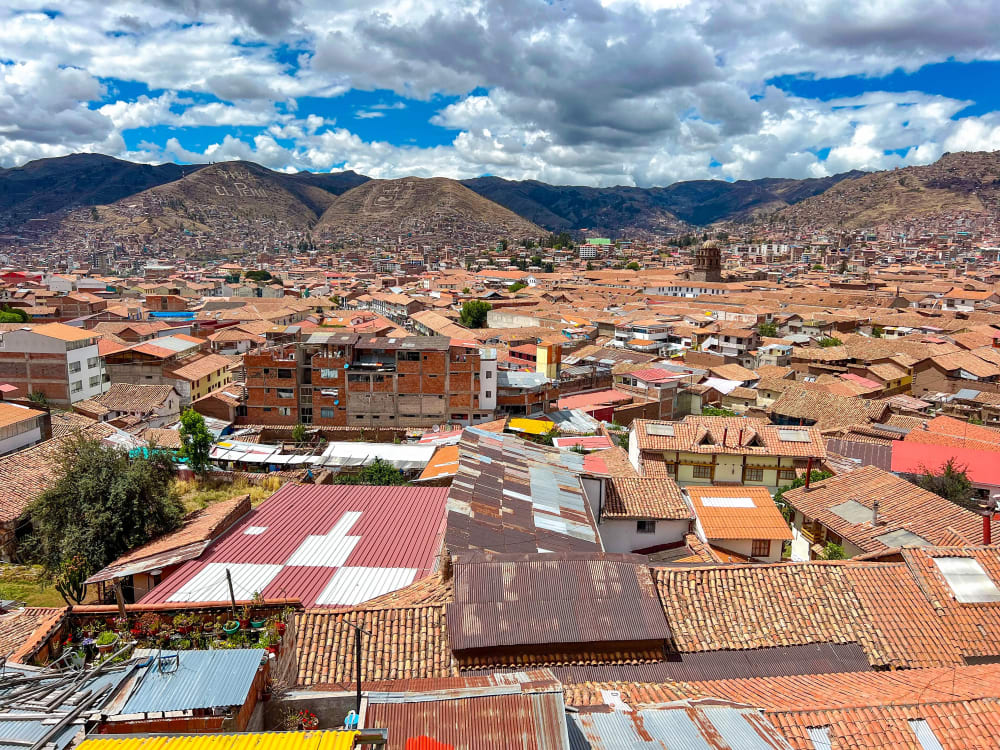
Cusco is so much more than just a gateway to Machu Picchu—it is a vibrant, high-altitude masterpiece of Incan history and Andean culture. But let’s be real: at 11,152 feet above sea level, your first few steps in the 'Imperial City' will likely leave you more breathless than the views! Whether you're here to conquer the steep cobblestone streets of San Blas, taste authentic Peruvian flavors, or prepare for a trek to the Wonder of the World, getting your 'mountain legs' is part of the adventure. In this guide, I’m sharing my personal tips for beating altitude sickness, the must-see spots in the city center, and the day trips that are actually worth the extra climb.
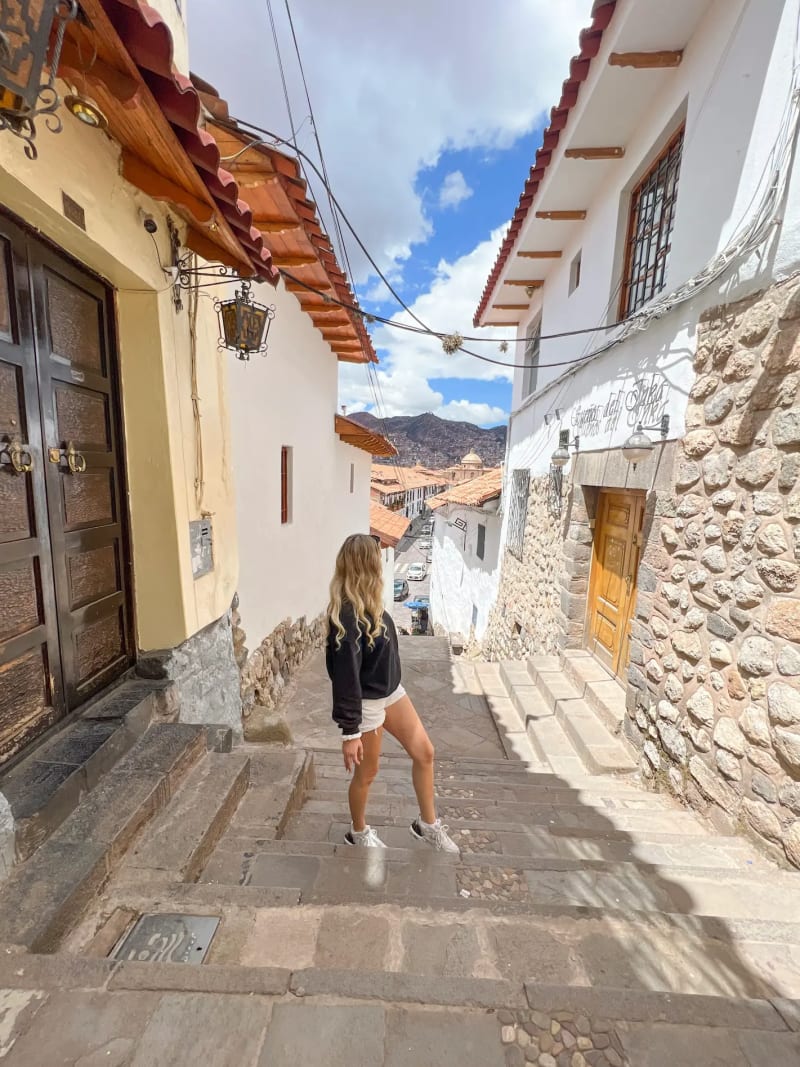
Altitude Survival Guide: Remedies, Teas, and the "3-Day Rule"
Me: "I'll be fine... wait, why am I out of breath?"
"3-Day Rule": Use your first 24 hours to rest, hydrate, and do some light city wandering. By Day 2, you can visit nearby ruins and tackle some more intense hills. By Day 3, your body should be ready for day trips like Humantay Lake and Rainbow Mountain. If you're still feeling weak, opt for the intense day trips on Day 4+.
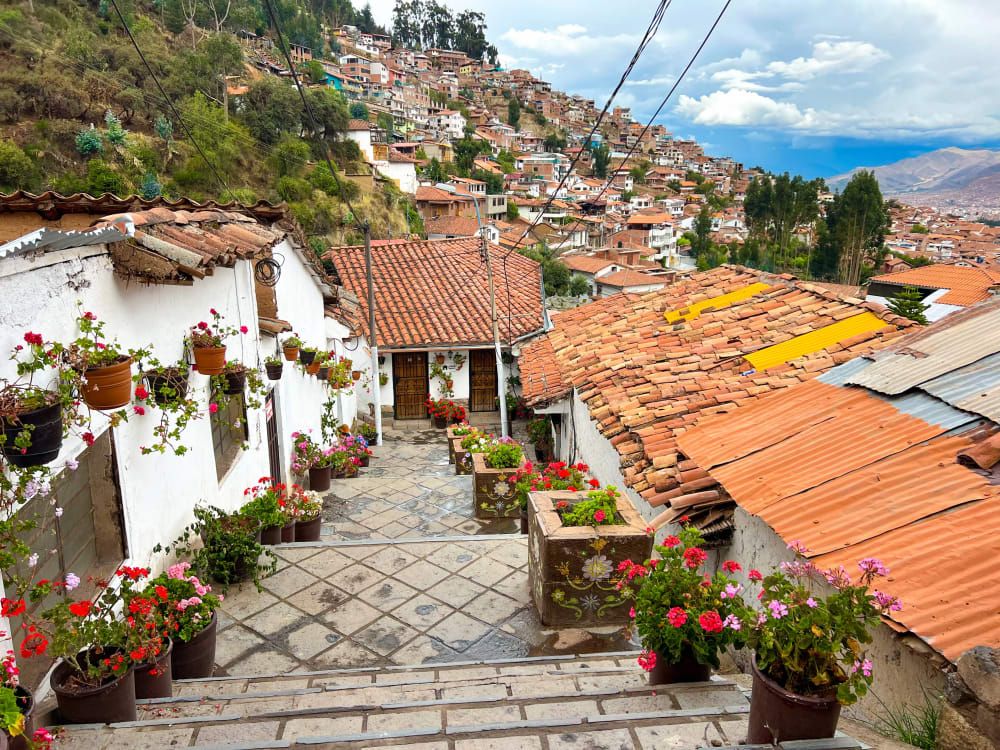
When you arrive in Cusco, I recommend spending a minimum of 3 days there to both explore the city and adjust to the altitude. Cusco sits at 11,152 feet (3,400m) above sea level. If you're coming from near-sea level, altitude sickness will be your enemy. You might think you’ll be the exception and won’t feel it—my boyfriend and I were confident we'd be fine—but when we arrived, going up a single flight of stairs had us winded. Plus, Cusco is famously hilly, so you’ll be getting in a leg workout just walking to your hotel. Don’t let that deter you though; the city is insanely beautiful, and there are plenty of ways to combat altitude sickness.
Scientifically, the air in Cusco has the same percentage of oxygen (21%) as sea level, but the atmospheric pressure is lower. This means oxygen molecules are further apart, so each breath you take actually delivers less oxygen to your blood than a breath at sea level. Your heart and lungs have to work double-time just to keep your blood oxygenated, which is why even light activity can make you feel like you just ran a marathon. Some common symptoms include:
- Pounding headache (I felt this!)
- Nausea or loss of appetite (Peruvian food is far too good. Safe to stay my appetite stayed! Lol!)
- Dizziness and fatigue
- Shortness of breath, even when sitting still (Felt!)
- Disturbed sleep or "racing heart" at night
The best defense starts with over-the-counter medicine. You can find altitude pills, commonly called Sorojchi Pills, at almost any pharmacy (look for the green "Inkafarma" signs). We actually got ours in Lima before flying into the mountains, taking one mid-flight and one each day we were there. They typically contain a mix of aspirin and caffeine to help with blood flow and headaches.
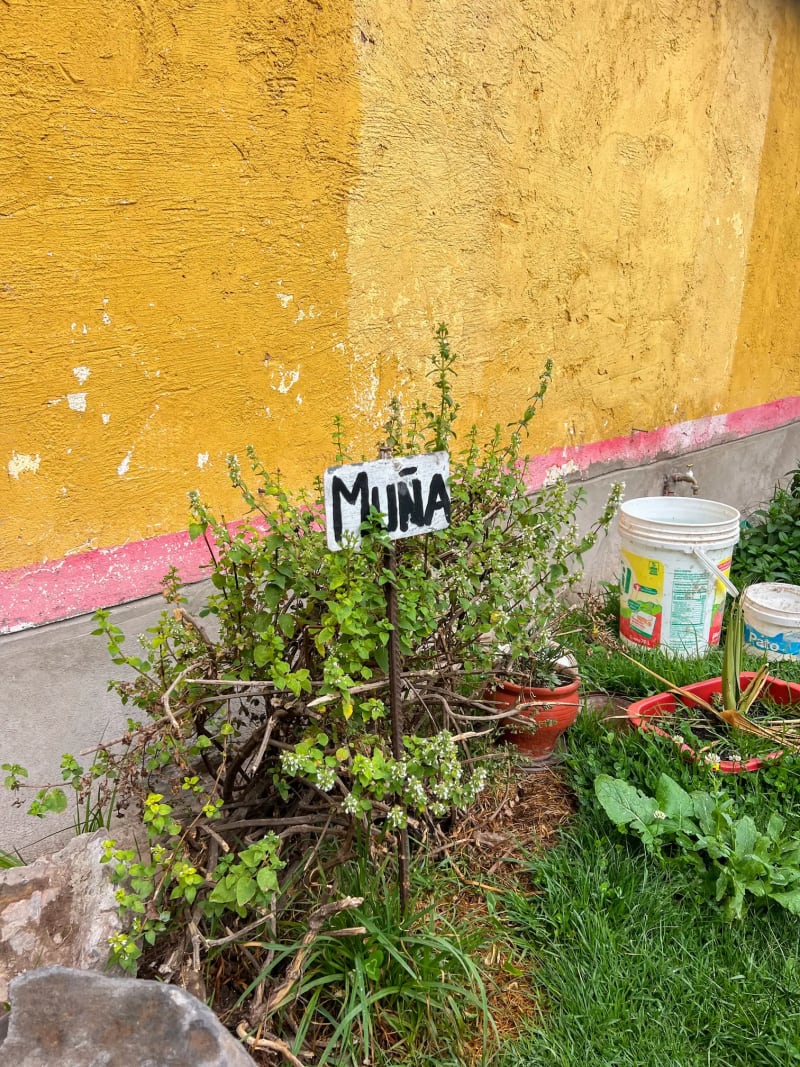
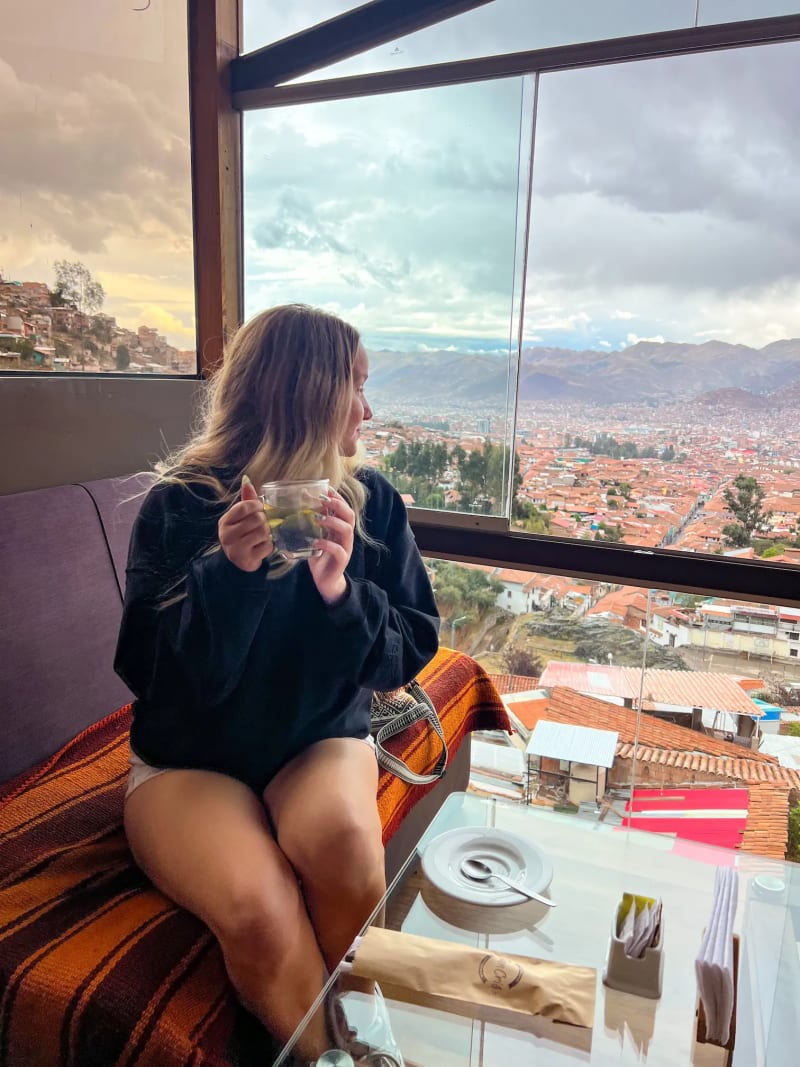
The Muña Tea Plant & Me Drinking Coca Tea at Sancris Restobar Mirador Restaurant
If natural remedies are more your style (or the pills aren't enough) Cusco has elite herbal teas readily available. Muña and Coca tea are extremely effective at relieving your symptoms. You'll find them in nearly every grocery shop and restaurant, and they're often offered as a "welcome drink" in hotel lobbies. IncaRail and PeruRail also have them in their Cusco offices for customers headed to Machu Picchu.
- Muña Tea (Andean Mint): Used by the Incas for strengthening the immune system, relieving indigestion, and killing parasites or bacterial infections. It tastes like a more earthy peppermint and is great for the "heavy stomach" feeling altitude causes.
- Coca Tea: A mild stimulant with gastrointestinal benefits; helps oxygen absorption and gives you an energy boost. Honestly it tastes like grass (green tea without the floral notes) but is SO effective.
While the tea is definitely a lifesaver, limit yourself to 2-3 cups a day. Drinking too much can actually have negative effects like dehydration (they act as diuretics so they make you pee more, and at a high altitude your body already loses water faster) and stomach irritation due to high alkaline content in the leaves.
⛰️ Visit my Perú Viator shop to book the best tours & activities in Lima, Cusco & Machu Picchu! ⛰️
Wandering the City
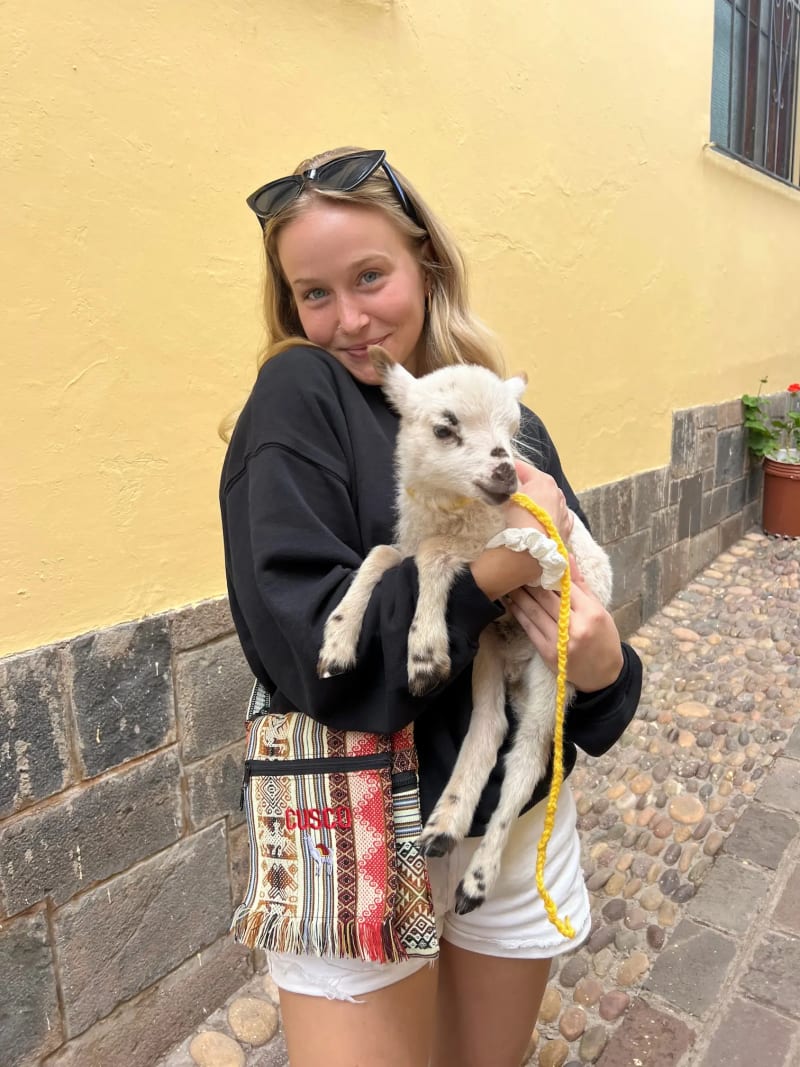
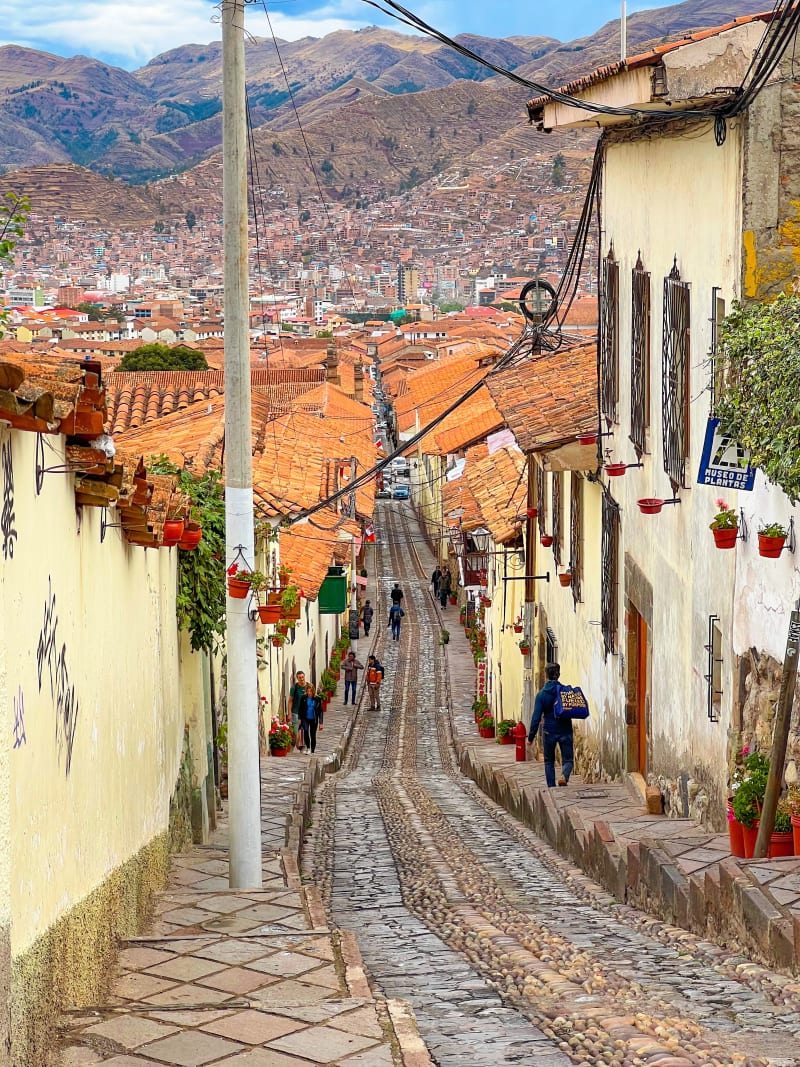
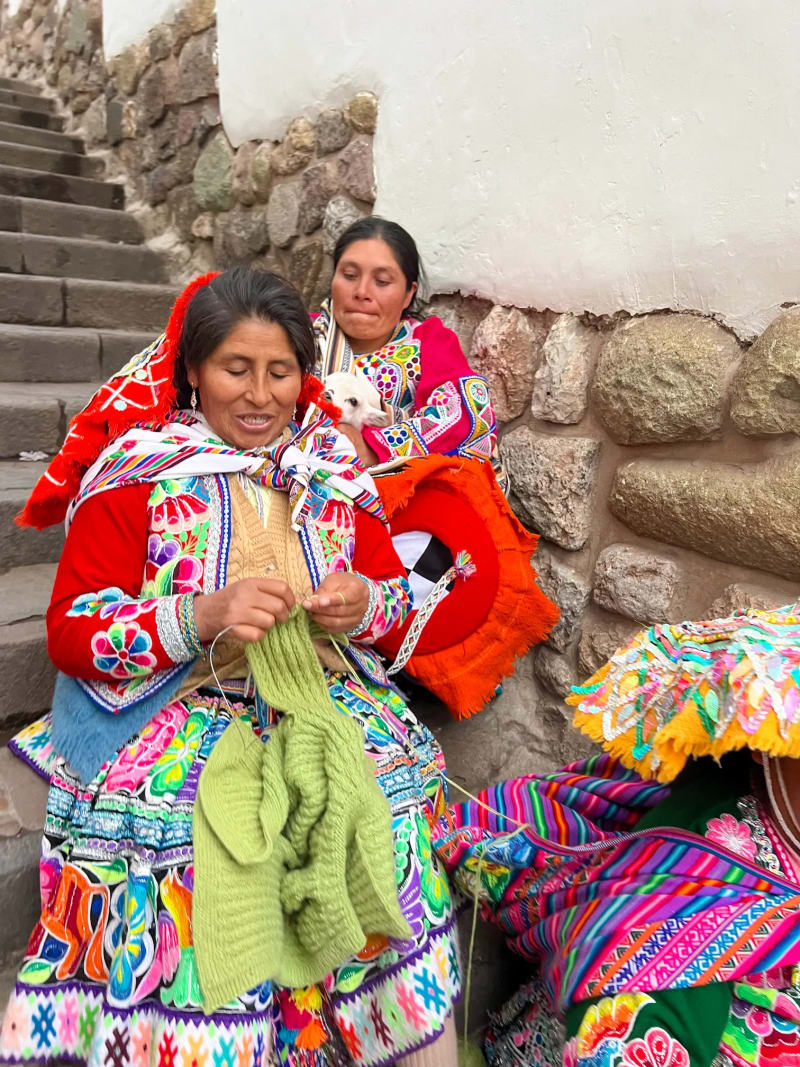
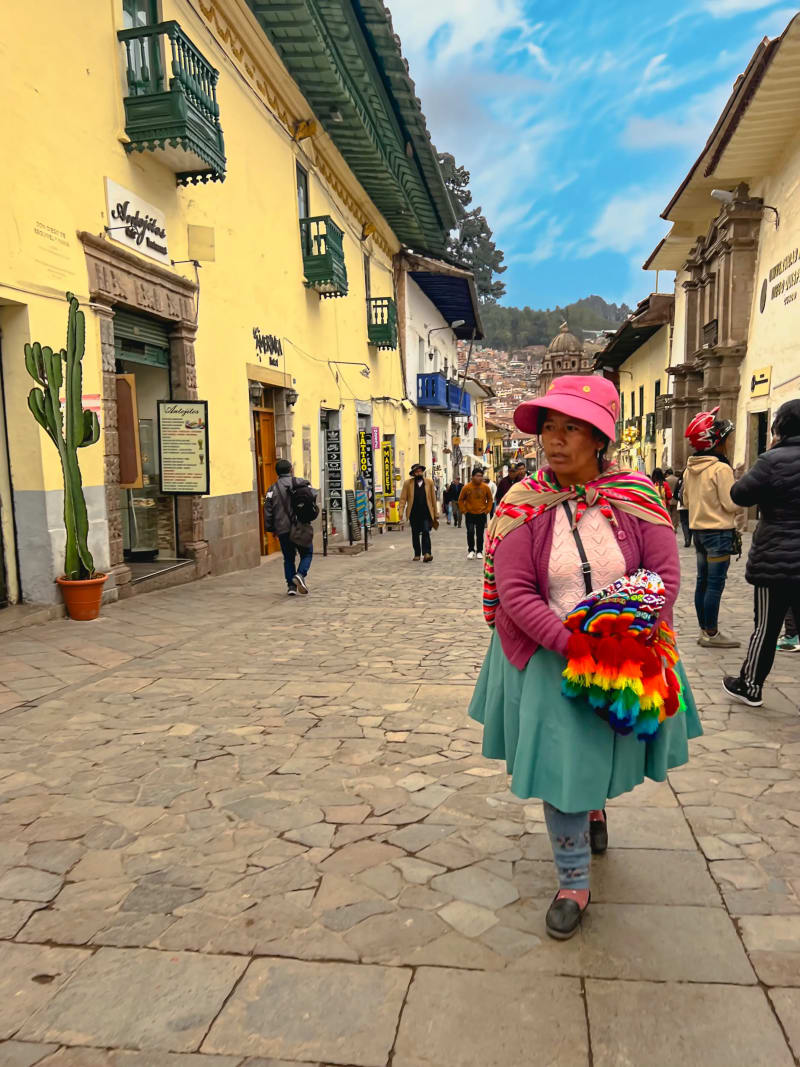
Cusco really has a lot to offer in experience, sights, and atmosphere. On your first day, while you're still adjusting to the altitude, it's a MUST to simply wander the picturesque narrow streets and get a little lost. When I say Cusco is stunning, I'm not exaggerating. Wandering also gives you a chance to get acquainted with the local culture, perhaps meet a few descendants of the Incas, and of course, pet a few llamas and alpacas (my favorite part—they're so freaking cute)!
Historic Center (Centro Histórico)
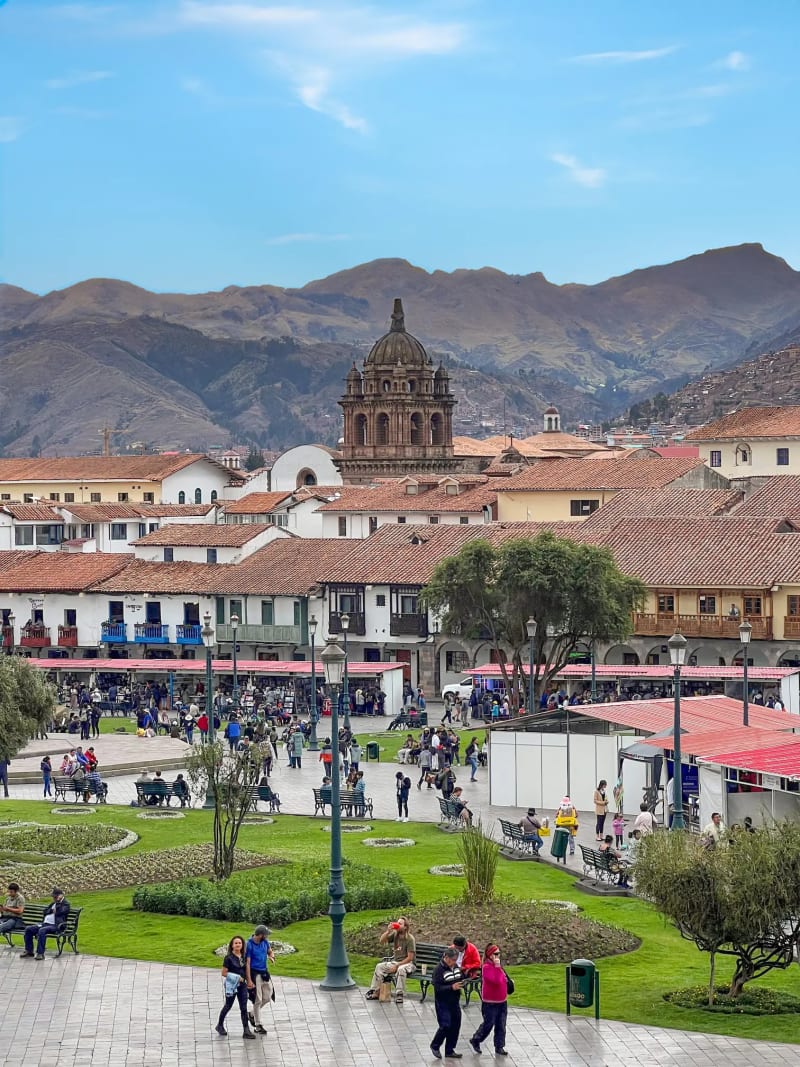
The historic center of Cusco is centered around the Cusco Main Square, called Plaza de Armas. The Plaza is the heart of the city, surrounded by churches, art galleries, and restaurants with colonial arches, all with an insane backdrop of the surrounding Andes mountains. Since Cusco sits in a valley, the Plaza is the perfect spot to look up and realize how wild the landscape is. It looks particularly nice at night when the lights on the mountain are lit up, making the hills sparkle.
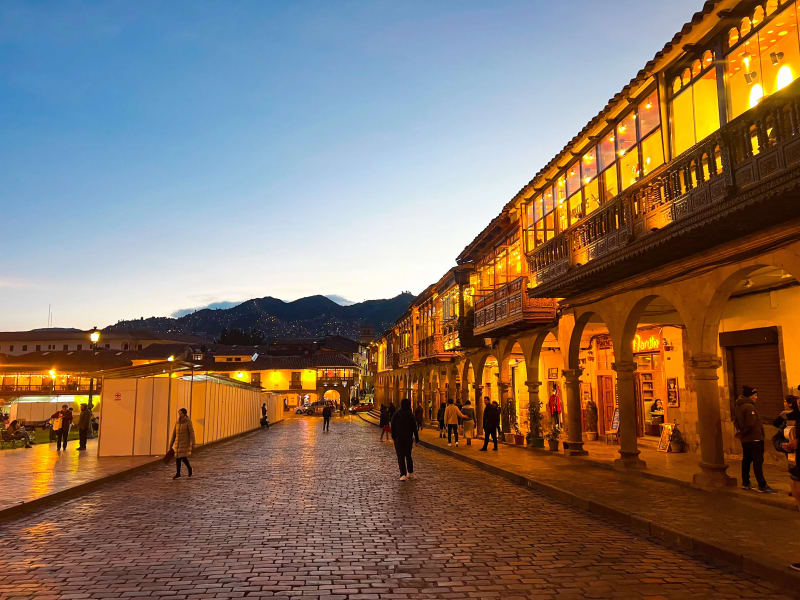
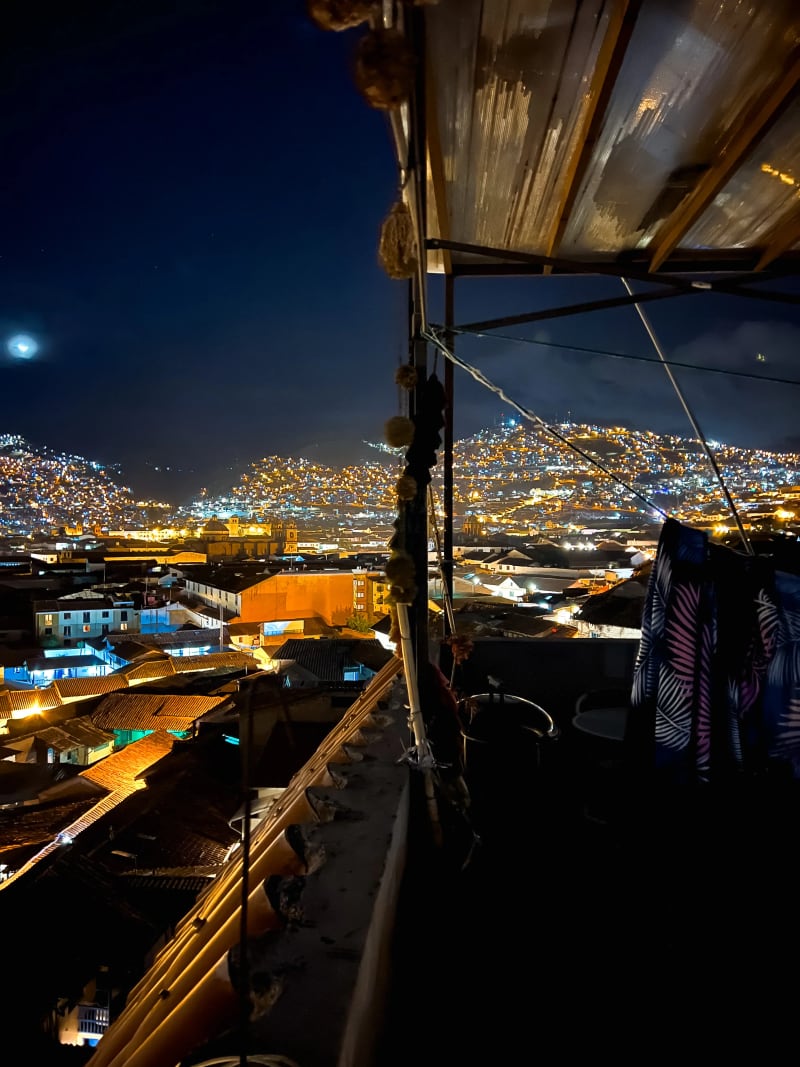
Just be prepared: you will be hounded by locals trying to sell you everything from paintings to massages. It can be quite overwhelming, but it comes with the territory—a polite "no, gracias" is usually enough if you don't want anything. Some of what they're selling is really worth it—my boyfriend and I actually purchased a beautiful painting in the square from a student at a local art school—but we had to say 'no' dozens of times in a single day.
In the square is the Cusco Cathedral and the Church of the Society of Jesus. The latter has an entry fee of 16 PEN and is intricately detailed with golden statues and mosaics. It has narrow passages and stairs leading to the upper level, where there's a window with a perfect view of the square. If you don't make it up there, you can still get a fantastic view from many of the second-floor restaurants lining the plaza.
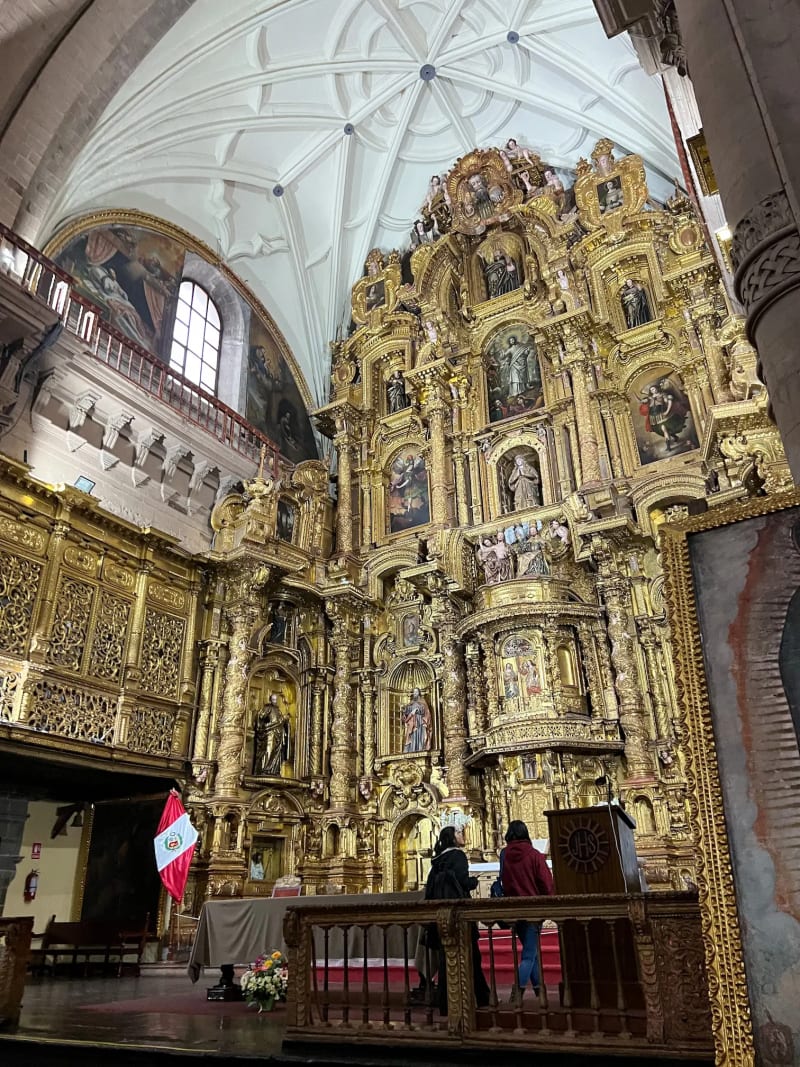
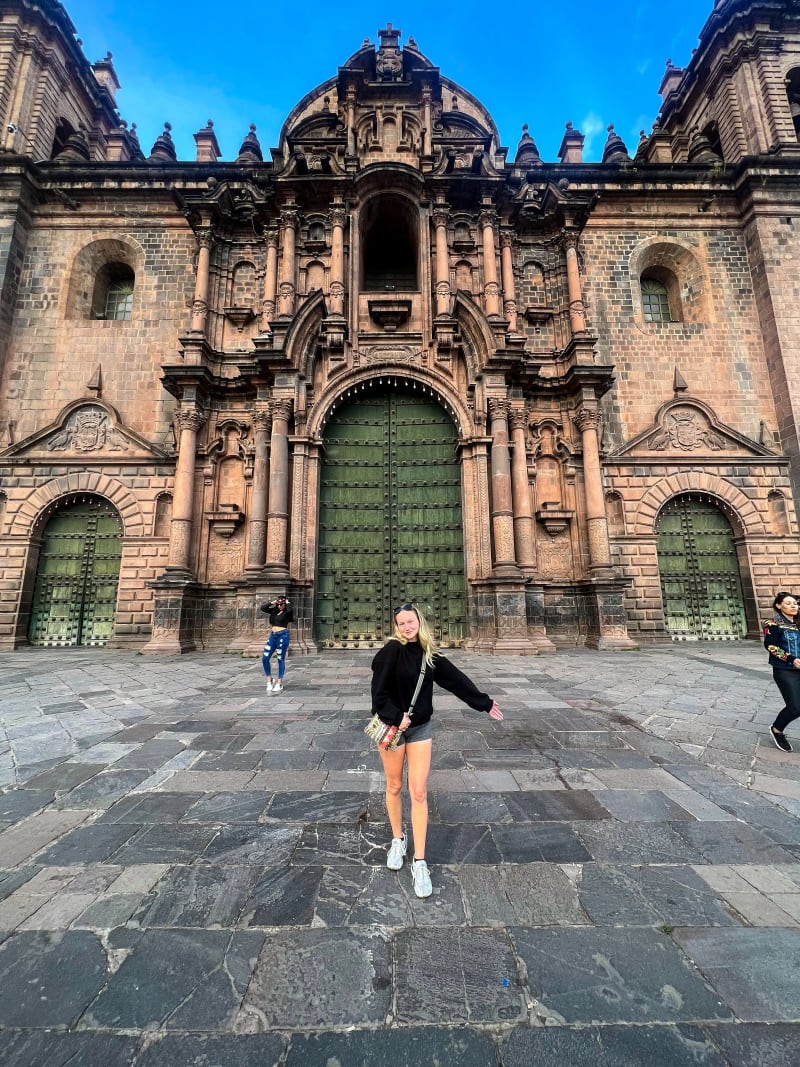
(L) Church of the Society of Jesus (R) Cusco Cathedral
San Blas (Bohemian Quarter)
Known as the "Barrio de los Artesanos" (artisans' neighborhood), San Blas is the most artsy area of Cusco. It's known for its narrow, steep streets lined with Andean Colonial style buildings—white-washed walls, bright blue balconies, and red-tiled roofs all built atop ancient Incan stones. To get there head up the hill from the Plaza de Armas but take it slow for the sake of your lungs, especially on day 1!
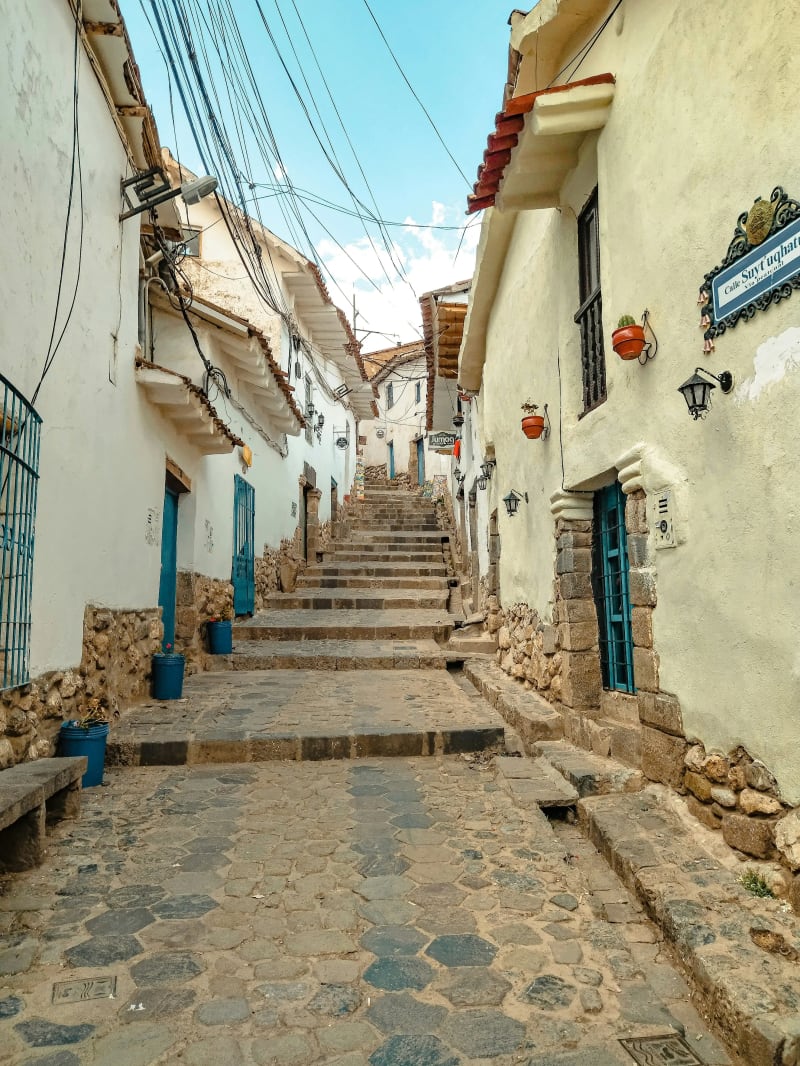
Photo by Isaac clinton Suca Fuentes
On your walk up, look for the Twelve-Angled Stone on Hatun Rumiyoc street. It's a 700-year-old artifact that was once part an Incan palace wall. While it might just look like an old stone wall, it's actually one of the most incredible representations of Inca engineering. The stones fit together so perfectly without mortar that you can't even fit a piece of paper between them. The 12-angled stone is the gem of the wall: it's famous because it has 12 distinct angles (duh based on the name), meaning every stone around it had to be carved like a complicated 3D puzzle piece to lock it into place!
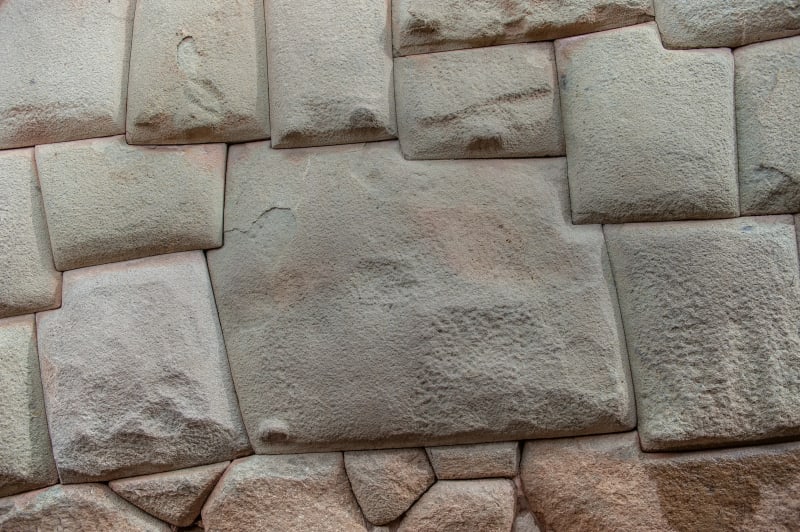
A highlight of the neighborhood is Plaza San Blas, where you'll find artist workshops and small shops where you can bargain for beautiful, affordable handmade purses, ponchos, and other souvenirs. It's definitely more relaxed than the main square, and also has the San Blas Viewpoint which has one of the best panoramic views in the city.
San Pedro
For a bit of real local life you'll want to head to the San Pedro Market. It's a massive, bustling hall where the locals shop for everything from fresh fruit and local cheeses to artisanal textiles. It's the best place to try a cheap, authentic meal or fresh-squeezed juices. If you head to the juice section, you can pick your own fruits and they'll blend a massive, liter-sized jar for you for just around 8 Soles and it's so, so good. It's a total sensory overload but in the best way!
Incan Ruins & History
Partial Tickets vs Boleto Turístico de Cusco
Before visiting any archaeological sites or museums, it's important to understand the ticketing system. Most major archaeological sites in and around Cusco do not sell individual entry tickets. Instead, you have to buy a "circuit" ticket that bundles several sites together.
There are three different 'Partial Tickets' and the big 'Boleto Turístico'. If you plan on visiting sites in both the city and the Sacred Valley, it's more cost-effective to just buy the full Boleto.
- Circuit I (City Ruins): 70 PEN. Valid for 1 day. Good for a quick afternoon trip. It covers the four ruins overlooking Cusco: Saqsaywaman, Qenqo, Puka Pukara, and Tambomachay.
- Circuit II (Museums & South Valley): 70 PEN. Valid for 2 days. Includes 8 sites, mostly museums in the city center (like the Qorikancha Site Museum) and the less-visited South Valley ruins of Tipón and Pikillacta.
- Circuit III (Sacred Valley): 70 PEN. Valid for 2 days. Used for the major sites in the Sacred Valley: Ollantaytambo, Pisac, Moray, and Chinchero.
- Boleto Turístico: 130 PEN (~$35 USD). Valid for 10 days. The "gold ticket" covering all 16 sites across all three circuits. If you're in Cusco or the Sacred Valley for 3+ days or plan to visit a site in 2 of 3 circuits, just get this one!
You can buy these tickets at the entrance of most sites (some small museums don't sell the Boleto Turístico) or at the COSITUC office on Avenida El Sol. You'll get a physical ticket that they'll punch at every site, so DON'T lose it! All tickets are CASH ONLY in Peruvian Soles so be sure to have enough on you before going.
Saqsaywaman (Sacsayhuamán)
The Saqsaywaman Ruins are often hilariously referred to as the “Sexy Woman Ruins” due to the pronunciation, which is an excellent way to remember it's name! It's an ancient citadel, now a UNESCO World Heritage Site, sitting on the mountain overlooking the city. To get there, you can walk from the Plaza de Armas or take an Uber. It's a steep 20-30 min uphill climb, so we Ubered up for around 12 PEN and walked back down after. If you're not fully altitude-adjusted yet, I highly recommend this strategy so you'll be dropped right at the gate.
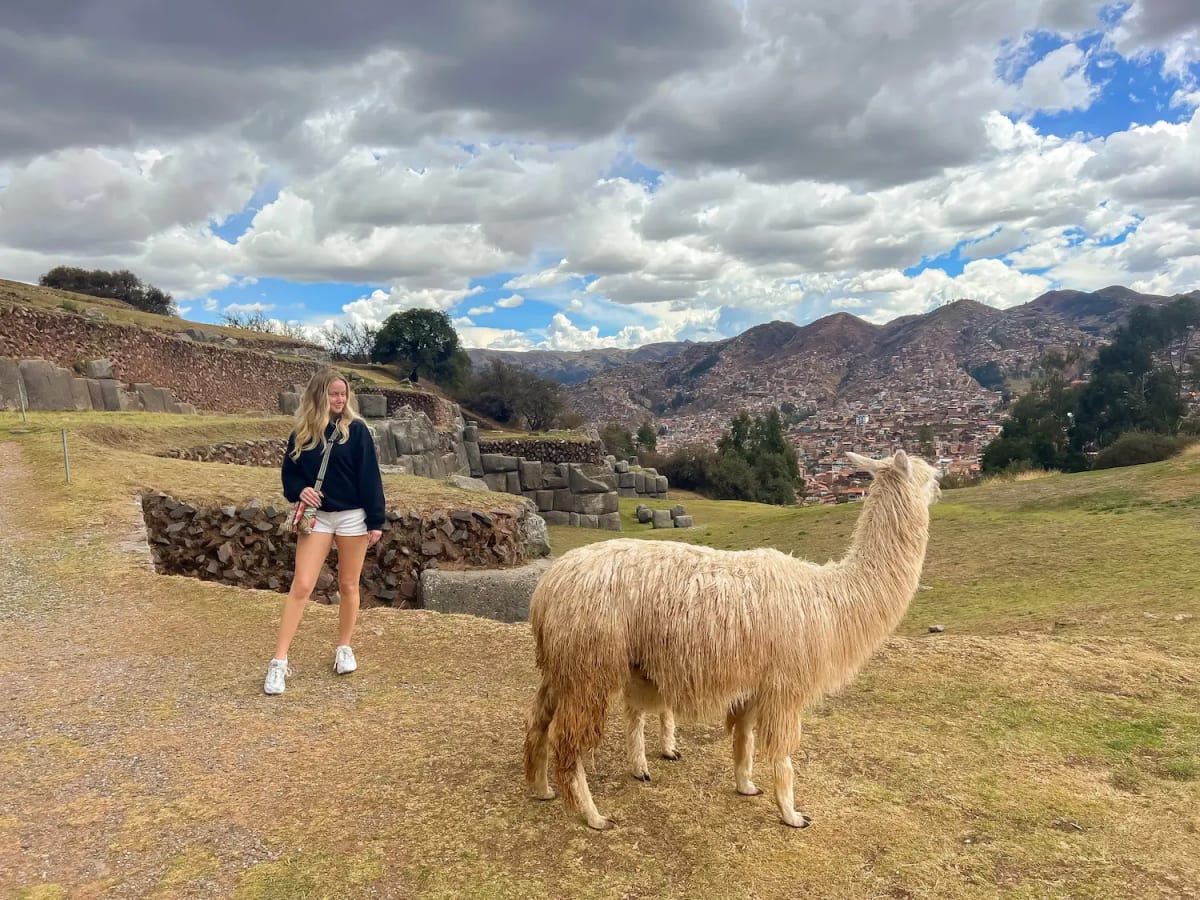
Did you know?: The ruins seen today are only ~40% of what it used to be. When the Spanish found the site in the 16th century they used it as a "stone quarry", moving what they could downhill to build the Cusco Cathedral and other colonial buildings. The only reason there's any boulders left at all is because they were simply too heavy to move!
The site was once a massive military fortress and ceremonial center, housing armories, storage rooms (granaries), and many temples. Like at Machu Picchu, it has a Sun Gate (Inti Punku)—most Incan sites have at least one. These gates were built in such a way that the sun aligns perfectly within the doorway during the solstices. Don't even get me started on the connection between the Incas and astronomy (actually, do—I promise to write a blog on this one day and link it here!).
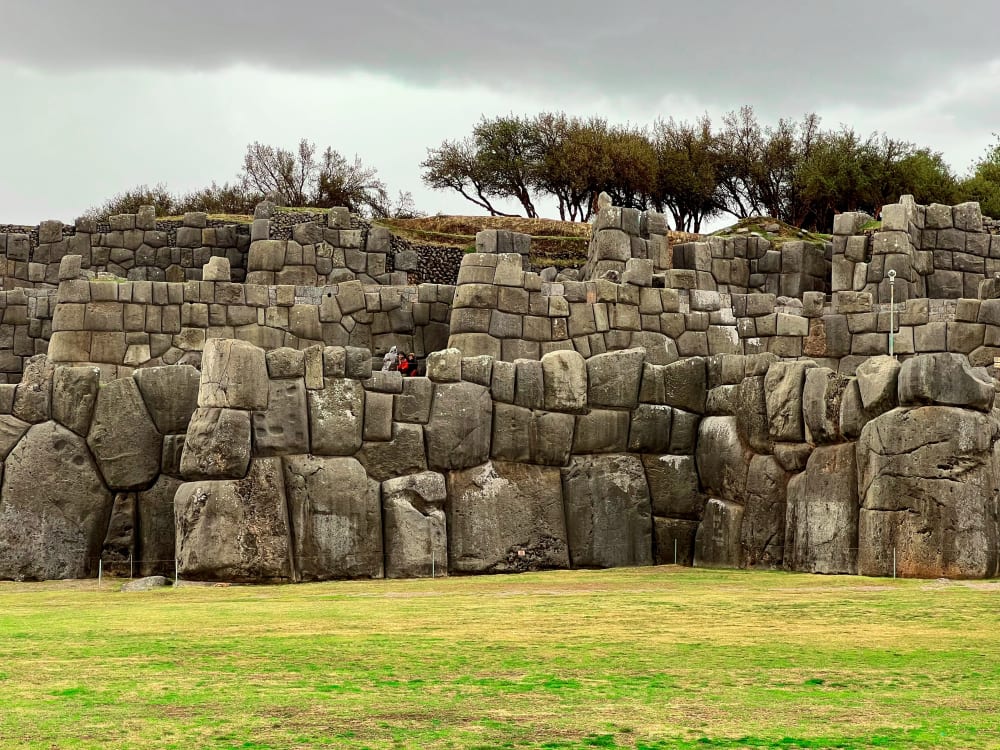
There are alpacas and llamas roaming the site, so it’s a great spot for getting close to them and taking photos! Just a short walk away is the Cristo Blanco (White Christ) statue. It’s pretty underwhelming as it's relatively small, but it’s so close to the ruins that you might as well just walk over to see it. It has a nice viewpoint, but so does the ruins.
Qorikancha (Coricancha) Museum
If you only have time for one museum in Cusco, make it this one! Quorikancha, right on Av. El Sol, was once the "Temple of the Sun" and the most important site in the entire Incan Empire. Rather than being just another temple, it was the literal and spiritual heart of Cusco, which the Incas called the "navel of the world". It was dedicated to Inti—the Sun God and the empire's top deity—and where the emperor (Sapa Inca) performed major ceremonies, where priests tracked the stars, and where people came to worship.
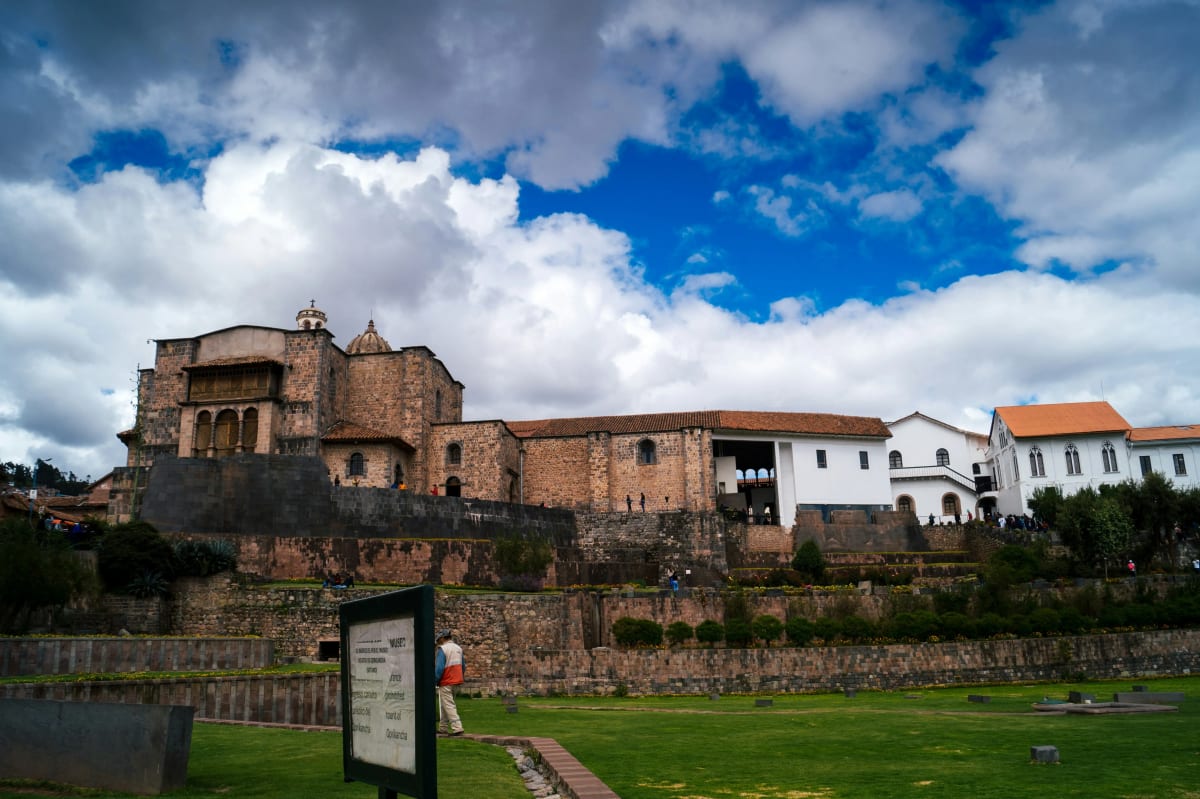
Photo by Diego Solorzano
Because of its importance, its walls were once literally covered in sheets of solid gold so thick when the Spanish melted them down its said to have filled entire rooms with treasure. When the Spanish conquered the city, they built the Convent of Santo Domingo right on top of it, so now you see a wild mix of Incan stonework and Spanish colonial architecture.
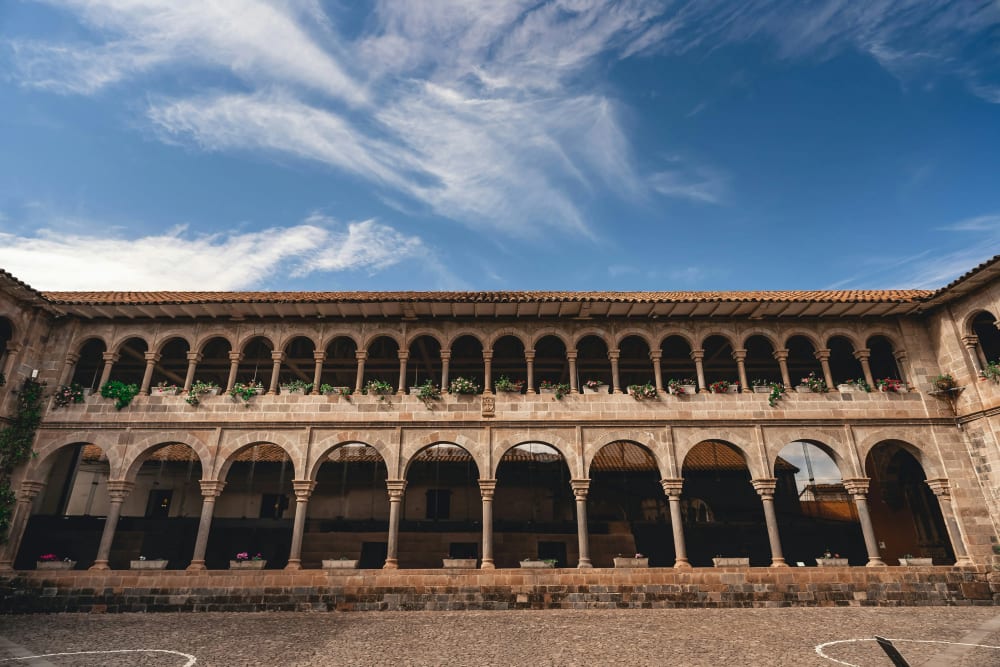
Convent of Santo Domingo - Photo by Mauro Lima
The Qorikancha Site Museum is across the street with a separate entrance apart from the temple. The Temple of the Sun is the temple ruins and convent, while the little site museums is a small but great underground gallery that houses real artifacts dug up here—pottery, textiles, metalwork, and a scale model of what the original temple would have looked like in its peak. Definitely worth the extra 10-15 minutes.
Inka Museum
This museum, near the Plaza de Armas, is widely considered the best museum in the city for understanding who the Incas were before heading to Machu Picchu. It has a large collection of Incan mummies, textiles, and Quipus (the knotted strings the Incas used for math and record-keeping). We took a guided tour here, which I recommend: I noticed there's a lack of explanations about what you're looking at. Most signs only have basic labels, so without a guide it's hard to understand the significance.
Ticket Note: Some city museums are included in the Boleto Turistico (Circuit II), but Qorikancha Temple (NOT the Qorikancha Site Museum, which IS included) and the Inka Museum require their own separate entrance fees, usually between 10-15 PEN.
Eat Like a Local: Cusco Restaurant Recs
On our way down from the Saqsaywaman Ruins, we stopped at Sancris Restobar Mirador to grab a bite. The food was great, there’s balcony space, comfy seating, and an incredible view of the city. Other places I loved were Green Point Cusco and Jardin Organiko, both excellent restaurants with traditional dishes, too!
Visit Qucharitas for delicious ice cream, desserts, and coffees. It is so adorable on the inside, and the staff gives you a coloring page with colored pencils for you to draw while you’re there—a concept that I found so sweet. As I looked around and saw a bunch of adults eating their desserts and intensely focused on their coloring, my heart got a little warmer.
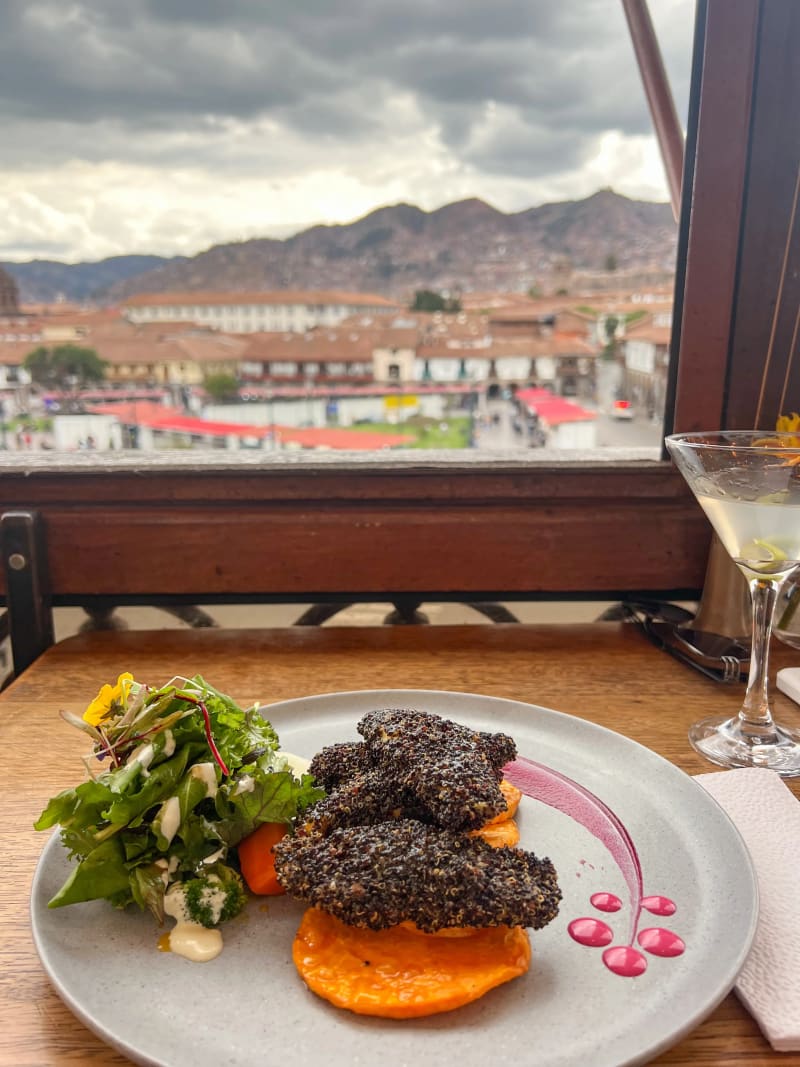
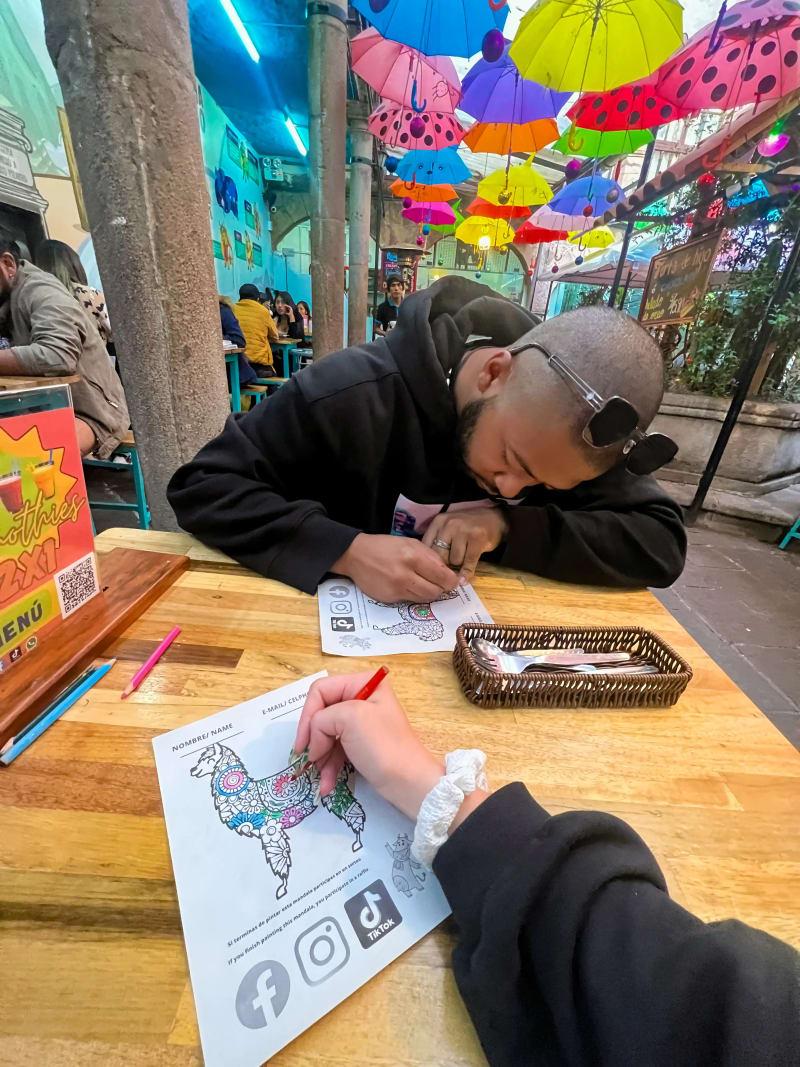
(L) Fusión Andina (R) Qucharitas
Be sure to eat at lots of huariques (also called picanterías/quintas). They're small, casual, family-run hidden gems that have traditional dishes at super affordable prices. The busiest ones with the most Peruvians inside are usually the best! And be sure to try the following dishes, all either already vegetarian or can easily be made so!
- Papa Rellena: Stuffed fried potato croquette
- Arroz Chaufa: Fried rice dish
- Aji de calabaza: Classic Andean-style pumpkin/squash stew
- Iro de zapallo: More typical of Arequipa cuisine; spicier, creamier version of squash stew
- Causa: Cold layered potato dish made with tangy mashed potatoes, avocado and fillings like quinoa or chopped veggies
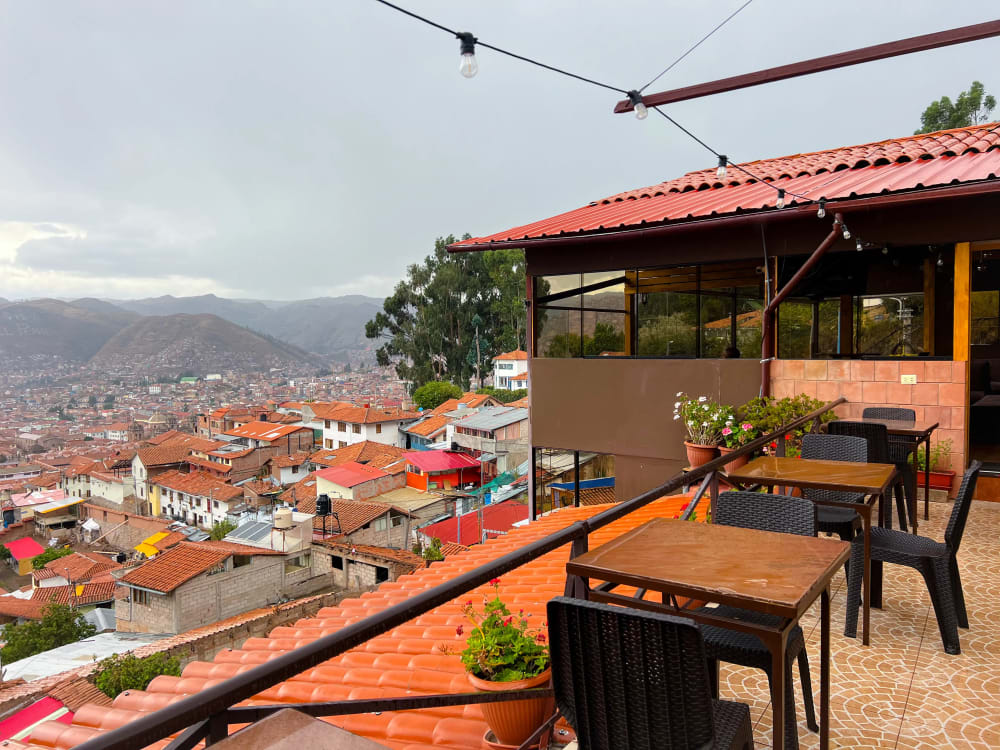
Sancris Restobar Mirador
Beyond the City: Day Trips From Cusco
For popular day trips from Cusco, there are plenty of tour companies around the city (particularly around Cusco Main Square or on Avenida El Sol) that have in-person next-day booking, but it's definitely recommended book in advance especially since these trips are so popular. You can get there on your own (and I'll explain how) but it's easier and hassle-free to go with a tour! GetYourGuide and Viator have lots of day trip packages from Cusco if you want to plan ahead.
Rainbow Mountain
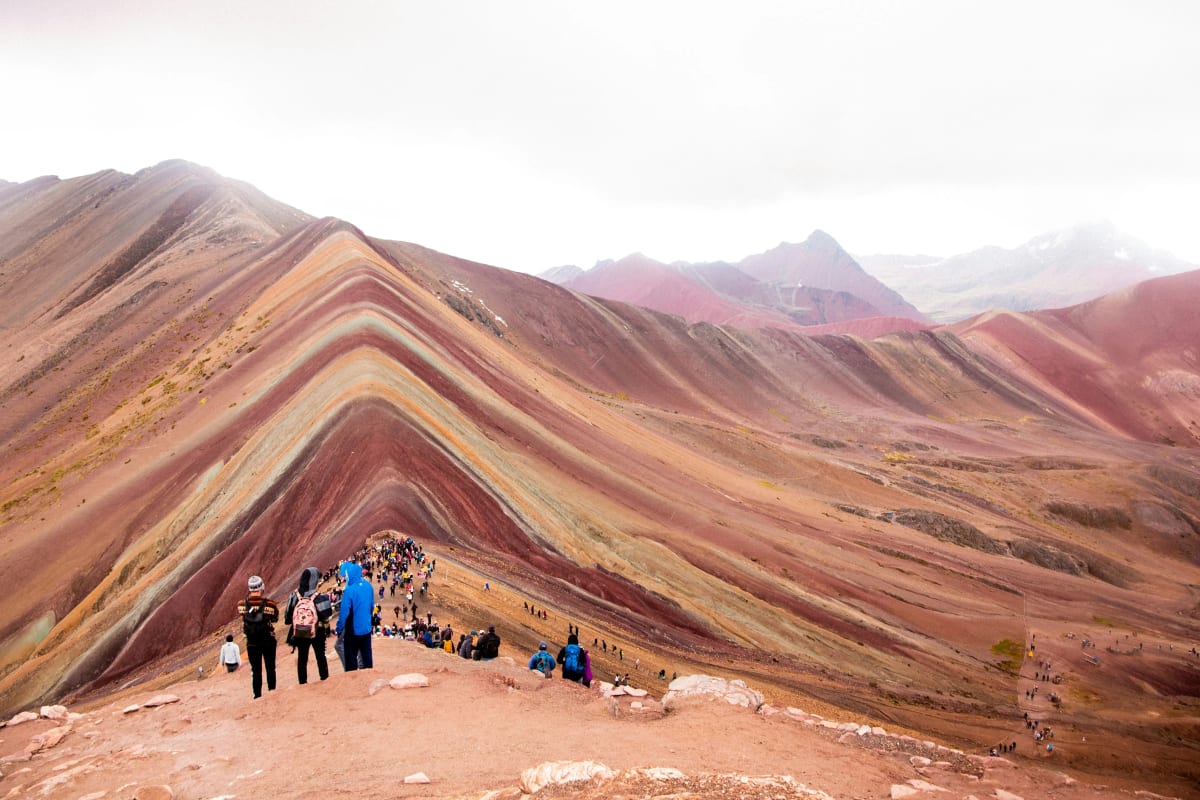
Vinicunca Mountain—Photo by Alvaro Palacios
Rainbow Mountain is the most popular day trip from Cusco. The mountain is a stunning, high-altitude geological formation in the Peruvian Andes known for its vibrant red, yellow, green, and white stripes. It displays these colors due to its unique mineral composition combined with weathering over millions of years. It had been hidden under thick snow and ice for literally centuries, but when the glacier melted around 2013-2015 it became visible and quickly turned into a major tourist attraction!
There is actually more than one rainbow mountain in the region: Vinicunca—also called Montaña de los 7 Colores—is the most popular and the one you likely have on your Peru bucket list. The other ones are:
- Palcoyo: Often called the "alternative" Rainbow Mountain. Lower in altitude, easier to hike up to, & less crowded
- Pallay Punchu: A sharp, jagged, rainbow-colored ridge overlooking a lake
- Wilcacunca: A smaller colored hill in the region, often called the "Mountain of Love"
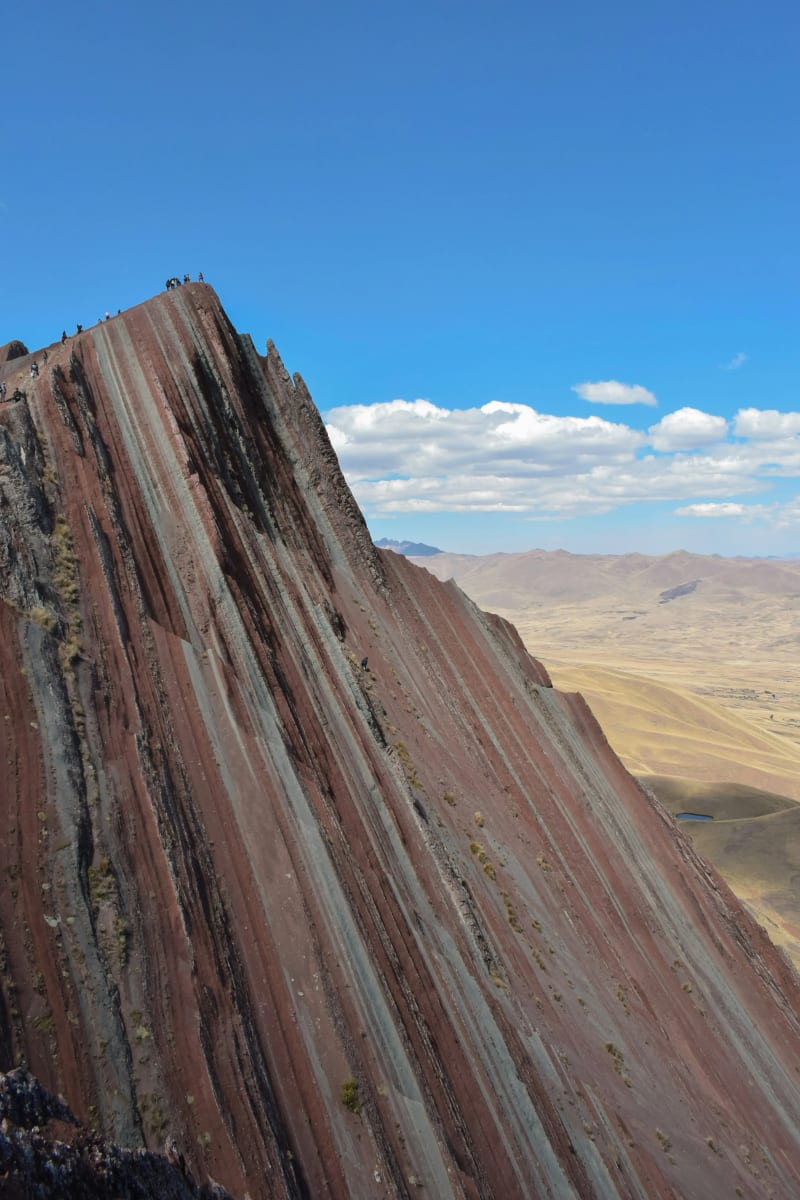
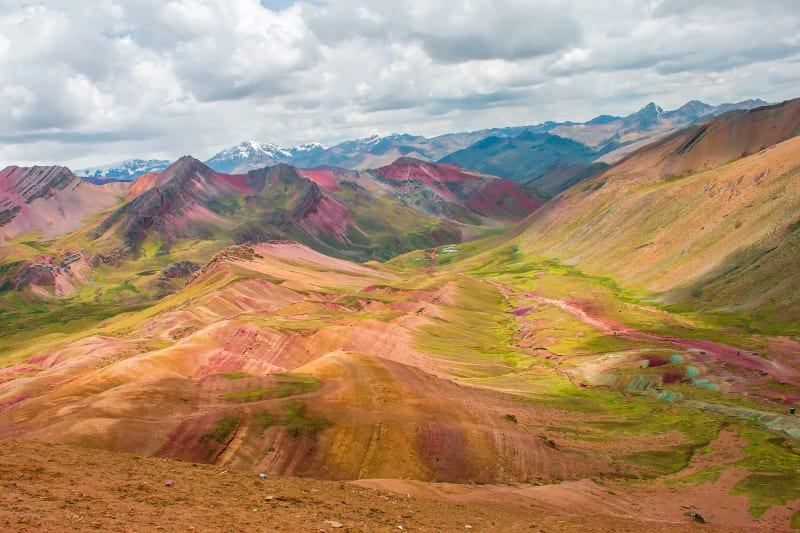
(L) Pallay Punchu—Photo by Ivan Vicente (R) Pallacoyo—Photo by Michael Busch
If you visit Vinicunca, keep in mind that it sits at around 17,000 feet above sea level (almost 6,000 feet higher than Cusco), so even if you don’t feel the altitude too much in Cusco, you are sure to feel it there. You don’t want to go the day—or even the day after—you arrive in Cusco. The trek only takes around 1.5-2 hours to get up but is pretty challenging due to the thin air, and the last ~800m are by far the hardest.
It's about a 7-8km round trip hike depending on which trailhead you start from. The most recommended and easiest trailhead is Phulawasipata, where most of the trail is a gradual and steady incline and the final stretch is a steep climb on loose gravel, while Kayrawiri is the "original route" and is longer, quieter, and steeper.
Tip: Local guides offer horse rentals for tourists who struggle with the steep, high-altitude climb... I recommend not doing this. If you can't hike up yourself, visit one of the hidden gems like Palcoyo that are easier to get to. It's not fair to the horses and these animals should not be exploited to get unfit tourists up the mountain.
The mountains are 3-4 hours from Cusco. A tour is the easiest, most hassle-free way to get there. Most leave the city around 3-4am, but you can definitely find some that leave around 8am (though the earliest ones aim to beat the crowds). If you want to go on your own for more freedom, you can, but it's not widely recommended and is notoriously stressful. To rent a car, it's ~$45-125 per day in Cusco, but most rental agreements in Peru prohibit driving on unpaved roads—the drive is 3-3.5 hrs each way and the final hour involves narrow, winding dirt roads with steep drop-offs and no guardrails. For public transport, there are no direct buses to the trailhead, and if you don't do it exactly right you may even end up paying more than what you would have for a guided tour. If you really want to take public transportation, here's how:
Warning: If you DIY the trip, you must book your taxi as a round-trip. There is no cell service at the trailhead and almost no chance of finding an empty taxi waiting to take people back. You pay one flat fee for the driver to take you there, wait 3–4 hours while you hike, and then drive you back to town.
Humantay Lake
One of the most beautiful natural sites in Peru, Humantay Lake is about 3 hours from Cusco and sits up in the Andes mountains at around 4,200 meters (13,779 feet) above sea level—this is around 1,000 meters lower than Vinicunca, which is very significant when it comes to both your ability to breathe and chances of altitude sickness. Still, the trek to Humantay Lake is very steep, so even though it's technically shorter than Vinicunca it's still very challenging. It takes around 1-2 hours to hike up (2-4 hrs and 4–5 km round trip).
The glacial lake has turquoise waters even prettier in person, and is backed by snowcapped mountains. Its vibrant color is created by sunlight scattering off "glacial flour" which are minerals ground by the moving ice when the Humantay and Salkantay glaciers melted to form the lake.
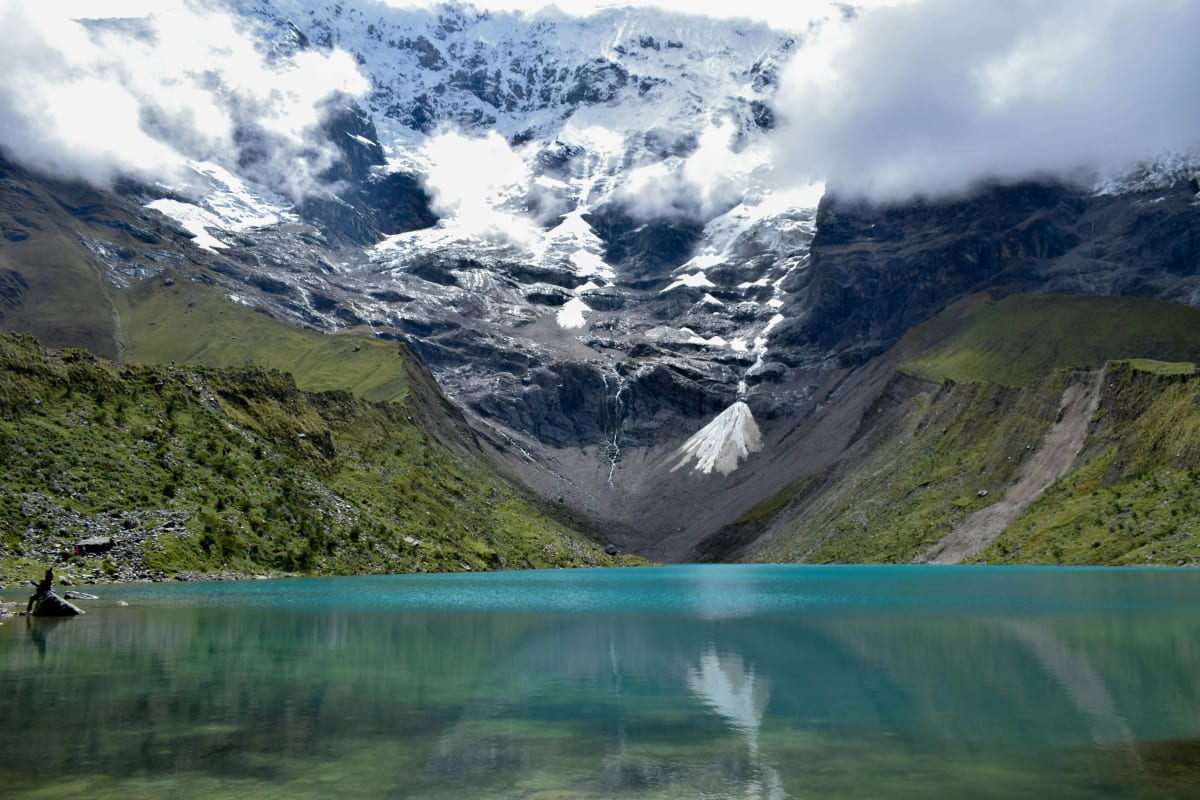
Humantay Lake—Photo by Ivan Vicente
This lake is very sacred in Peru, and comes with many legends. In one, it is said that there were two brothers, Salkantay and Ausangate, who went on a journey to find food in order to save the people of Cusco from famine. Ausangate went south, Salkantay north. Both found food, but while Salkantay was in the jungle, he also found love, falling into a deep romance with the goddess Verónica (Apu Verónica). This love was forbidden, as both brothers had a sacred duty to return home and protect their people.
As he was forced to leave her, his heart was broken. When they got back to Cusco the gods required the brothers to turn into mountains to act as eternal protectors of the city. Salkantay was so devastated at being pulled away from Verónica that he remained in a state of perpetual grief, so even as he turned into a mountain he couldn't stop weeping. His tears pooled at the base of his snowy peak, creating the Humantay Lake.
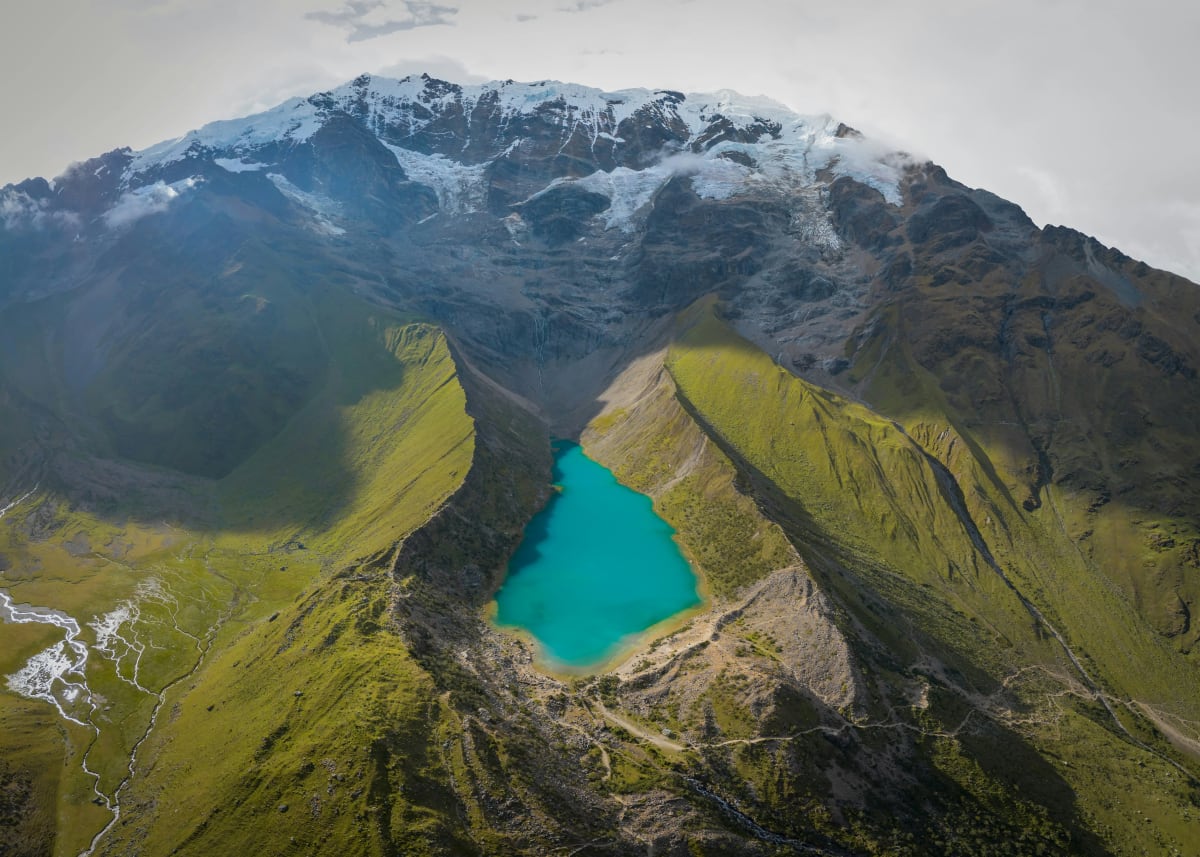
Humantay Lake—Photo by Mayur Arvind
Pachamama (Mother Earth) is believed to reside in Humantay's waters. When you arrive you can participate in a ceremony to honor her: it's traditional to choose a small stone from the trail during your hike and carry it with you as a symbol of gratitude for your safety and the natural beauty she has created. Along the water you'll find mounds of stacked stones known as apachetas, and the higher observation points overlooking the lake you'll find several spiritual cairns where ceremonies also take place. If you're with a guide or a Shaman, they may lead you to a specific spot to place your stone alongside other offerings like coca leaves (k'intu) or small splashes of wine as a tribute to Pachamama.
To get here, the easiest and best option is to go via organized tour for ~$25–$50 USD; this often includes hotel pickup and a meal, typically departing in the super early morning hours. If you DIY it, you can avoid the tour crowds by leaving a bit later in the day, but it's definitely more hassle. The final hour of the drive from Cusco is in even worse condition than the Rainbow Mountain roads. The paved road ends in Mollepata. If you drive, I would park in Mollepata and take a colectivo or private taxi for the final stretch to Soraypampa, where the trailhead is. For public transport, take a bus in Cusco from the Arcopata Terminal to Mollepata, then switch to local transport to Soraypampa.
Again, please don't rent a horse. Respect Pachamama and all her beings.
Cusco is a city that stays with you long after you’ve caught your breath—literally and metaphorically. I hope this guide helps you navigate the high-altitude magic of the Imperial City! Ready for the next leg of your Peru trip? Check out my other guides below:
- Planning your visit to Machu Picchu? Read my breakdown of Train Tickets and the New Entry Circuits!
- Heading to the coast? Here are the Top Things to do in Lima!