What You'll Find in This Post
Quick Facts About Marseille
- Location: South of France, Provence-Alpes-Côte d'Azur
- Transport: Gare Saint-Charles (intercity) & metro, trams, buses, or electric scooters (intracity)
- History: France's oldest city, founded around 600 BC by Greek settlers
- Best Time: Spring & Summer for the best beach weather and most vibrant nightlife
- Phone Data: Maya Mobile eSIM - always reliable during my travels!
Pro Tip: Use the Marseille City Pass for unlimited public transport and free entry to museums & other activities—it's a huge time and money saver!
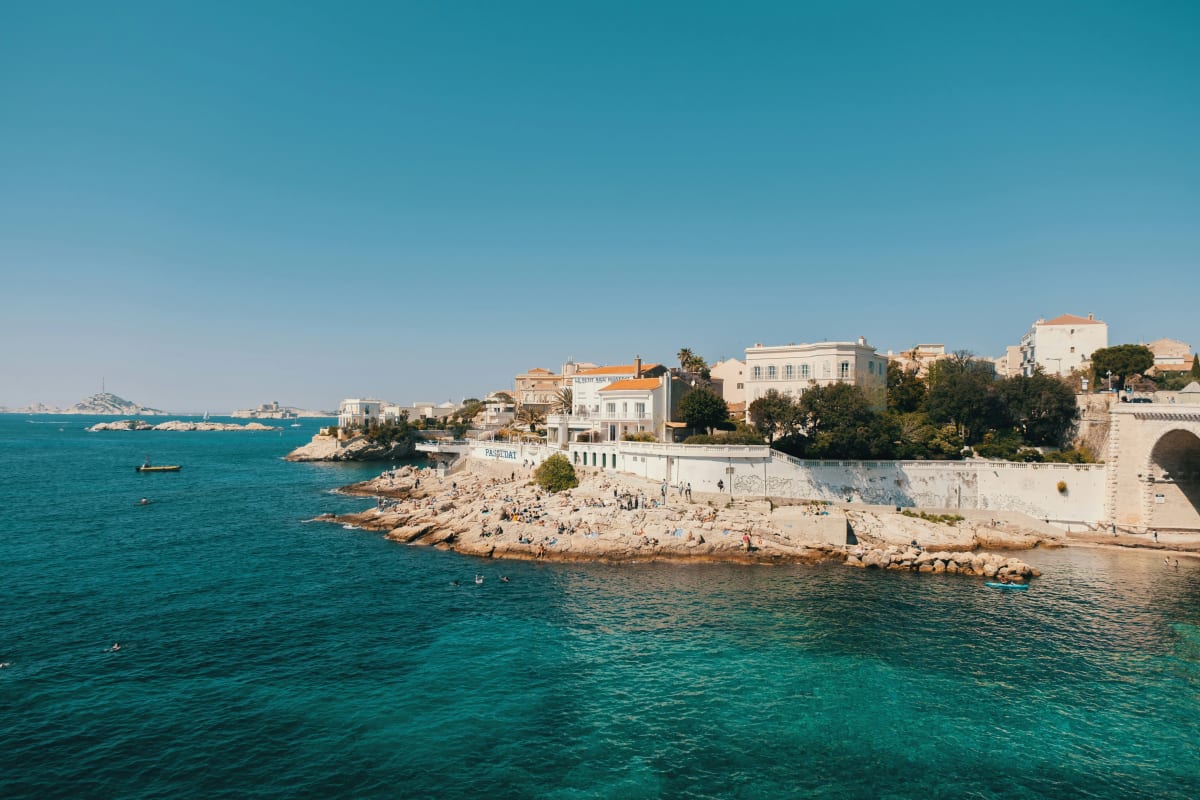
Photo by Najib Chari
Disclaimer: This post contains affiliate links. If you book or buy through these links, I may earn a small commission at no extra cost to you. Thank you for supporting my blog!
The city of Marseille, nestled along the sun-drenched shores of the South of France, holds a special place in my heart! It's actually France's oldest city—founded around 600 BC by Greek settlers from Phocaea—and it's the second largest city in the country behind Paris. Today it's a lively, bustling port in with a deep history, multicultural energy, and Mediterranean charm.
I spent five weeks exploring the city, and it really came to feel like home. There are endless things to do in Marseille; whether you're looking for a lazy day at a local beach, sightseeing at historical hotspots, or seeking out local nightlife, you'll be delivered a magical summer escape.
Check out my Marseille Viator shop to book the BEST tours & activities for an incredible summer in the South of France! 🇫🇷🌊☀️
Getting Around Marseille
Intercity Travel
- Gare Saint-Charles: This is the main hub connecting Marseille to the rest of France. You can get to Paris in just 3.5 hours via the high-speed TGV, Nice in about 3 hours, and Avignon in just 1. Pro Tip: Book in advance on SNCF’s website for significantly cheaper fares
- Marseille Provence Airport (MRS): Located about 27 km northwest of the city, it's the gateway for flying in.
- Navette Shuttle (Line 91): Runs every 10-15 minutes directly to Gare Saint-Charles (25-30 min, €10)
- Taxis & Private Transfers: Quick but expensive, usually €50-70 depending on traffic and the time of day
Intracity Travel (Local Transport)
If you plan on moving around a lot, it's so worth it to get the Marseille City Pass (24, 48 or 72 hours, €39-55). You get unlimited rides (metro, tram, and buses) plus free entry or heavy discounts on major museums. This saved us a LOT of money. They even include some free guided tours, so if you do purchase one, look closely at the active listings do you don't miss out on anything!
- Metro: Two lines (M1 and M2) link the top spots like Vieux Port (the Old Port), the train station, and the Prado beaches. Runs 5:00 AM - 12:30 AM, ~€2/ticket
- Trams: Three lines (T1-T3) cover key neighborhoods like Canebière and Joliette. They use the same tickets as the metro
- Buses: Extensive network that reaches outer areas the metros don't go (like the Calanques national park trailhead or up to Notre Dame de la Gard)
- Electric Scooters: My go-to! Use apps like Lime (Uber) or Voi (~€1.00 to unlock + €0.20-0.30/min) for fun rides. This was the best thing we did to get around locally
- Walking: The heart of the city is incredibly pedestrian-friendly, especially around Vieux Port and Le Panier
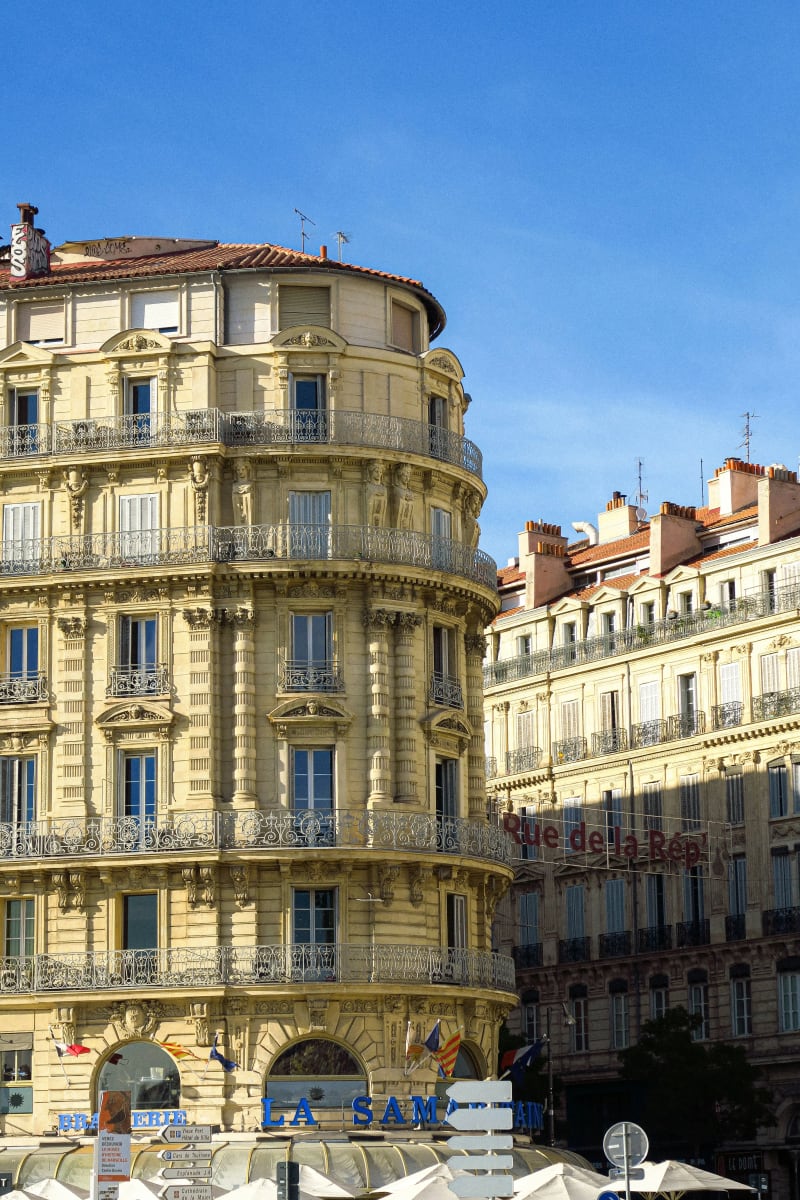
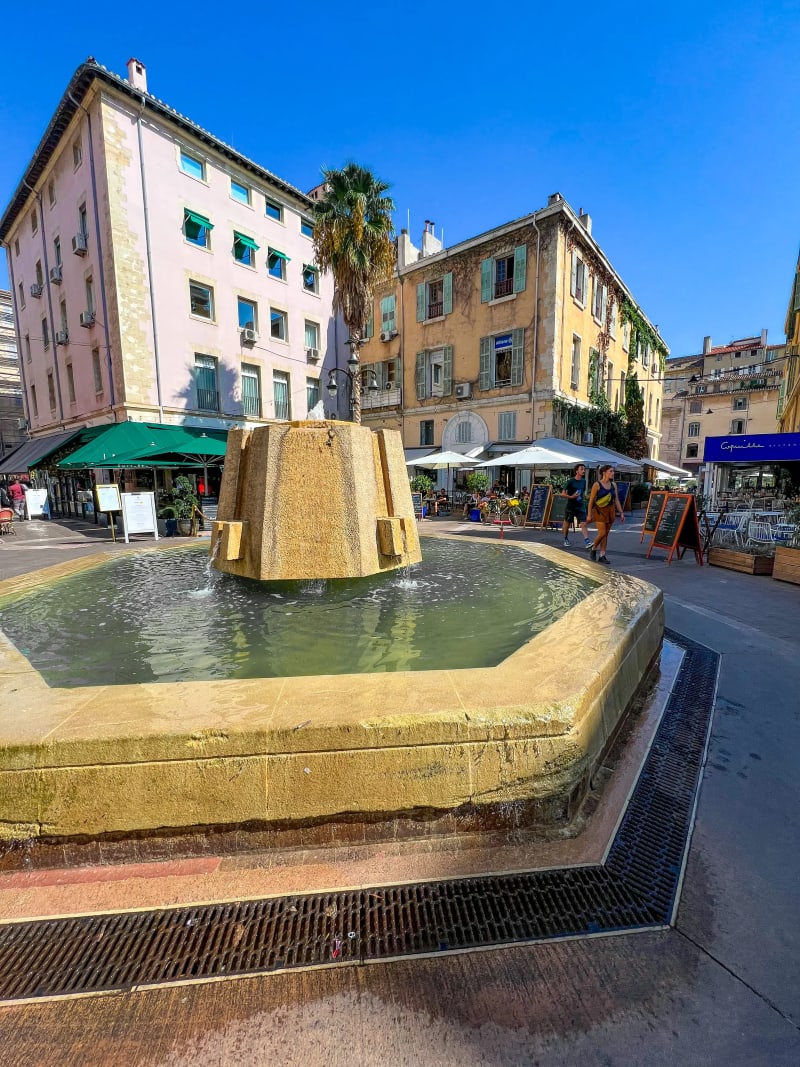
(L) La Samaritaine building at the Vieux Port - Photo by JAWZ (R) Fontaine de la Place Thiars
Top Things to do in Marseille: A Complete Travel Guide
Marseille is a city that is often overlooked when compared to the more mainstream places in the South of France like Cannes or Saint-Tropez. But Marseille has such a unique and raw character, so different than the flashier destinations, that I can't help but to recommend visiting. Whether you spend just a few days or a whole week here, I promise you'll enjoy every minute. From the salty air of the Mediterranean to the roar of the football stadium, here's how to spend your time in France's oldest city.
Coastal Escapes: Swim & Snorkel
With its position on the Mediterranean, life in Marseille revolves around the water. Whether you want a sandy spot for a family picnic or a secret rocky cove for snorkeling, the city’s coastline has a perfect slice of sea for everyone.
As you explore Marseille’s rugged coastline, you’ll notice locals claiming a spot on the rocks pretty much everywhere to swim, sunbathe, and open a bottle of wine with friends. It doesn't even have to be an official "spot"—if you can navigate down to a rock by the water, it's perfect. No, it's not always comfy, but it's raw and private! Make sure you venture beyond the main beaches to soak in the Mediterranean vibes—bring a sense of adventure, be safe, and find your own gem!
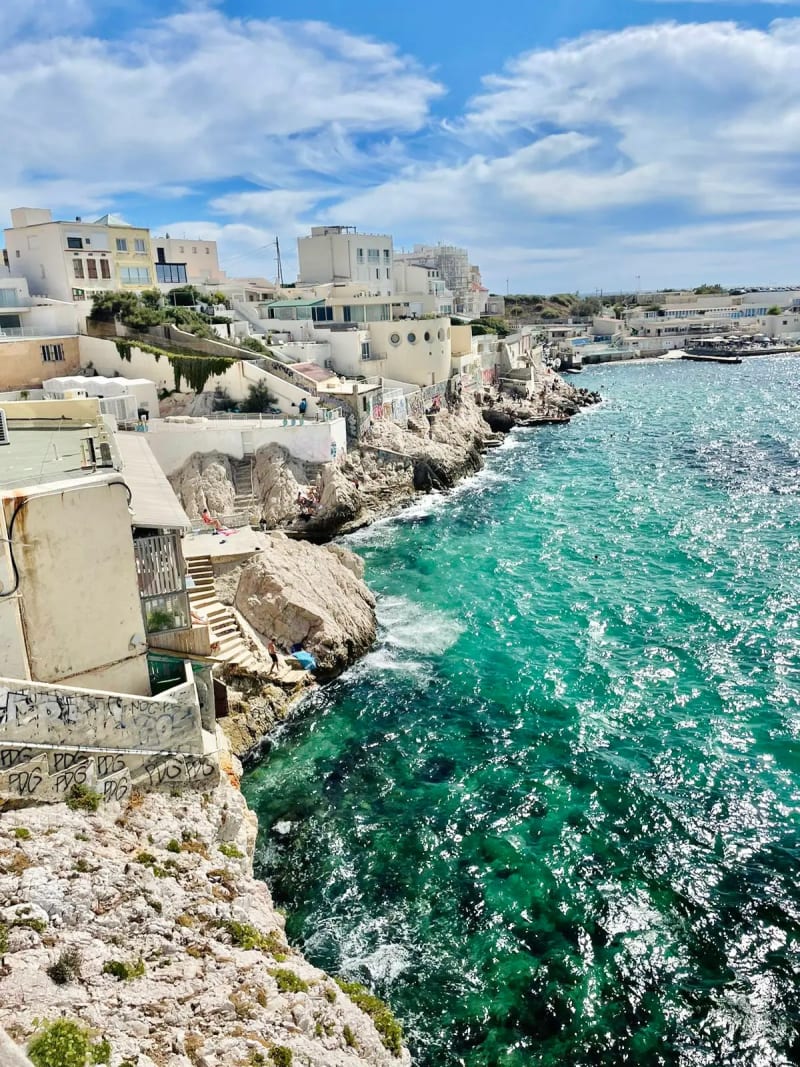
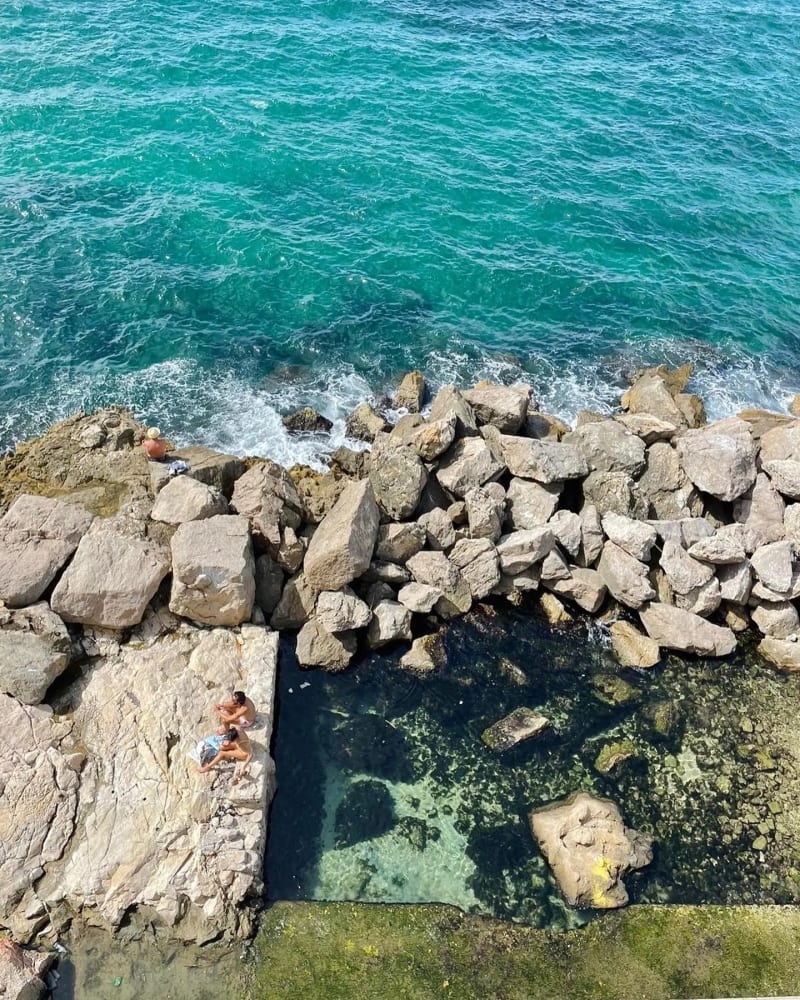
Marseille's rocky coastline
That being said, here are my favorite spots you can actually put into a map!
Plage des Catalans
1 Rue des Catalans (20-min walk or 7-min e-scooter ride from Vieux Port)
Catalans is a smaller sand beach tucked into the rocky coastline. It's a quick electric scooter ride from the center, with a dedicated scooter parking zone just a block away. It's intimate and lively, and because it's so close to the city center, it's a local favorite where you can sunbathe on the rocks alongside the residents and feel the true authenticity of Marseille.
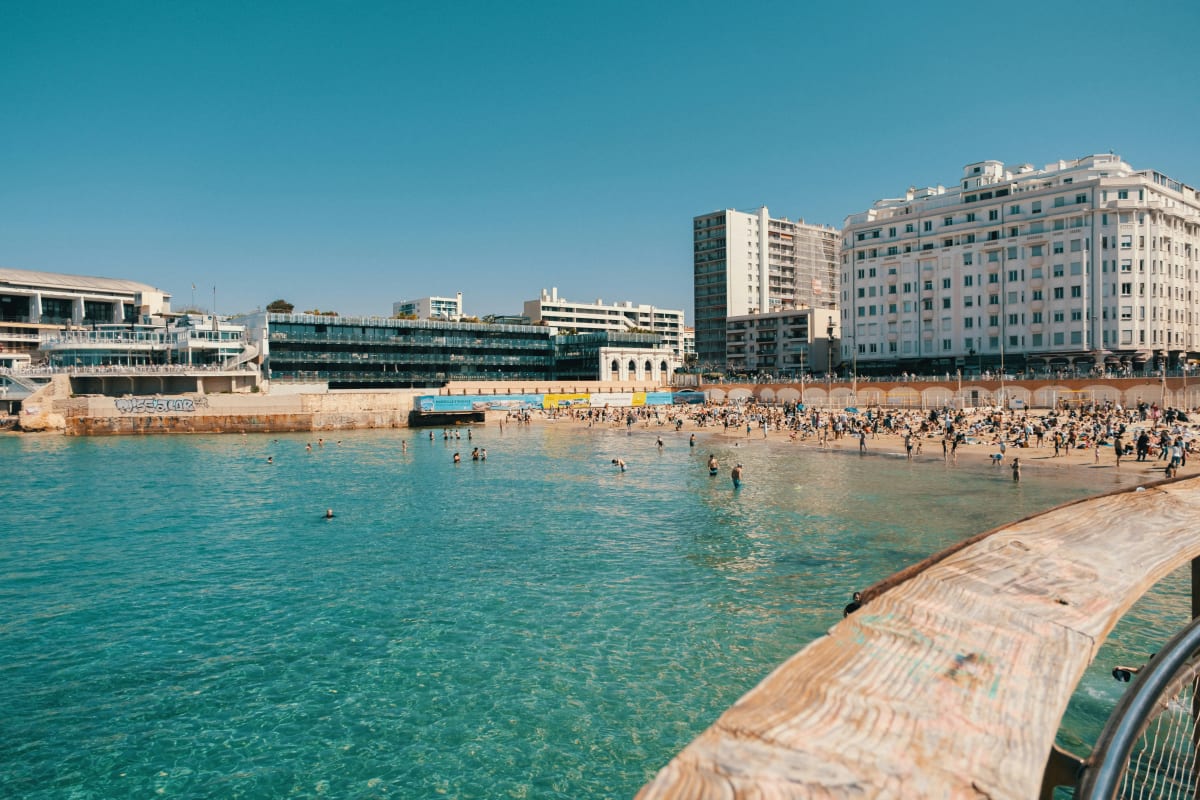
Photo by Najib Chari
The best snorkeling is along the rocky edges to the left of the pier. You can spot colorful Mediterranean fish, beautiful sea shells, and the occasional swarm of jellyfish which really hurt if you get stung, so look out! Once when we went, there must have been hundreds of them—an abnormality for sure—but I swam out to snorkel anyway because I thought it would be cool to see them underwater. I got stung a lot (obviously) and the stings left marks, which honestly looked pretty cool because they were in the shape of tentacles, but long story short: Don't do this. Lol! If you don't have snorkeling gear when you arrive, no worries! There's a shop right across the street that sells all kinds of beach accessories.
Plage du Prado
Avenue Pierre Mendès France (Metro Line M2 to Rond-Point du Prado, then Bus 19 or 83 to the beach)
If you're looking for wide-open spaces, head to the 8th arrondissement. Prado Beach is a massive, family-friendly stretch of sand and pebbles with calm waters. It's part of the Plages du Prado complex, which is a series of interconnected beaches spanning about 3.5 km.
The complex includes Plage Borély (slightly narrower, popular for windsurfing), Plage de l’Huveaune (quieter, near the river mouth), Plage de la Vieille Chapelle (smaller, excellent snorkeling along rocky breakwaters), and Plage du Prado itself, which is the most central and iconic. It has a lively atmosphere with lots of nearby cafés, beach volleyball courts, and the grassy lawns of 'Parc Borély' for post-swim picnics. In the summer, you can catch a ride on the Grande Roue de Marseille (the giant ferris wheel) for panoramic views across the coast.
Port de Malmousque (The Hidden Gem)
Anse de Malmousque (25 min walk from Vieux Port)
A lesser-known gem, this was my absolute favorite place when I wanted to feel like we had our own secret piece of the Mediterranean away from main tourist beaches. Malmousque is a picturesque, quiet harbor tucked away in the 7th arrondissement. To find the "spot", just walk along the right side of the port towards the coast and claim a rock for your towel! It's known for its coves and blue waters, best for a quiet beach day with a laid-back vibe.
Pro Tip: Wear your shoes to get here—these rocks can be a little slippery and hurt to walk barefoot on
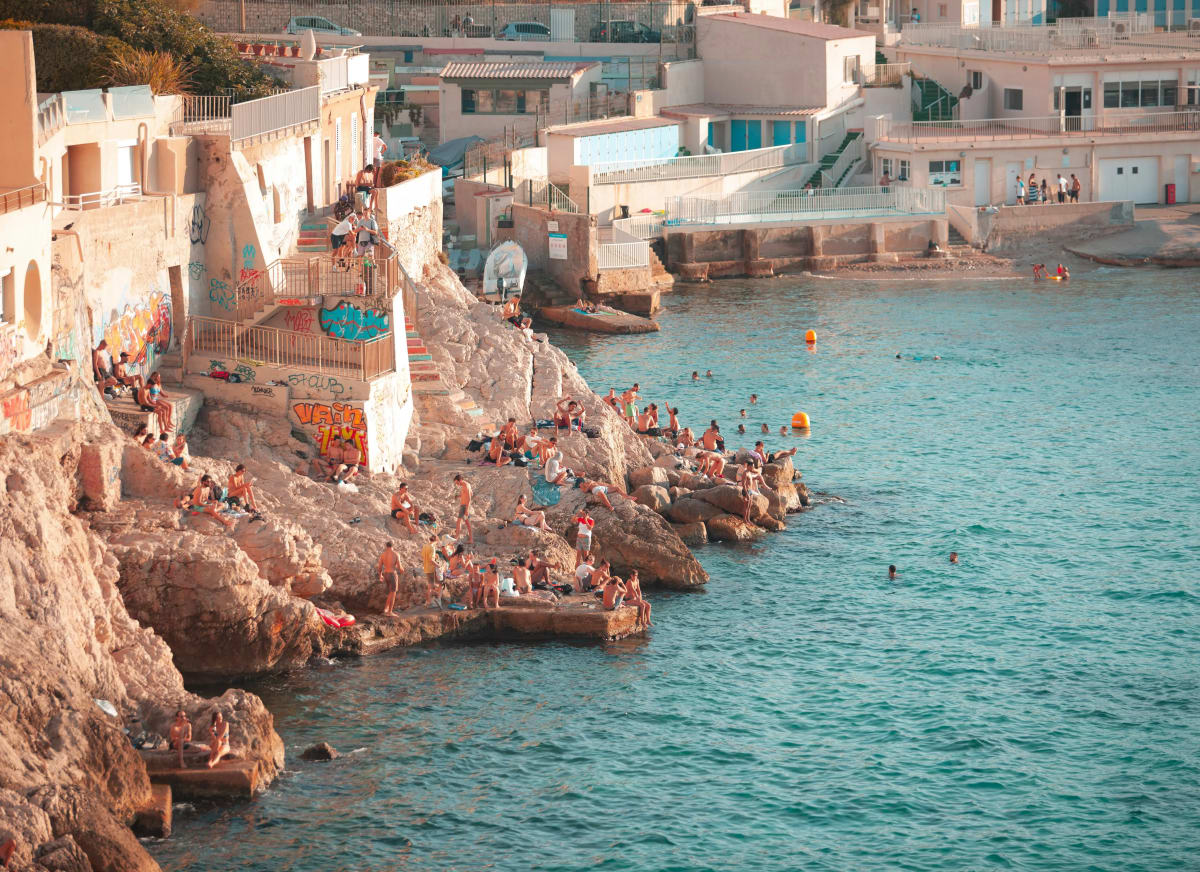
Sunbathers on the rocks of Malmousque - Photo by Elie Fitoussi
Vallon des Auffes
Rue du Vallon des Auffes (Bus 83 from Vieux Port directly to the bridge)
If you want to see the most postcard-perfect spot in Marseille, head to Vallon des Auffes. It’s a tiny old fishing village hidden right under the arches of the main coastal road. Watching the sunset here with a pizza from Chez Jeannot while the local fishermen dock their colorful wooden boats is a peak Marseille experience.
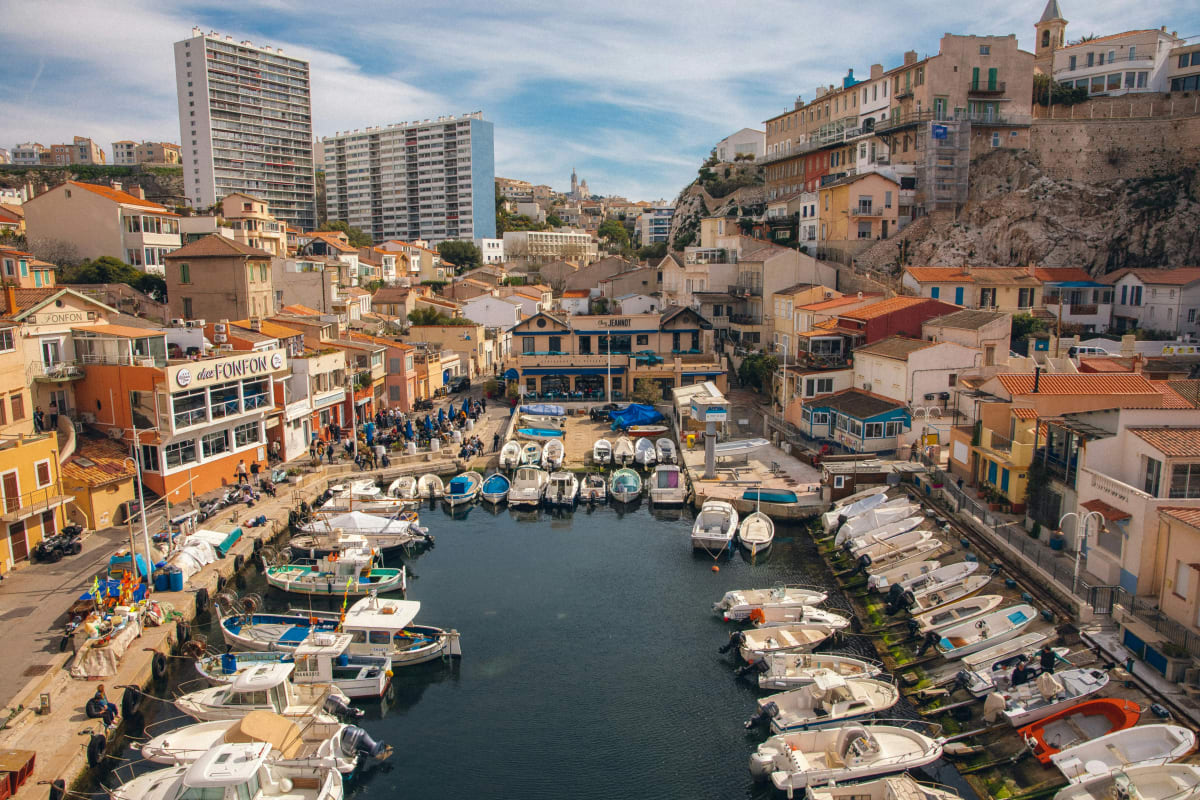
Photo by Boris Hadjur
Day Trip to Calanques National Park
Marseille Side (Luminy Trailhead): Take Bus B1 from Castellane directly to the campus stop.
Cassis Side (Port-Miou Trailhead): Take the TER train line from Gare Saint-Charles to Cassis, then a quick shuttle or 30-min walk to the trailhead.
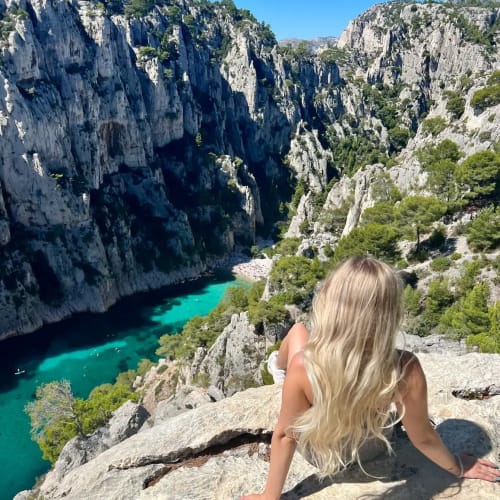
If you only do one excursion outside the city center, make it a Calanques National Park day trip. This is easily one of the most breathtaking natural wonders in the entire South of France. This is one of the best places in all of the South of France. Calanques are dramatic limestone cliffs that drop into narrow, bright-blue inlets, and this national park has over 20 of them. Some are only accessible by boat or kayak, while others require super scenic hiking. Along with your hiking gear, don't forget your swimsuit and snorkel—you'll want it the second you see the water!
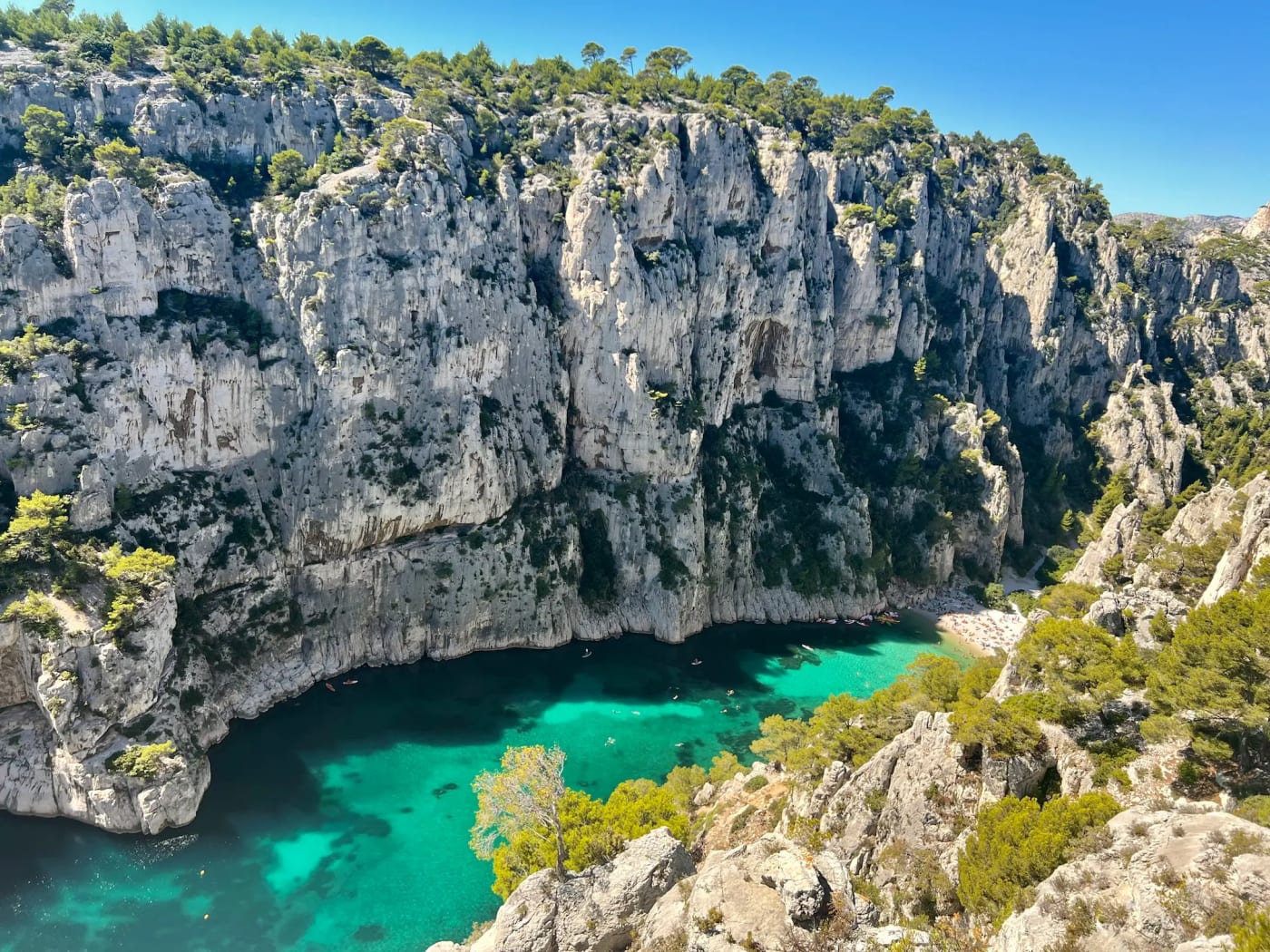
Calanques National Park
Note: During peak summer/high season, you may need to reserve a (free) slot online to enter the most popular areas (like Sugiton). Check the official My Calanques app before you leave! It also gives real-time alerts if trails are closed due to forest fire risks, which happens often in July and August!
For the full breakdown on trail, best swim spots, and what to pack, check out my hiking guide to the Calanques!
The Icon of Marseille: Notre Dame de la Garde
Rue Fort du Sanctuaire (Bus Line 60)
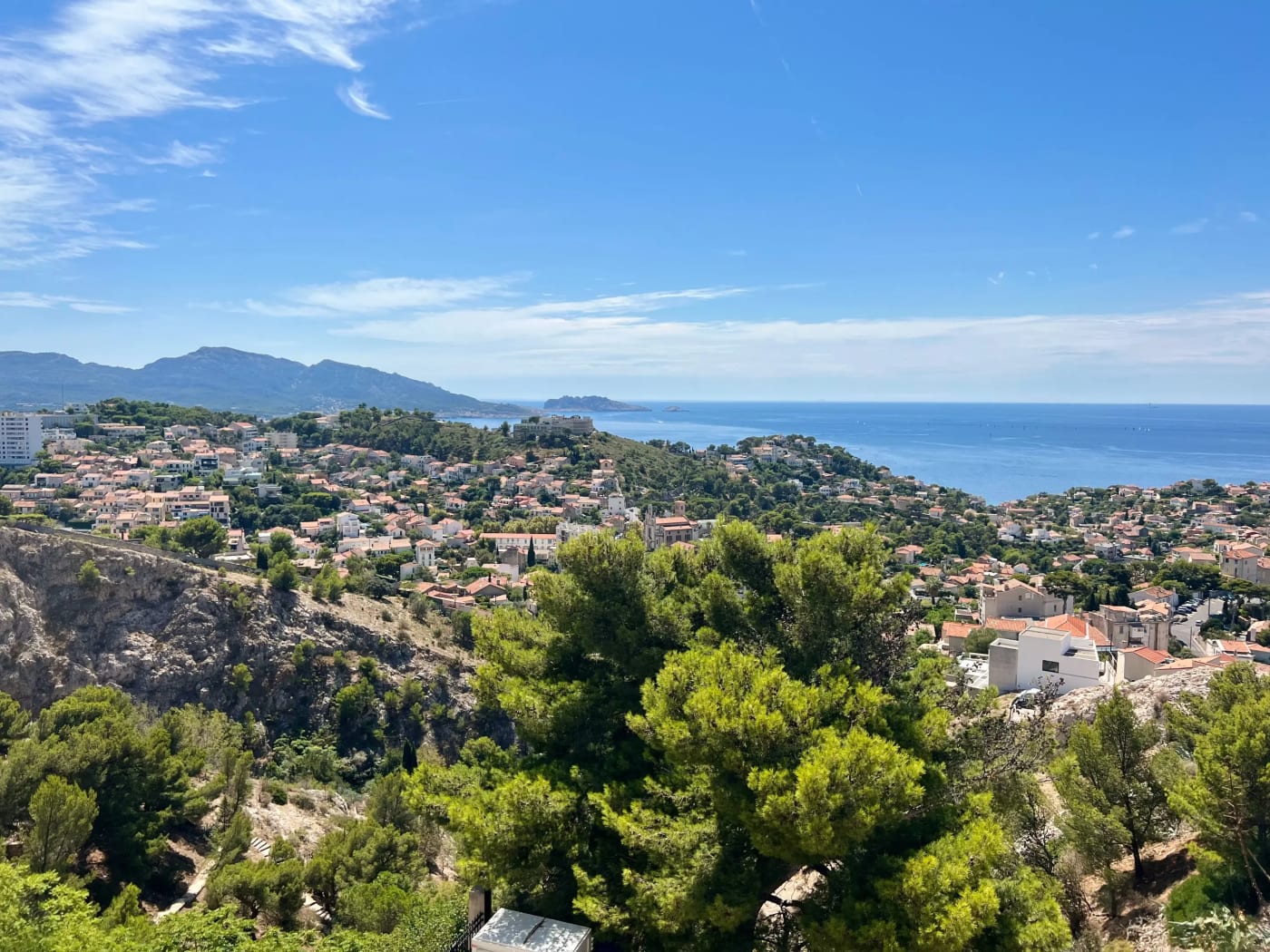
View from Notre Dame de la Garde
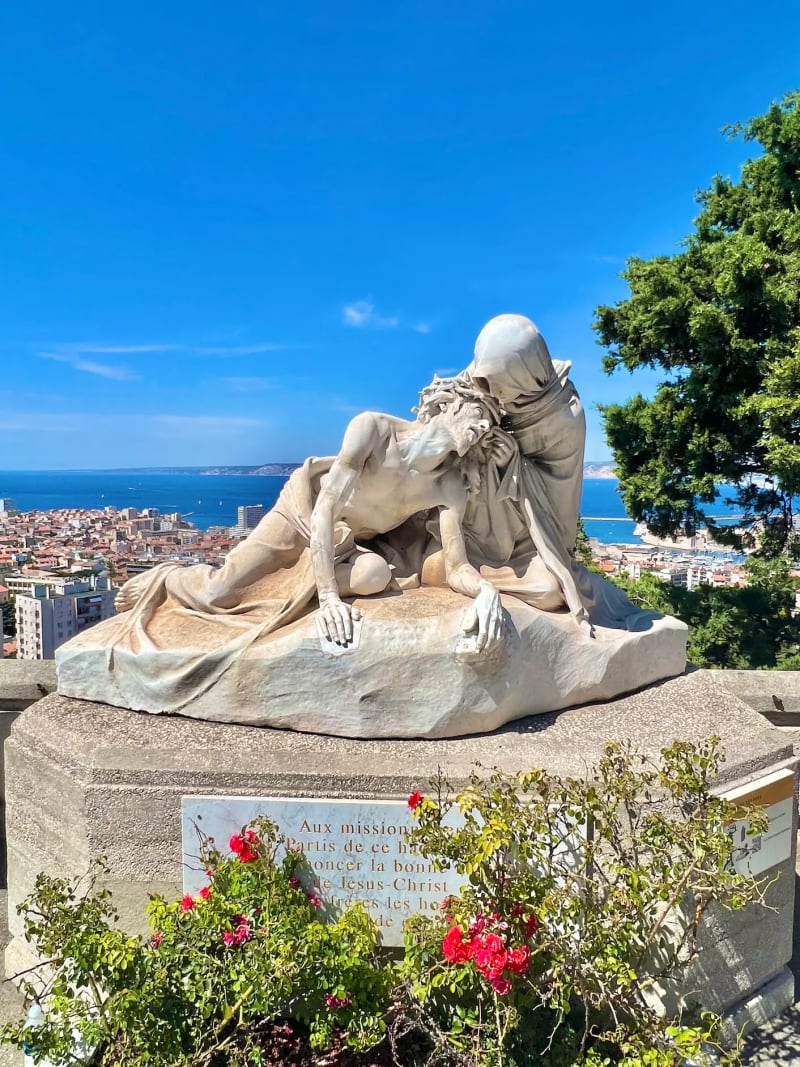
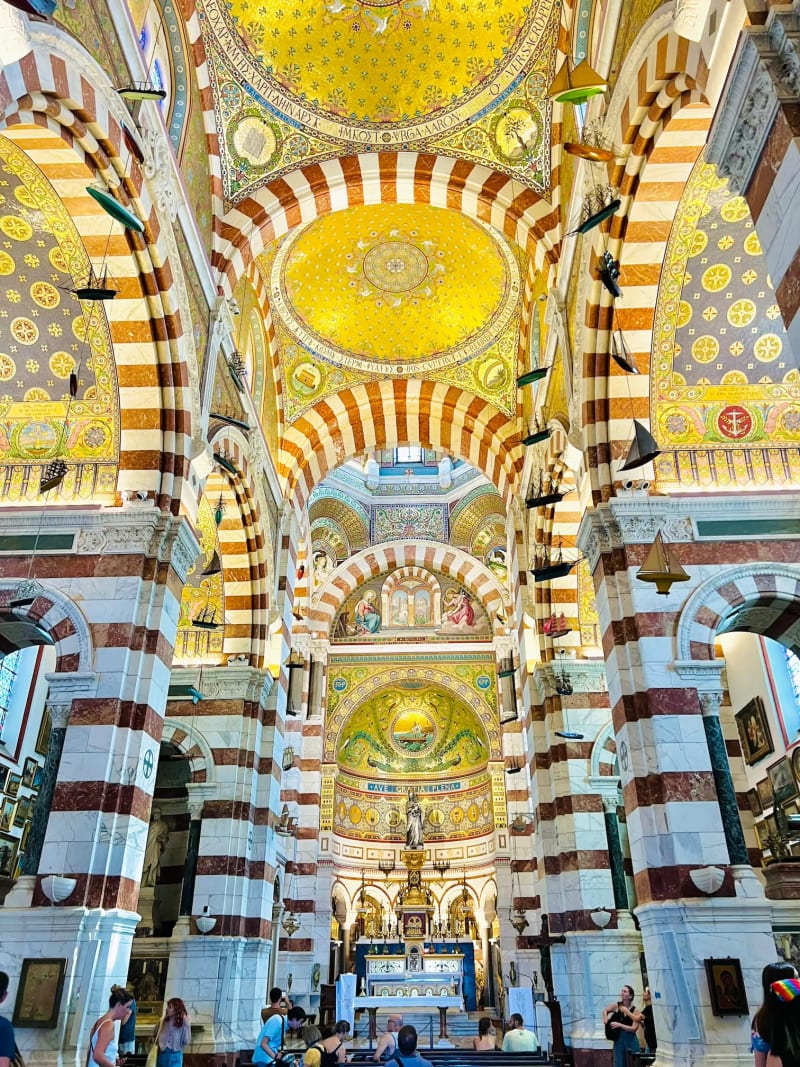
Perched at the highest point in the whole city, "La Bonne Mère" (The Good Mother) watches over Marseille. It's a stunning Neo-Byzantine basilica with panoramic views of the sea, small offshore islands, and surrounding mountains. You can see it from miles away, including from the Vieux Port. Exploring the church and its grounds is free! The interior is covered in gold mosaics, and you'll see model ships hanging from the ceiling—historic offerings from sailors for safe passage as they crossed the Mediterranean.
You can tecnhically walk up from the city center in about 25 minutes, but it's all uphill and really steep. It's super scenic walk along pretty streets and past small parks, but really, if I could do it again, I'd take the bus—Marseille summer sun is no joke. However you get there, there's a water fountain refill spot on the top of the hill that you can use to stay hydrated.
The Heart of the City: Vieux Port of Marseille
The Old Port (Vieux Port) is where everyone meets. It's a huge marina lined with waterfront shops, seafood restaurants, and bars. Walking along the docks, you'll pass lines of cute local market stalls selling classic regional goods like soap, handmade jewelry, and lavender brought in from the nearby fields of Provence. I got lots of lavender bar soap here and they smelled and felt so good (and combined two souvenirs in one!).
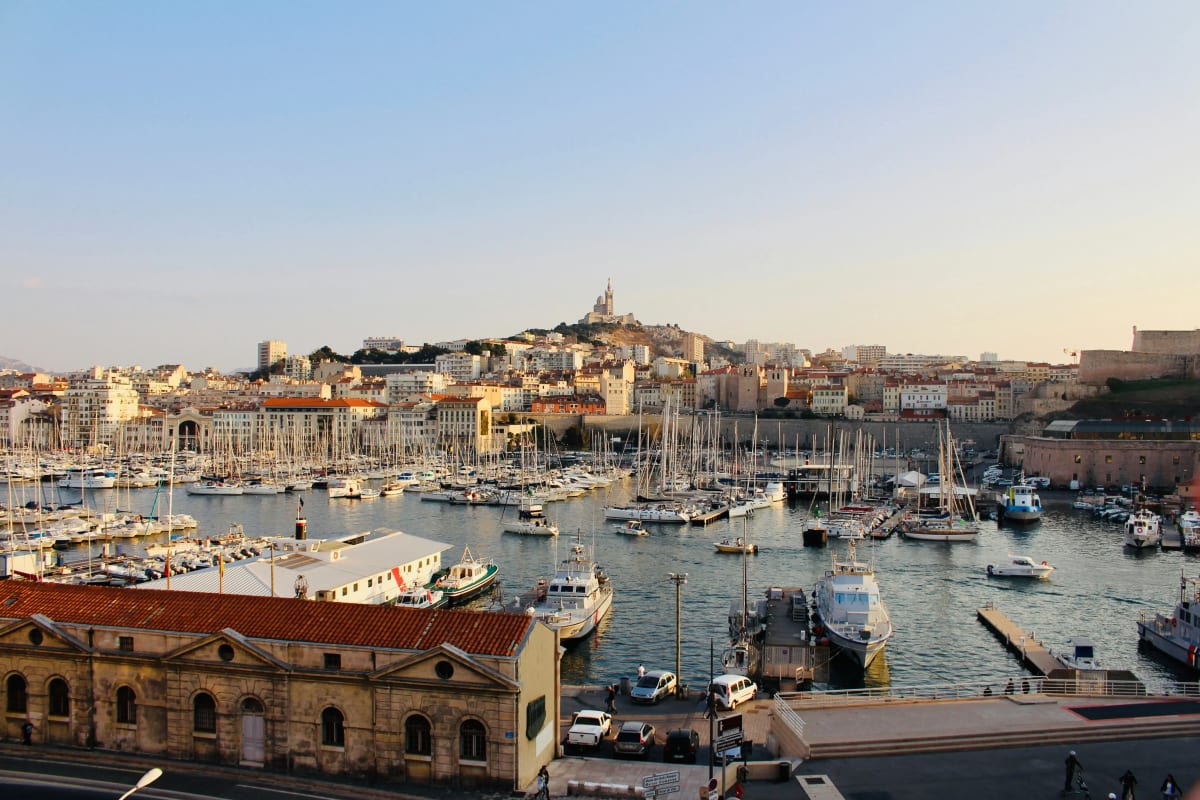
Vieux Port marina (You can see Notre Dame de la Garde at the top of the hill) - Photo by Elisa Schmidt
As the central transit spot for water transportation, you can catch water taxis and ferry boats to small nearby islands like Frioul, or even to Calanques National Park!
Be sure to walk under L'Ombrière near the main ferry terminal. You literally can't miss it—it's a massive mirrored canopy art installation where street performers, local musicians, and popup food vendors often are!

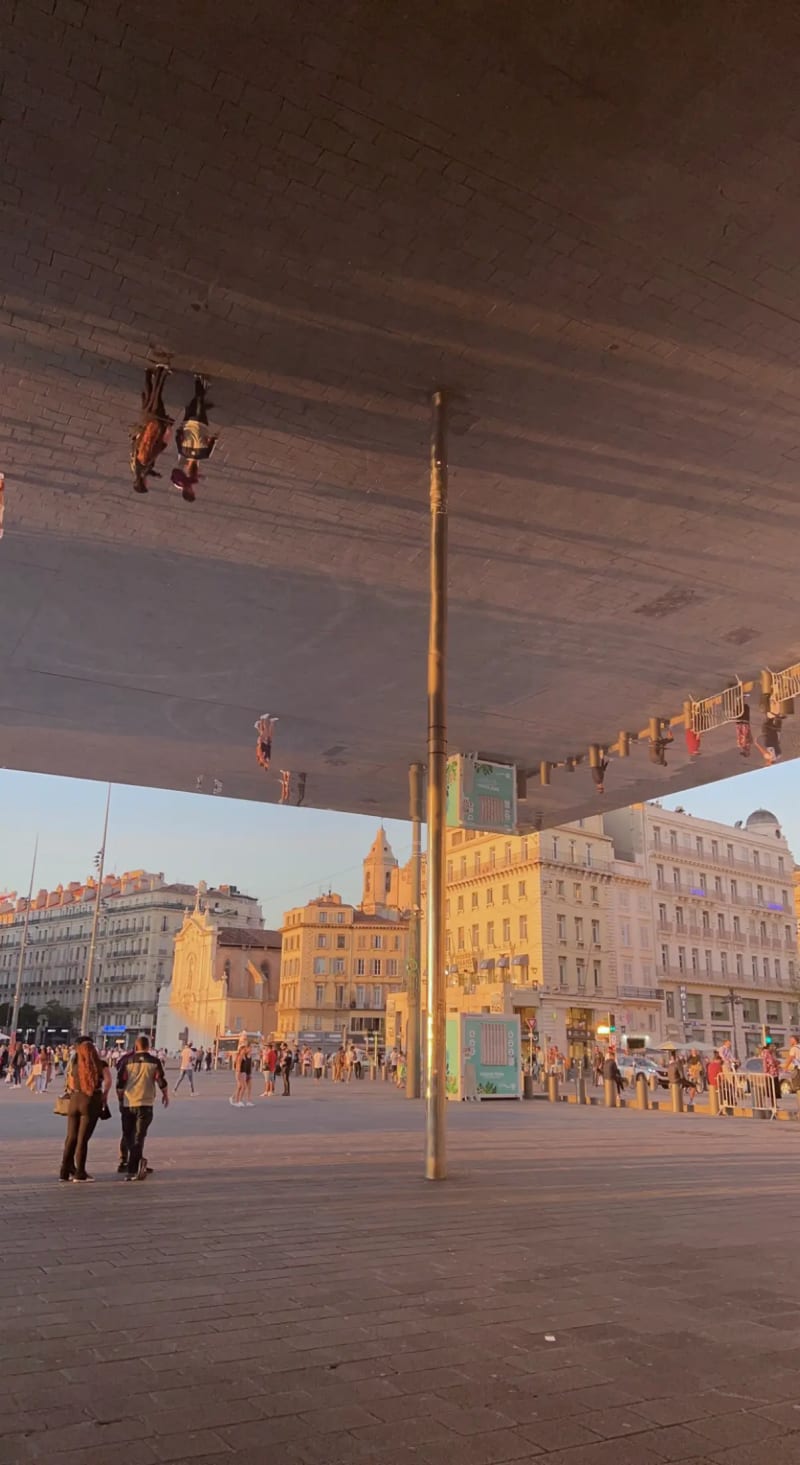
(L) Me in front of the marina (R) The L'Ombrière
Historic Marseille
These are the historic spots you have to visit in this area (according to yours truly):
- Fort Saint-Jean: Built in 1660, this fort has a wild history. Famously, Louis XIV had the cannons pointed at the city to discourage the locals from rebelling. It had lots of other uses, too, like a prison during the French revolution and a munitions storage facility during Nazi occupation. Today it's connected to the MuCEM museum and is free to wander—a really cool place to learn about Marseilles history
- Cathedral of the Major (La Major): A beautiful 19th-century Roman-Byzantine cathedral worthy of some quick admiring. If you walk from the Fort to the Cathedral, look out for the giant orange bear (among many others installations—Marseille is quite artsy!)
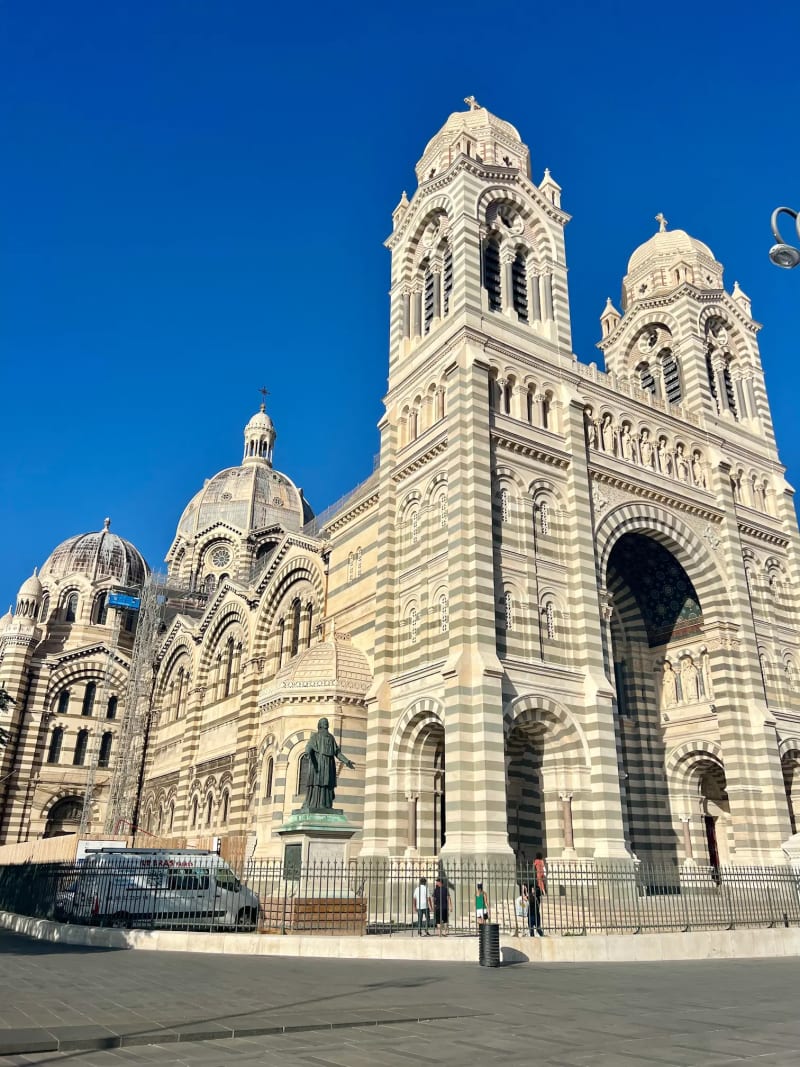
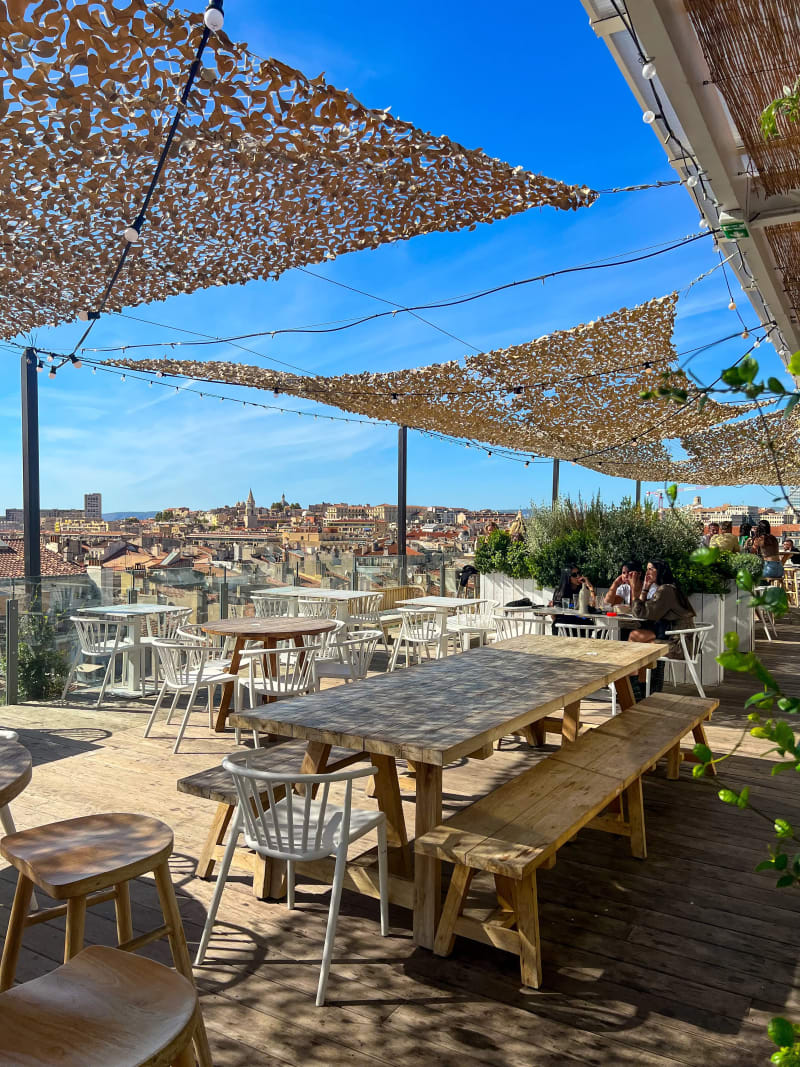
(L) La Major Cathedral (R) Ciel Rooftop
Vieux Port Nightlife
The old port has spots for every kind of person—quiet pubs, roof bars, dance clubs, and chill lounges. It is a perfect area for bar hopping and is always bustling. As for my personal recs, Bar de la Marine was featured in Love Actually and is the perfect spot for a pastis and people-watching, while bars like Le Dantès Skylounge and Ciel Rooftop are incredible rooftops with panoramic views.
Iconic Neighborhoods & Streets
Here are the neighborhoods you need to explore, and streets you have to walk down:
- Le Panier: Marseille's oldest historic neighborhood that feels like a colorful, sun-drenched Mediterranean village dropped into the city. It's famous for its timeless, old-world aesthetic: tightly packed vertical houses, terracotta potted plants, trailing ivy, hidden artisan workshops, and steep, narrow staircases. It's the best neighborhood for photography!
- Cours Julien: The absolute opposite of Le Panier, this is the boho-alt heart of Marseille. It's centered around a wide pedestrian square, but locals call the whole district "Cours Ju." The narrow side streets, full of vibrant street art and heavy graffiti, are lined with thrift stores, record shops, and edgy bars, giving you a sense of the 'original' Marseille.
- Cours d'Estienne d'Orves: Just a block back from the marina, this massive pedestrian square is lined with huge outdoor restaurant patios and string lights, and has many historic buildings including the Marseille Opéra House. It's a massive local hotspot for an evening drink.
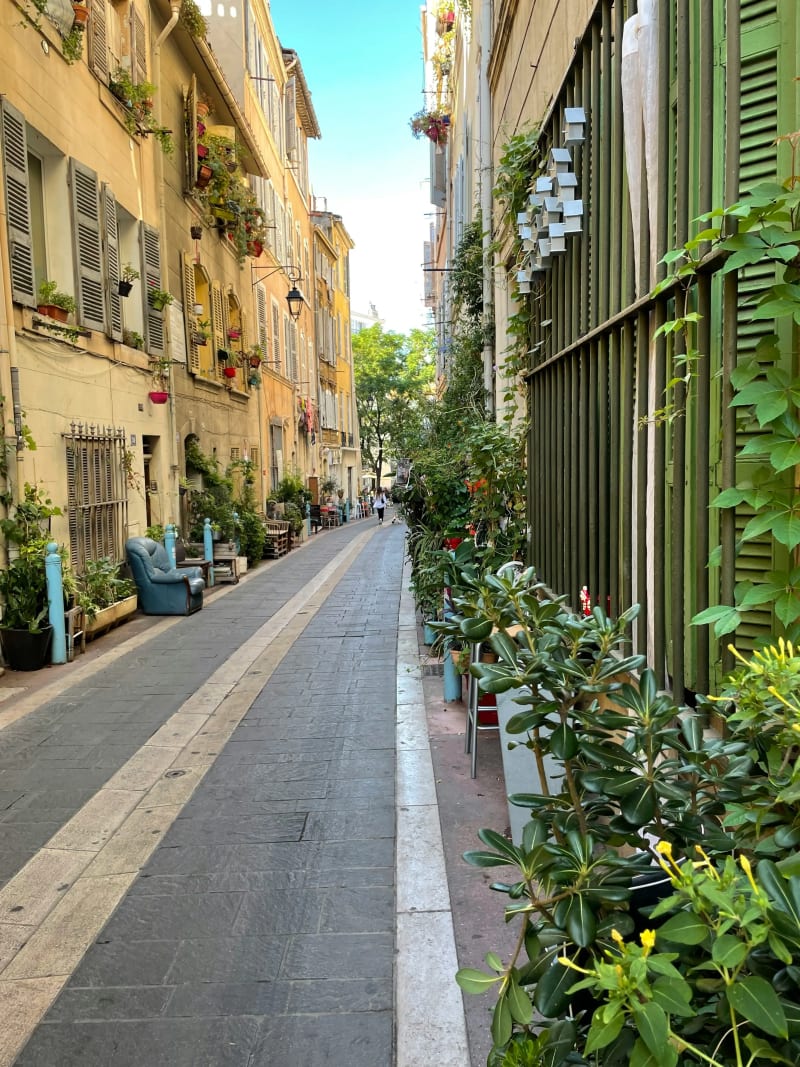
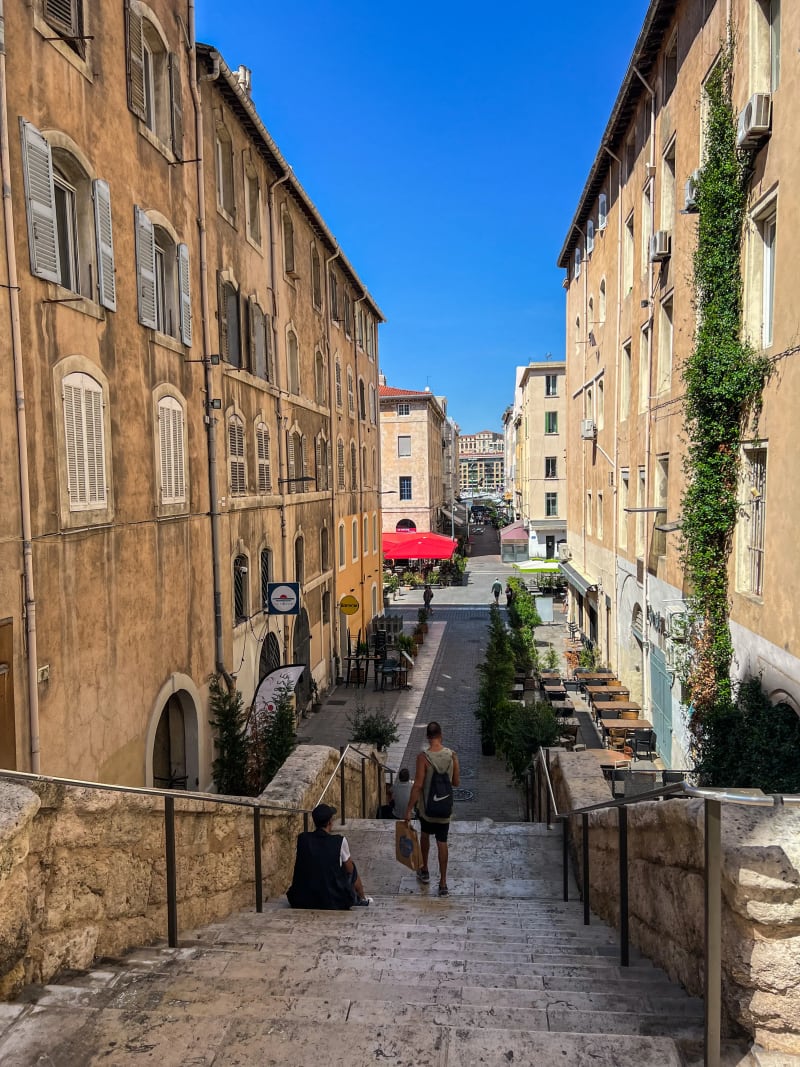
(L) Le Panier - Photo by Alberto Maghini (R) Stairway leading towards Cours d'Estienne d'Orves
- La Canebière: Marseille’s version of Paris's Champs-Èlysées, stretching for 1km (~10-15 min to walk the whole thing). It's lined with historic buildings, markets, theaters, and cafés. The best place to find navettes (traditional orange-blossom cookies)! They're SO so delicious!
- Rue Saint-Ferréol: Connecting to La Canebière, this is my favorite pedestrian shopping street. If you need a little retail therapy, this is your spot. It's got vintage boutiques, high-street fashion, and select luxury like Gucci. From Zara and Pull & Bear to cosmetic spots like Sephora, there's a bit of everything.
Catch a Football Game at the Orange Vélodrome
3 Boulevard Michelet (Metro Line M2 to Rond-Point du Prado)
You haven't experienced the true Marseille until you've seen a football game here. We saw a Champions League match, and "wild" is an understatement. The energy from the Ultras (the hardcore fans) is unmatched. During the game, the Ultras from opposing teams were lighting smoke bombs and flares and actually throwing them at each other. Yes, inside the stadium! Half the time I was more distracted bnu the chaos than I was actually watching the game! Don't worry though—as long as you don't sit in the Ultras sections (the curves at either end) you'll be perfectly safe. Families and tourists attend these games every week.
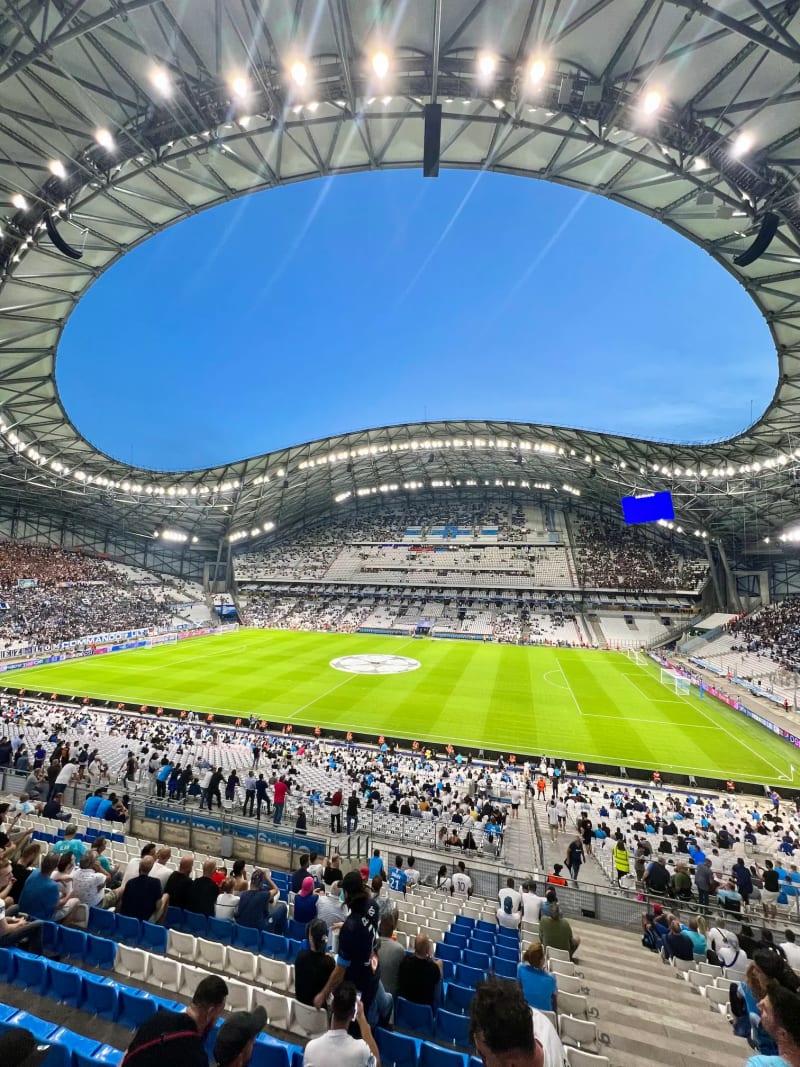
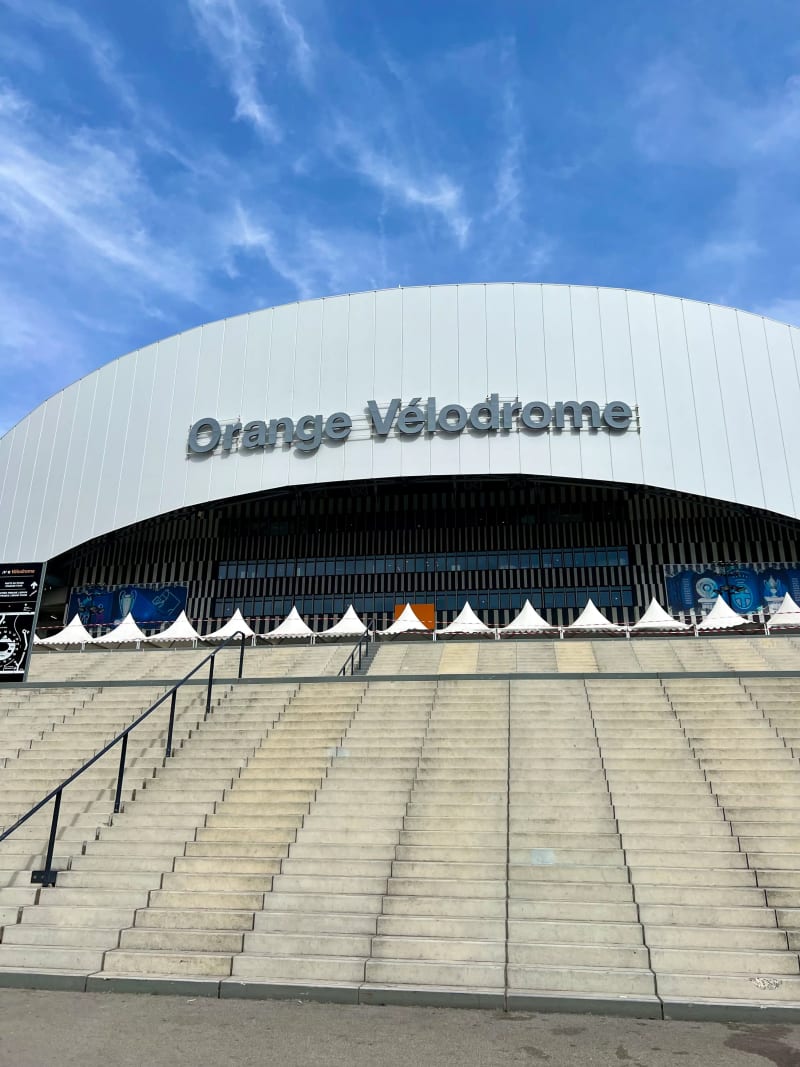
Pyrotechnic devices are supposedly 'strictly' banned inside, but clearly absolutely no one cares... which is actually ironic because I almost had my portable phone charger confiscated at the entrance. I mean, get your priorities straight, right? Haha! There is so much life in the buzzing stadium, and between the group chants, jumping, and Ultras, it's a very fun experience to watch unfold before your eyes while enjoying some football. Even if you aren't a big sports fan (we aren't either), you have to go!
Take a Weekend Trip to Nice or Monaco
Nice (pronounced like 'Niece') is only a 2.5–3 hour train ride away from Marseille via the regional TER train, and Monaco—a tiny, glamorous principality nestled into the coastline—is just another 20 minutes away! We made a weekend of it by booking one night in Nice and the following night in Monte Carlo, Monaco. I love Europe's insanely connected train networks; it easily made the perfect short getaway, and we had at least a full day of exploring in both locations.
Pro Tip: If you're a 'window seat or I'm not going' traveler like me—sit on the right side of the train when departing Marseille. You'll get the absolute best views of the Mediterranean the whole way!
Nice is famous for its colorful Italian-style Old Town and the iconic, palm-lined Promenade des Anglais. On the other hand, Monaco is all super-yachts, Ferraris, and grand casinos—a strong contrast to Marseille's grit and soul. If you have the time, I'd recommend spending more than a day in Nice (it's another dream destination), but honestly, one day was enough for me in Monte Carlo.
We didn't have a massive budget and Monaco is notoriously expensive. It's a bit of a "luxury playground"—if you have the extra cash, it's the dream place to shop at the high-end boutiques every block, play a hand at the Monte Carlo Casino, and finish the night at an exclusive rooftop bar. On a budget, there isn't as much to do, but it's still worth a day visit to just walk the F1 race track, see the Prince's Palace, and admire the multi-million-dollar mega-yachts in Port Hercule. It's definitely something you have to see at least once!
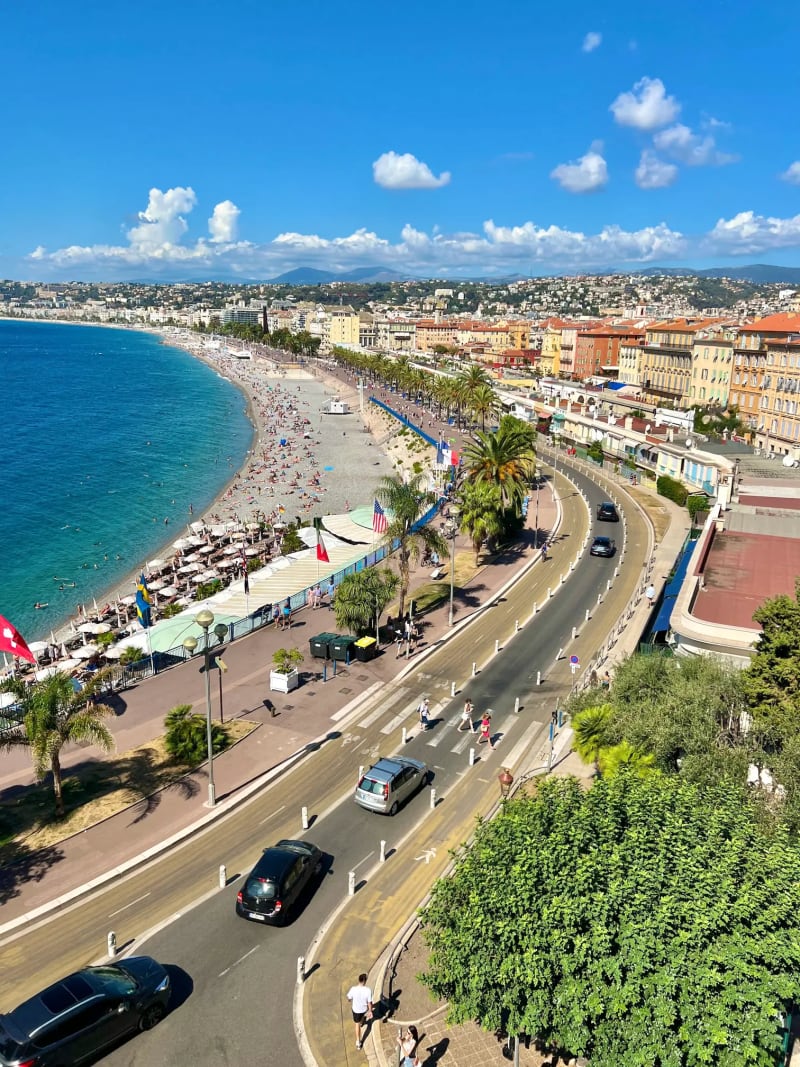
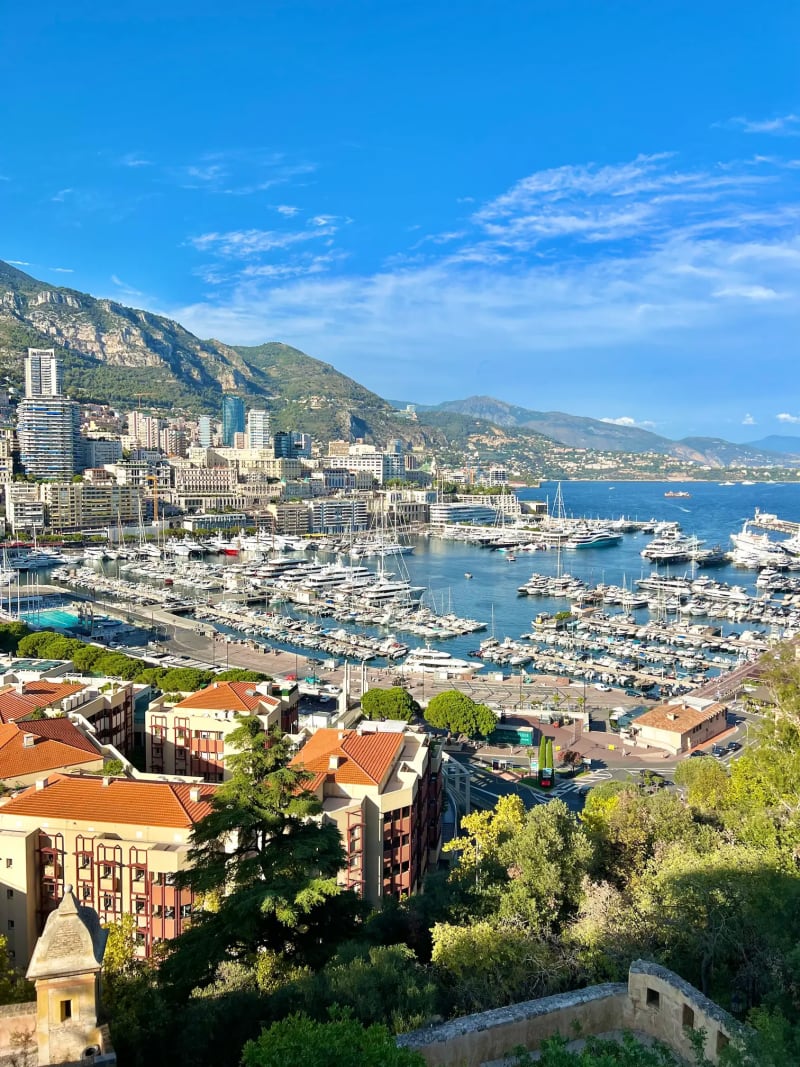
(L) Nice (R) Monte Carlo, Monaco
Map of Top Things to do in Marseille
To help you map out your walking routes and plan your days, here's an interactive map tracking all of the top recommendations featured in this guide:
With its vibrant beaches, historic gems, and eclectic, artistic neighborhoods, Marseille is a Mediterranean summer adventure you’ll never forget—and end up recommending to your friends. Be sure to save this guide, pack your sunscreen, and subscribe below for early access to more travel tips!
If you want more of my France travel guides, here are some links: