What You'll Find in This Post
Quick Facts About Venice
- Location: Northeastern Italy, in the Venetian lagoon of the Adriatic Sea
- Transport: No cars; travel by foot, gondola, vaporetto (water bus), or private water taxi through 150+ canals and 400 bridges
- Costs: Gondola rides €80-€100, Doge’s Palace & Bridge of Sighs tickets ~€30, Bell Tower €10, Murano & Burano day trips ~€25 vaporetto pass to get there
- Best Time: Spring/Fall for fewer crowds and milder weather
- Nicknames: Floating City, City of Love, City of Canals, Serenissima, City of Masks & Queen of the Adriatic
- Data: Maya Mobile eSIM - always reliable during my travels!
Tips:
- • Book Doge's Palace tickets in advance to skip lines
- • Wander quieter areas like Castello or San Polo at night for a local feel and fewer tourists
- • Get a vaporetto pass (€25 for 24 hours) to save on canal transport and easily visit islands like Murano and Burano.
Disclaimer: This post contains affiliate links. If you book or buy through these links, I may earn a small commission at no extra cost to you. Thank you for supporting my blog!
Why Visit Venice
Venice, the "Floating City", is a bucket-list travel destination in a lagoon of the Adriatic sea, spanning 118 islands. Originally formed by natural sediment deposits that created a marshy landscape of mudflats and small islets, these islands were transformed by Venetian ingenuity. Over a thousand years ago, millions of alder and oak pilings were driven deep into the lagoon’s floor, creating stable foundations. Remarkably, some 12th-century palaces and churches along the Grand Canal still stand on these ancient timbers, preserved by oxygen-poor mud that prevents decay, giving the illusion of a city magically floating on water.
Visit my Venice Viator shop to book the BEST tours & activities in this island city! 🇮🇹🎭🛶
The Venetian lagoon is an archipelago of islands, some of which are clustered together, separated only by narrow canals and linked by bridges. The historic center — known simply as "Venice" — comprises roughly 100 islands and serves as the heart of the Veneto region. It is connected to the mainland by the Liberty Bridge, a single roadway and railway link. Other island clusters, including Murano (7 islands) and Burano (4 islands), are accessible only by boat. After arriving from the mainland, there are no roads - travel is done on foot, gondola, vaporetto (water bus), or water taxi, which makes the city so unique.
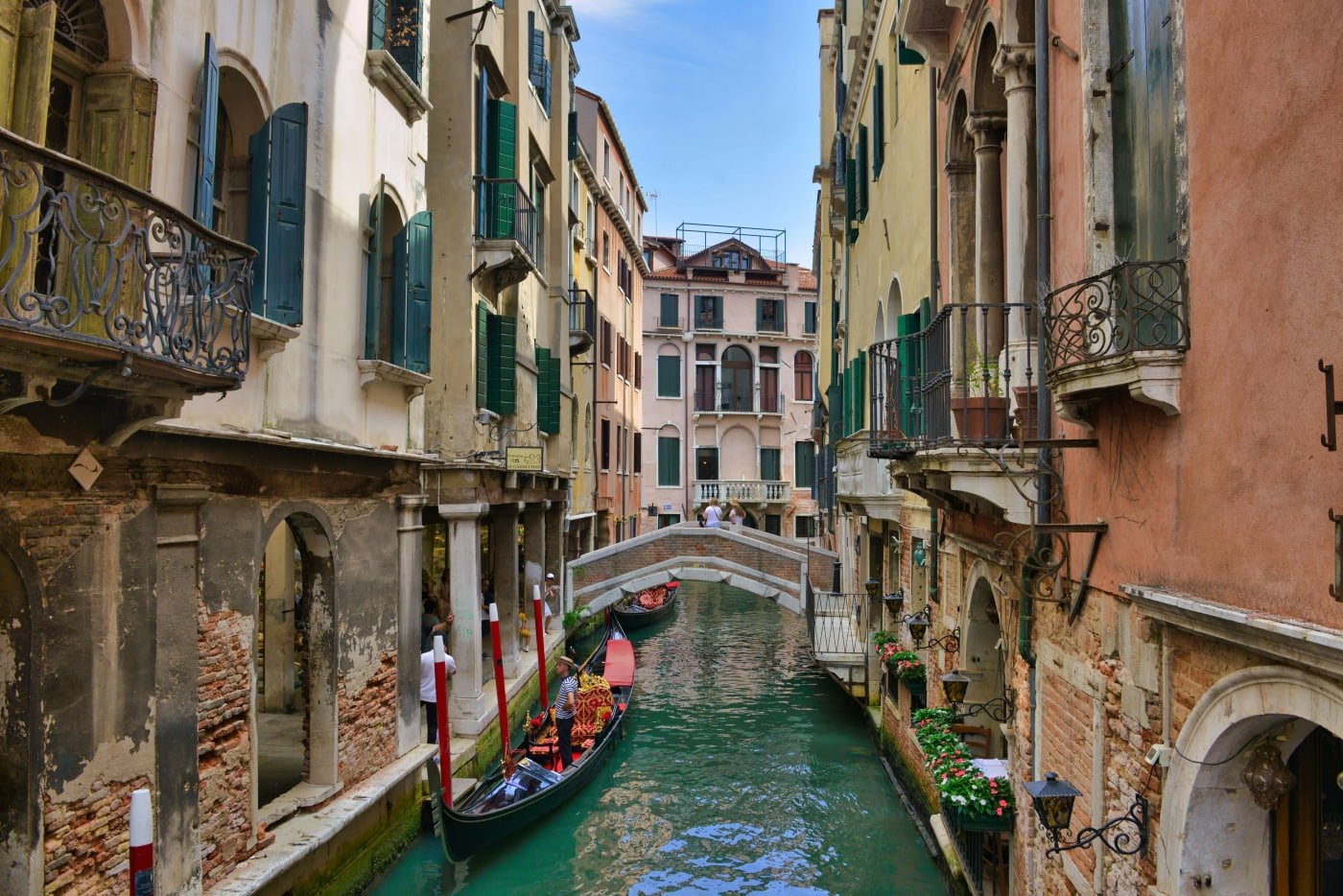
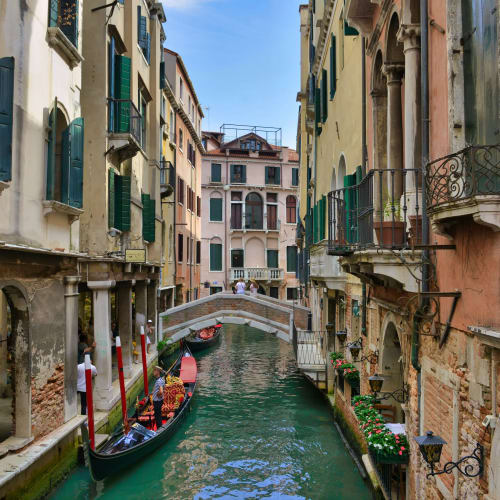
Venice Canal - Photo by allPhoto Bangkok
As one of Italy’s most picturesque destinations, there is so much to experience among the cobblestone streets and dreamy canals, including breathtaking architecture and rich history. With so many activities and sights to see, I highly recommend staying in the city for at least a few days to take in everything the city has to offer. Here are the top things to do when visiting Venice, Italy.
1. Visit St. Mark's Square
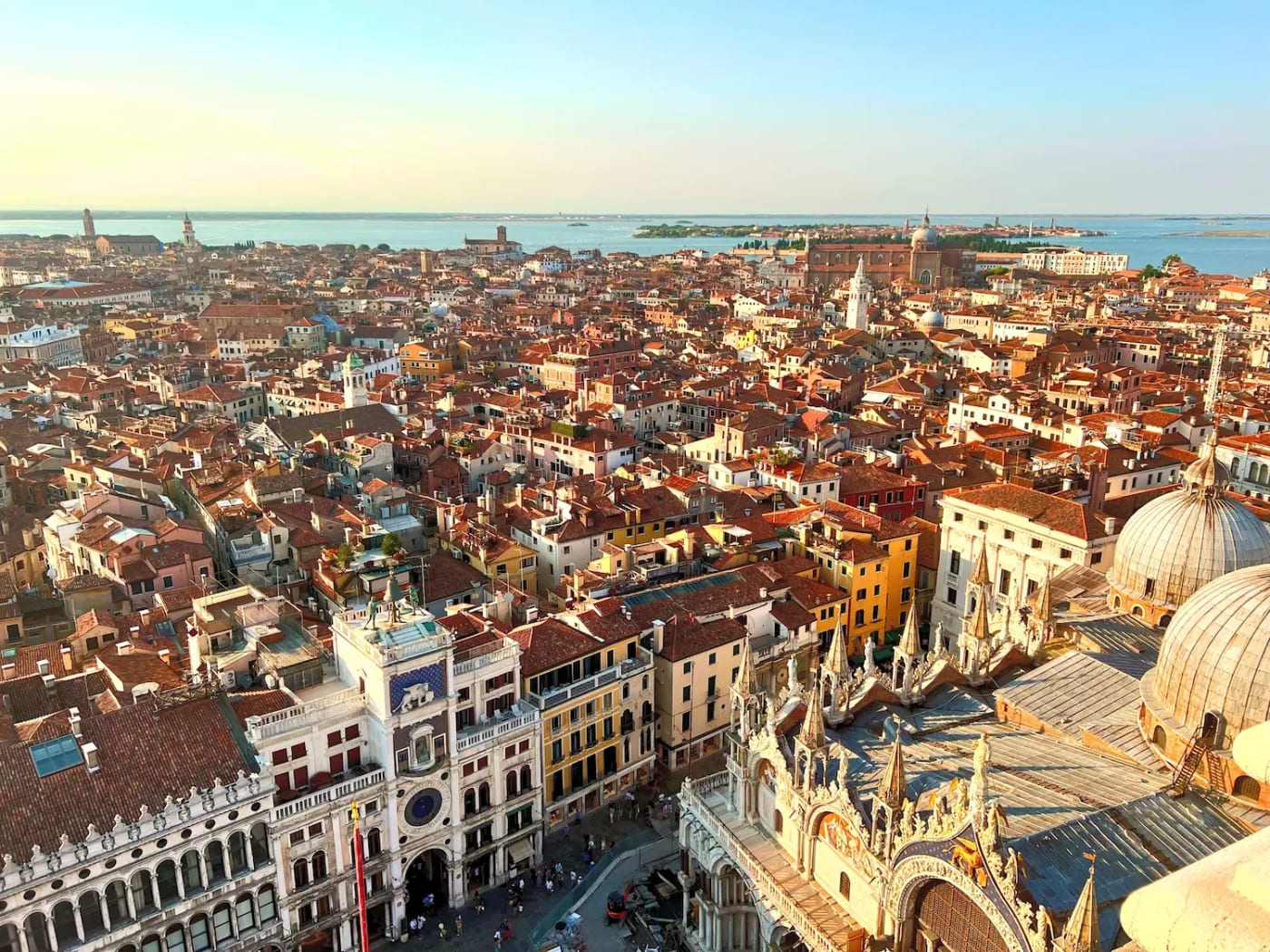
Panoramic City View of Venice from St. Mark's Bell Tower
St. Mark's Square ('Piazza San Marco') is the heart of the city and a must-visit while sightseeing. This huge, bustling plaza is flanked by stunning landmarks like St. Mark’s Basilica and the grand Doge’s Palace. It’s been Venice’s social and political hub for centuries, once called “the drawing room of Europe” by Napoleon himself! The square currently hosts vibrant events like Carnevale and the Feast of St. Mark, and is perfect for enjoying a gelato or dining while soaking up the vibrant atmosphere. Expect crowds by mid-day as it's an unmissable, iconic Venetian attraction, and therefore quite popular!
St. Mark's Bell Tower
While you're in the square, you have to go the top of the bell tower ('Campanile di San Marco'). Seeing the entire city - and even some nearby islands - from the top of the tower is definitely one of the top activities in Venice. This 323-foot-tall tower, the tallest structure in the city, offers insane views. For about €10 per person you get a panoramic look at Venice’s red-tiled rooftops, winding canals, and glittering lagoon.
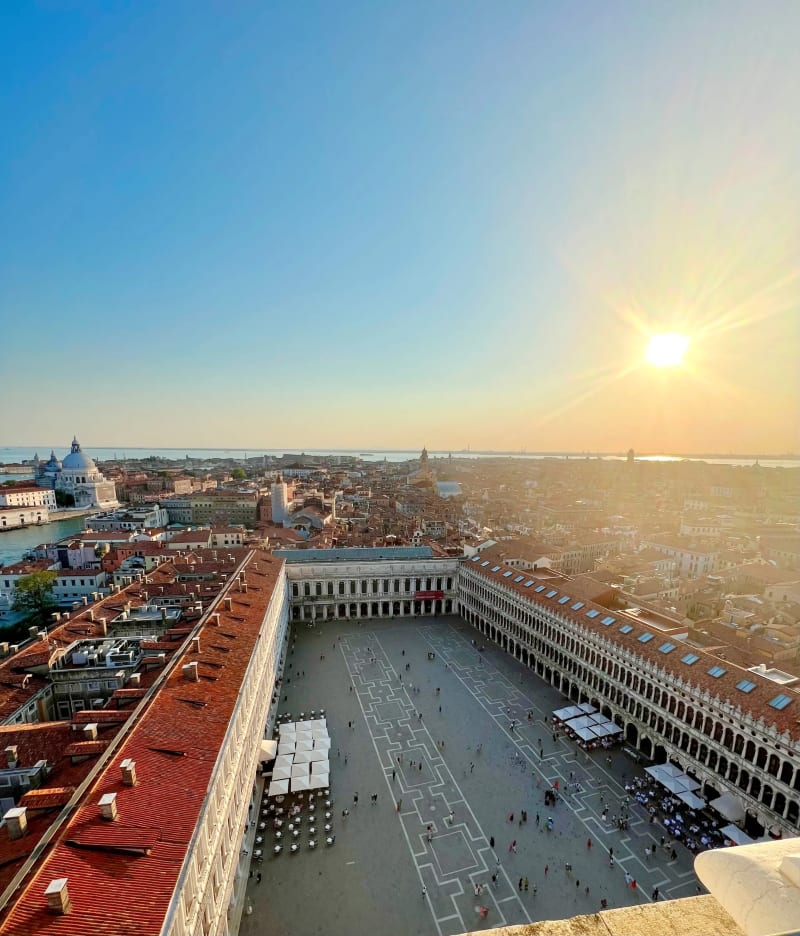
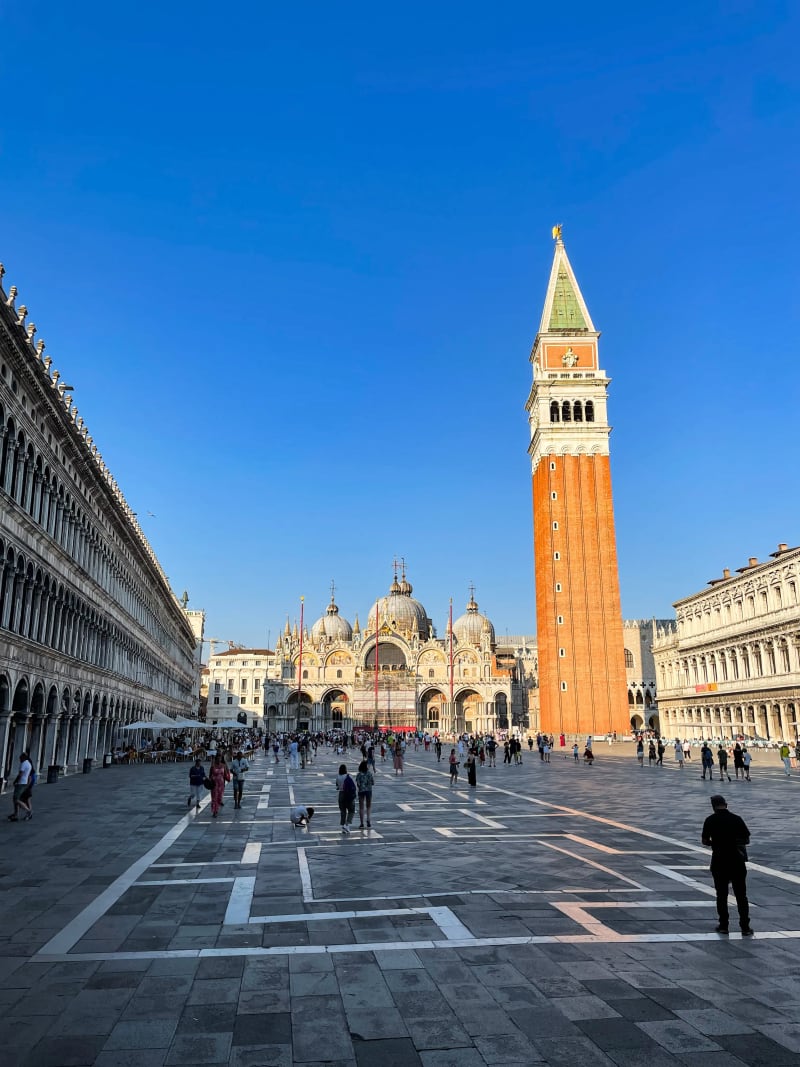
St. Mark's Square
To buy tickets, grab them in-person at the base of the tower (cash or card, but lines can be long) or book online for skip-the-line entry (often bundled with St. Mark's Basilica or Doge’s Palace). Book early for peak season!
Ready to explore Venice’s history? Book your tickets now to skip the lines!
There is an elevator that takes you both up and down the tower, so you don’t have to walk on any stairs (it's easily accessible for families or people with a disability). There is no time limit, so you are allowed to stay at the top observing and taking pictures for as long as you’d like. When you're ready to head back down, just get in line for the elevator.
Tip: Bring some coins, around €2, to look through the panoramic binoculars & zoom in on basilicas or boats in the lagoon!
Doge's Palace & the Bridge of Sighs
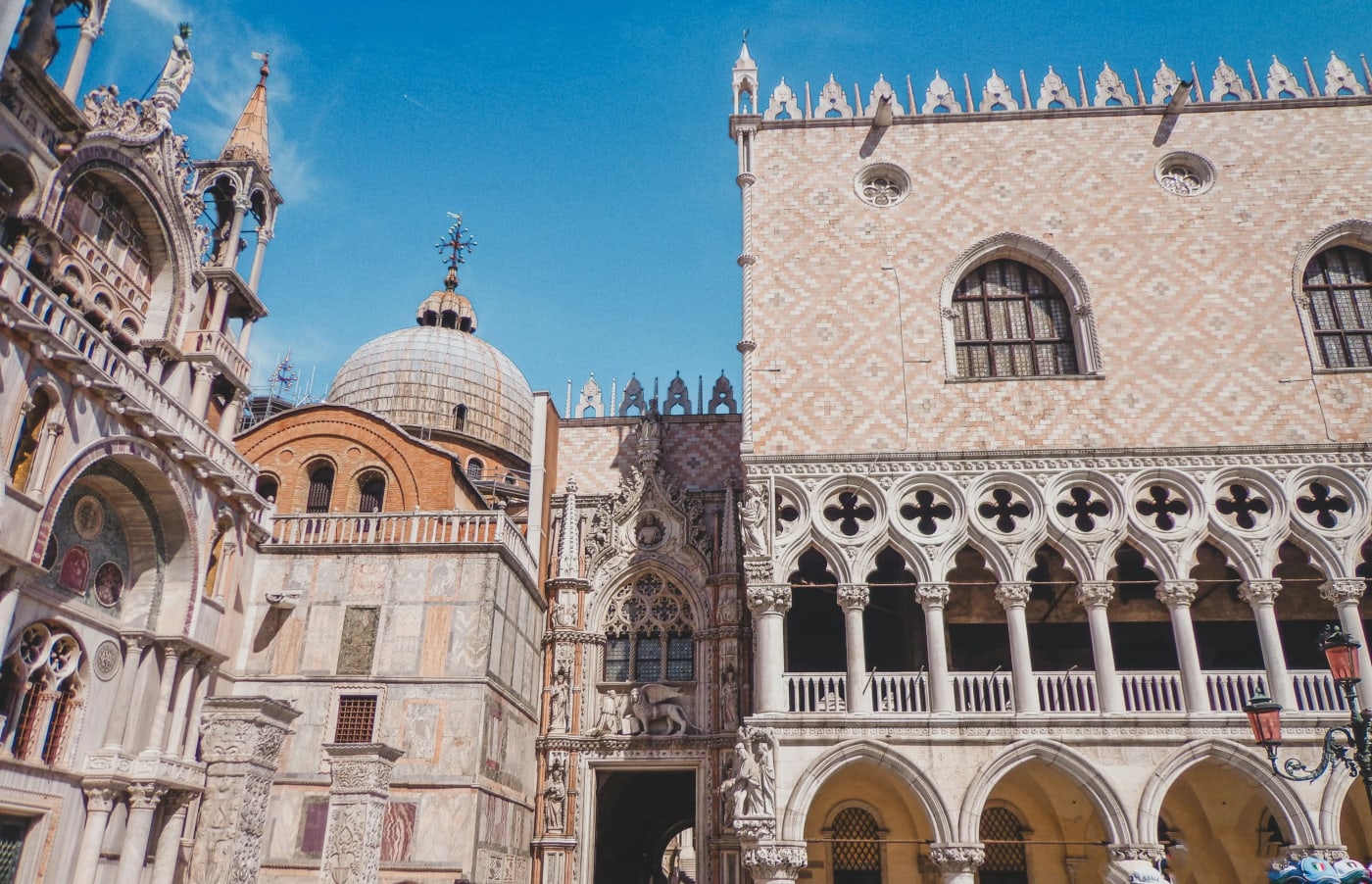
Photo by Árpád Czapp
Doge's Palace
One of the best Venetian landmarks is Doge's Palace (Palazzo Ducale), so visiting and walking across the infamous Bridge of Sighs is a must! It's so beautiful and holds so much history. As its name suggests, the palace was the residence of the Doges of Venice - elected lords and heads of state. Many of the luxurious rooms were used as either the Doge's apartments or meeting places for the government council and ministries. The building interior, designed in gothic architecture, is exquisitely adorned with gold and beautiful murals, each room more impressive than the last. While wandering the palace you'll pass through the courtyard, apartments, institutional chambers, and armory. Definitely read the signs explaining each room’s purpose - they really help pull the tour's story together!
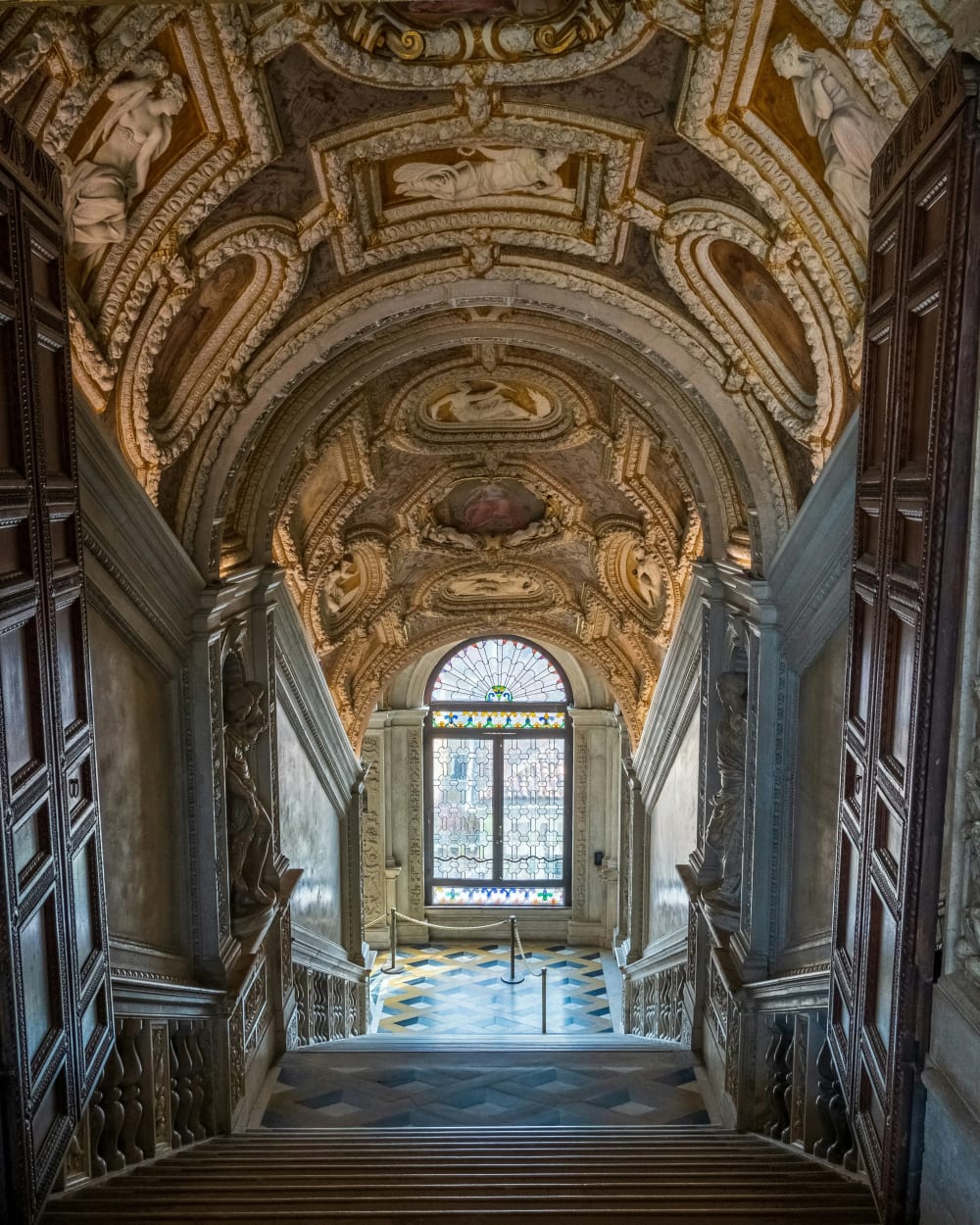
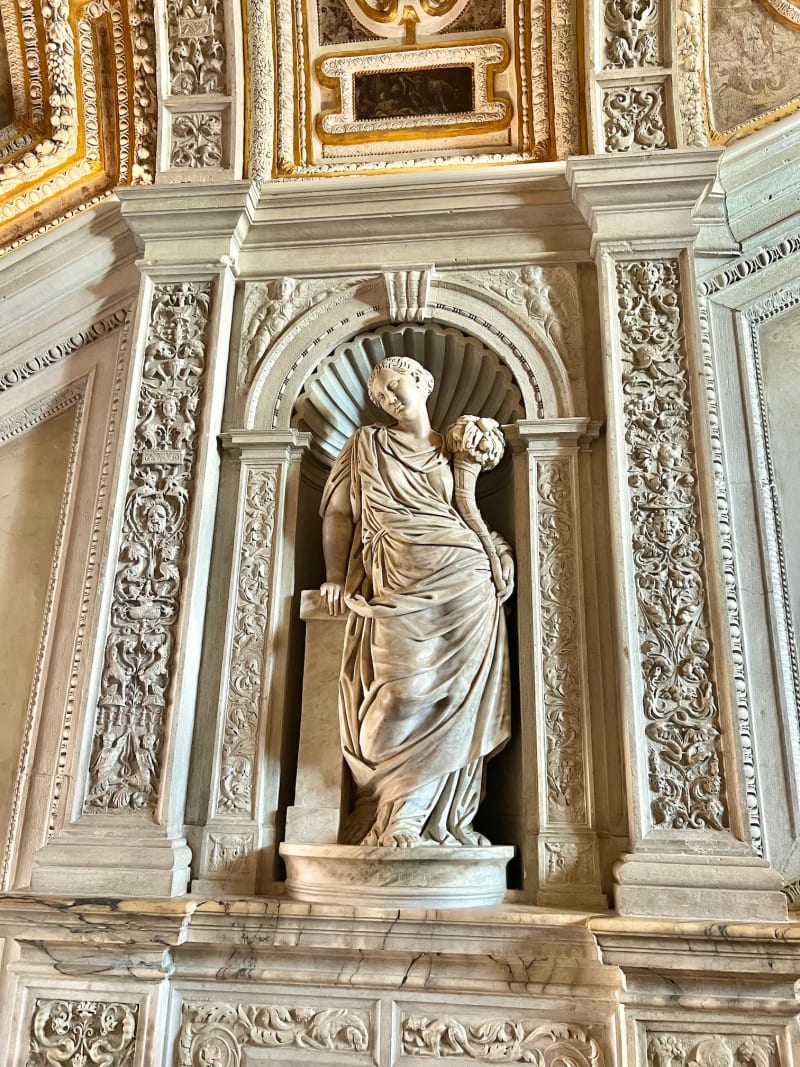
Doge's Palace Interiors
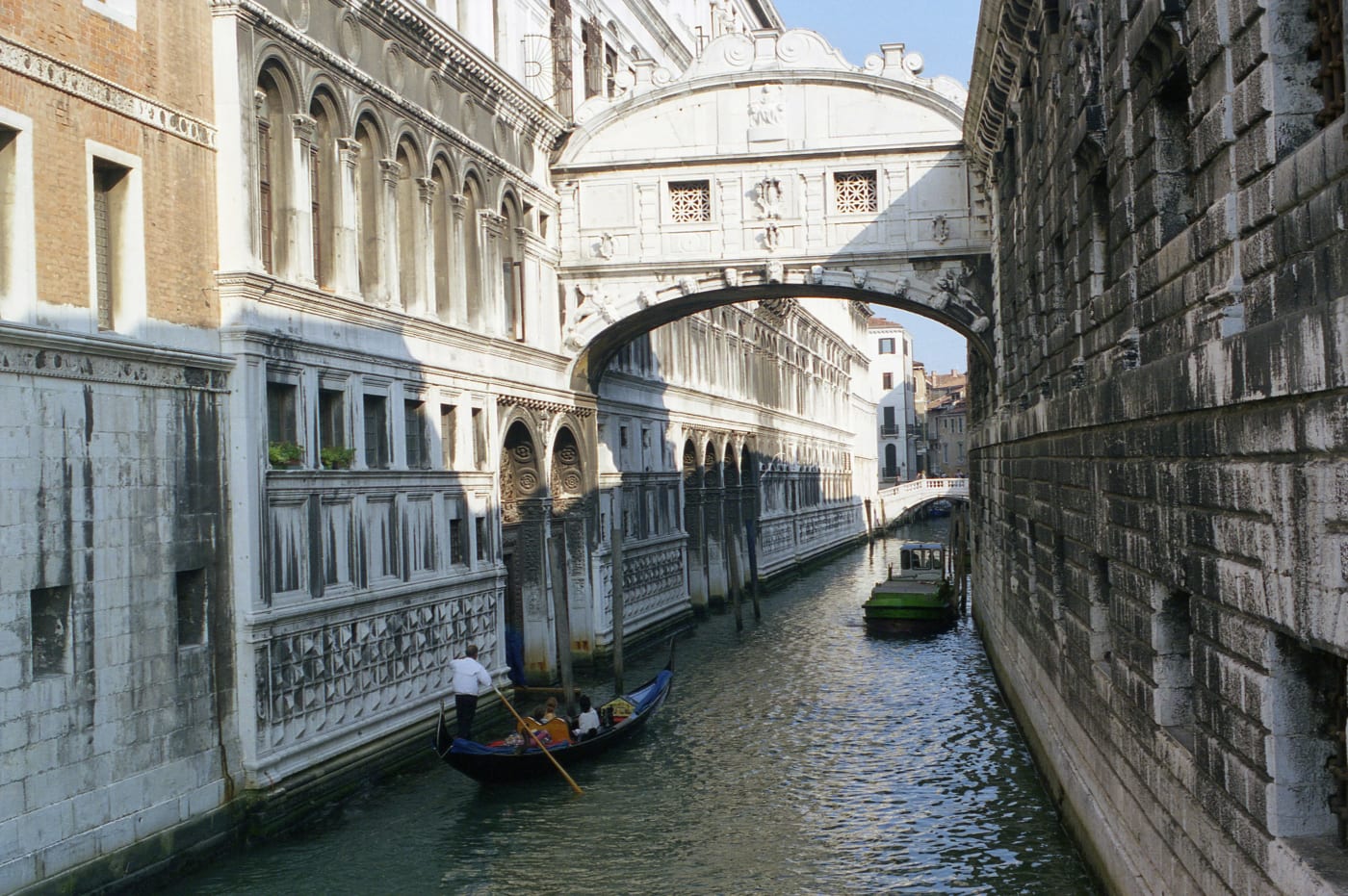
Bridge of Sighs
The last two stops along the tour are the Bridge of Sighs and prison. The Bridge of Sighs feels so dark and harrowing to walk across, especially when you’re aware of its history. It earned it's name as the path prisoners crossed after sentencing, heading to execution or confinement in the prison cells. They would look out of the tiny holes in the windows at their last bit of freedom, sigh, and carry on to face their fate.
It is quite beautiful to look at from outside, but a chill will run down your spine when walking across just as the prisoners did. After coming out of the bridge you end up in the prison, peering into cells that were once filled with so much doom. The beauty and deep history of walking through the palace, over the bridge and through the prison makes this one of the top things to do in Venice.
Bridge of Sighs
How Much are Tickets to Doge's Palace?
Standard entry (which includes both the palace and bridge) costs €30 per adult and can be purchased either in-person at the Doge’s Palace ticket office (Grain Gateway, Riva degli Schiavoni) or online in advance via the official website or GetYourGuide. If you book on the official website 30+ days in advance you can a €5 discount, not to mention beating the long lines when you arrive for a smooth sightseeing trip. Visit at opening (9:00a.m.) or late (~4:00-6:00p.m.) for fewer crowds. A self-guided tour of the palace will take around 1–1.5 hours.
Tip: Save money by purchasing the 'Museum Pass' on the official website - €40.00/adult or €44.00/family (2 adults & 1 child) - which includes access to Doge's Palace and 10 other museums in Venice.
St. Mark's Basilica
The St. Mark's Basilica (Basilica di San Marco), adjacent to Doge's Palace, is a stunning Byzantine-style cathedral dedicated to Saint Mark, the patron saint of Venice. It’s one of the most famous churches in Italy, known for its opulent architecture and religious significance. The interior is lavish with gold-ground mosaics depicting biblical scenes and ornate marble floors, earning it the nickname Chiesa d’Oro (Church of Gold). Built in 828 AD to house St. Mark’s relics, smuggled from Alexandria, it reflects Venice’s Byzantine influences and maritime power.
Entry to the main nave requires a €10 reservation fee per adult (free for children under 6) while additional areas, including Pala d’Oro (+€10) and Museum/Loggia dei Cavalli (+€10), incur additional fees - book online to secure a timed slot. Worshippers attending Mass enter free but must use a separate queue. Keep in mind that since it's primarily a religious site for worship, dress code is strict (no shorts, bare shoulders, or backpacks) - be sure to respect the customs!
2. Explore the Rialto Bridge
The Rialto Bridge (Ponte di Rialto) is Venice’s most famous bridge, spanning the Grand Canal with its elegant stone arch and bustling shops. A symbol of the city's trading past, it's one of four that crosses the Grand Canal. It’s a must-see for its architectural beauty and has stunning views of the Grand Canal, perfect for photos, especially at sunrise or sunset when the light is magical. The middle of the bridge is lined with rows of shops selling jewelry, souvenirs, and crafts; it's worth some browsing, though expect higher prices due to its popularity.
Tip: For a postcard-perfect shot of the bridge, go to the nearby Fondamenta del Vin - a picturesque walkway on the San Polo side of the Grand Canal with an unobstructed view of the bridge’s exterior and the canals boat traffic. Add this spot to your Venice itinerary!
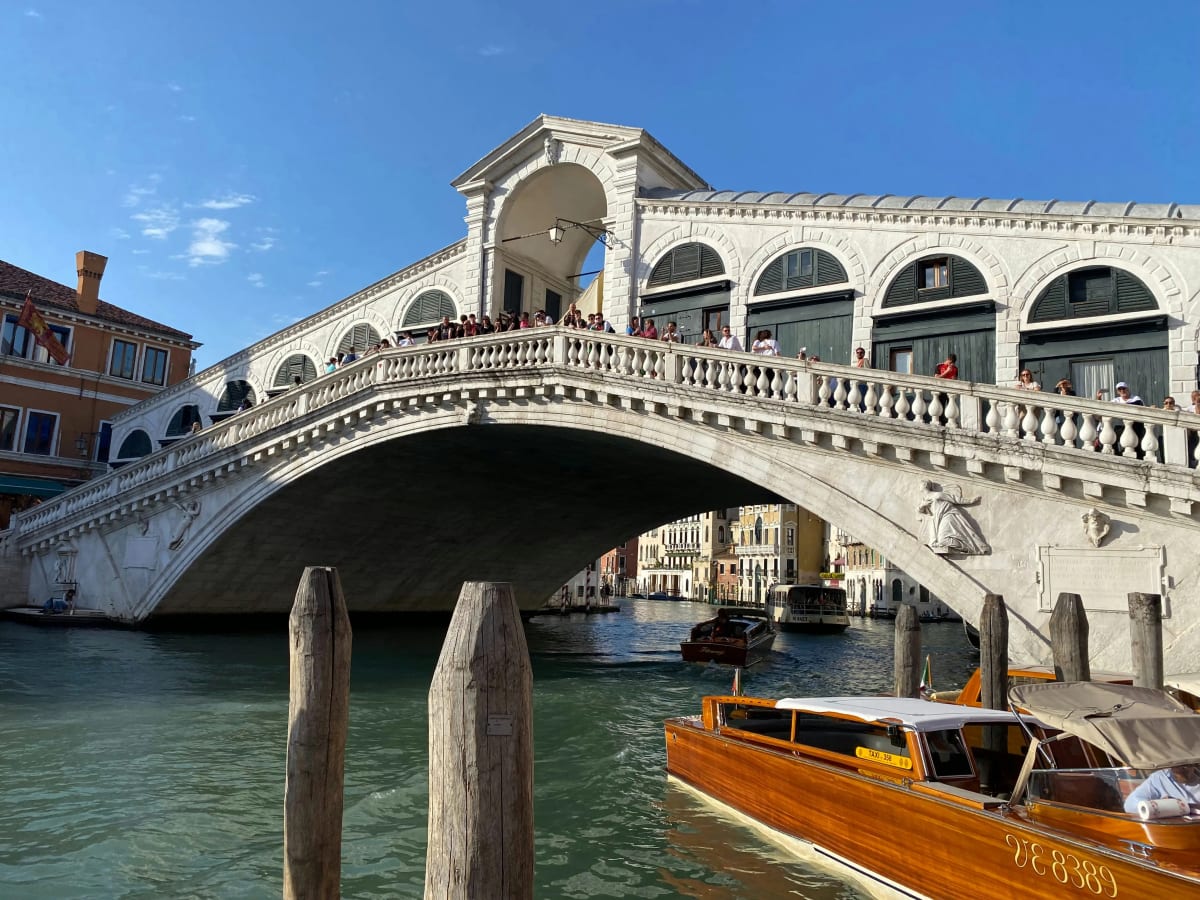
The Rialto Bridge and Grand Canal
Rialto Market
Steps from the bridge is the historic open-air market (Mercato di Rialto) that's thrived since the 11th century. Split into the Pescheria (fish market) and Erberia (fruit and vegetable market), it's a great place to experience Venice’s local culture, with colorful stalls selling fresh seafood, produce, and regional goods. The market is liveliest in the morning (open Tuesday–Saturday, ~7:30a.m.–1:00p.m.) which is the best time to visit for the freshest goods and fewer crowds! Near the market, at bacari (small bars that serve drinks and snacks), try local cicchetti (Venetian tapas) while enjoying the vibrant atmosphere of the area.
3. Take a Gondola Ride
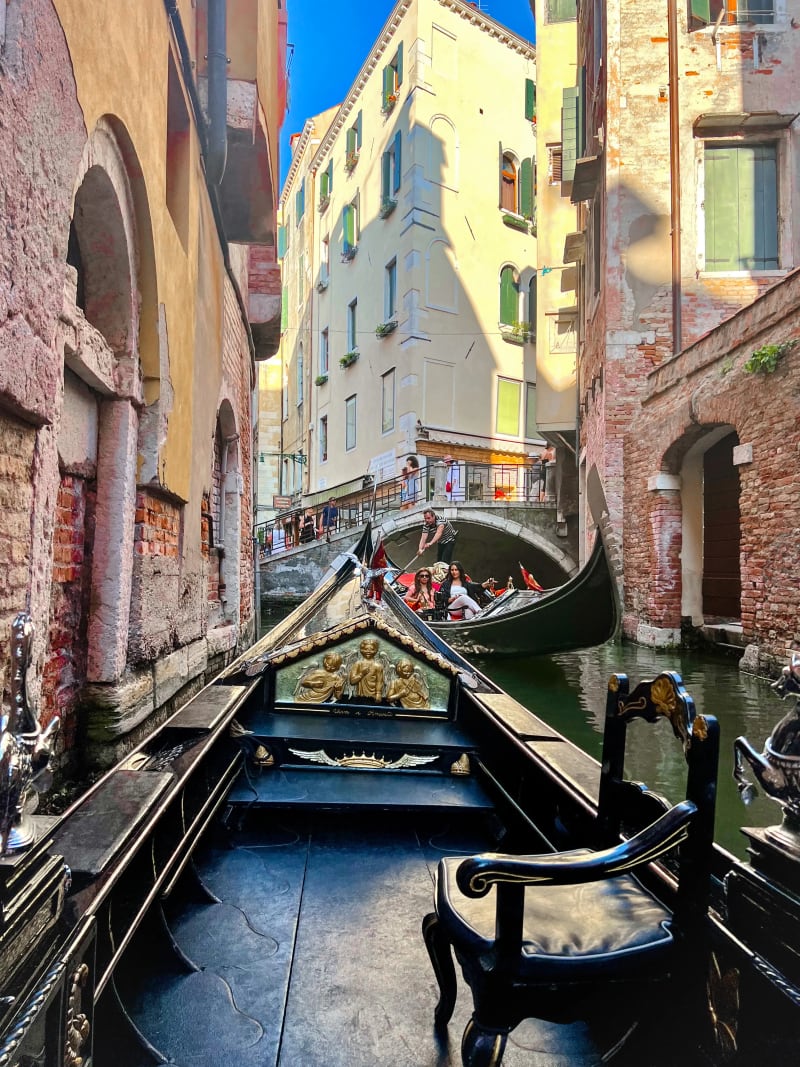
Riding a gondola is the most popular and iconic things to do in Venice. That being said, I can attest that it is not overrated and was indeed one of the top experiences we had while visiting. First, the gondolas are absolutely stunning – ours was black and gold - and they feel so much bigger when you’re on one. One goldona can fit up to six people, allowing ample space when you're traveling as a couple like us. Second, gliding on a boat through the winding canals gives a whole new perspective to the city. It truly makes the area feel so romantic (you can see why they call it the 'City of Love'), so I would not miss the opportunity to take a ride on one!
How Much do Gondolas Cost?
It costs around €80 during the day, and €100 during and after sunset. I know it sounds expensive - and it is - but you know the saying, 'when in Venice...!' (or wait, is that Rome?). I would recommend hopping on during the day or at sunset as Venice is rather dimly lit at night, so it can be too dark on the canals. In my opinion it's more beautiful in the light. The ride takes about 30 minutes, but can be longer depending on any traffic in the canals (yes - traffic! Especially within the very narrow canals that only two small boats at a time can fit through).
Where to Find Gondolas in Venice
There are multiple spots where you can get a gondola - they're set up for business pretty much all throughout the city - and each location offers a slightly different experience:
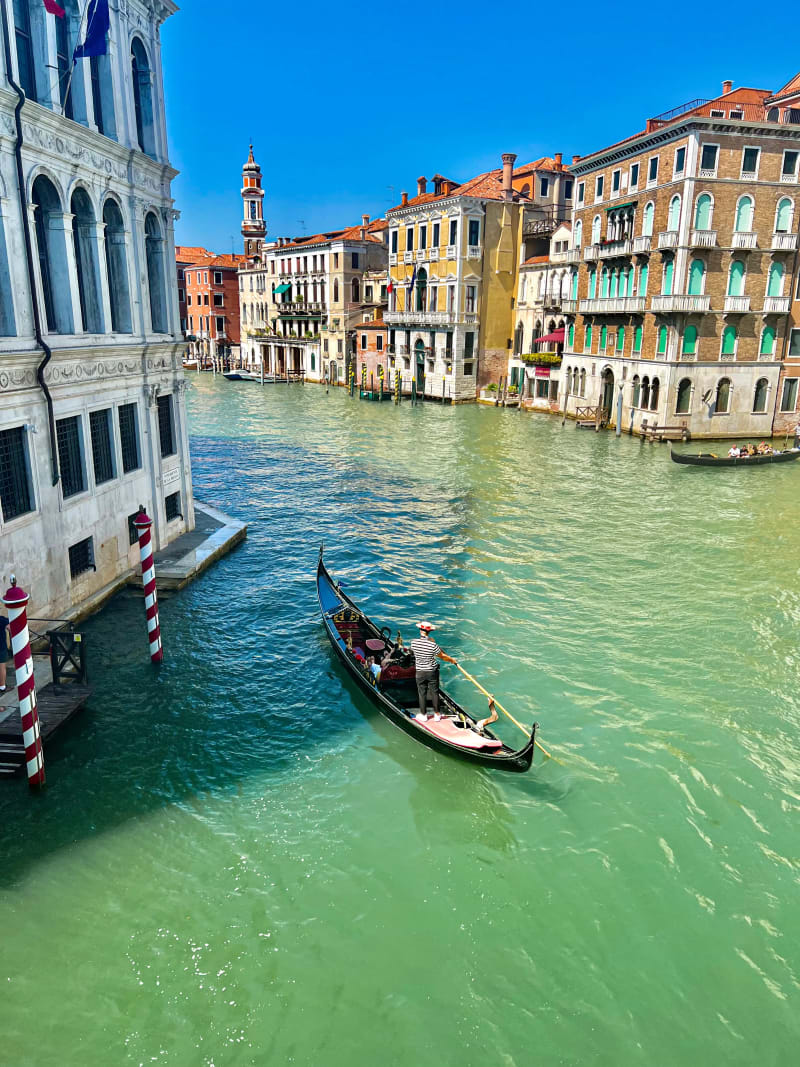
- Grand Canal: If you catch a gondola on/near the Grand Canal, the gondoliers will take you down a few smaller canals and then spend the rest of the ride on the Grand Canal.
- Rialto Bridge: If you are near the Rialto bridge, they will take you under it - it's said it is good luck to kiss your love under this bridge! This is where we took our gondola - we got to go down a few small canals and then under the Rialto - it definitely was magical.
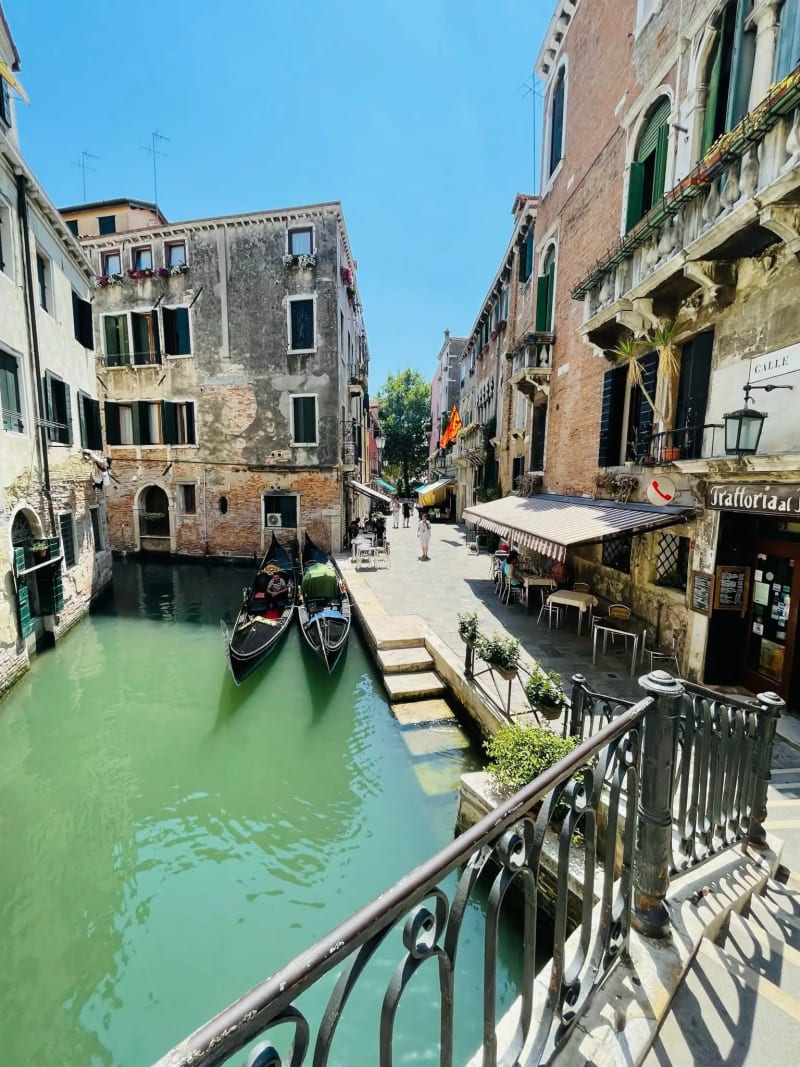
- Small canals: You can avoid the Grand Canal altogether for a more intimate feel. The gondolas are located on most corners of the winding canals - if you wander down the cobblestone streets for a bit, you'll find them.
- Venetian Lagoon: On the very edges of the city there are gondola tours that go into the lagoon itself, giving a unique view from the outskirts of Venice.
In my opinion, the best option is to take a gondola near the Rialto Bridge to ensure you get to ride on both the Grand Canal and in the smaller canals. The small canals are my favorite due to the local, quiet feel, making it more romantic for couples! This experience is special, unique, and definitely one of the best activities in Venice, Italy.
4. Half-Day Trip to Murano & Burano Islands
Murano and Burano are located in the Venetian lagoon just a few miles away from the city, and are only accessible by boat. The islands are historical, picturesque, and famous destinations in the Veneto region that draw in nearly 2-million visitors a year. It's simple to get there via vaporetto (water bus, cheapest option), private water taxi (expensive but most unique) or a half-day tour (easiest way to see the highlights). These charming islands are worthy of a day trip from Venice and should be added to your itinerary!
Murano
Murano island is known for its glassmaking traditions; nearly every other store is a shop or museum with hundreds of handmade glass items from jewelry to chandeliers. I highly recommend grabbing a souvenir here - while they sell Murano glass all over Venice, I personally feel it's more special and authentic when you get it directly from the island it was created on. You can tour glassmaking factories and museums, like the historic furnaces of Fornace Mian or Guarnieri Vetro, to watch skilled artisans shape molten glass, or take a class to create a piece of your own - a highlight if you have the time!Burano
Burano is a photographers paradise. This small island (a cluster of 4) is filled with brightly colored houses lining the canals, creating a reflection that feels like stepping into a living postcard. As a fishing island, the vibrant painting tradition is said to have started so fishermen could easily spot the island from the sea, so as not to get lost when returning home at dusk. Beyond being a fishing village with some of the freshest seafood in the Venetian Lagoon, Burano is known for lacemaking where you'll find shops selling delicately handcrafted products, from bookmarks to dresses. Visit the Lace Museum (Museo del Merletto) to see examples of this delicate art and learn about its history, or join a lacemaking workshop to craft an item yourself!
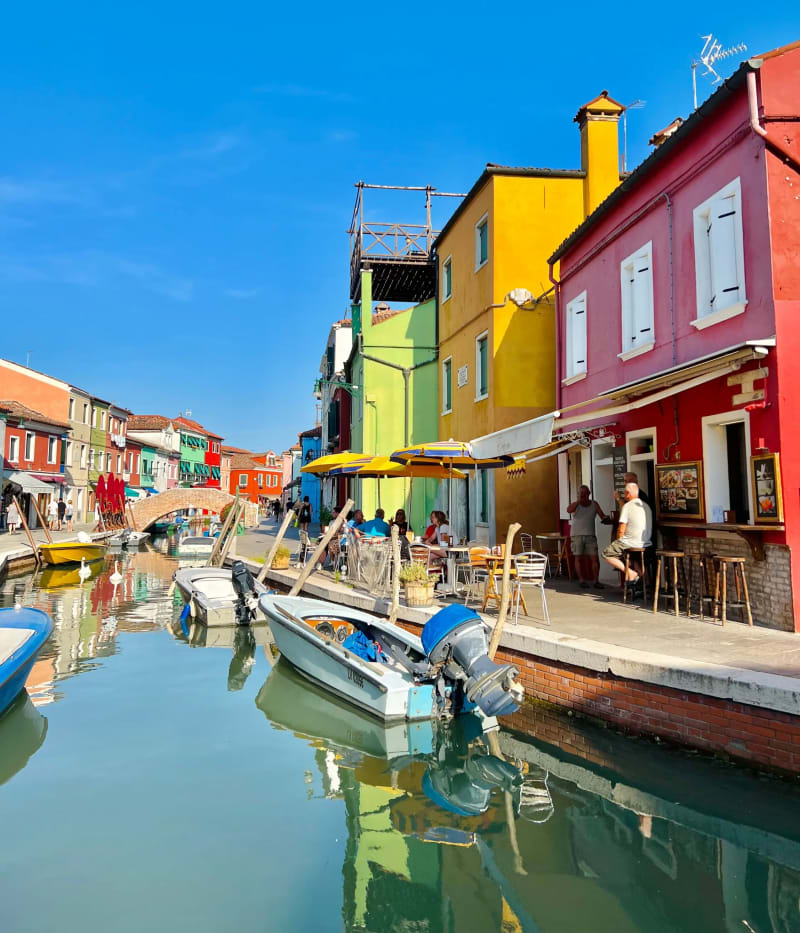
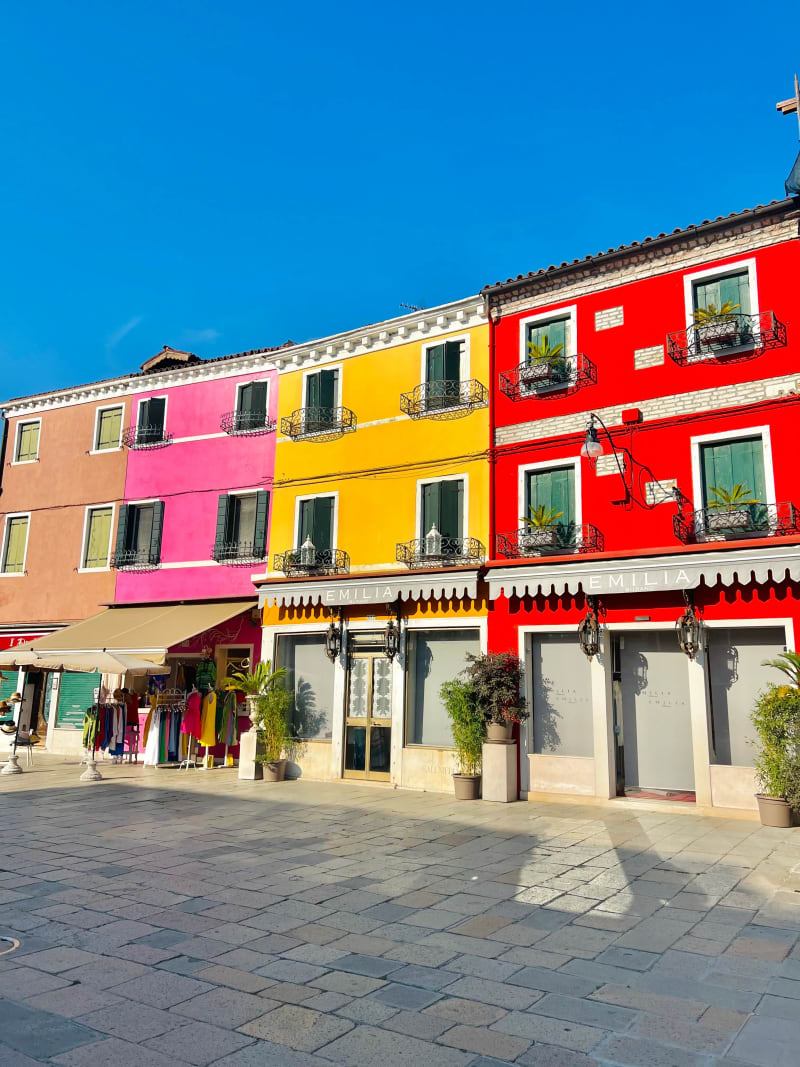
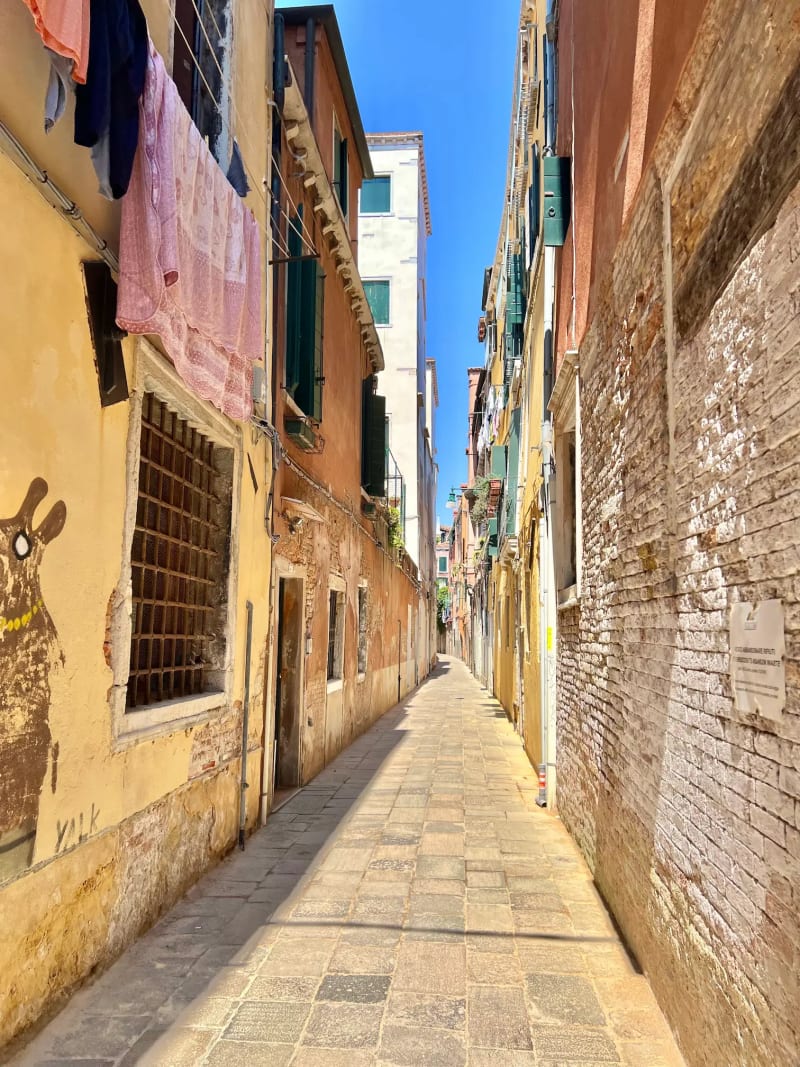
On both islands, be sure to wander the quieter side streets away from the main canals to discover their authentic charm — locals chatting outside their homes, artisans at work, and small bridges offering serene canal views. If you’re visiting in the warmer months check for small festivals where you might catch traditional music or community events such as Regata di Burano (a rowing competition) or Murano Glass Week (a celebration of the islands craft). For more information on how to get there, when to visit and what to do there, check out my Murano and Burano Island blog post!
With these top four things to do in Venice — Saint Mark’s Square, the Rialto Bridge, a gondola ride, and Murano & Burano island - you’ll experience the heart of the city's history, charm, and vibrant local life. Use this guide to start planning the perfect trip to one of the most famous cities in the world, balancing iconic sights with authentic moments.