What You'll Find in This Post
Quick Facts About Opatija Riviera
- Location: Between Mount Učka and the Adriatic Sea in northwestern Croatia
- Length: A 30km coastal stretch (Volosko to Mošćenička Draga)
- Best Time: Late spring (May) or early autumn (September-October) for milder weather & fewer crowds; Summer (June-August) for nightlife and festivals
- Vibe: Elegant with grand villas, lush parks, and Mediterranean seaside charm
- Phone Data: Maya Mobile eSIM - reliable, fast and easy. I use this all the time!
Pro Tip: Use local bus #32 for easy hops between towns
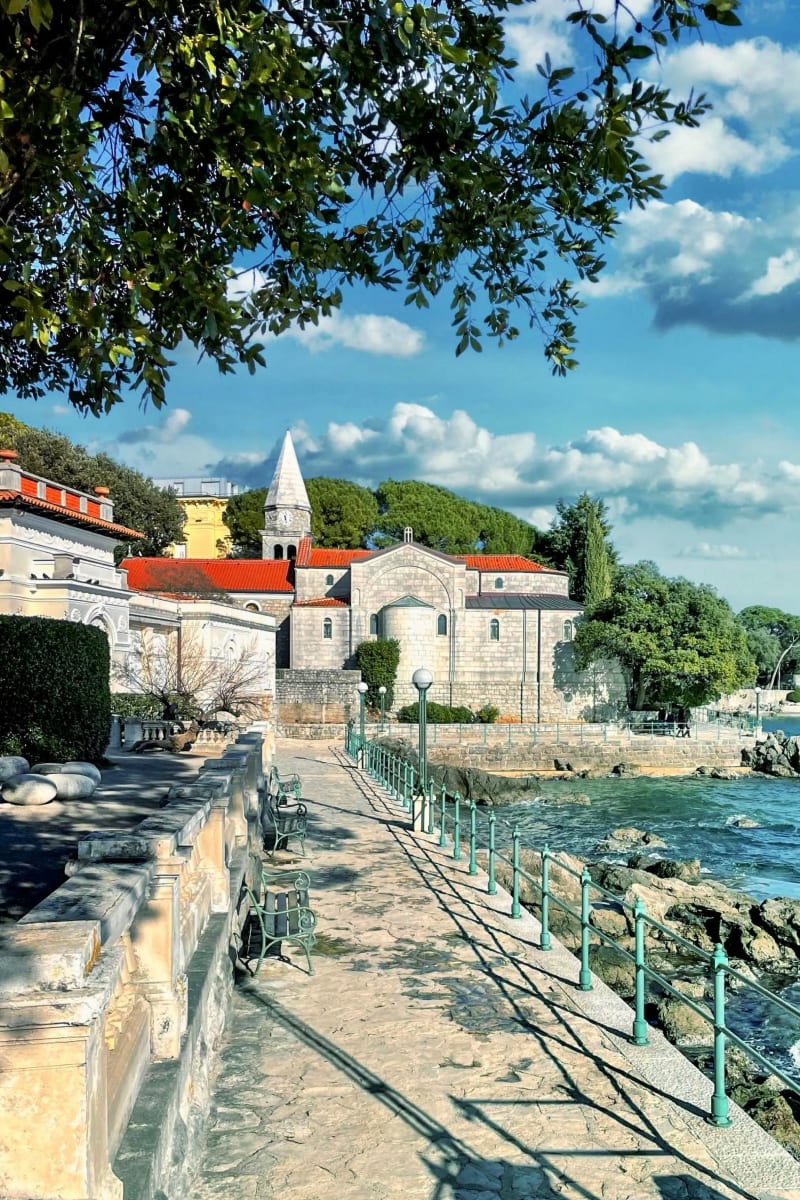
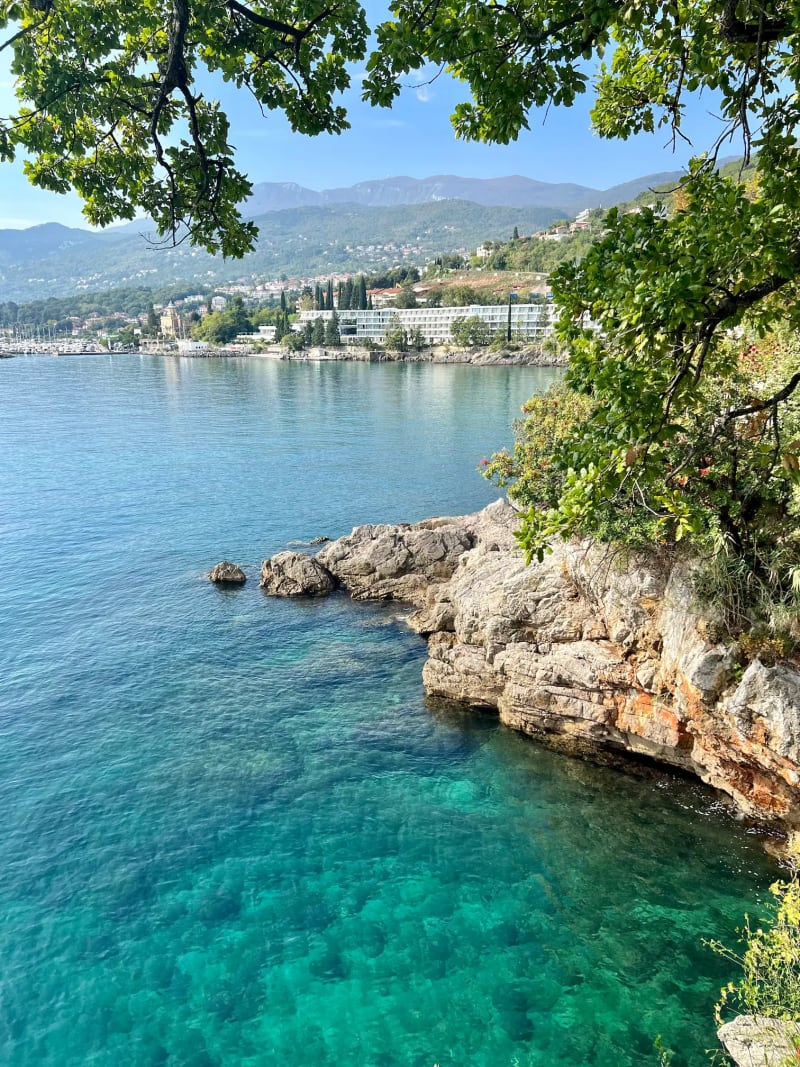
(L) St. Jacob church - photo by Marko Kelecevic on Unsplash; (R) Opatija's coast
Disclaimer: This post contains affiliate links. If you book or buy through these links, I may earn a small commission at no extra cost to you. Thank you for supporting my blog!
Intro to the Opatija Riviera
In the country of Croatia — one of my favorites — nestled between Mount Učka and the Adriatic Sea, lies the Opatija Riviera: The scenery is picturesque, vegetation is thriving, and the climate is pleasant. Commonly referred to as the “Pearl of the Northern Adriatic”, the riviera is an elegant coastal getaway, scattered with beaches, historical villas, and parks.
Planning your itinerary? This guide covers where to stay, how to get around, and the best things to do along this 30km stretch of Croatia's stunning coast.
How to Get Around Opatija
Navigation is straightforward and scenic, whether you're hopping between towns or heading out on day trips. Here's a quick rundown:
- Local Bus (Line 32): The most affordable and convenient — runs frequently along the coast from Volosko to Lovran, and connects to Rijeka. Short-distance fares ~1-2 EUR. Buy tickets on board
- Bolt: Easy rideshare app
- Car Rental: Ideal for flexibility, especially for day trips. Roads are well-maintained with stunning views. Expect ~30-50 EUR/day
- Walking or Cycling: The coastal promenade is perfect for strolls between towns. Rent bikes in town for ~10 EUR/day
During my stay, we ended up trying almost every way to get around the area—and loved the variety! For the daily trips between our apartment (perched high on those steep hills) and the grocery stores, we took bus 32. It was reliable and convenient, but pro tip: make sure to wave vigorously as it approaches, or it might sail right past you. To hop between nearby towns, I either walked or rented a bike, and followed Opatija's coastal promenade. As for Bolt rideshares, they can be a fantastic option when cars are available—super easy and affordable—but I wouldn’t count on them 100%. Availability was hit-or-miss, so it’s smart to have a backup plan.
For longer day trips, I highly recommend renting a car from Sixt. They have convenient locations at major Croatian airports (including Rijeka) and right in Opatija at the Hotel Ambasador. Every time we rented from them, the process was fast and hassle-free, with excellent rates and genuinely friendly staff. Their flexible one-way rental policy lets you pick up in one spot and drop off in another without extra costs. This was so convenient when we moved from Opatija (after a month there) to Zadar - we simply rented the car in Opatija, loaded our luggage, drove ourselves down the coast, and returned it when we got to Zadar.
Where to Stay: Towns of Opatija From North to South
The towns along the riviera each have their own unique charm and attractions. My highlights include Volosko, Grad Opatija (the main town), Ičići, Lovran and Mošćenička Draga. All towns are easily connected via the scenic Lungomare Promenade - details on that in a bit!
Volosko
Vibe: Seafood haven, artsy
The northernmost spot on the riviera is Volosko, a charming fishing village famous for its seafood restaurants, colorful harbor, and artistic vibe. A hidden gem for those wanting to escape crowds, it's ideal for relaxed walks, hidden coves and authentic local cuisine.
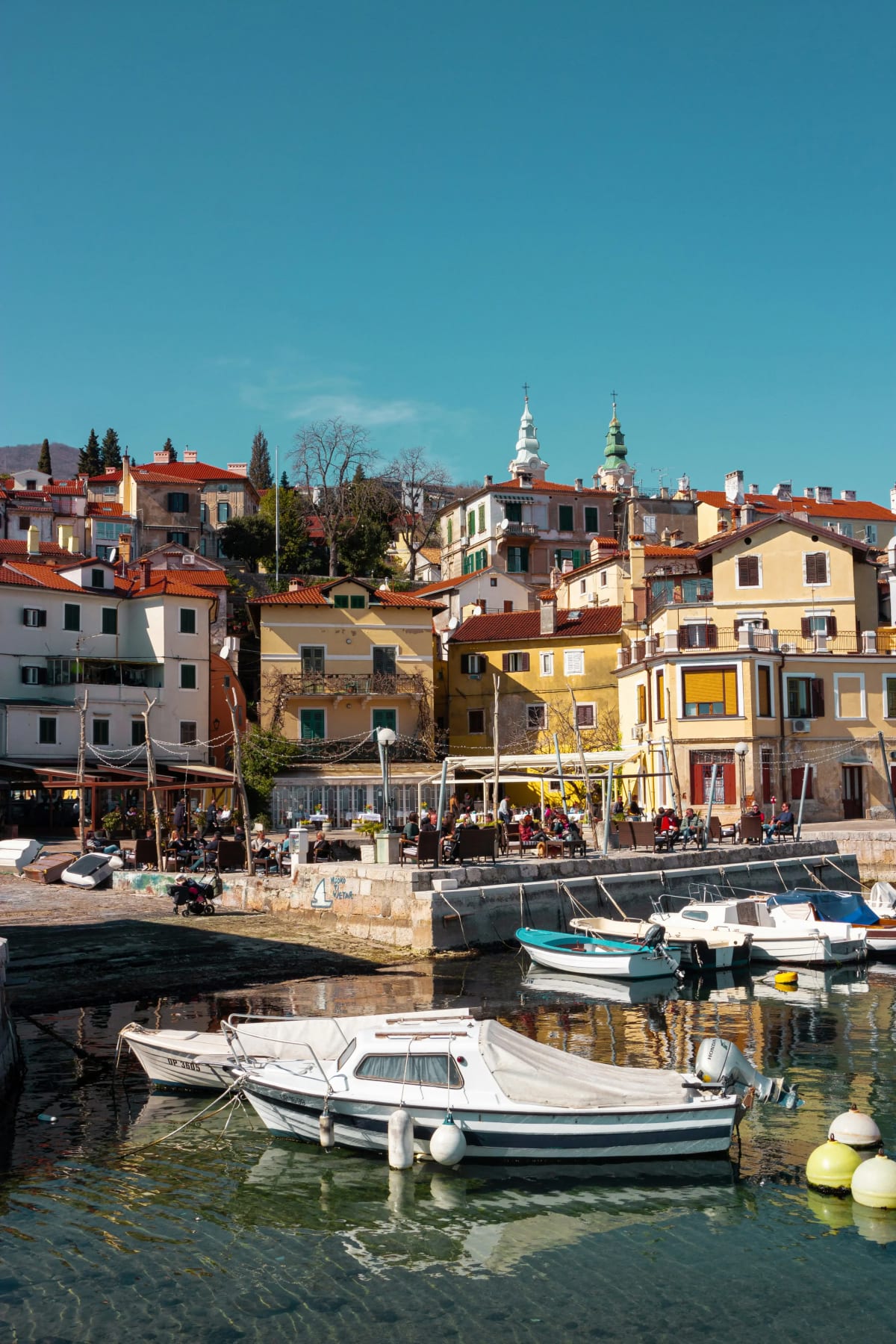
Volosko; Photo by Ozren Cuculic on Unsplash
I recommend staying in a boutique guesthouse right in the village. It's intimate and affordable, perfect for couples or solo travelers looking for peace. Off-season it's serene, but summer brings a combo of lively yet laid-back energy.
Grad Opatija
Vibe: Lively, historic, elegant
Located in the middle of the riviera is Grad Opatija (often just called Opatija or downtown Opatija). As the main hub and liveliest of all the towns, it's packed with restaurants, grand historic villas, beaches, shops (from local boutiques to big brands), and activities on land and sea.
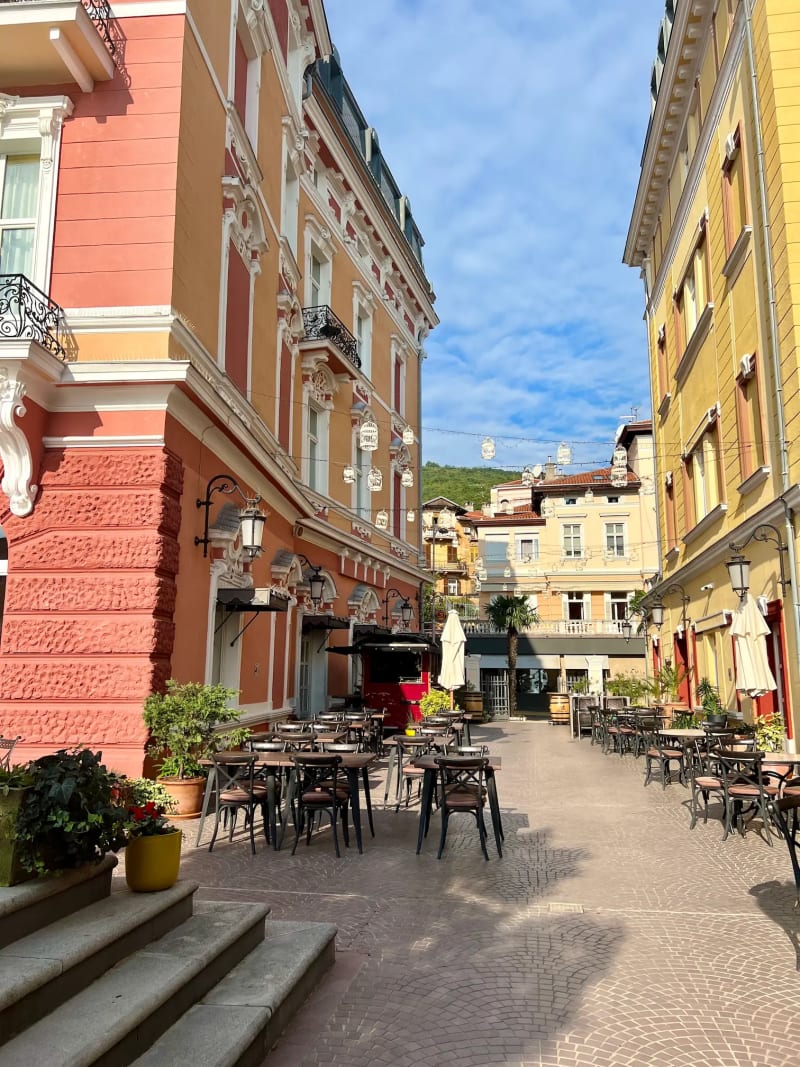
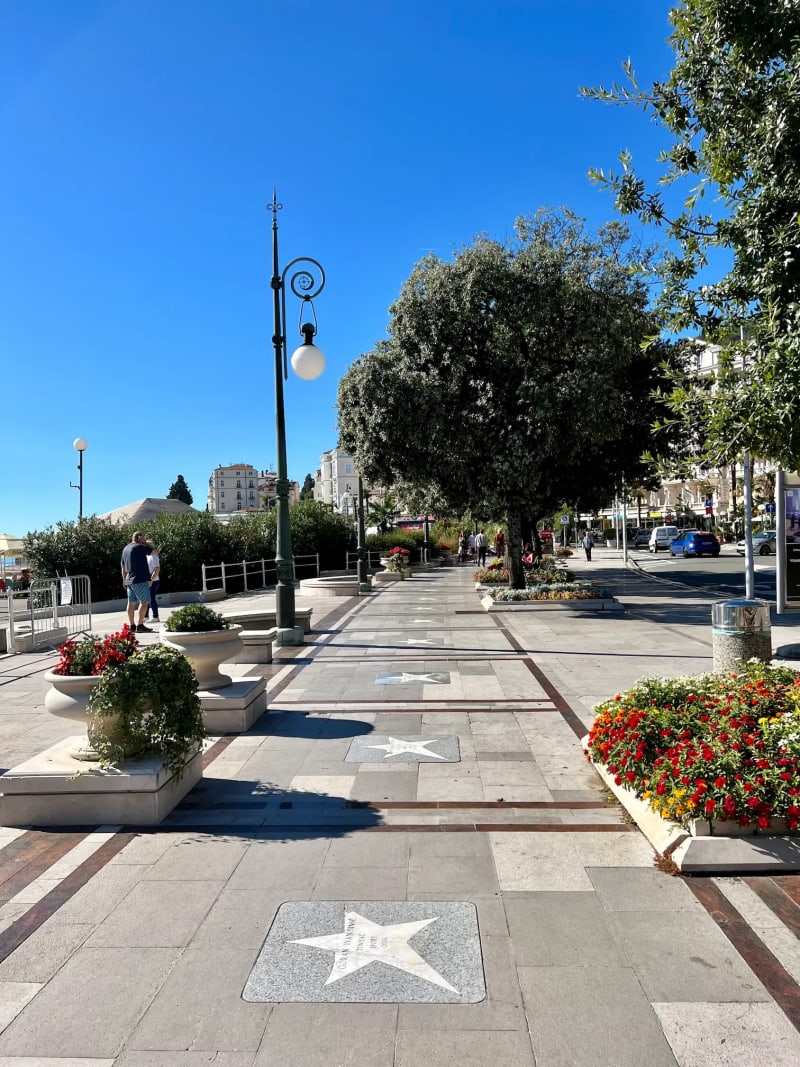
Grad Opatija
Don't miss iconic landmarks like the Croatian Walk of Fame (like the ones in Hollywood, marble stars honoring famous Croatians along the promenade near Slatina Beach) and the Maiden with the Seagull statue (a classic photo spot and a symbol of the Kvarner region as she stands forever overlooking the sea).
Beyond these must-sees, give yourself at least one day without an itinerary, wandering aimlessly, leaving your day in the hands of fate. You never know what you'll come across: We randomly ended up at an outdoor event at Hotel Kvarner - free to enter, with live music and wine/food tastings! The summer stage or open-air theater near Park Angiolina often also has shows, concerts, or festivals going on (check out their website for schedules)!
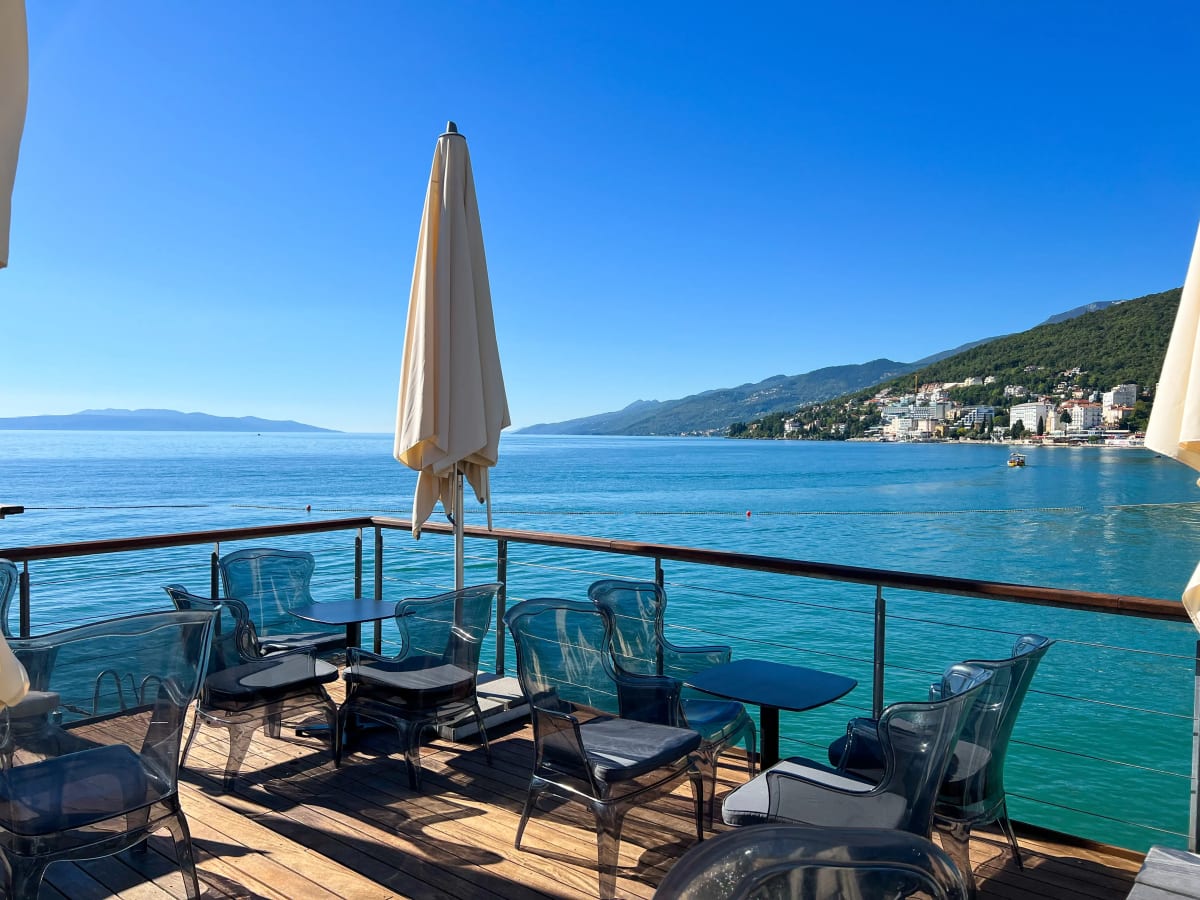
Note for young travelers wanting nightlife: During the off-season, it's pretty quiet (bars are either closed or empty, even on weekends). If you're there off-season looking for nightlife, head ~15-20 minutes along the coast to Rijeka - there's plenty of spots to grab a drink and dance year-round.
Ičići
Vibe: Luxurious, mountainous
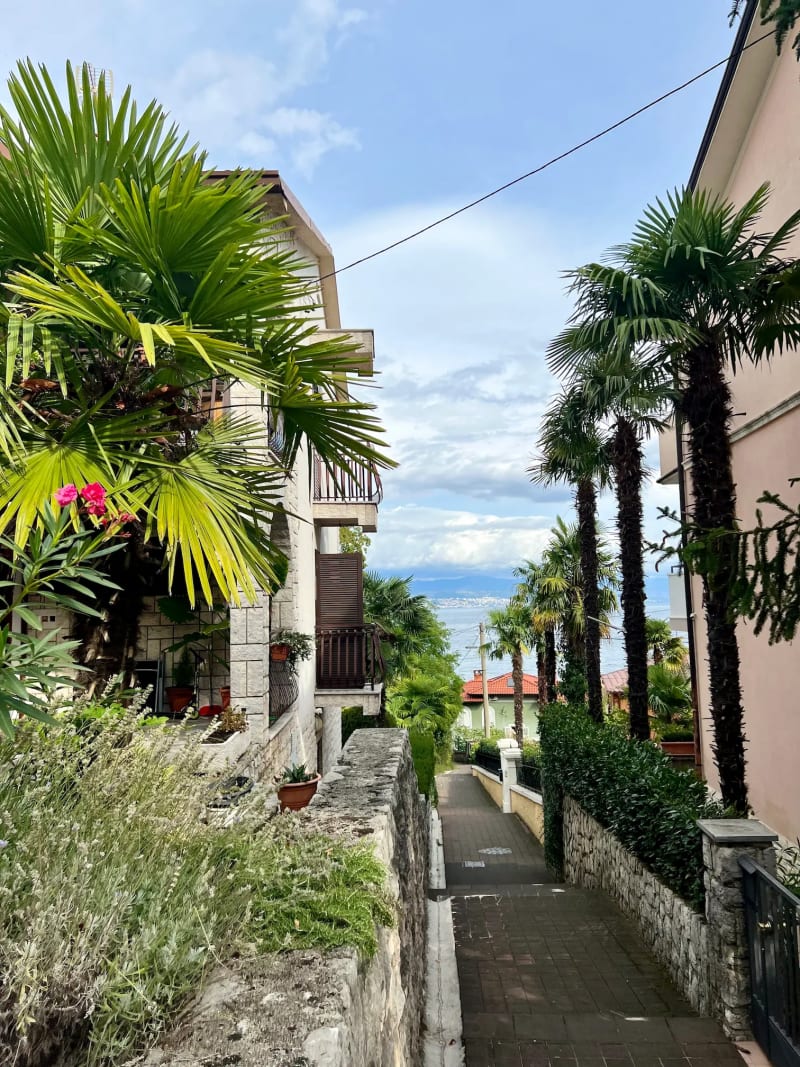
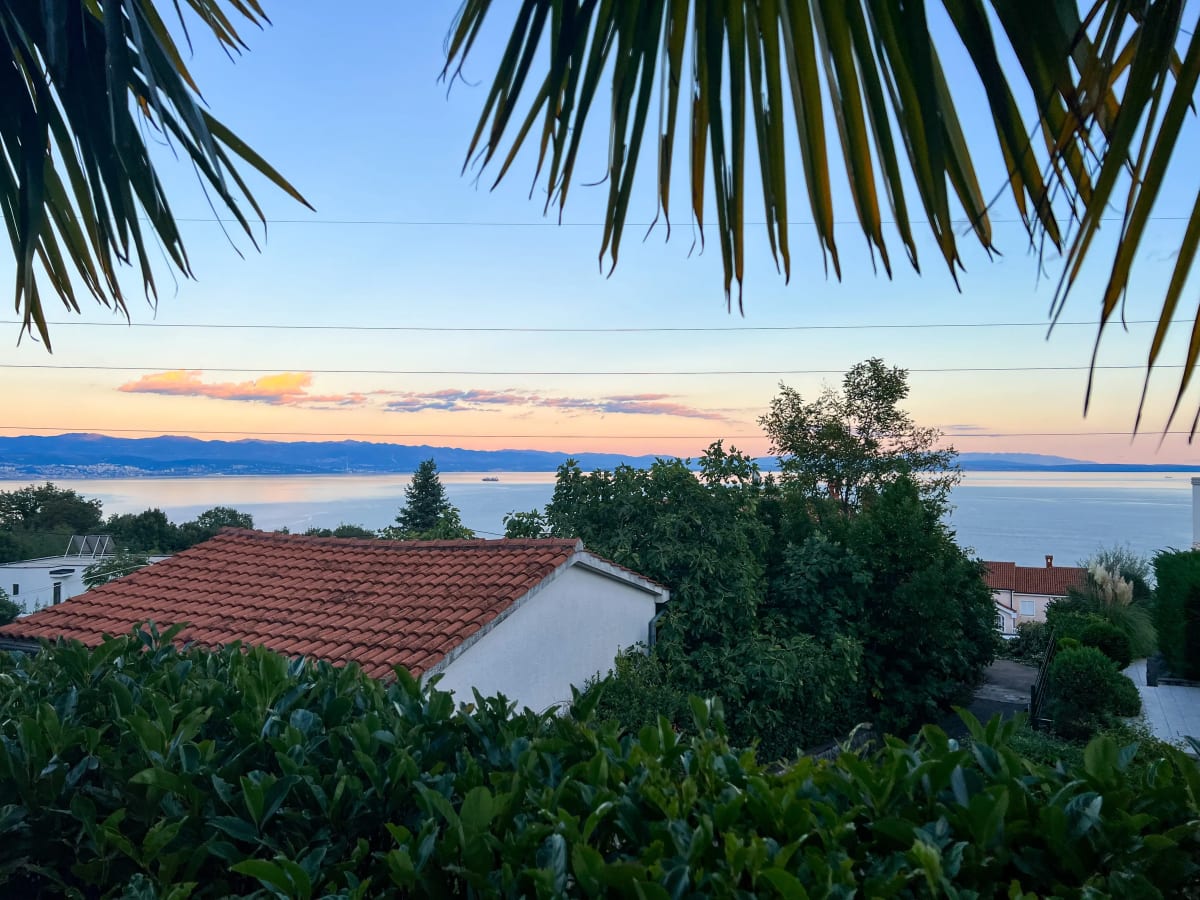
Arguably the most naturally beautiful town in the Opatija Riviera, Ičići rests on the slopes of Mount Učka, cascading down to meet the Adriatic Sea. Panoramic views accompany elegant Mediterranean-style homes that line the winding roads.
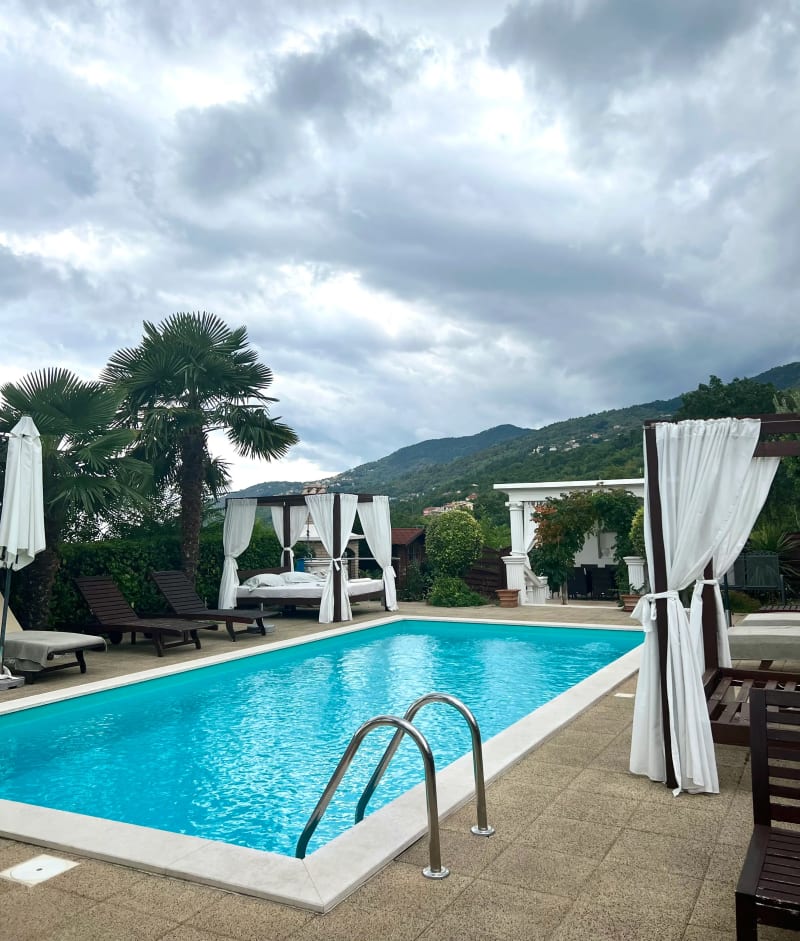
We loved our stay in an affordable, luxurious villa with a huge shared pool, sunbeds, outdoor dining area, and those beautiful views. Highly recommend something similar!
Lovran
Vibe: Medieval old town, scenic harbor, chestnut festival
South of Ičići (passing tiny Ika), Lovran is a medieval town with a cozy, historic vibe blending culture and relaxation. Wander narrow cobblestone streets, lined with ancient stone houses and churches (like Crkva Svete Trojice), or stroll the harbor at sunset. In October, the famous Marunada chestnut festival brings roasted chestnuts, local wines, desserts, and live music (check the website for dates - usually a mid-October weekend).
Stay-wise, opt for a quaint apartment in the old town with a balcony overlooking the harbor. It's quieter and more authentic than central Opatija.
Mošćenička Draga
Vibe: Beach, nature
Known for one of the riviera's best beaches (Sipar), this village on the southernmost end has clear waters, pine forests, and a relaxed pace. It's popular for swimming, diving, and exploring nearby trails, making it a top pick for nature lovers or families. It connects via a short path to the medieval hilltop town of Mošćenice, with panoramas and historic charm. Choose a seaside stay with views — many are budget-friendly and come with terraces for morning coffee overlooking the Adriatic.
Lungomare Promenade: The Best Coastal Walkway in Opatija Riviera
One of the best things to do in Opatija is strolling the Lungomare Promenade (also known as the Franz Joseph I Promenade), a peaceful and stunning 12km coastal walkway stretching from Volosko to Lovran. Access points to the promenade exist anywhere you can get near the sea between these towns.
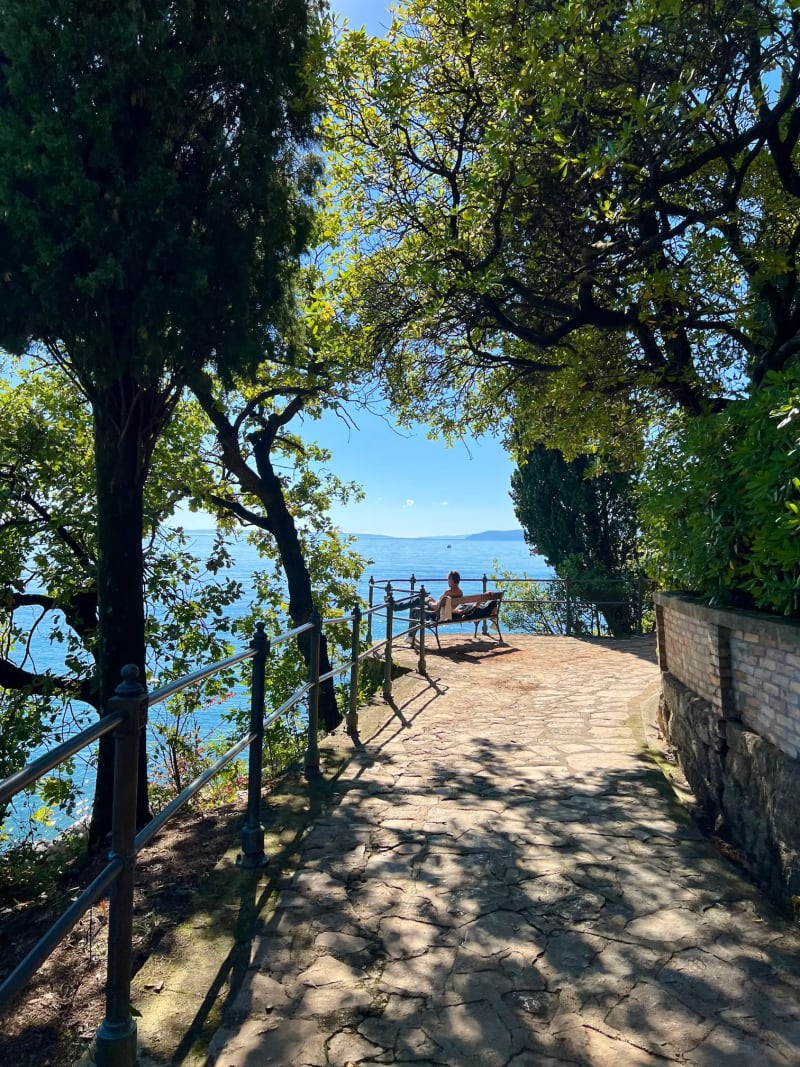
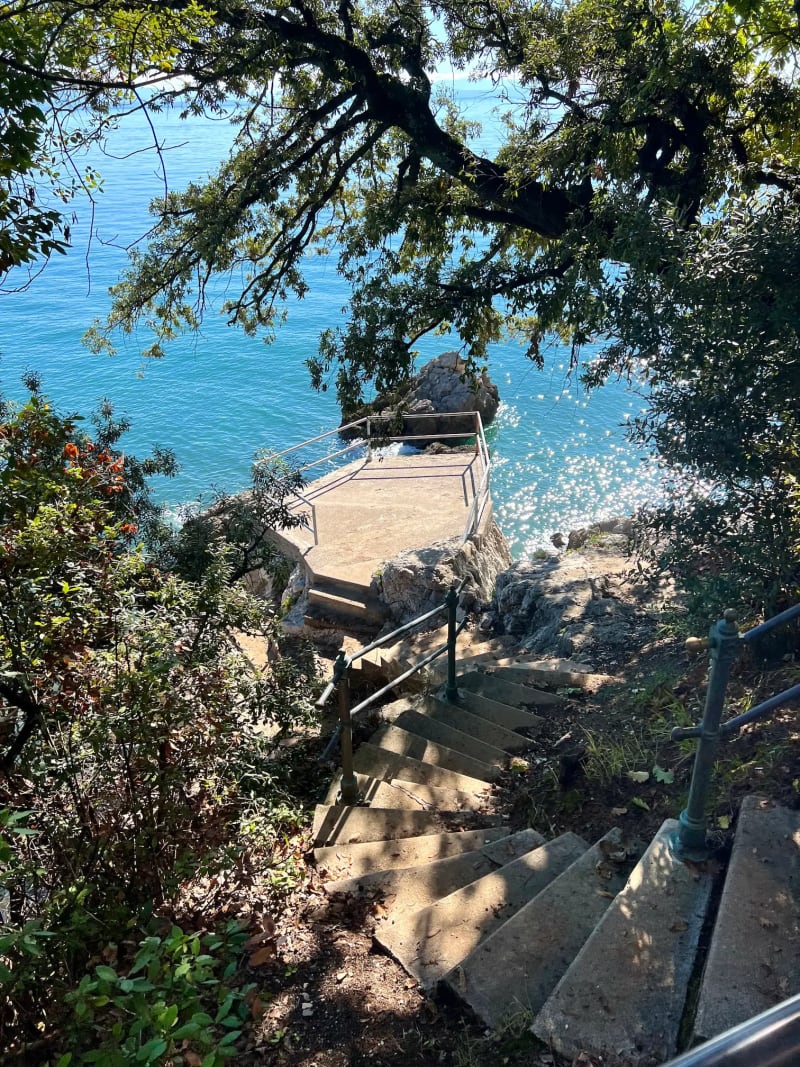
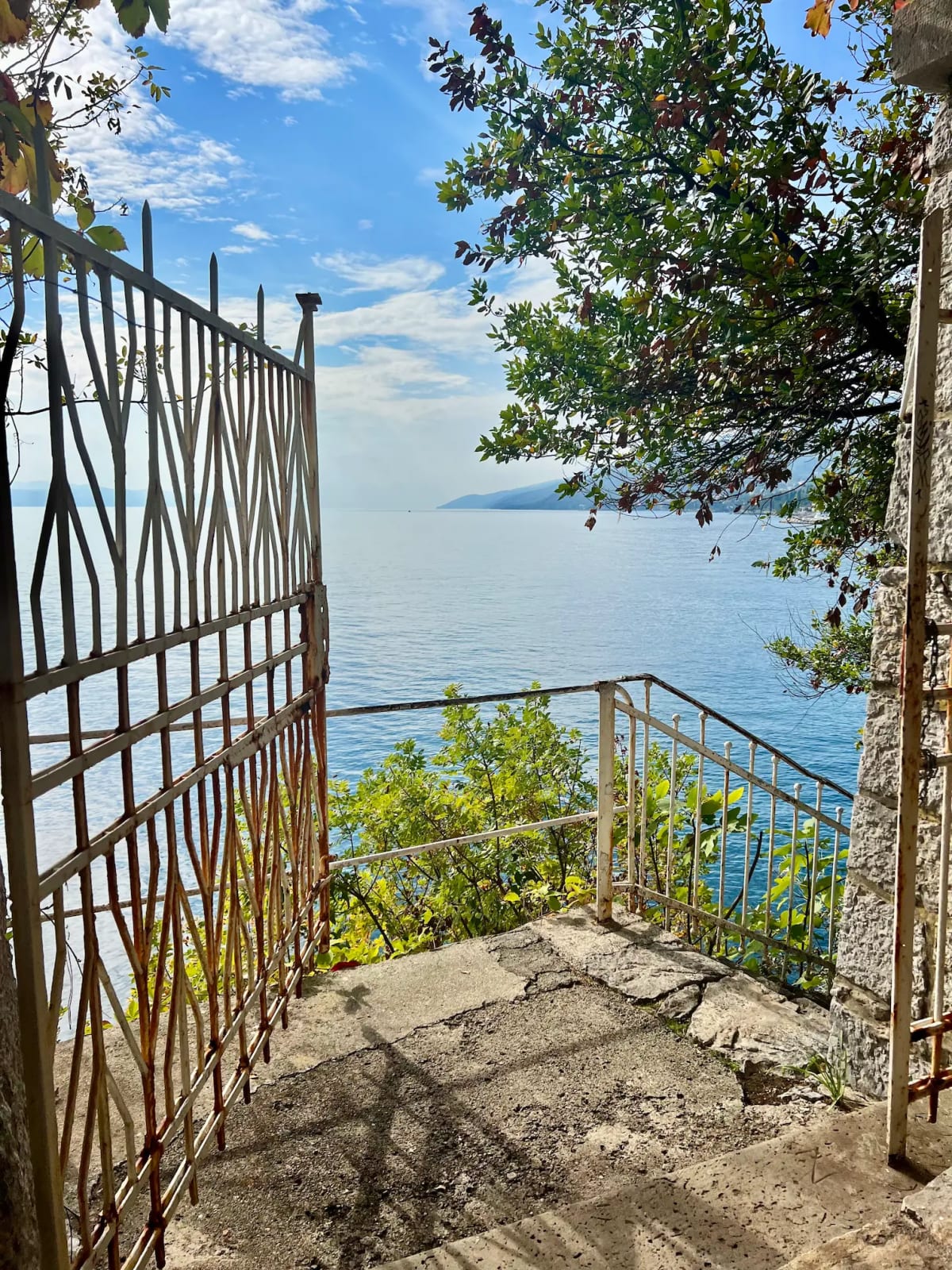
A favorite for locals and tourists alike, the whole path is breathtaking and equipped with benches to pause and take it all in. You’ll find multiple stone stairways leading to hidden swim spots on the rocks or secret beaches. The water along the riviera is clear, blue, and inviting - you could spend hours at one of these spots, as I've done countless times, soaking up the sun and enjoying picnics!
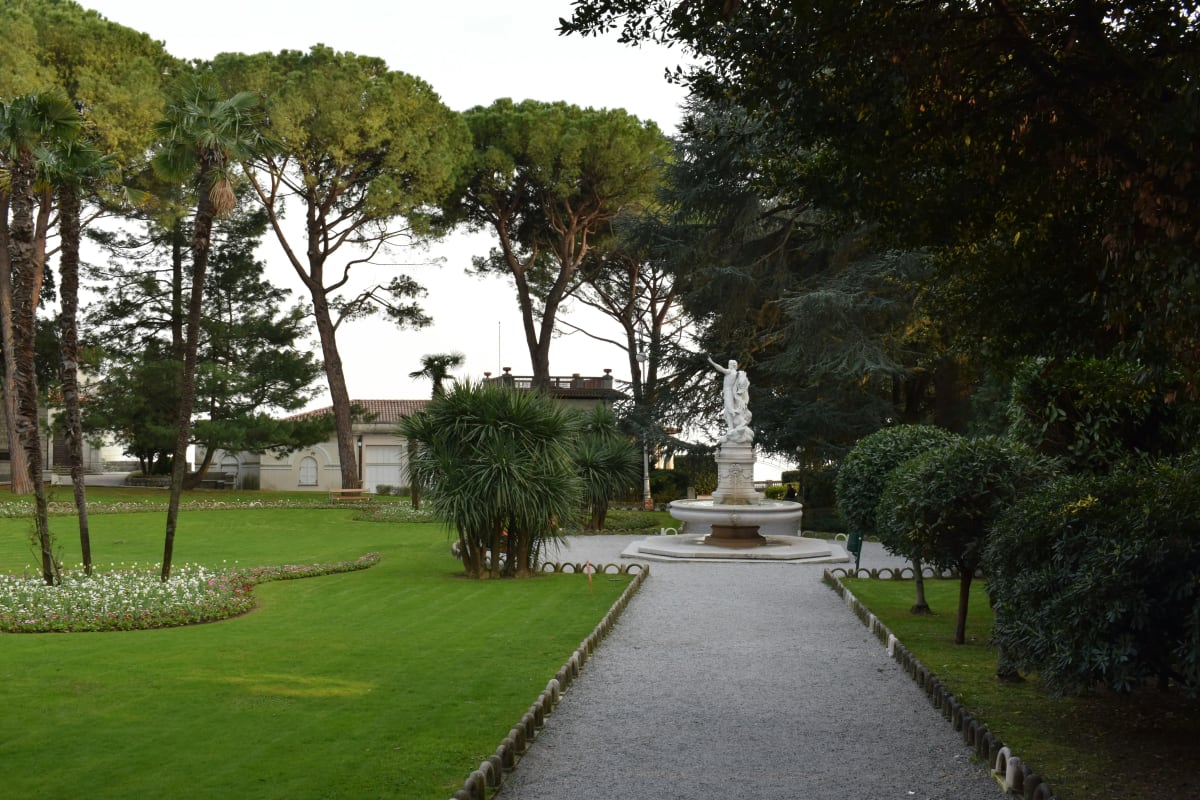
St. Jakov park - photo by Kristina Kutleša on Unsplash
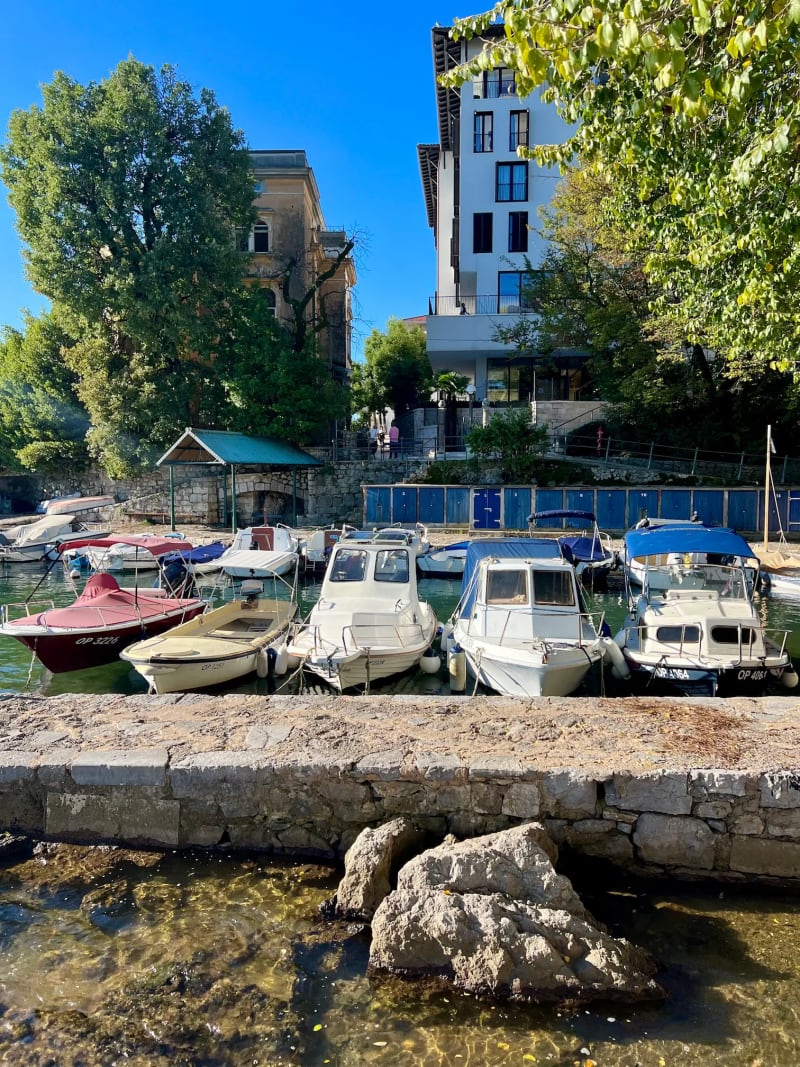
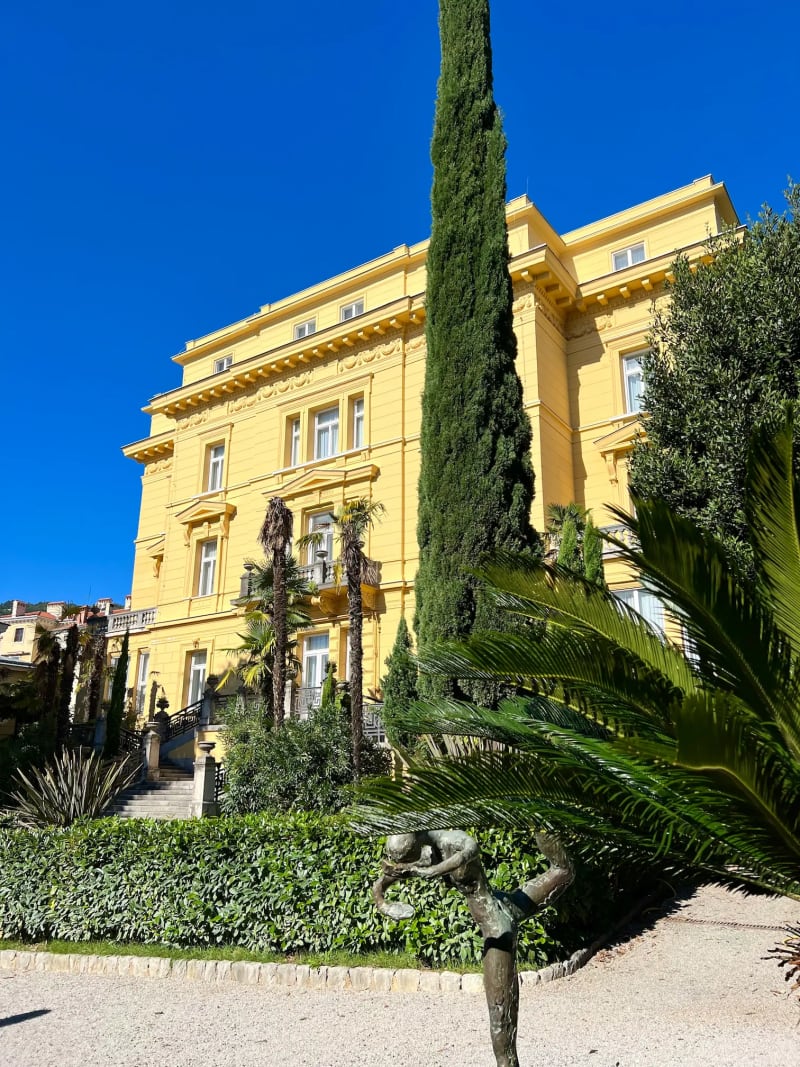
As you continue, the promenade winds past marinas, historic buildings of architectural perfection, and famous landmarks. There's also multiple entries to parks adorned with bamboo forests, statues, and vibrant tropical gardens - my favorites are Park Angiolina, the largest on the riviera and a must-stop for its exotic flora, and St. Jakov park which is in my opinion the most elegant.
Hiking Opatija: Mount Učka Nature Park Trails and Tips
Mount Učka is particularly unique to Croatia due to it's rich, abundant vegetation on the side that faces the sea. Its position between the Istrian peninsula and the Kvarner Bay creates a microclimate that supports diverse flora including beech forests, sweet chestnut groves, and Mediterranean shrubs - one of the many reasons I love Opatija so much!
Nature Park Učka has several trails through scenic mountain landscape with varying difficulty - some are family-friendly while others require a high fitness level. Options include mountain biking, leisurely walks, hiking, free climbing, or — for adventure seekers — hang gliding or paragliding from the summit for an adrenaline rush with epic sea views. Entrance to the park is free but some activities like paragliding may require permits.
Getting to Učka Nature Park Trails
Let's start with how to get there: Access is straightforward from any Riviera town, ranging from 12-25km away. Many main entry points are at Poklon Pass (922m elevation) or lower trailheads in villages like Veprinac and Lovranska Draga, and some dedicated trails connect directly to towns like Lovran.
Driving is the easiest way for flexibility and there's free parking at trailheads. Roads are well-maintained but winding and uphill with hairpin turns so drive cautiously. Public buses are infrequent, mainly running on weekends and only reaching Poklon, limiting access to various trails. Some trails you can get to on foot directly from towns (e.g., Lovran-Poklon-Vojak loop, Sv. Jelena village from Ičići or Mošćenička Draga). If opting for Bolt or a taxi, schedule your pickup in advance since cell service can be spotty on the mountain.
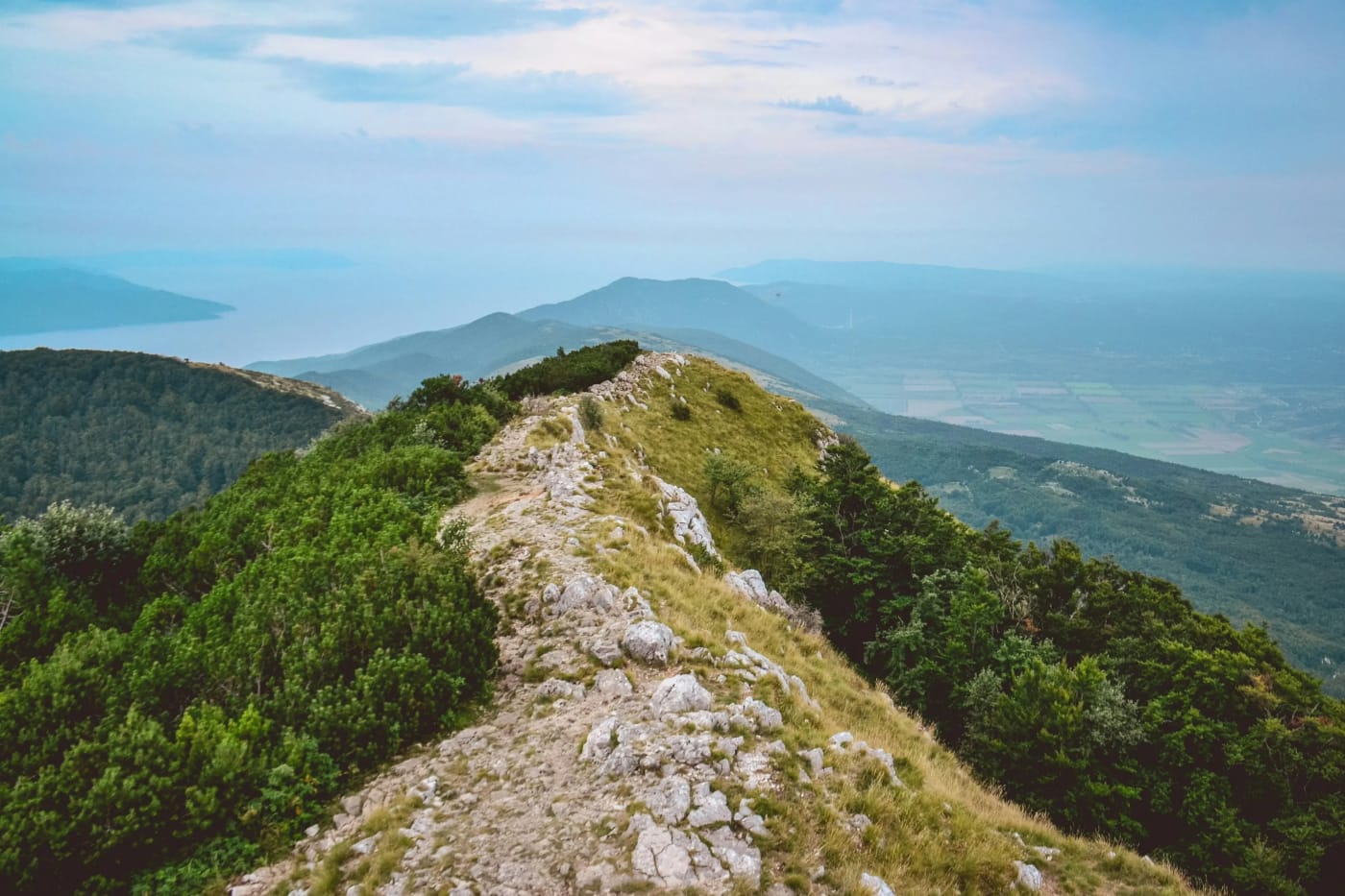
Top of Mount Učka; Photo by Marino Linic on Unsplash
Some notable hiking routes include:
- Slap Walking Trail: Short and easy stroll (800 m, 20-30 minutes, minimal ascent). From Lovranska Draga to a seasonal waterfall, perfect for a quick nature escape amid chestnut and oak groves.
- Vela Draga educational trail: Easy and beautiful (2km, 1-1.5hrs, minimal ascent). Passes the Vela Draga canyon - a stunning geomorphological monument formed over millions of years by natural forces, featuring dramatic limestone towers and a vantage point for panoramic views.
- Poklon - Vojak - Poklon: Easy summit experience (7 km loop, 2-3 hours, 451 m ascent). Starts and ends at Poklon (922m), ascending to the Vojak summit (1401m) with sweeping vistas of the Adriatic Sea, Rijeka Bay, and surrounding islands on clear days.
- Trebišća-Perun Historic and Mythological Trail: Moderate-to-difficult cultural hike (15 km, approx. 7 hours, varied ascent). Explores Slavic mythology and ancient settlements, requiring good preparation with water and sturdy shoes.
The best times to hike in Mount Učka from the Opatija riviera are spring (April-June) for blooming wildflowers or autumn (September-October) for milder temps. I was there in autumn and hiked to Vojak with perfect weather conditions - the uphill climb had me sweating in the midday sun, but the off-season breezes cooled me down. While summers can be hot, starting early helps; bring plenty of water, sunscreen, and insect repellent. I recommend downloading trail maps from the park's website or using apps like Komoot for navigation.
Best Beaches in Opatija
You can pretty much hop in the water anywhere along the coast (like along the promenade). When it comes to beaches, however, what the riviera lacks in sandy stretches, it makes up for in pebble and concrete. Fronted by turquoise waters and backed by green hills, the vibe echoes a peaceful mediterranean charm. Many are Blue Flag certified - a global recognition for clean water, environmental management, and more.
Fun Fact: As of 2025, Croatia has 74 Blue Flag beaches!
Some offer sunbeds and are near restaurants, cafes, and shops, while others are quiet hidden gems. You'll find plenty of beach clubs (affordable to luxury) and endless water activities along the Riviera, such as kayaking, boating, sailing, snorkeling, and scuba diving!
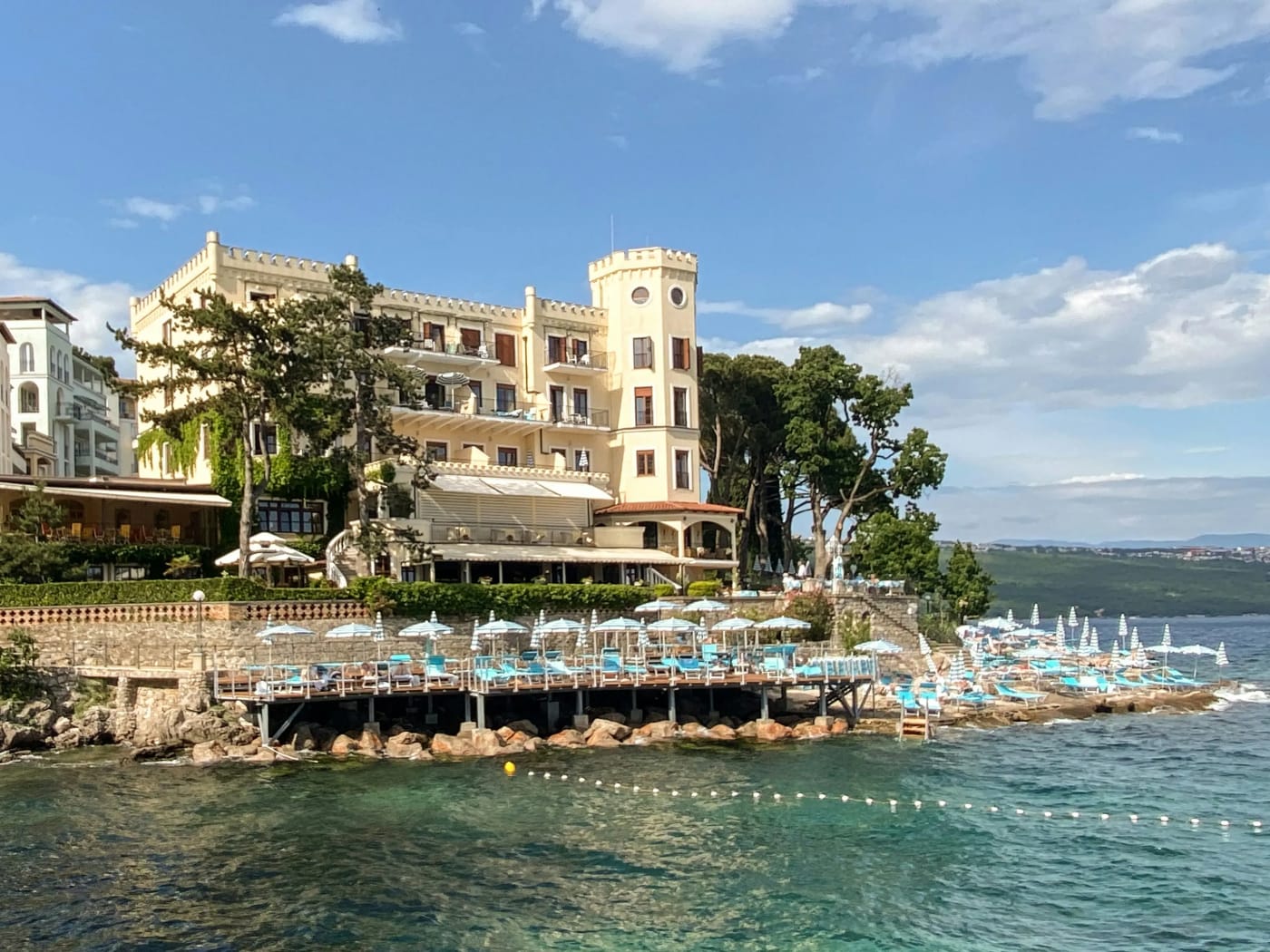
Scenic beach club at Hotel Miramar in Opatija, Croatia - photo by Linda Gerbec on Unsplash
The beaches are serene and so unique, and some of my favorites are:
- Volosko Beach (Volosko): Small, artsy stretch in the fishing village harbor — charming and uncrowded with authentic vibes. Best For: Village explorers
- Tomaševac (Opatija): Blue Flag-certified mix of pebbles and concrete with a family-friendly atmosphere, playground and shallow access for kids. Best For: Families and groups playing games (e.g., picigin, a Croatian water ball game)
- Slatina (Opatija): Large, Blue Flag concrete beach with steps into the sea. Lively (bars, restaurants, water sports) and backed by the bustling promenade. Best For: Families and first-timers
- Medveja (Lovran): Secluded bay framed by cliffs and forests, offering a wilder, more dramatic escape. Explore nearby coves for snorkeling or hike trails to Učka Park. Best For: Adventurers and couples
- Sipar (Mošćenička Draga): Cove with aqua seas and pine-shaded spots—one of the Riviera's most scenic and least crowded, with Blue Flag status. Best For: Nature lovers and snorkelers seeking tranquility
Nearby bonus - Sablicevo (Rijeka, ~30min from Opatija): Rare gravel-and-sand mix, small and scenic with clear shallow waters, backed by high cliffs. Best For: Families and day-trippers from Opatija
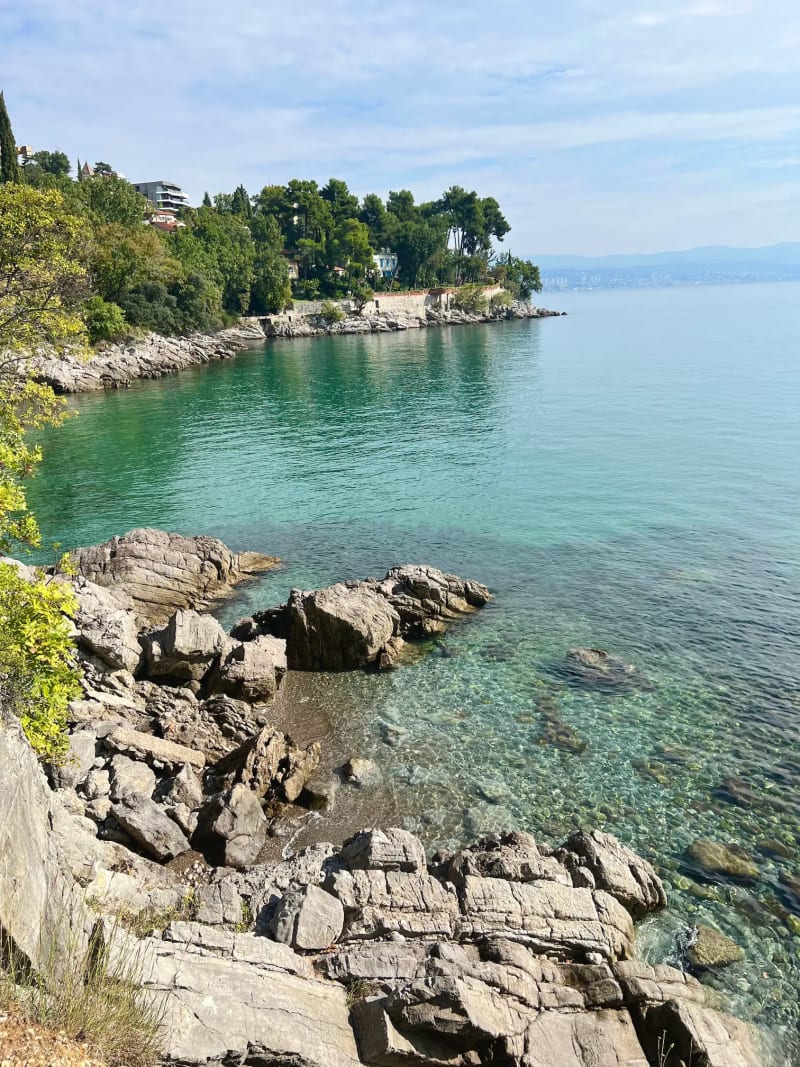
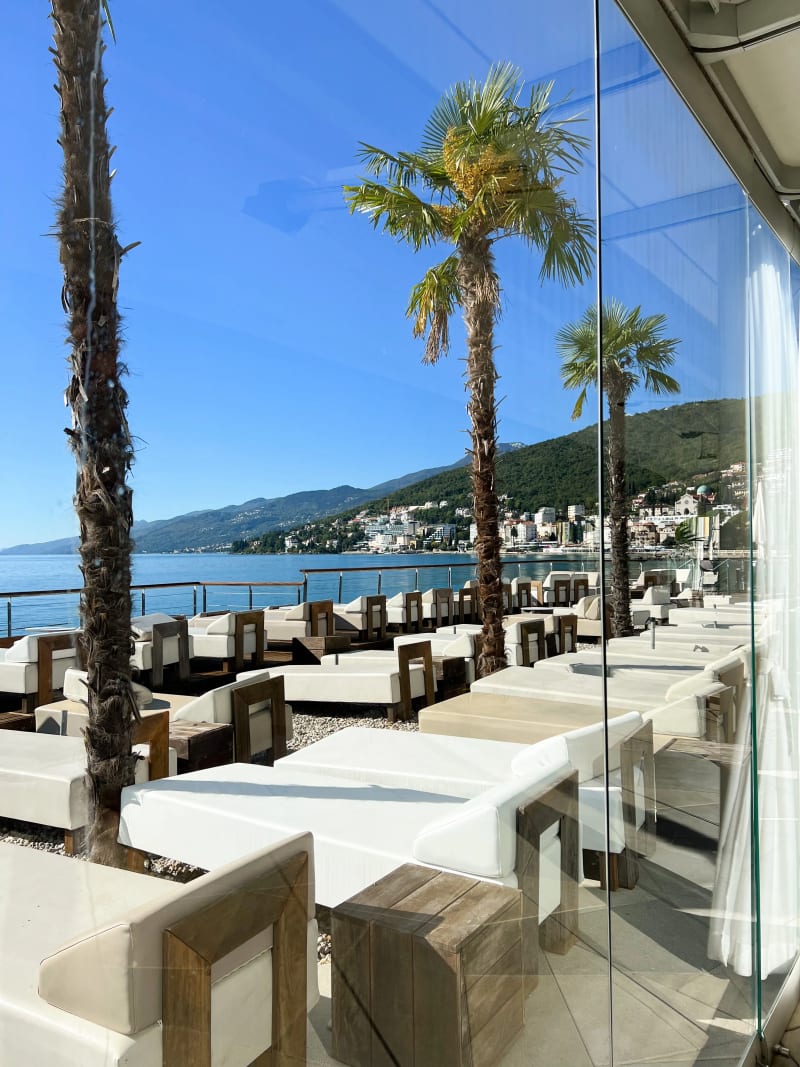
(L) Small pebbled beach on the riviera; (R) Lido Beach Club in Grad Opatija
Day Trips from Opatija
The Opatija Riviera sits in close proximity to many of Croatia's most popular destinations, making it an ideal base for exploration. Driving along the coast offers endless sea views, while venturing inland brings dramatic mountainous landscapes. We did a lot of driving during our two months in Croatia, and I am not exaggerating — every route we took, no matter where, was stunning.
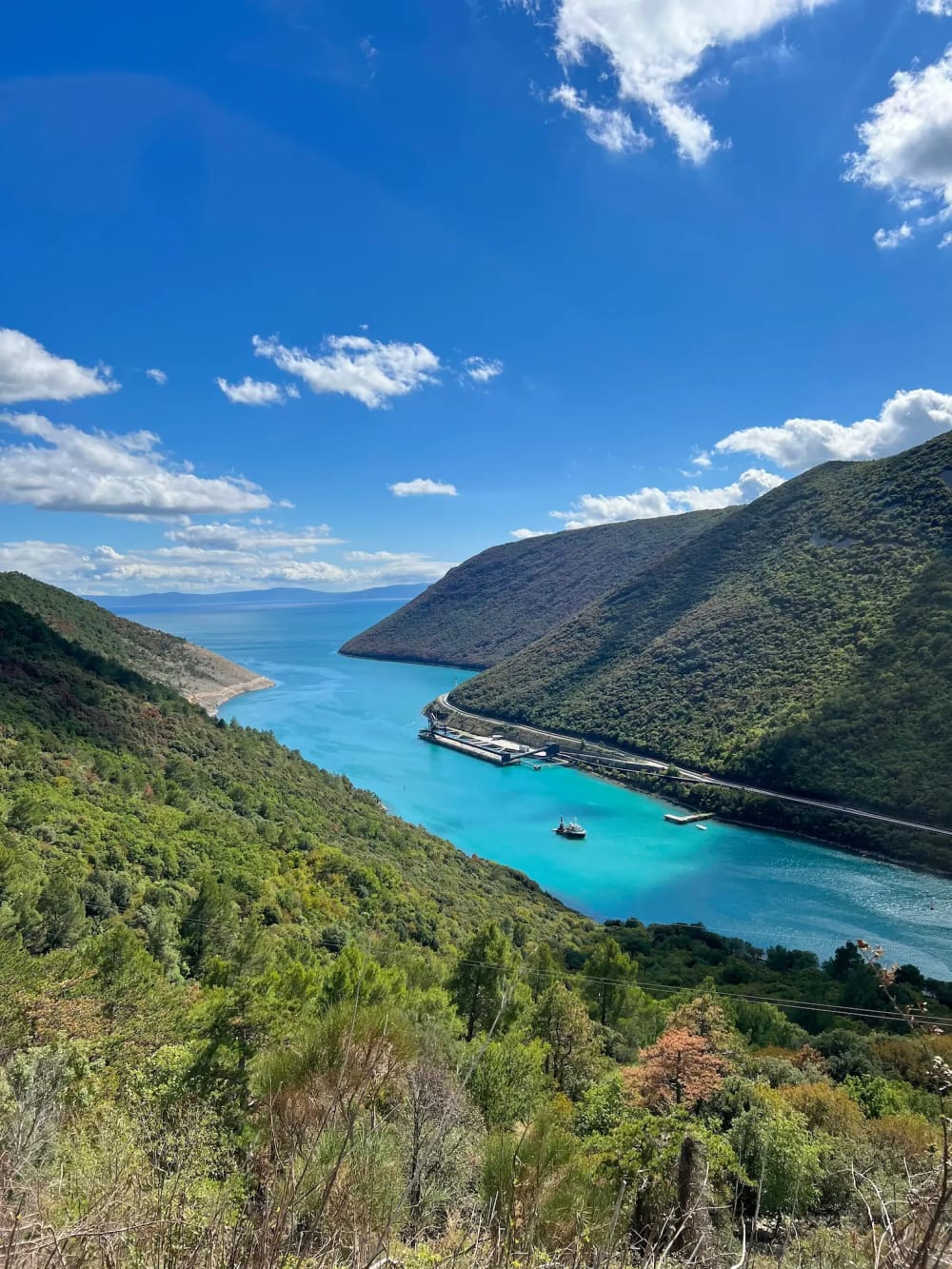
Coastal views of mountains & turquoise waters
Must-add day trips from Opatija to your Croatia itinerary include Pula, Plitvice Lakes National Park, Cres Island, and Krk Island.
Pula
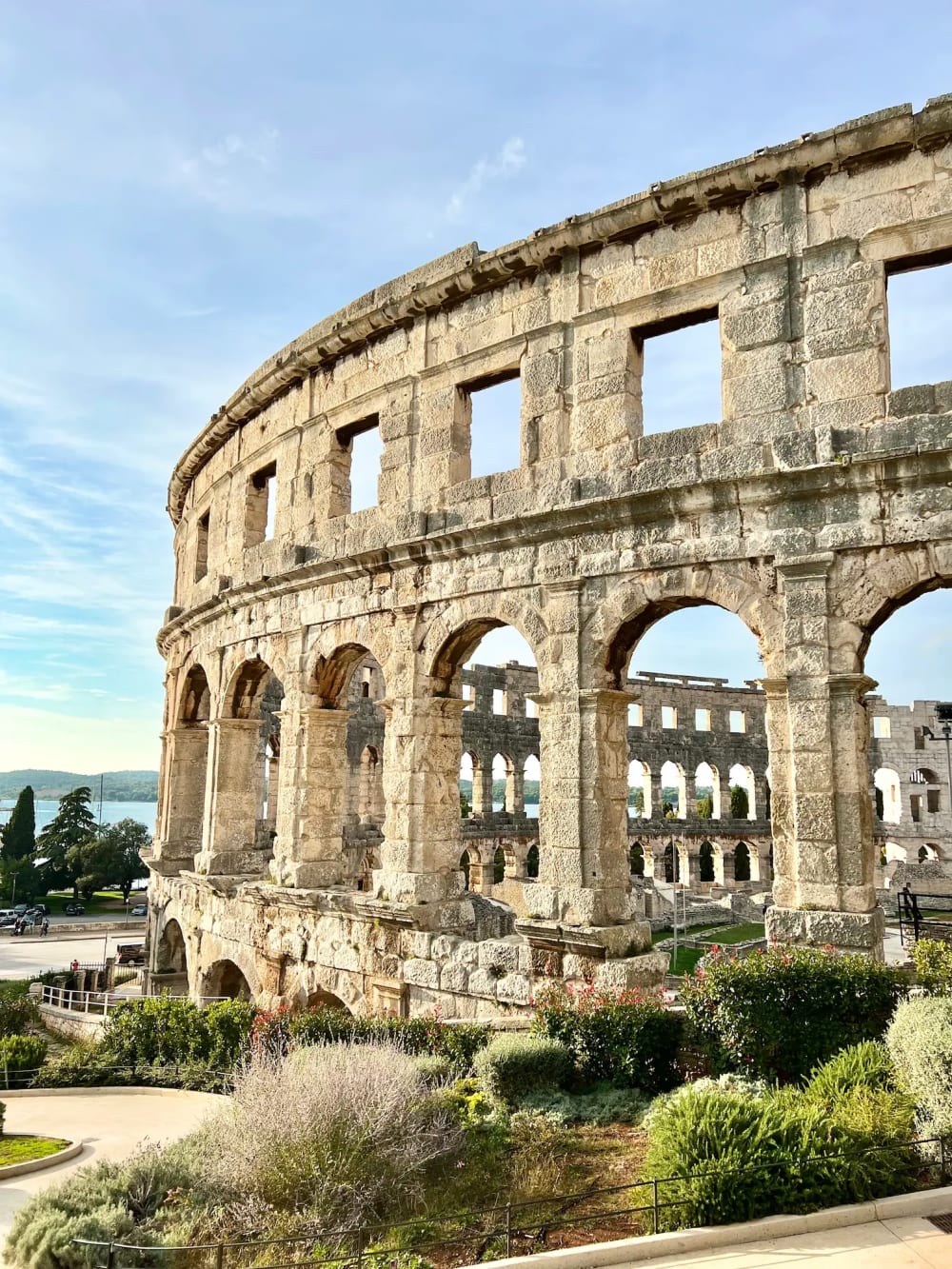
In about a 1.5-hour drive you can reach Pula, a vibrant city with a historic core of cobblestone streets, ancient architecture, and iconic landmarks. Must-visits include:
- Pula Arena: One of the world’s six largest preserved Roman amphitheaters
- Temple of Augustus: Roman temple built between 2 BC and 14 AD, dedicated to the emperor Augustus
- Arch of the Sergii: Roman arch once used as a city gate
- Church and Monastery of St. Francis 14th-century Romanesque and Gothic monastic complex

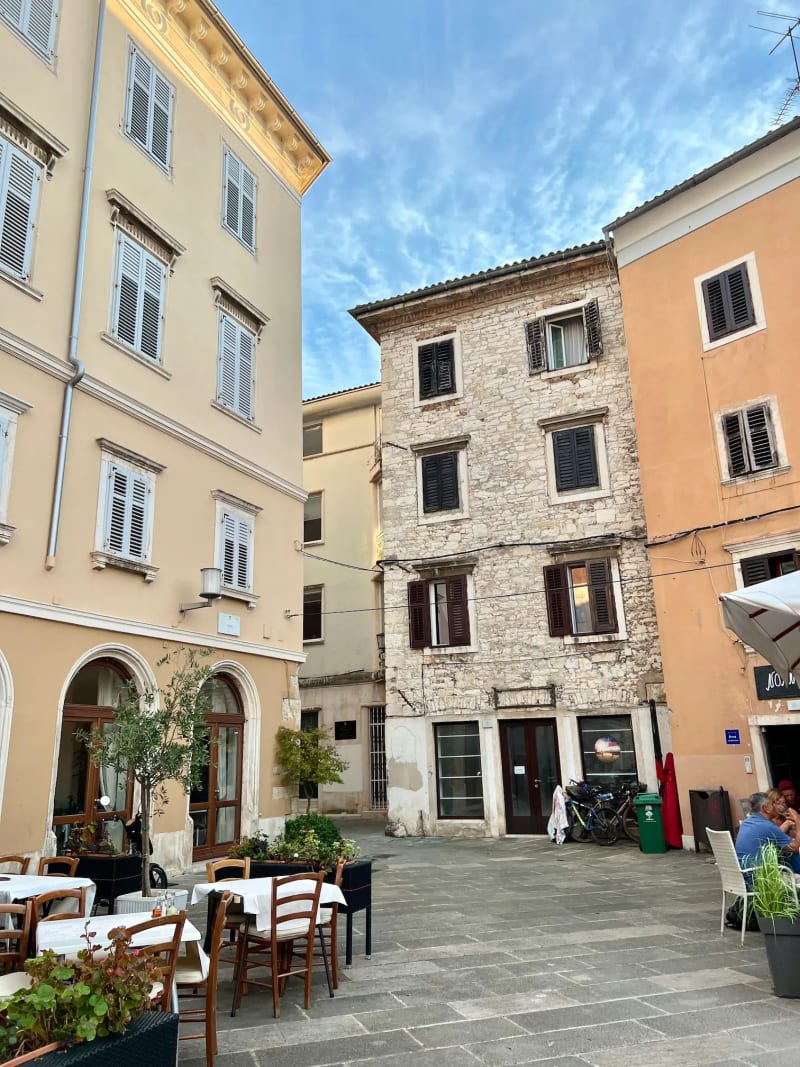
The lively Forum Square, adjacent to the Temple of Augustus, is perfect for grabbing a drink before strolling to the waterfront for a stunning sunset. For dining, we wandered down some narrow alleys and stumbled upon a low-key medievalesque tavern tucked away on a side street — the kind of hidden gem serving Istrian dishes away from crowds. I highly recommend seeking out these spots for a more authentic meal. As a little side note, there are lots of stray cats roaming around Pula - if you’re an animal lover like me, carry a bag of cat treats in your backpack!
Plitvice Lakes National Park
To get to Plitvice Lakes, you can drive (~2.5 hours), take a bus (~3-4 hrs) or join a guided tour with transport for ease. Plitvice Lakes is a 300km² protected park in central Croatia and is one of the most eyecatching national parks I have ever been to. Walking through it is a must when visiting Opatija. There are eight different trail options, each full of rivers and waterfalls and complemented with tons of stunning views. For more information on how to get there, which trail to take, and what to expect, read my comprehensive guide to Plitvice Lakes National Park.
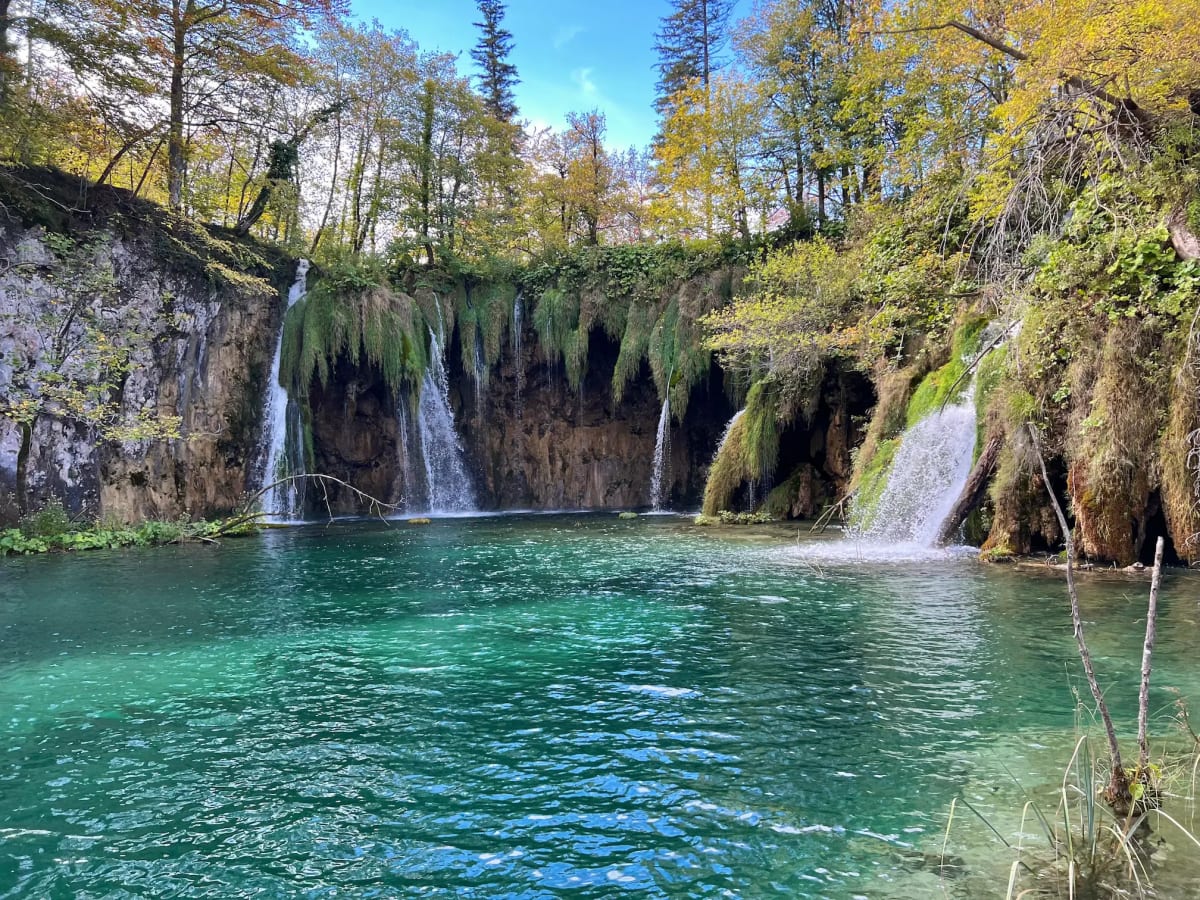
Plitvice Lakes National Park
Cres Island
If you’re looking for more of an adventure, head to one of the nearby islands for swimming, sunbathing, and exploration. With plenty of accessible options off Croatia's coast, Cres is the closest to the Opatija Riviera - just a 40-minute drive to Brestova, followed by a 20-minute ferry (~4-5 EUR one way, or ~30 EUR with a car). You can also arrive via an organized tour, like the one below for a hassle-free experience.
Some of the top things to do on Cres Island include:
- Cres Town: Wander the charming harbor town with its Venetian architecture, visit the Cres Museum for local history, and enjoy fresh seafood at waterfront restaurants.
- Lubenice Village and Beach: Perched on cliffs, this ancient hilltop village offers stunning views; hike down (30-40 minutes, moderate descent) or take a boat to the secluded pebbled Lubenice Beach (Sveti Ivan). It has crystal-clear waters and a nearby blue grotto for swimming.
- Valun Village: See the ancient Valun Tablet (Glagolitic inscription), stroll the quaint streets, and relax at Raca Beach, a pebbled cove lined with pine trees, and offering restaurants and bars nearby.
- Mali Bok (Orlec Beach): A scenic trail leads to this small, rocky beach at the base of cliffs — gorgeous, scenic and quiet.
- Osor Archaeological Site: Explore the ruins of this ancient town bridging Cres and Lošinj, with remnants of Roman walls, forums, and a museum showcasing artifacts.
Krk Island
Krk Island, one of the largest in the Adriatic Sea, is connected to the mainland by a bridge, making it about a 1-hour drive from Opatija. Alternatively, buses run directly from Rijeka to Krk Town (about 1 hour 20 minutes); reach Rijeka from Opatija via bus line 32 (every 20-30 minutes, ~30-minute ride, ~5-6 EUR) or by car (~15-20 minutes). Krk is full of culture and diverse in attractions, sights, and activities. Krk blends history, culture, and natural beauty, with ancient towns & rural villages, bustling beaches & hidden coves, and lively bars & serene cafes.
Some of the best things to do on Krk Island are:
- Krk Town: Visit the historic center with Frankopan Castle, the Cathedral of the Assumption, and city walls; stroll the harbor and enjoy local markets or the aquarium.
- Vrbnik: Known for its cliffside location and Žlahtina wine; taste local wines, explore narrow streets, and relax at Zgribnica Beach with bars, cliff jumping, and sunbed rentals.
- Punta Debij Beach: In Punat, one of the few sandy beaches on the island; nearby, take a boat to Košljun Island's Franciscan Monastery for a cultural detour.
- Biserujka Cave: A short, illuminated cave tour near Rudine, with stalactites, stalagmites, and legends of hidden treasure.
- Stara Baška and Škrila Beach: Scenic coastal paths lead to this rugged area with cliffs, hills, and the pebbled Škrila Beach offering kayak rentals and tranquil vibes.
Interactive Opatija Riviera Map
We covered a lot in this guide, so feel free to explore this interactive map I created with all the locations mentioned—from beaches and landmarks to towns and hidden gems. Zoom in, click on the marked spots for details, and start planning your adventure!
What's your favorite spot in Opatija? Tag me on Instagram @blondevelvet_travel to show me, and subscribe below for early access to all my new posts!