What You'll Find in This Post
Quick Facts About Snorkeling in Aruba
- Top Spots: Tres Trapi, Antilla Shipwreck, Mangel Halto, Boca Catalina, Baby Beach
- Marine Life: Sea turtles, stingrays, moray eel, tropical fish
- Water Conditions: Warm, calm & clear (weather-dependent)
- Tips: Bring anti-fog spray, water shoes, underwater camera
- Safety: Respect marine life, avoid strong currents
- Phone Data: Maya Mobile eSIM - best data for the Caribbean islands!
Pro Tip: Arrive early at Tres Trapi for guaranteed sea turtle sightings!
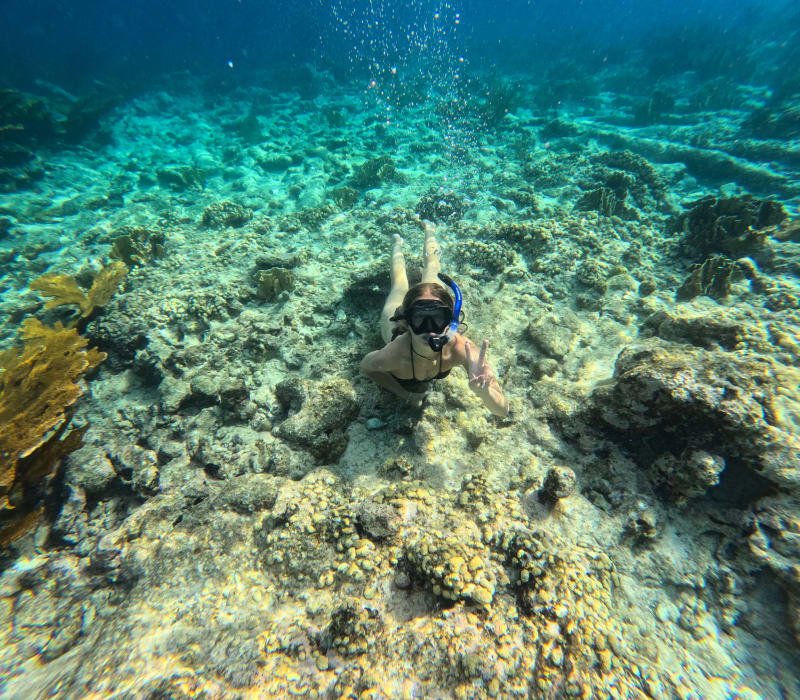
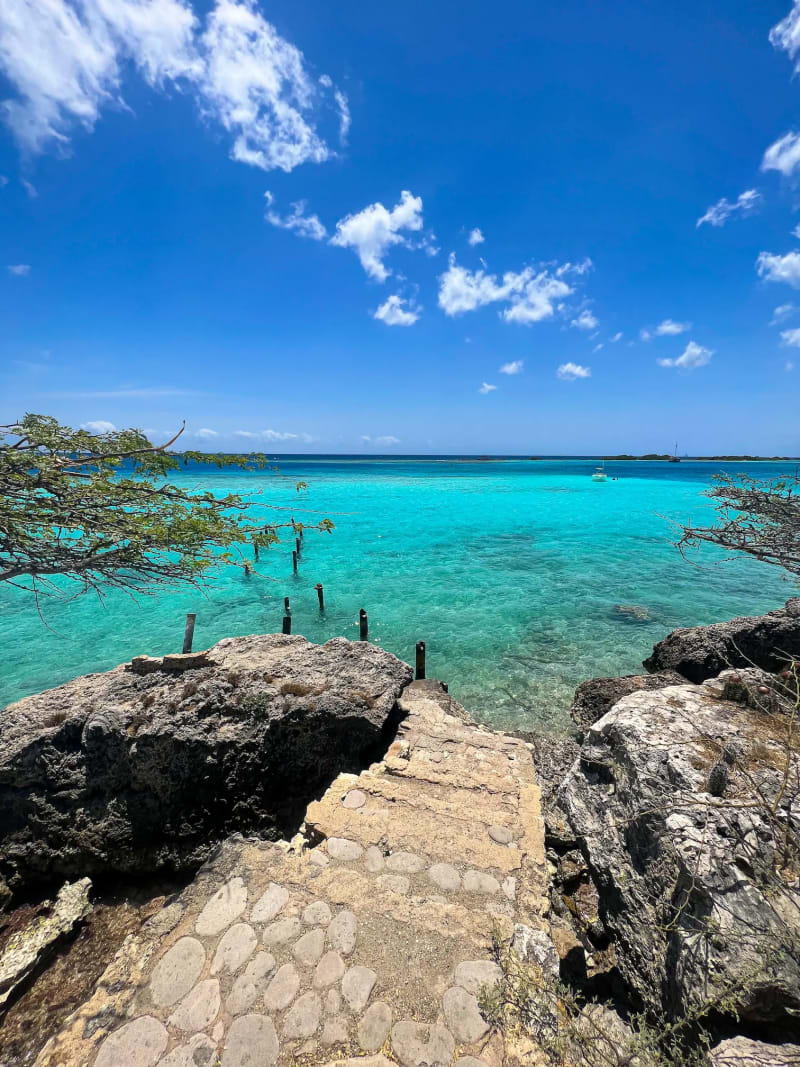
Mangel Halto Beach
Disclaimer: This post contains affiliate links. If you book or buy through these links, I may earn a small commission at no extra cost to you. Thank you for supporting my blog!
The Underwater World of Aruba
Aruba is one of my favorite Caribbean islands thanks to its crystal-clear turquoise waters and abundance of marine life. The water is consistently warm (averaging 79-85°F year-round), the waves are gentle on the west coast, and the sun shines nearly every day—making it a snorkeler's paradise. I've spent two months living here, rotating through beaches and snorkel spots, so I can tell you firsthand: snorkeling in Aruba is incredible! Expect to encounter sea turtles, stingrays gliding along the sandy bottom, schools of vibrant tropical fish (like parrotfish and angelfish), and even the occasional octopus, moray eel or jellyfish.
🇦🇼 Check out my Aruba Viator shop to book the BEST tours & activities on the island! 🥥🌴
Not every beach offers prime snorkeling, and each spot has its unique draws—like guaranteed turtle encounters at one or colorful reefs teeming with fish at another. In this guide, I'll focus on what I consider the top snorkeling spots in Aruba: Tres Trapi, Antilla Shipwreck, Mangel Halto, Boca Catalina and Baby Beach, with tips on what to expect, how to get there, pros/cons, and more. (If you're looking for a broader beach overview, check out my post on the best beaches in Aruba).
Best Time to Snorkel in Aruba
Aruba has year-round viability thanks to steady trade winds and low hurricane risk (it's outside the belt). In dry season (April-November), there's warmer water (up to 85°F) and calmer seas, but more crowds and higher prices. Rainy season (December-March) has cooler water (79°F) with short rains, fewer tourists and lower costs — ideal for uncrowded snorkeling, but keep in mind rain can stir up the sand and reduce visibility. Mornings are best for visibility (less wind/stirred sediment). Always check weather apps for wind forecasts—avoid snorkeling if it's windy as it can affect southern spots like Mangel Halto.
Things to Bring For Snorkeling in Aruba:
- Anti-fog spray: We had no issues purchasing nice snorkel gear on the island, but we visited many stores and couldn't find any anti-fog, which sometimes made it difficult to see clearly. It's hard to admire the sea life when you have to tread water to clean your mask, so get some in advance to avoid this issue!
- Underwater camera: Trust me, you'll want it. We bought a GoPro Hero12 from a tech shop in Oranjestad and it was worth every penny!
- Water shoes: Some spots are very rocky & sharp and can hurt your feet.
- Reef-safe sunscreen: Aruba's sun is intense, and chemical sunscreens can harm the coral reefs you're there to see. Opt for mineral-based ones (like zinc oxide) that are biodegradable & apply 30 mins before entering the water!
- Dry bag or waterproof pouch: To keep your phone, keys, and wallet safe.
Safety and Preparation Tips:
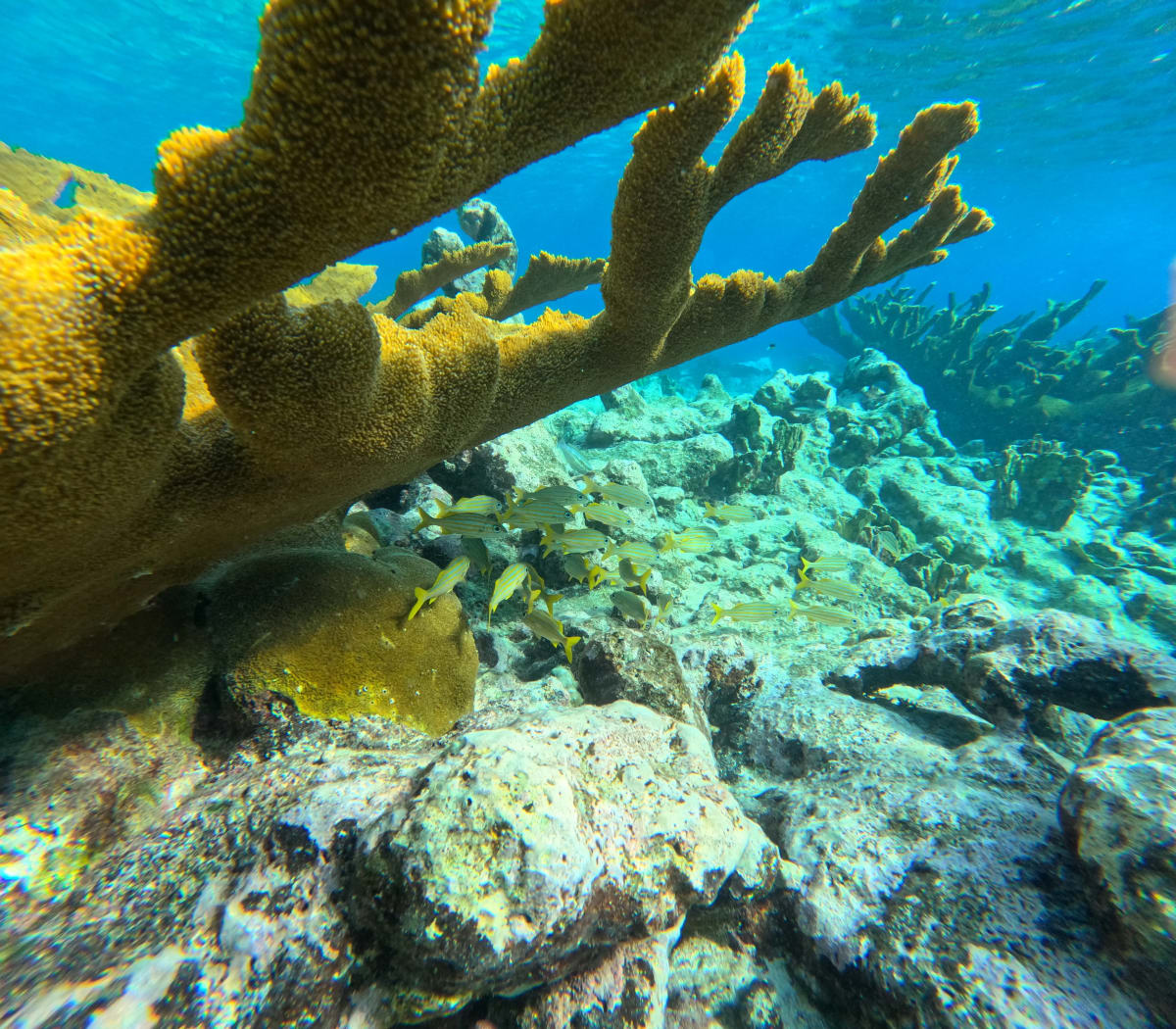
- Basics: Stay on the west coast; avoid east coast due to currents/waves. Don't snorkel alone; use a buddy system.
- Common Mistakes: Overlooking wind (can create choppy water); touching coral (harms both ecosystems and you (stings/cuts)); watch for jellyfish.*
- For Kids/Beginners: Start with shallow spots like Baby Beach.
- Gear: Full-face mask (easier breathing), fins (for currents), rash guard (sun/jelly protection) and a flotation device if not a strong swimmer.
*I read that jellyfish encounters aren't common, yet I got stung not once, but twice at Tres Trapi. It wasn't big but hurt and gave me a swollen mark in the shape of its little tentacles! It's not its fault - it's their ocean after all! Just look out for them at this location.
Top Beaches For Snorkeling in Aruba
Snorkeling at Tres Trapi
Highlights: Sea turtles, stingrays, pelicans
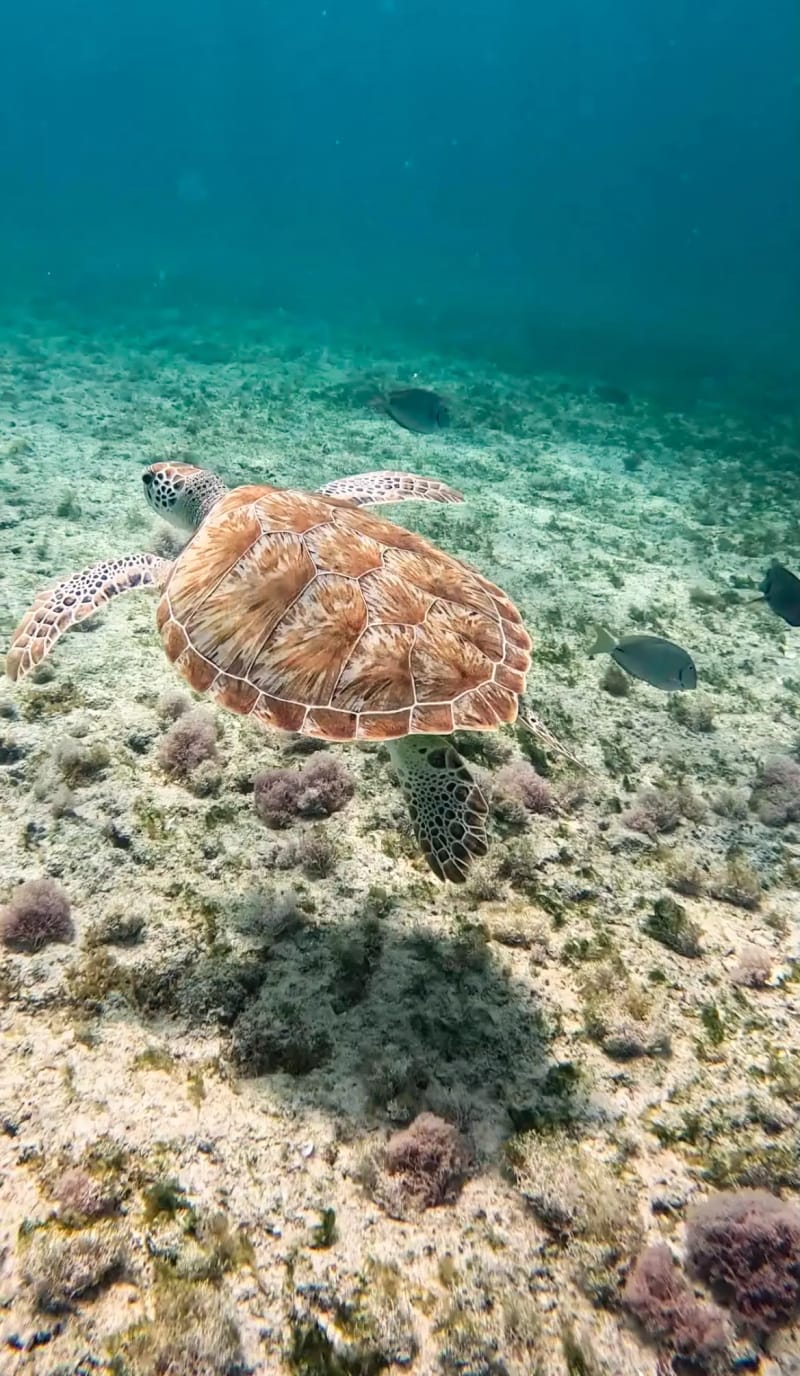
Of the two months I spent in Aruba, the number of days I devoted to snorkeling at Tres Trapi was bananas - it's that magical. If you're on a quest for sea turtles, this rocky cove on the northwest coast is your guaranteed spot. The turtles love grazing on the seagrass beds about 20 meters offshore. They're often around, but your odds skyrocket if you arrive early—ideally between 7 and 11:00 AM—before they drift farther out as the day warms up. They're stunning up close: watch them munch on seagrass, rest on the sandy bottom, or surface for air right beside you. But please keep in mind that green sea turtles are endangered and protected—never feed, touch, chase, or harass them. Keep a respectful distance (at least 10 feet) to let them behave naturally.
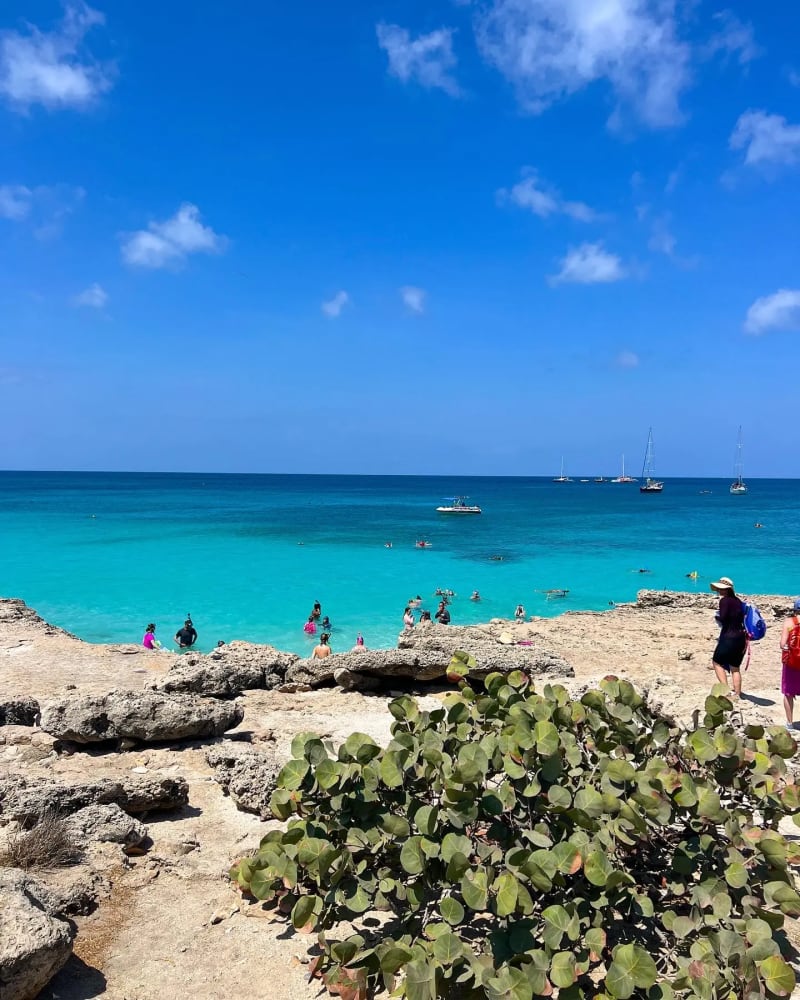
Beyond turtles, Tres Trapi has other life like stingrays gliding along the seafloor—we spotted one on our first visit, which was pretty amazing since I'd never seen one while snorkeling before! Schools of colorful tropical fish swim around (especially near the rocky coastline), and you can find red cushion starfish scattered on the bottom. Another highlight: Pelicans love to hang here and plunge-dive for fish, often from just feet away — it's like a live nature show.
Tips for Tres Trapi Snorkeling:
- Getting There: A short 7-minute drive north from Palm Beach; park along the road or in the small lot (free) and descend the carved stone steps into the water. No sand or ameneties here — just rocks — so bring chairs if you plan to lounge.
- Skill Level: You'll need to be a comfortable swimmer—the water gets deep quickly, and turtles often hang out at depths where floating or treading is key. Fins can help with currents.
- Best Time & Crowds: Early mornings beat the afternoon crowds and offer the clearest visibility. Avoid windy days, as choppy water reduces sightings and increases treading difficulty.
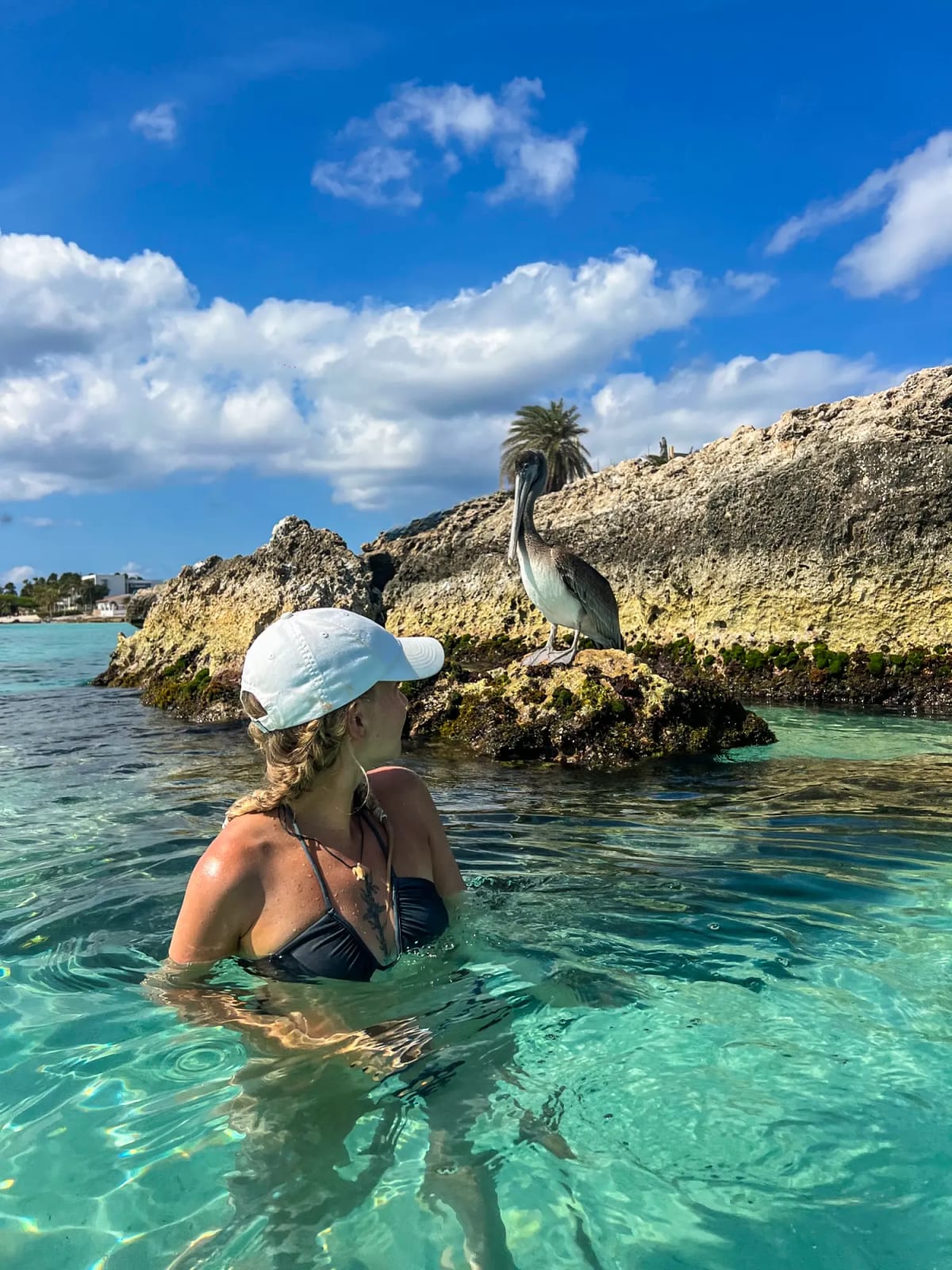
As a perfect pairing, after snorkeling at Tres Trapi, hop over (2-minute drive or 11-minute walk) to Arashi Beach for soft sands, snacks, and drinks - grab a Jamaican beef patty and an Aruba Ariba cocktail at Arashi Beach Shack and watch the sunset. Aruba's west-coast sunsets are legendary: the sun dips straight into the ocean looking massive and fiery red, outshining nearly anywhere else I've traveled. Combining turtle-spotting with golden-hour makes for an unbeatable Aruba day!
Snorkeling at the Antilla Shipwreck
Highlights: WWII wreck, barracudas, moray eels, schools of tropical fish
The Antilla Shipwreck is a massive 400-foot German cargo ship from World War II that was sunk in 1940 off the northwest coast near Malmok Beach. It rests in about 60 feet of water and is it one of the Caribbean's largest and most intact wrecks. It's often called an "underwater museum" because the structure is encrusted with coral and sponges, creating a thriving artificial reef full of life. Unlike shore-entry spots, you'll need a boat tour to reach it (it's too far and deep to swim from land), and these are typically guided excursions for safety and navigation.
You'll see schools of vibrant tropical fish darting through the hull, barracudas patrolling the perimeter, and moray eels peeking from crevices. We even spotted groupers and colorful parrotfish weaving in and out of the wreck. Looking down from the surface you can see the bow and stern emerging from the depths, with parts of the ship still recognizable after over 80 years underwater. Keep safety in mind — the area can have currents and choppy waves, so stay close to your guide and avoid touching anything to protect the fragile ecosystem (and yourself from sharp edges).
Tips for Antilla Shipwreck Snorkeling:
- Getting There: Book a guided boat tour from Palm Beach or Oranjestad (expect $60-100 per person, including gear and often snacks/drinks); excursions last 2-4 hours and may include other stops. No DIY option here — it's offshore and requires a vessel.
- Skill Level: Intermediate snorkelers and up; the depth and potential currents make it less beginner-friendly, but tours provide flotation aids.
- Best Time & Crowds: Mornings for calmer seas and better visibility (which can vary with weather — aim for clear days); tours fill up in peak season, so book ahead. Avoid if seas are rough (it can feel intimidating over deep water).
Snorkeling at Mangel Halto
Highlights: Mangroves, reef beds, tropical fish
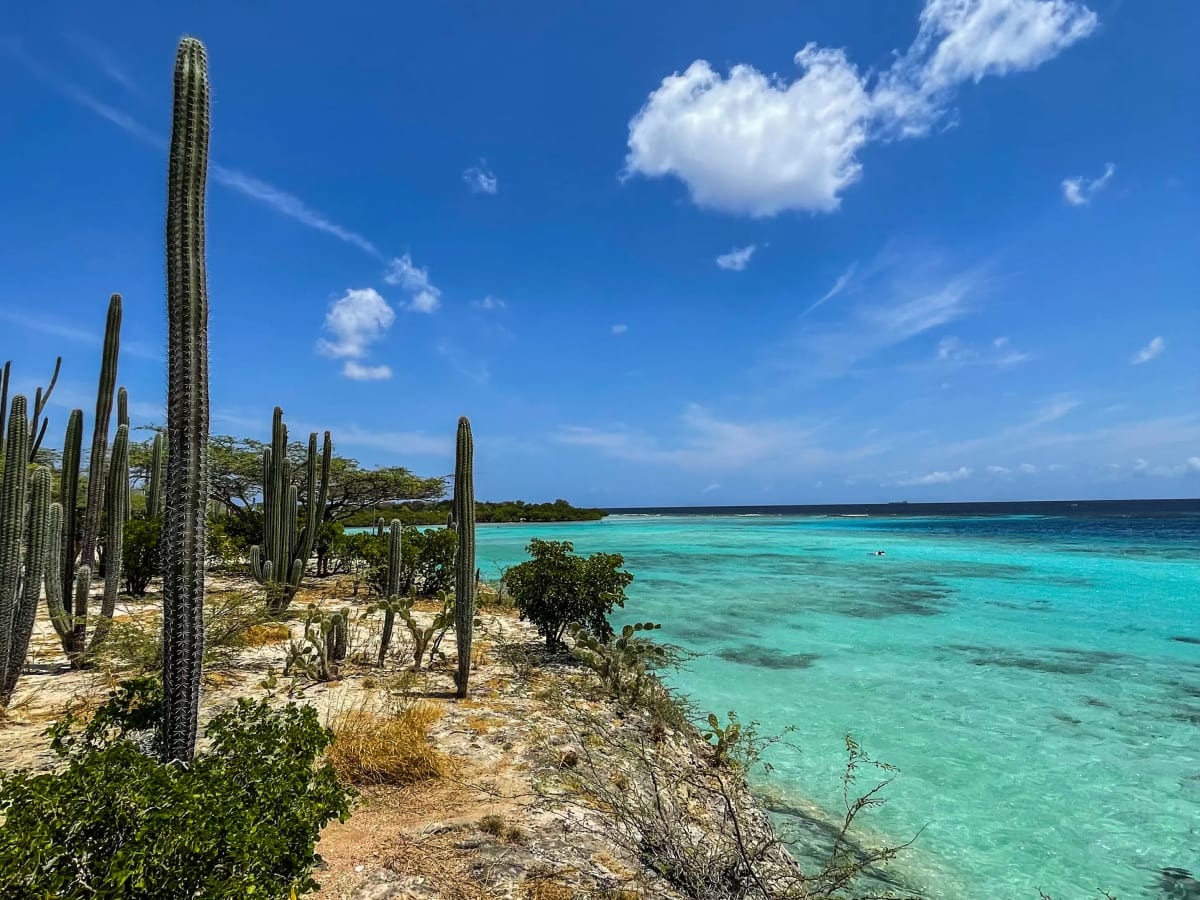
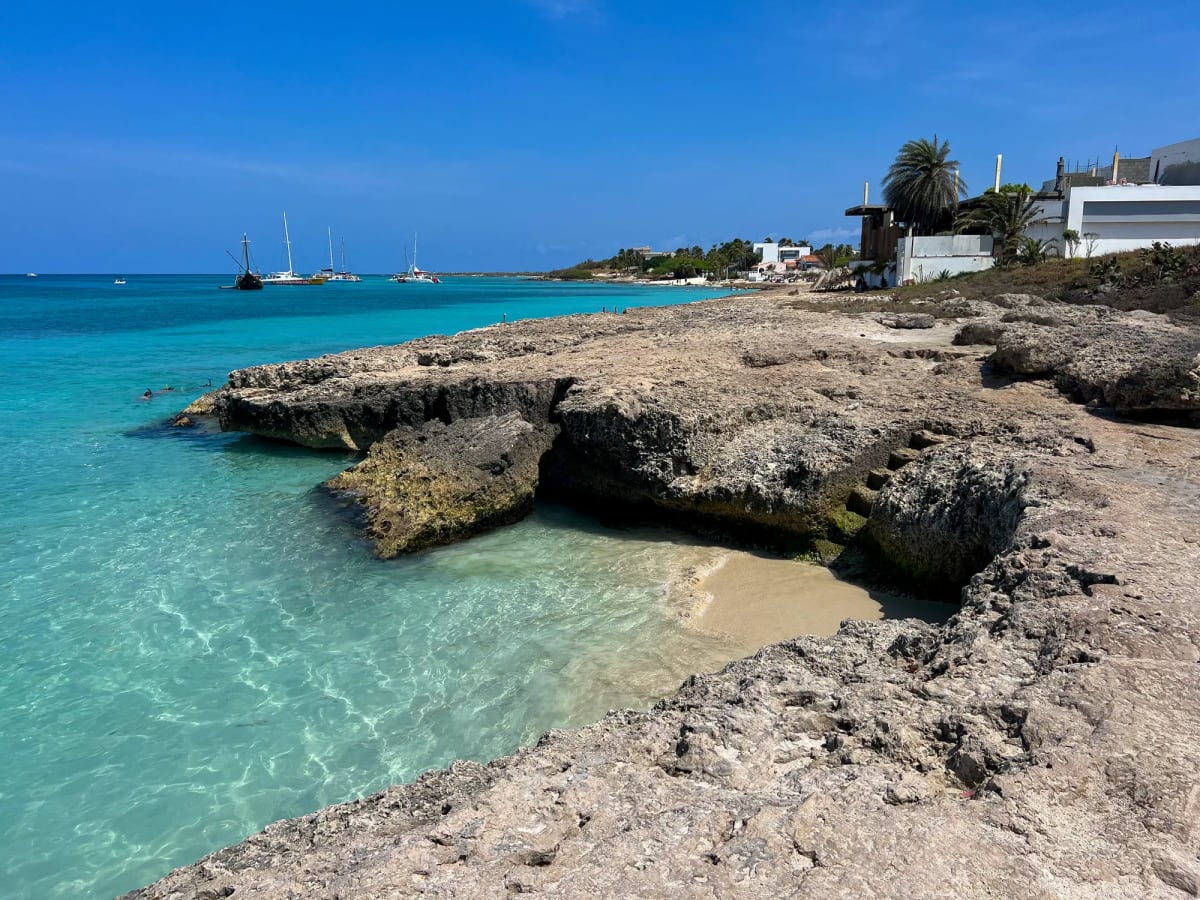
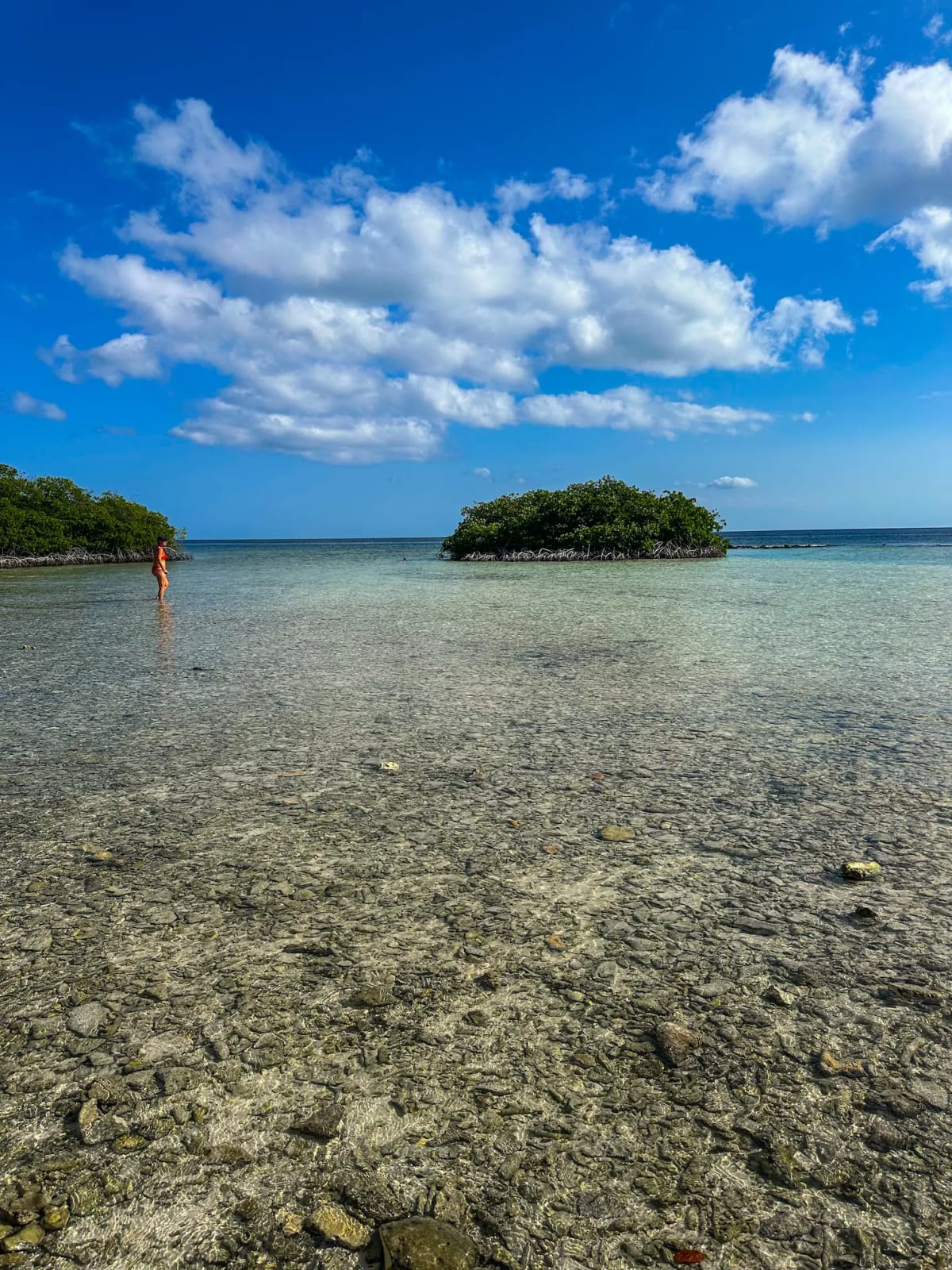
Mangel Halto is one of my favorite places to hang out, sunbathe, swim, and snorkel. This hidden gem on the southern coast is widely regarded as Aruba's top snorkeling site, thanks to its healthy coral reefs, exceptional visibility (often 80-100 feet), and diverse marine life. The water is much clearer here than other beaches. Expect schools of tropical fish like sergeant majors and angelfish darting through the corals, along with sea stars, urchins, and occasional rays gliding by. The mangroves shelter juvenile fish, creating a nursery where they thrive.
The beach divides into three distinct areas: The northern desert-like section (merging with Pos Chiquito Beach Park) features rocky terrain with cacti, free lounge chairs & picnic tables (first-come, first-served), and wooden stairways leading down a small cliff to sandy-bottomed waters. It's perfect for casual swimming but lighter on snorkeling.
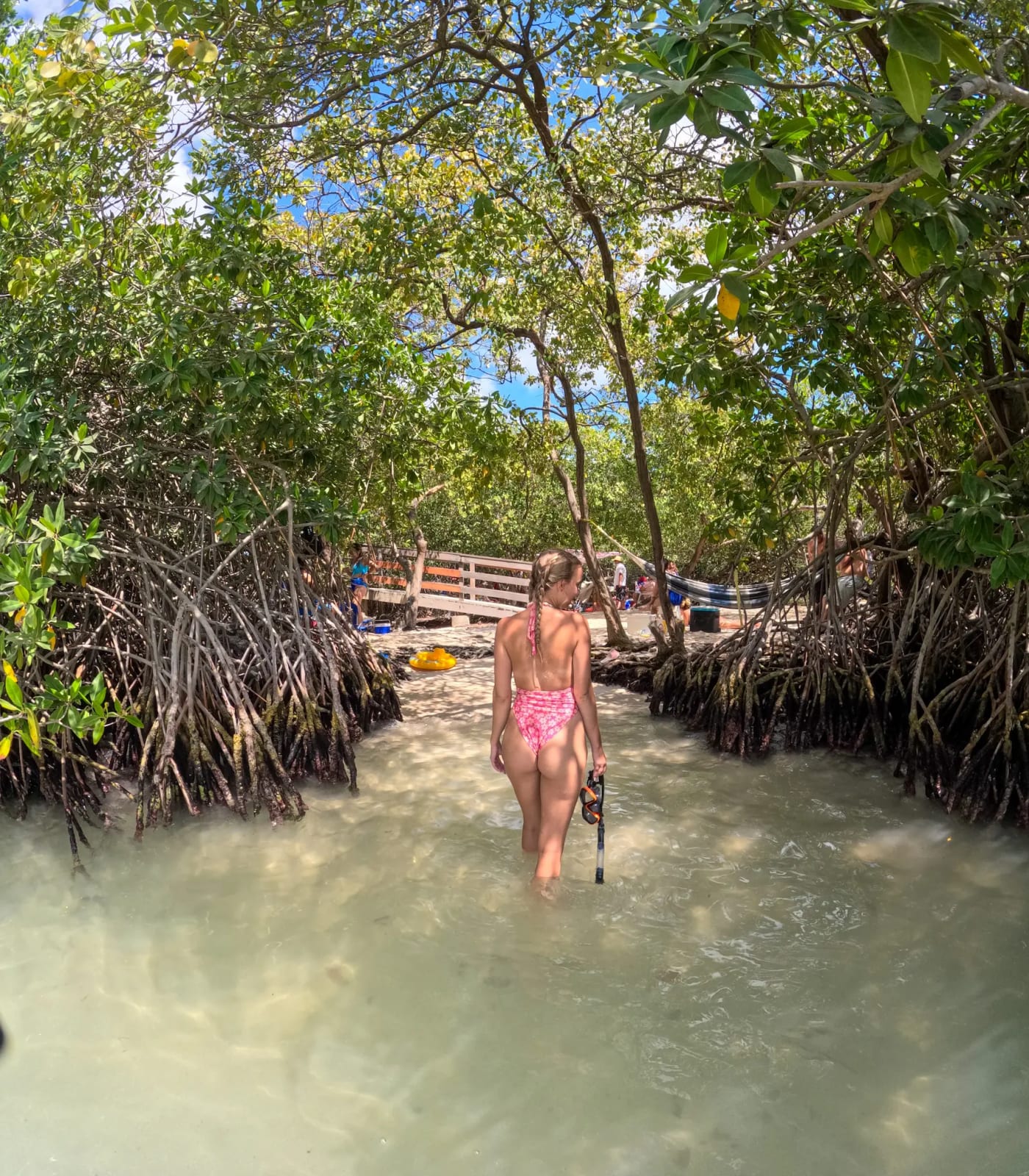
The shady middle section, enveloped by mangroves and trees, offers soft sand and more free cabanas for lounging. Each section has access from the road, but if you’re coming from the water on the northern side, access is through the mangrove path as seen above.
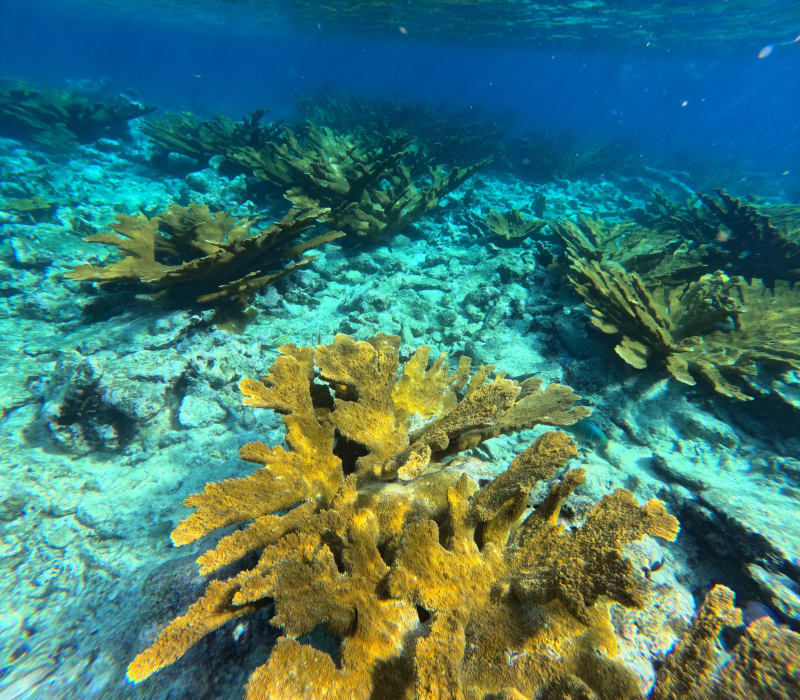
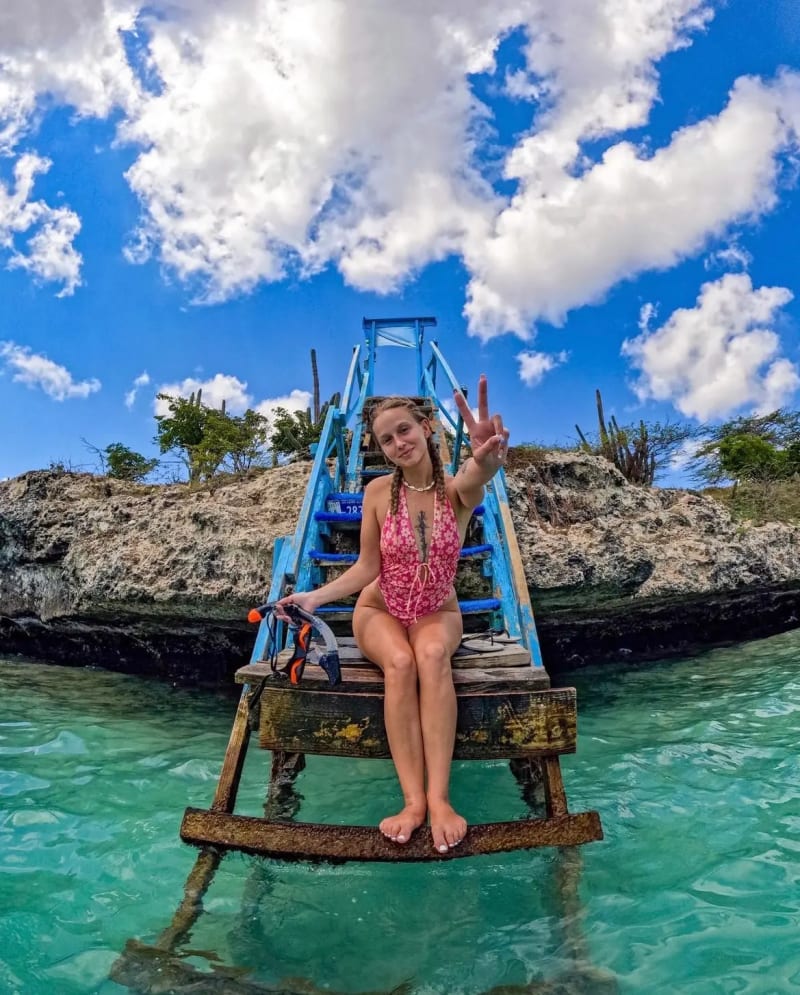
(L) Snorkeling in the southern side (R) stairs to the sea on the northern side
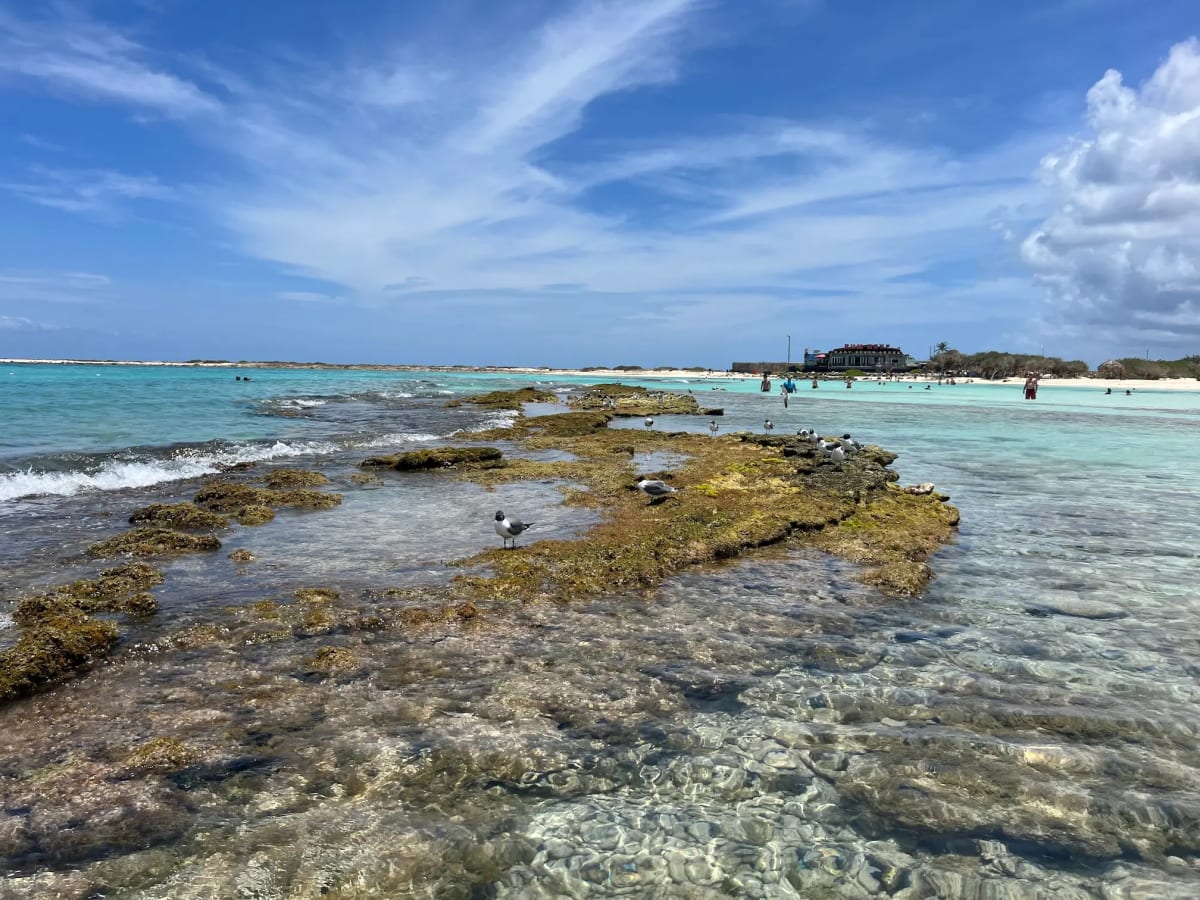
Rocky shallows leading to the snorkeling spots in the southern side
From the middle section, you can walk along the coast to get to the southern section or access via the large parking lot. It shines for snorkeling: sandy shores transition to pebble-strewn entries with sharp rocks (wear water shoes!), leading to vibrant reefs. Nearby, you can grab cheap, delicious food and cocktails at cash-only snack shacks. But safety first: Don't snorkel here if its windy - strong waves can push you into low-lying reefs.
Tips for Mangel Halto Snorkeling:
- Getting There: About a 20-25 minute drive south from Oranjestad or Noord; park in the free lots near each section (street parking for north, large lot for middle & south). No public transport directly, so rent a car or take a taxi — tours sometimes include it if you prefer guided access
- Skill Level: Intermediate and up, especially in the southern reefs; beginners should stick to calmer, shallower areas near the mangroves
- Best Time & Crowds: Mornings for the calmest waters, best visibility, and fewer people - check forecasts as conditions tie directly to waves
Snorkeling at Boca Catalina
Highlights: Sea turtles, colorful reefs, French angelfish, tropical fish
This top-rated spot on the northwest coast has calm, crystal-clear waters with visibility often exceeding 50 feet, making it ideal for spotting green sea turtles grazing in the seagrass beds 50-100 yards out (similar to Tres Trapi). We floated for hours watching them surface gracefully — it's mesmerizing, but as always, prioritize their space as they're protected species.
Beyond the turtles and fish, the reefs here are alive with sponges, soft corals, and rocky outcrops that create mini-habitats for smaller critters like damselfish and wrasses. The marine diversity is impressive: schools of French angelfish gliding by, parrotfish munching on coral, and even the occasional sergeant major or blue tang adding pops of color.
Tips for Boca Catalina Snorkeling:
- Getting There: A quick 5-10 minute drive north from Palm Beach; park along the road (free) and enter from the small, sandy beach cove. No facilities here, so pack water and snacks
- Skill Level: Beginner-friendly with its calm waters and gradual depth increase
- Best Time & Crowds: Arrive before 9 AM for the calmest conditions, best visibility, and fewer people—mid-day can get crowded with tour boats dropping off groups
Snorkeling at Baby Beach
Highlights: Shallow lagoon, schools of tropical fish, clear waters
Baby Beach is unique from the others as it's like one giant, natural swimming pool shaped in a 'U'. It has a protective rock barrier that blocks waves, keeping the water incredibly calm and shallow (mostly 4-8 feet deep) throughout. Located on the southern tip near San Nicolas, this family-friendly haven has unbelievably smooth sand underfoot, unlike the rockier spots elsewhere, and the water felt warmer here than anywhere else on the island.
For the best snorkeling and most abundant marine life, swim toward the rocks on the Big Mama Grill side (left when facing the water), just past the rope barrier but staying inside the natural rock wall — don't venture beyond since currents can get strong out there. While the main bay has a sandy bottom with less to see, the clarity increases in this area to reveal tons of tropical fish species darting around, with tiny coral patches and sea grass; I even made friends with a tiny pufferfish! There has been recent coral die-off, so please avoid touching anything to preserve what's left.
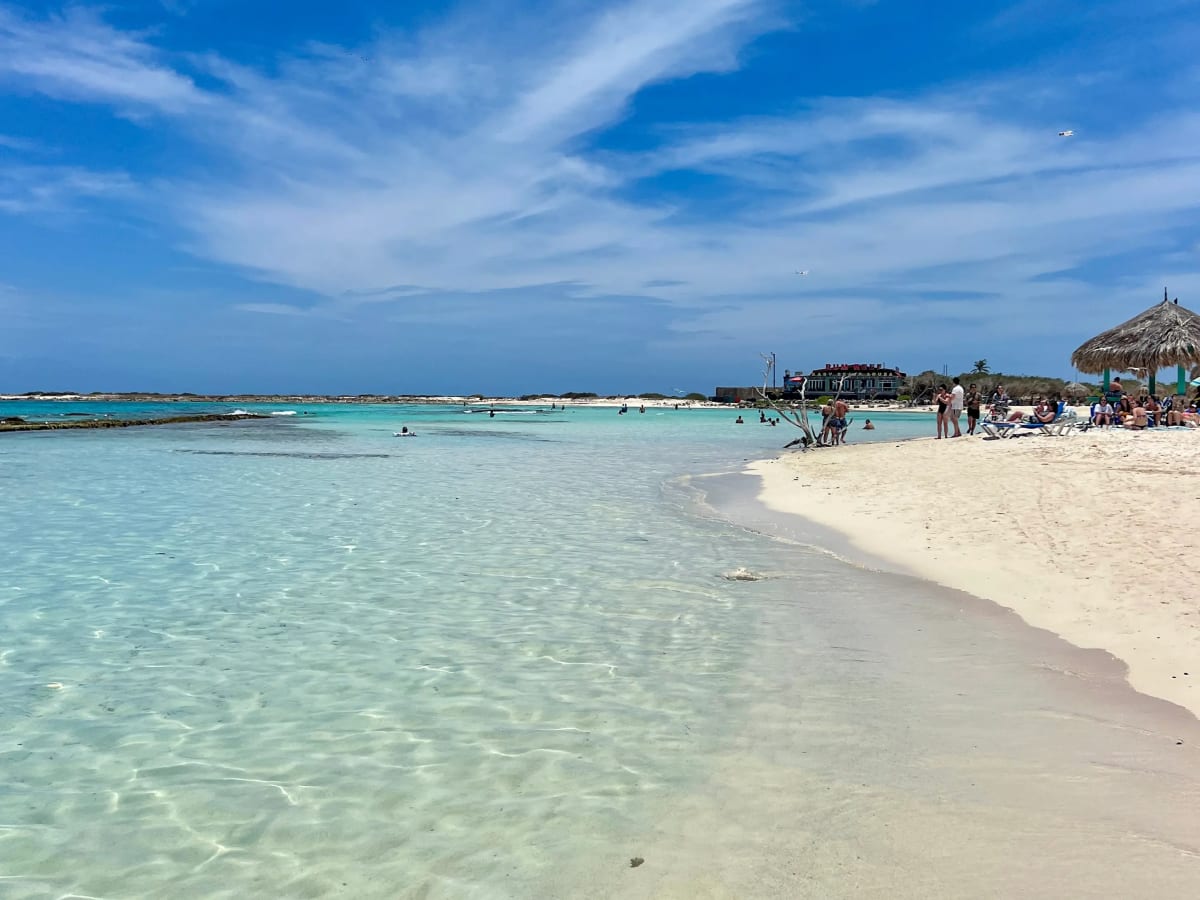
There are two restaurants on opposite ends of the beach - Big Mama Grill for strong, cheap drinks (chill vibe, but skip the food) and Rum Reef for solid meals and cocktails, plus a pool overlooking the sea. Food trucks often roll up behind the beach during lunch hours for quick bites. There's plenty of natural shade and lounge rentals here, too.
Tips for Baby Beach Snorkeling:
- Getting There: A 45-55 minute drive south from Noord or Oranjestad (rent a car—taxis are pricey, and buses only go to San Nicolas, requiring a short cab after); free parking lot available. No direct facilities beyond the restaurants, so bring essentials
- Skill Level: Beginner-friendly overall with its calm, shallow waters—great for families or newbies—but the prime snorkel area near the rocks suits those comfortable swimming a bit farther out (while still protected in the rock barrier)
- Best Time & Crowds: The bay's protection make it suitable for snorkeling all day, but it does get busier mid-day with locals and families
Environmental and Conservation Tips:
- No feeding/touching marine life; maintain distance from turtles
- Avoid anchoring on reefs if boating
- Leave no trace & pick up trash
- Don't take shells or pieces of nature with you
- Use reef-safe sunscreen (no oxybenzone/octinoxate) to protect corals
- Aruba is very focused on conservation of their diverse ecosystems — if possible, donate to the Aruba Conservation Foundation!
Aruba's underwater world offers everything from serene turtle encounters at Tres Trapi to vibrant reefs at Mangel Halto and the family-friendly lagoon at Baby Beach. Whether you're a beginner wading into Boca Catalina's calm shallows or an adventurer exploring the historic Antilla Shipwreck, these spots create memories that stick with you long after you've dried off. If you're planning your trip, pair your snorkel days with some beach lounging—check out my guide to the best beaches in Aruba for more inspiration. Enjoy snorkeling in Aruba, be safe, and have fun meeting the beautiful marine life that reside in the tropical waters of the Southern Caribbean Sea. Safe travels and happy exploring!