What You'll Find in This Post
Quick Facts About Pangkor Island
- Location: Off Malaysia’s west coast
- Common Fauna: Oriental Hornbills (icon of Pangkor), Dusky Leaf Monkey, Long-tailed Macaque, Green Sea & Hawksbill Turtles
- Best Time: March-October
- Highlights: Snorkeling, jungle treks, west coast beaches, east coast fishing villages, culture
- Phone Data: Maya Mobile eSIM - the cheapest & most reliable global data that I always use!
Pro Tip: Hop on a pink taxi for an island tour led by locals
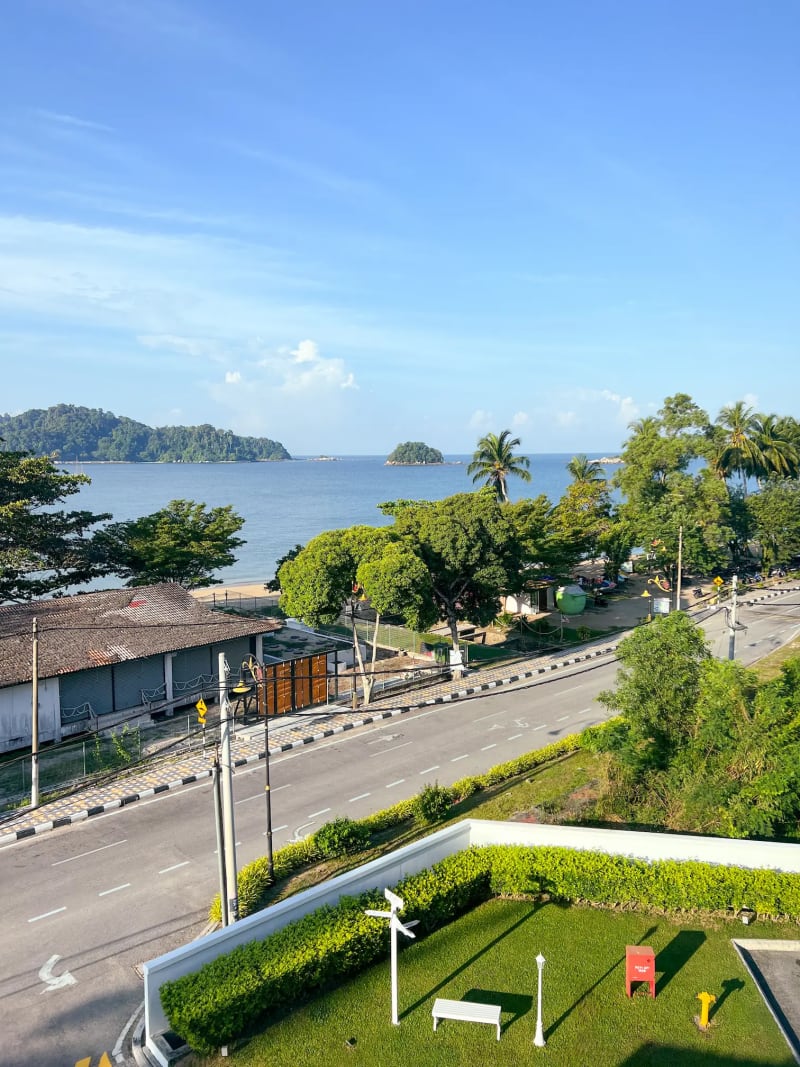
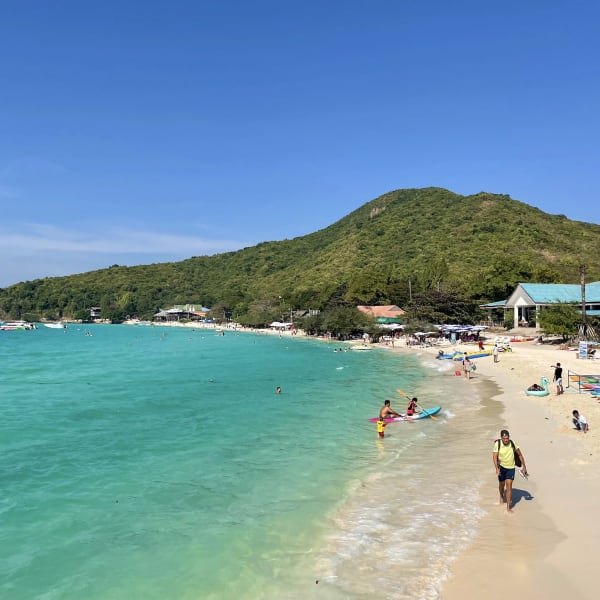
(L) Pantai Teluk Segadas, (R) View of Pasir Bogak from AVI Pangkor Hotel
Disclaimer: This post contains affiliate links. If you book or buy through these links, I may earn a small commission at no extra cost to you. Thank you for supporting my blog!
Pangkor Island (Pulau Pangkor)
Located off the west coast of Malaysia is one of the country's best hidden gems: Pangkor Island. It's a small, tropical destination with beautiful sandy beaches, charming fishing villages, temples, and lush jungle that fills the approximately 18 square km that is Pangkor. Only ~10% of the island is inhabited by its 25,000 residents while the rest belongs to forests and highlands, allowing you to feel miles from civilization.
Pangkor is surrounded by a trio of islands, including Giam, Pulau Mentagor, and Pulau Pangkor Laut. Laut is a large resort island, while Mentagor (second largest) and Giam are uninhabited and can be visited via boat or kayak.
From hidden beach adventures to watching the sun set over the Malacca Strait, Pangkor delivers perfect beach-vacation vibes with authentic island living. You can get in touch with local culture, eat fresh meals (Malay seafood and street food is the best), and relax away from large crowds.
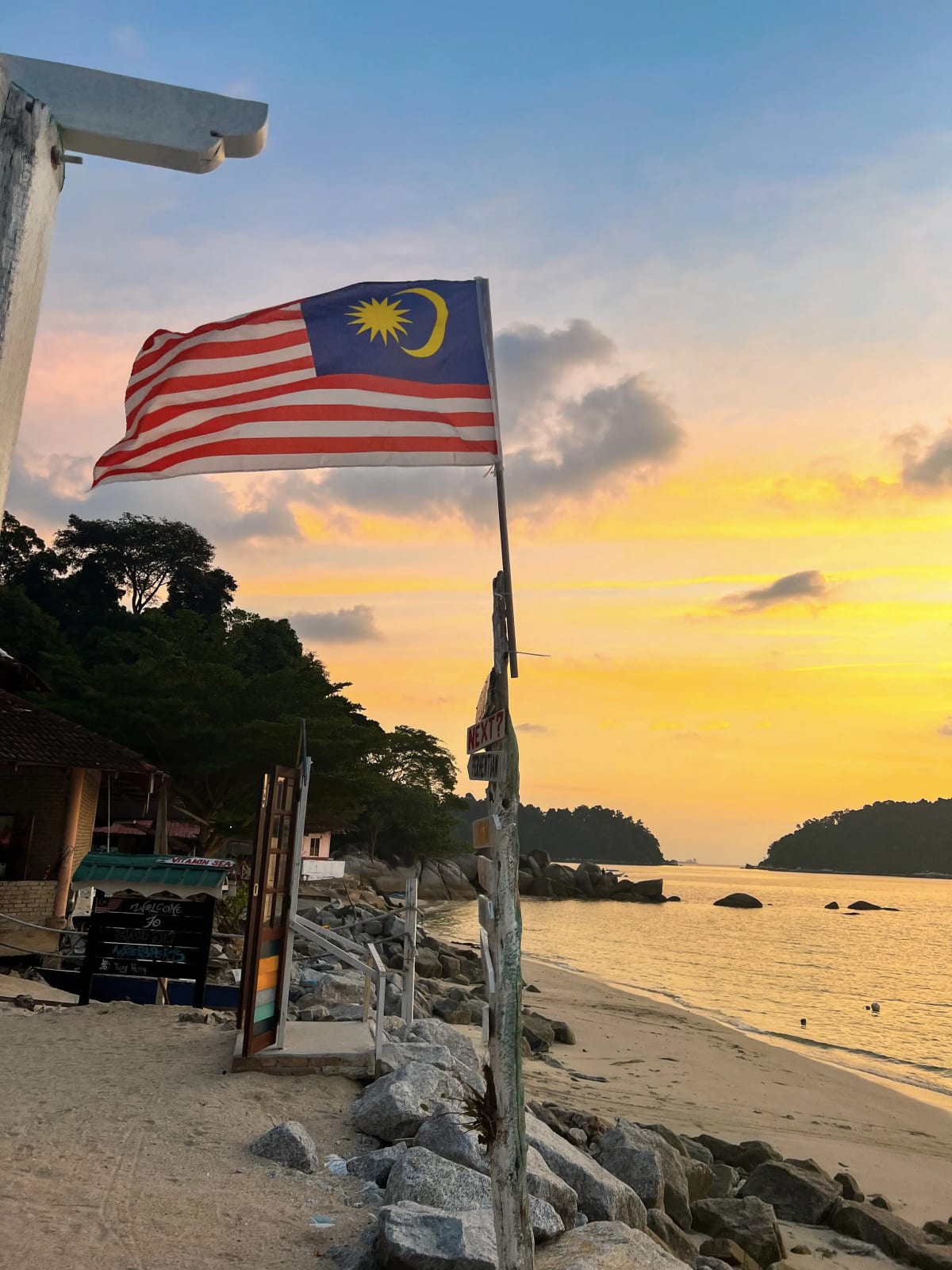
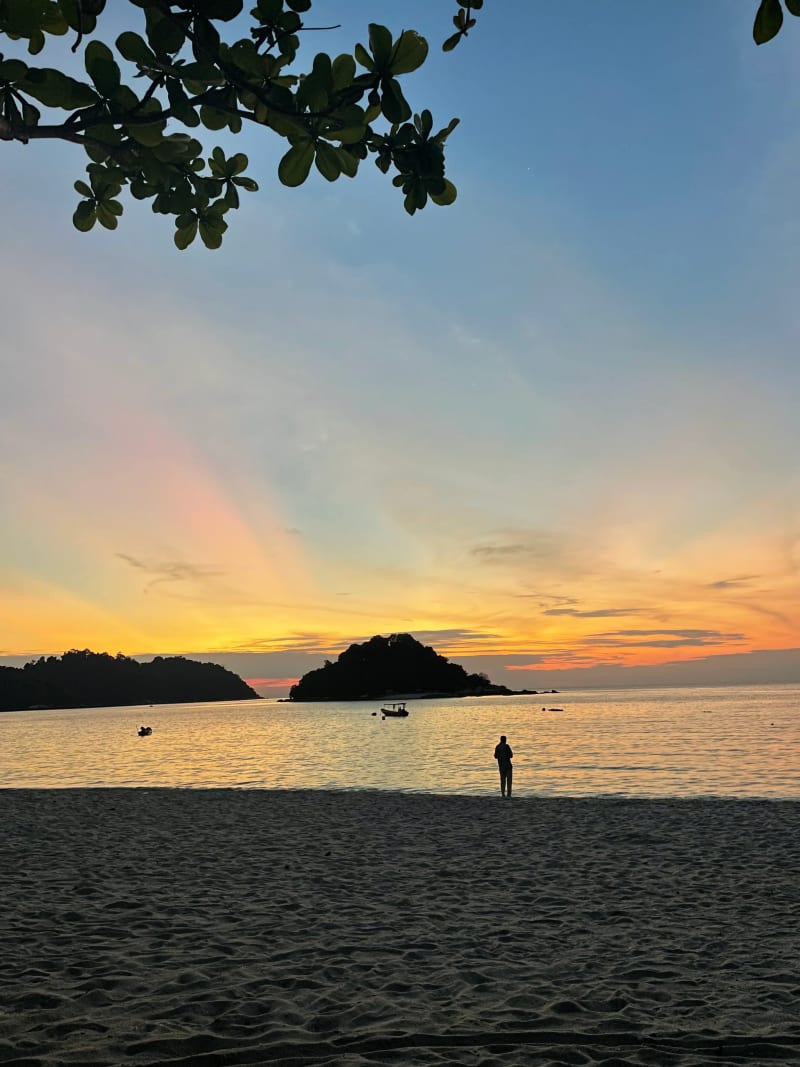
Sunset at Teluk Nipah
Best Time to Visit Pangkor Island: Monsoon Seasons in Malaysia
In short: March to early October — with June–August being the sunniest and driest
We've traveled extensively through Malaysia, and understanding the monsoons was key to avoiding disappointing trips — nothing ruins a beach day like relentless rain and rough seas. Malaysia has two main monsoon seasons:
Southwest Monsoon → May–September (affects west coast of Thailand and parts of northern Langkawi)
AND
Northeast Monsoon → November–February/March (affects east coast islands)
Most famous Malaysian islands, like Perhentian, Redang, and Tioman, sit on the east coast. They're hit hard by the Northeast Monsoon. Resorts and hotels often close entirely due to strong winds, high waves, and heavy rain. Even after they reopen, the water might stay murky with poor visibility for snorkeling. Waves can remain choppy, and any land damage — like eroded paths or fallen trees — lingers for weeks.
You'd think Pangkor, being on the west coast, would be affected by the Southwest Monsoon, but it's actually the opposite. The Northeast Monsoon is what affects the island, though not strongly. It brings more frequent storms and rougher seas, but even in the “wet” months Pangkor never closes like the east coast ones do. Still, I recommend avoiding November-February.
Pangkor is sheltered in the Straits of Malacca, with Sumatra acting as a natural rain shield against the Southwest Monsoon. This turns what could be a wet season into Pangkor's prime time: sunny skies, calm waters perfect for our daily swims, and fewer crowds — experiences that would be impossible on the east coast during their off-season.
| Months | Season | Rainy Days/Month | Sea Conditions | Recommendation |
|---|---|---|---|---|
| June – August | Best (Dry Season) | 6–9 | Calm & clear | Peak sunshine – book early! |
| March – May & September – early Oct | Shoulder | 8–12 | Mostly calm, occasional short afternoon showers | Fewer crowds, lower prices |
| November – February | Wettest | 15–22 (Nov/Dec worst) | Can be rough, reduced visibility | Cheapest, but expect storms |
We were in Malaysia for the month of March, first wanting to go to one of the eastern islands. After learning the monsoon seasons, we decided against it - it was the tail end of the Northeast Monsoon and we didn't want to risk murky waters. After looking into other options we chose Pangkor and it was perfect. Sunny almost every day with calm, clear seas. We’re already planning a trip back!
Getting to Pangkor Island From Kuala Lumpur
If your base is in the Malaysia's capital city, Pangkor is the perfect weekend getaway! You have to take the ferry from the Lumut jetty (in Perak) to Pangkor. You can drive to Lumut OR you can take public transportation.
Visit my Kuala Lumpur Viator shop to book the BEST tours & activities in Malaysia's capital city! 🇲🇾🌺🏙️
Bus from Kuala Lumpur to Lumut
To get to Kuala Lumpur's bus station you can use Grab - one of Malaysia’s most popular taxi apps that offers rides in cars and on motorbikes. There are a few options for what station to depart from and we chose TBS Kuala Lumpur. The station was like an airport for ground transportation - huge, but easy to navigate and very clean. We booked bus tickets on 12go.asia.com; round trip tickets cost ~54-60 RM ($13-14 USD/person), taking ~4-5 hours each way.
Ferry From Lumut to Pangkor
When you get off at the Lumut bus terminal you will have to walk a few short blocks to get to the ferry jetty. Tickets are available right at the jetty and are cash-only, so be sure to have some handy, otherwise there's an ATM about a 5 min walk away. A roundtrip ticket cost us ~15 RM/person ($3.60 USD), taking 30-40 minutes to reach the island. Typically, the ferries start running at 7am and finish around 8pm, departing every 30-45 minutes depending on the season.
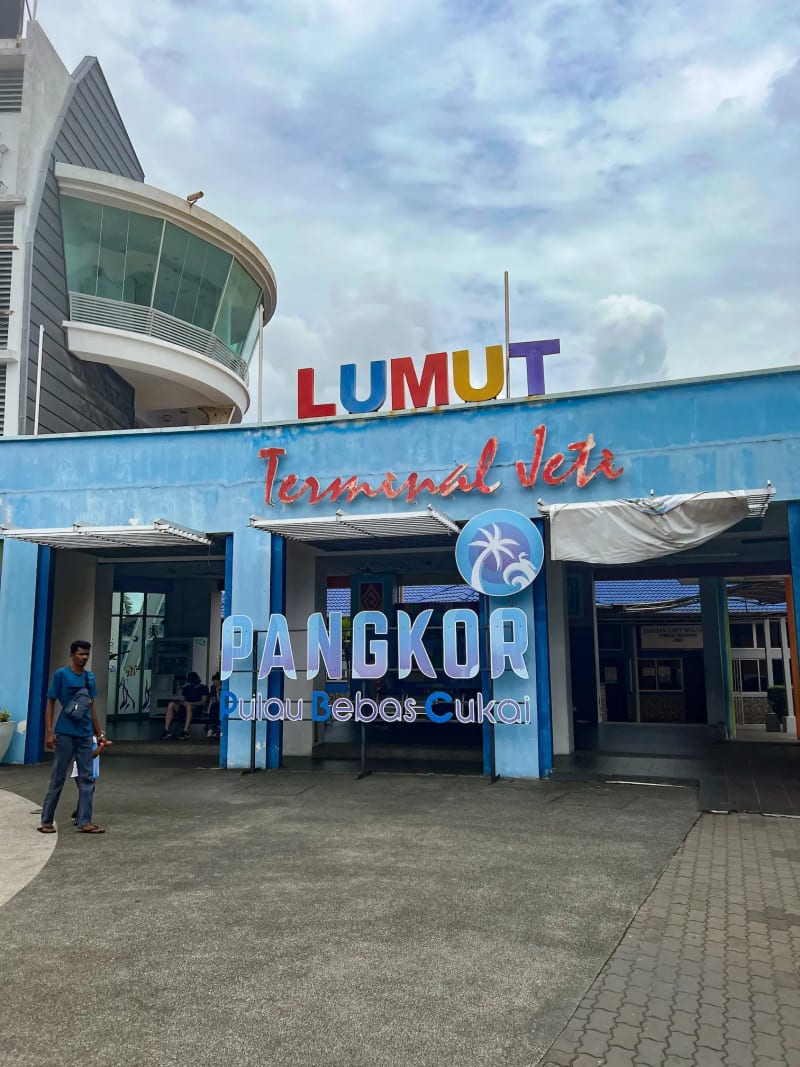
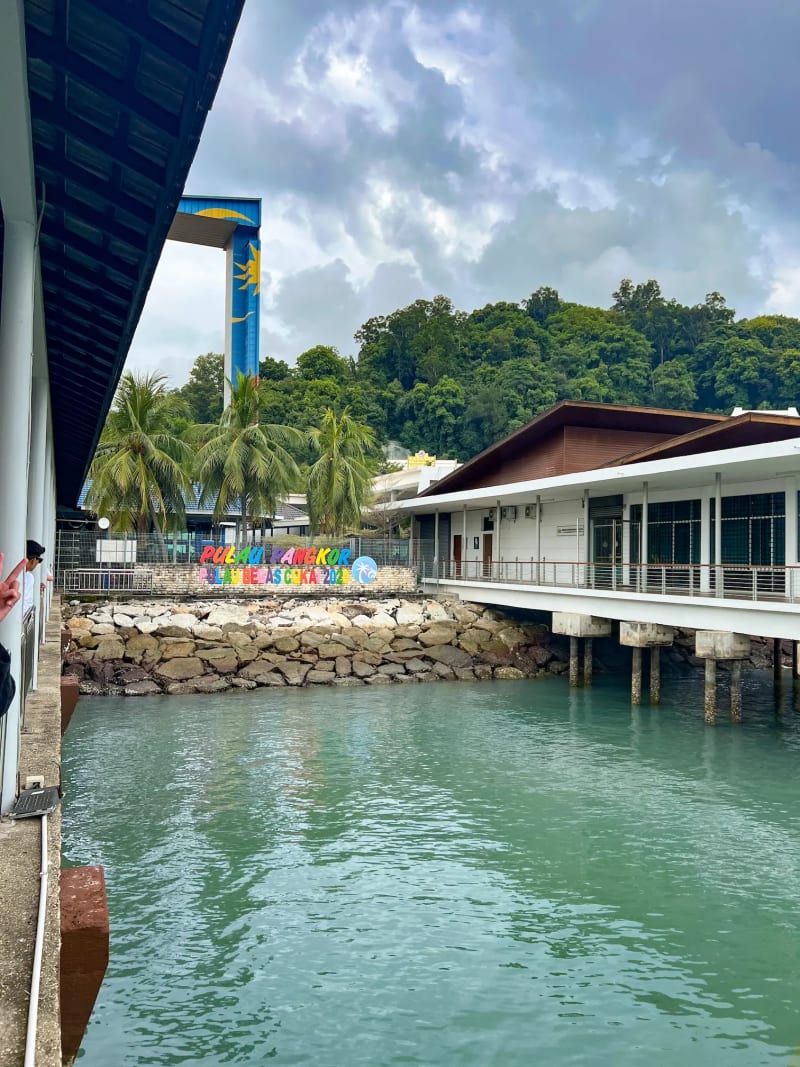
(L) Lumut jetty, (R) Pangkor jetty
Pangkor Back to Lumut
If you don't have roundtrip tickets you can purchase return tickets at any time from one of the various ticket booths around the Pangkor ferry jetty. They typically have the same schedule as the Lumut jetty. If you have a bus to catch back in Lumut, be sure to get there with lots of time to spare - the buses don’t wait for anyone. There are street food markets you can find near the Lumut station if you want a snack before the long ride back.
Getting Around Pangkor Island
The main mode of transportation is motorbikes, which you can rent at the Pangkor ferry jetty upon arrival for ~30-40 RM ($6-8 USD)/day. Alternatively, you can get around the island via pink taxis - bright pink vans that are the island’s iconic transport. They're affordable at ~12-30 RM/ride ($3-7), depending on distance and number of people. The island is only ~25 minutes end to end so you’ll never need to travel too far. Find them at the jetty, main beaches and busy towns like Pekan Pangkor. Hire one for the day (~80-100 RM ($19-24 USD)) for a full, personalized tour around the island - a great way for a carefree day, plus the drivers know all the hidden gems!
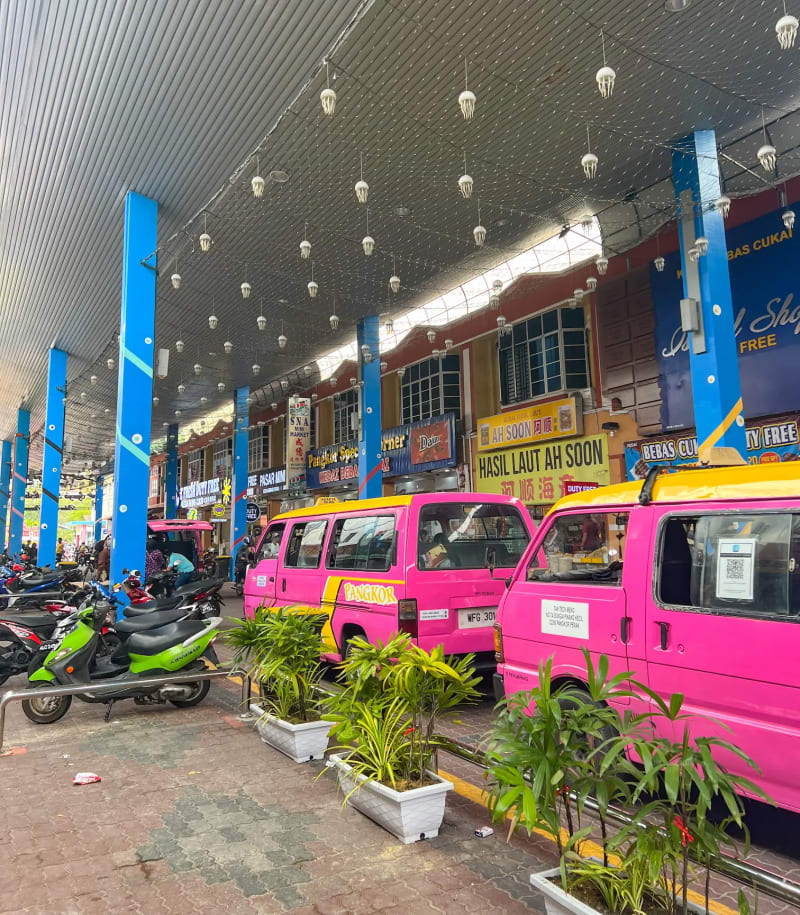
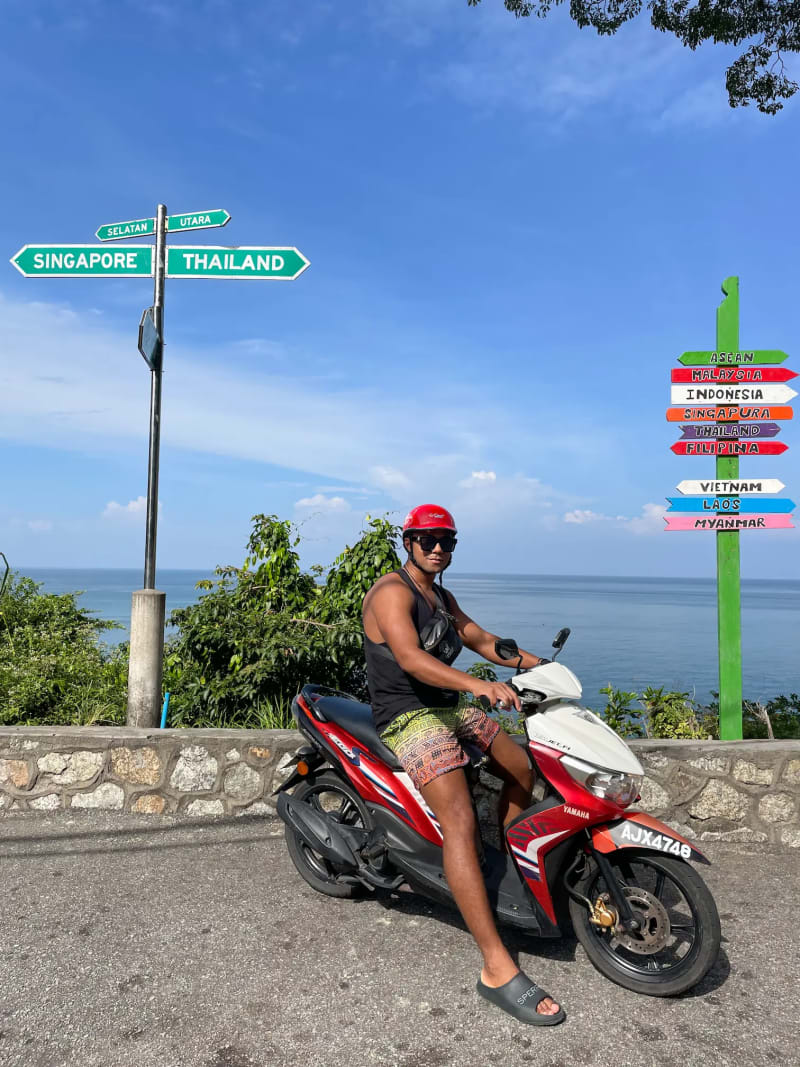
(L) Pink Taxis in Pangkor Town (Pekan Pangkor), (R) Motorbike at a Viewpoint
Where to Stay on Pangkor Island
You can stay on the main island or on Pangkor Laut, which can only be visited by guests; it's luxurious with resort complexes, beaches, bars, and restaurants. Their rooms start at around $300 USD per night which was out of our budget.
We stayed at AVI Pangkor Resort Hotel across from Pasir Bogak Beach for ~$70 USD/night including a complimentary breakfast in their on-site restaurant, large pool with mountain views, and a balcony overlooking the sea. The breakfast is delicious but I do recommend venturing out of the hotel for other meals as the local island spots have so much to offer.
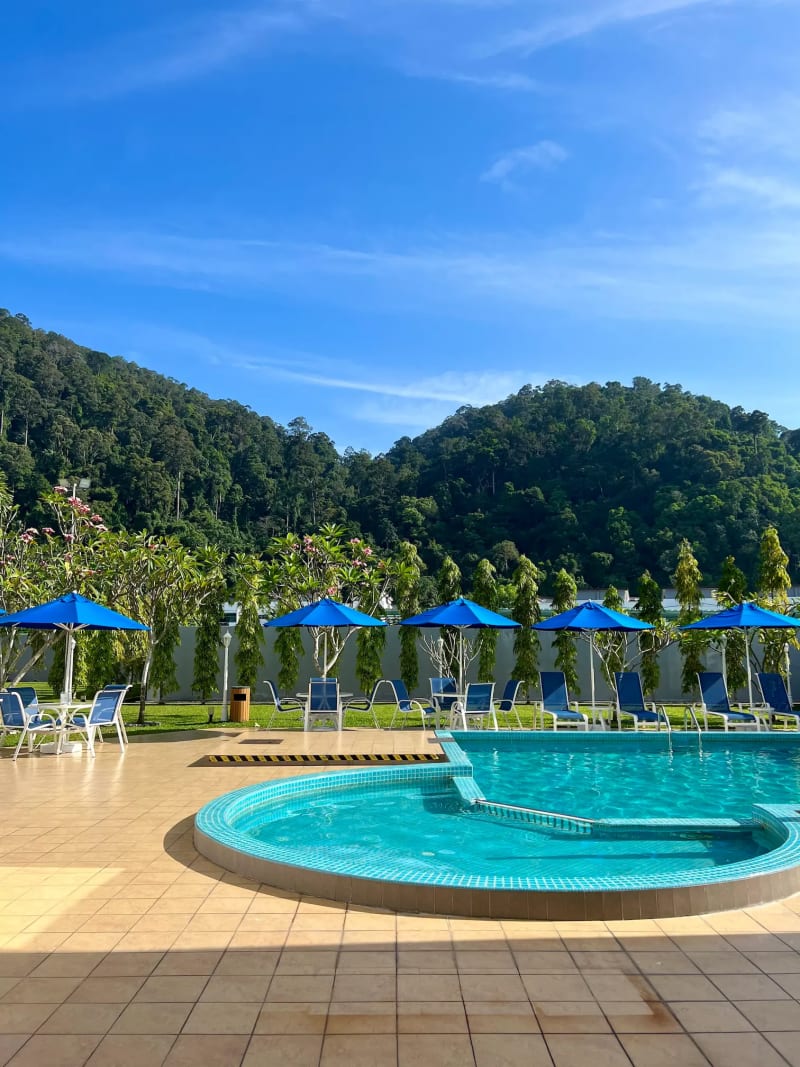
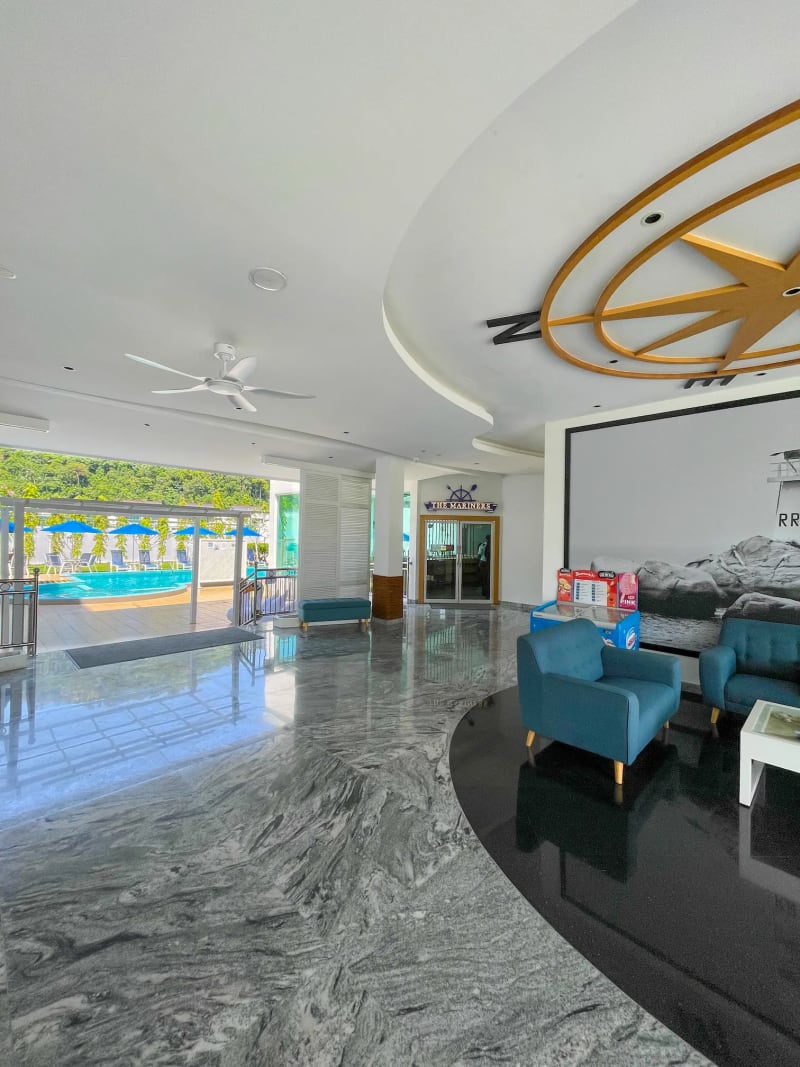
Some other options we looked at are Anjungan Beach Resort and Pangkor Sandy Beach Resort. Upon doing research, these hotels fit what we were looking for (good reviews, affordable, breakfast, pool, balcony), but we ultimately went with AVI. We rode our motorbike past these hotels, so I can attest to the fact that they're appealing and conveniently located!
TOP Things to do on Pangkor Island:
1 - Relax & Snorkel at the Beaches
Coral Beach
Highlights: Powdery shores, seafront restaurants, excellent snorkeling
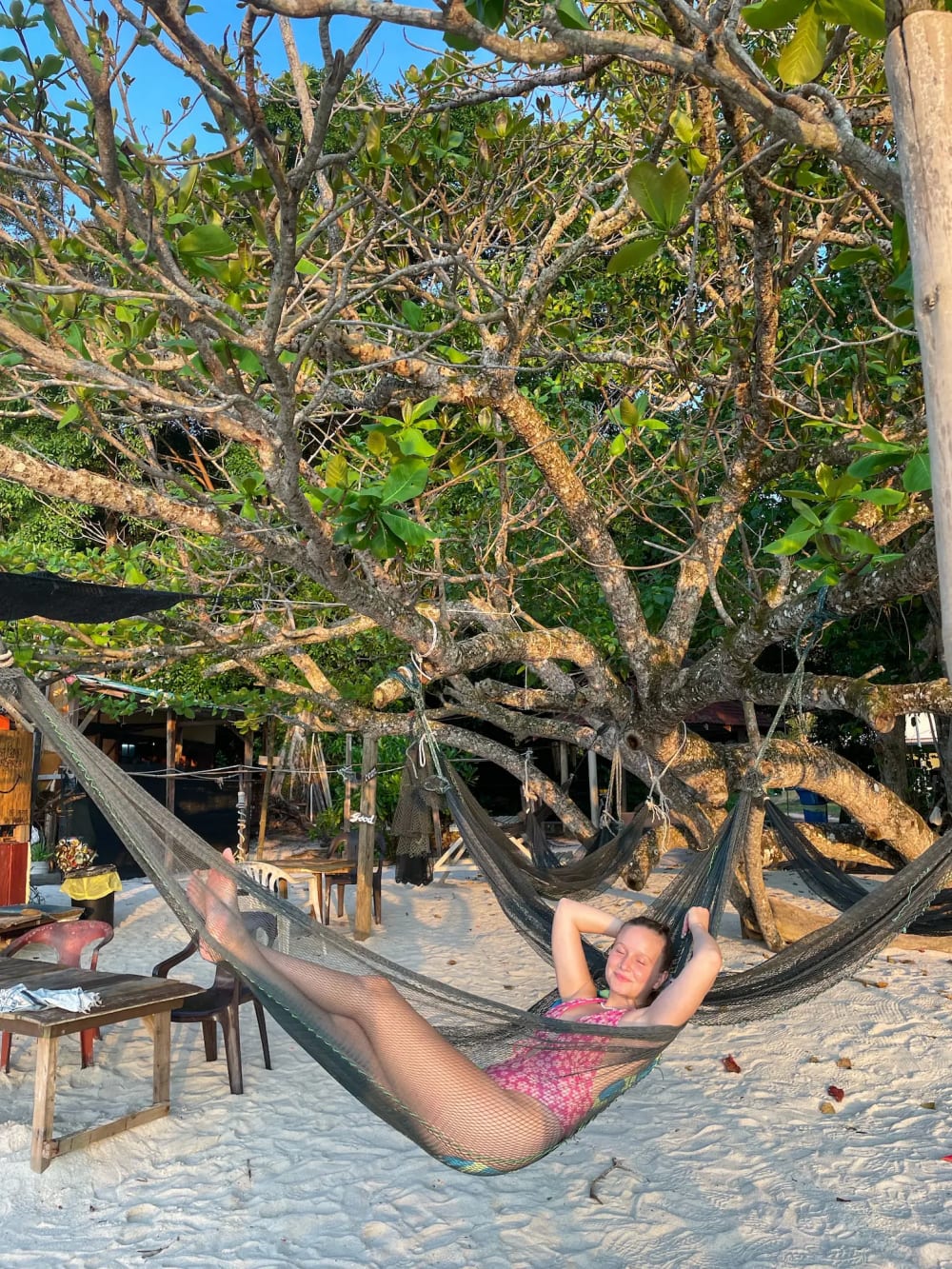
Coral Beach is my favorite on the island. You can relax in community hammocks, do water sports such as renting a kayak and paddling to Giam Island, or take a boat tour to visit the other islands. There are lots of restaurants with tables on the sand serving incredible food and yummy drinks.
Teluk Nipah Beach
Highlights: Lively vibe, street food, water activities
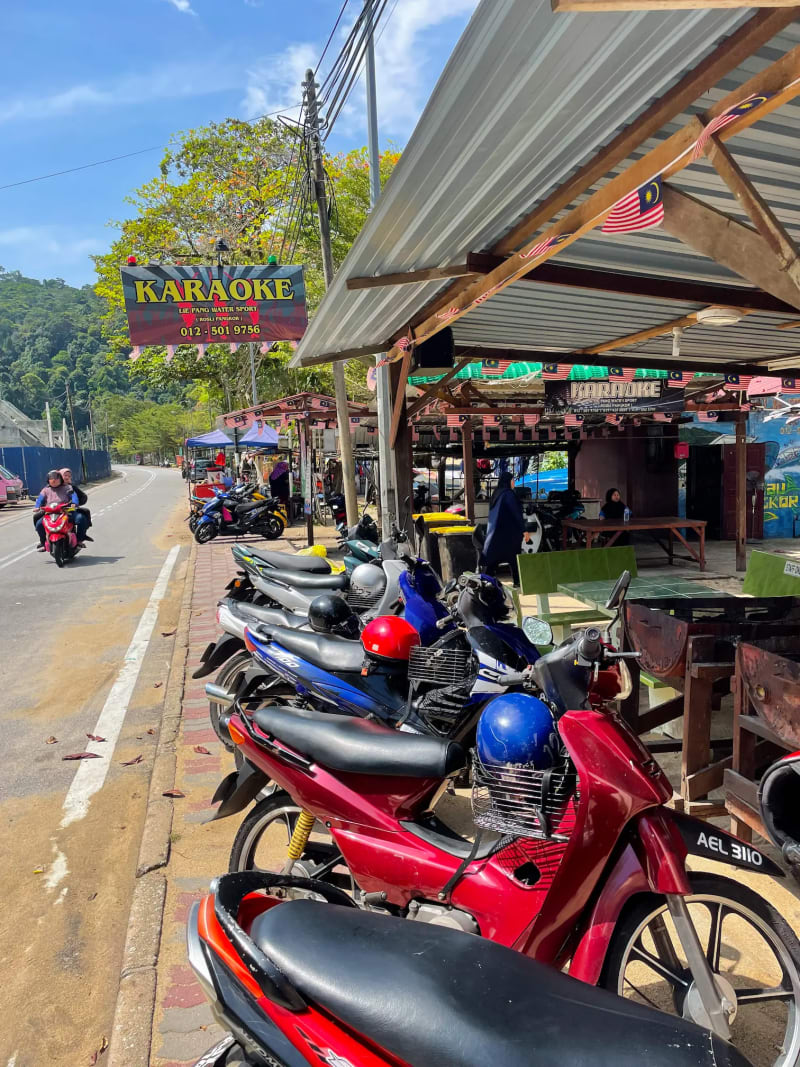
Adjacent to Coral Beach, Teluk Nipah is livelier with shops, street food and more water activities (e.g., boat tour hires, banana boats) — perfect if you want energy over serenity.
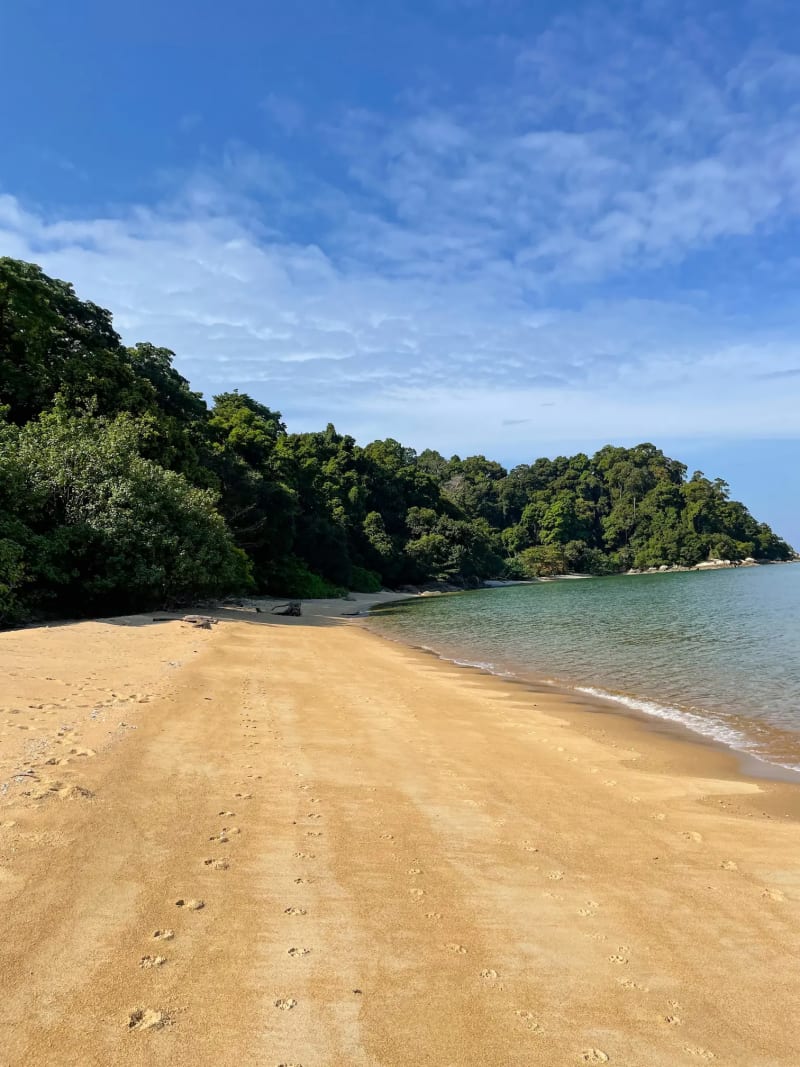
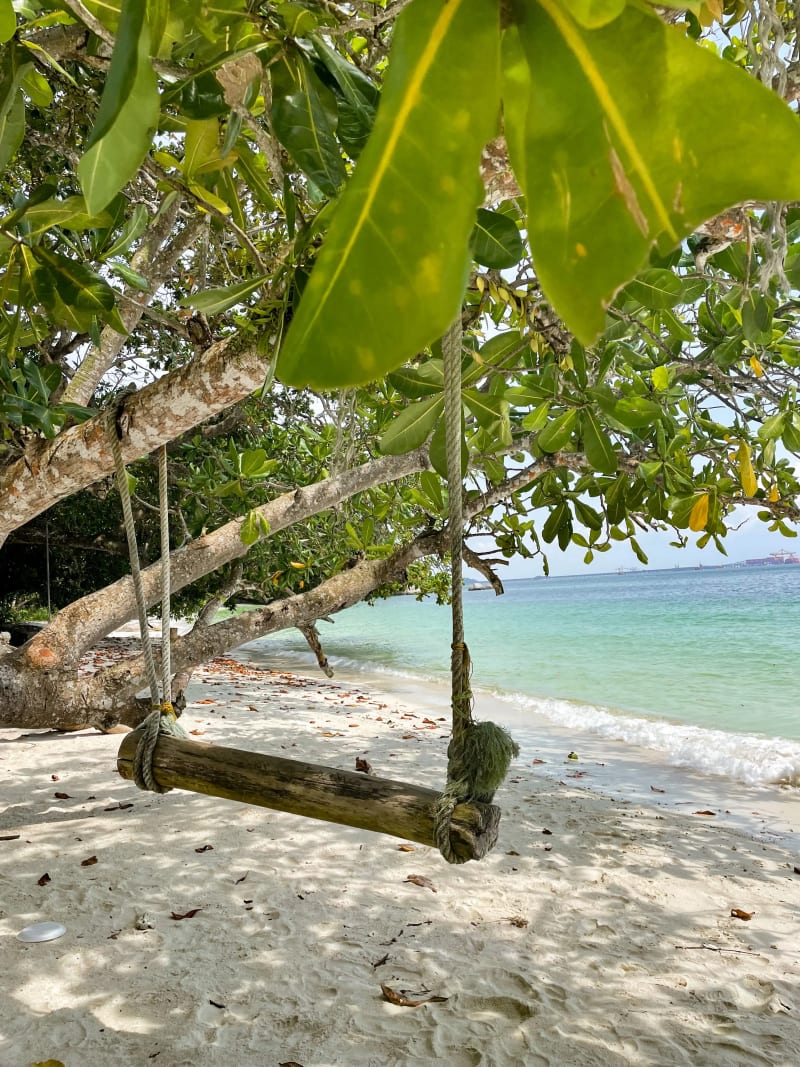
On the far left side of Teluk Nipah there is a secluded area of the beach with clear, shallow waters that we had all to ourselves. While on the road I spotted a swing on the beach, so we stopped to take pictures and ended up discovering this ‘untouched’ area. We went for a swim and hung out a while. As usual, be careful with leaving your belongings unattended on the beach in case the monkeys try to steal it! In general I highly recommend just driving around the island to explore, stopping wherever you see something fun or interesting.
Pasir Bogak
Highlights: Natural shade, family-friendly spots
Pasir Bogak is one of the most popular and well-known beaches on the island. Luckily for us, it was located directly across the street from AVI Pangkor! It has swings on the sand, hammocks, natural shade, seating areas and jet ski rentals. If you walk the full length down the beach, the far right end has a really special spot where you can sit under the trees - an excellent place for a picnic. Pasir Bogak also has stunning views at dusk, sometimes with a fireshow!
2 - Kayak or Boat to Giam Island
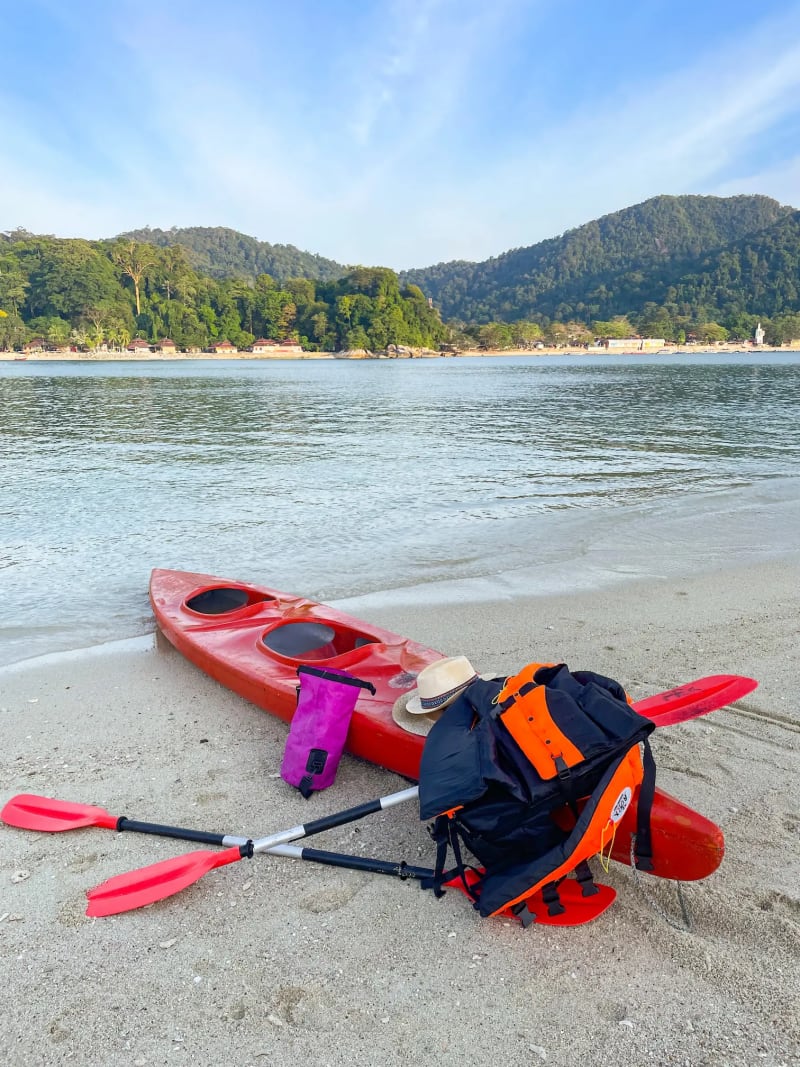
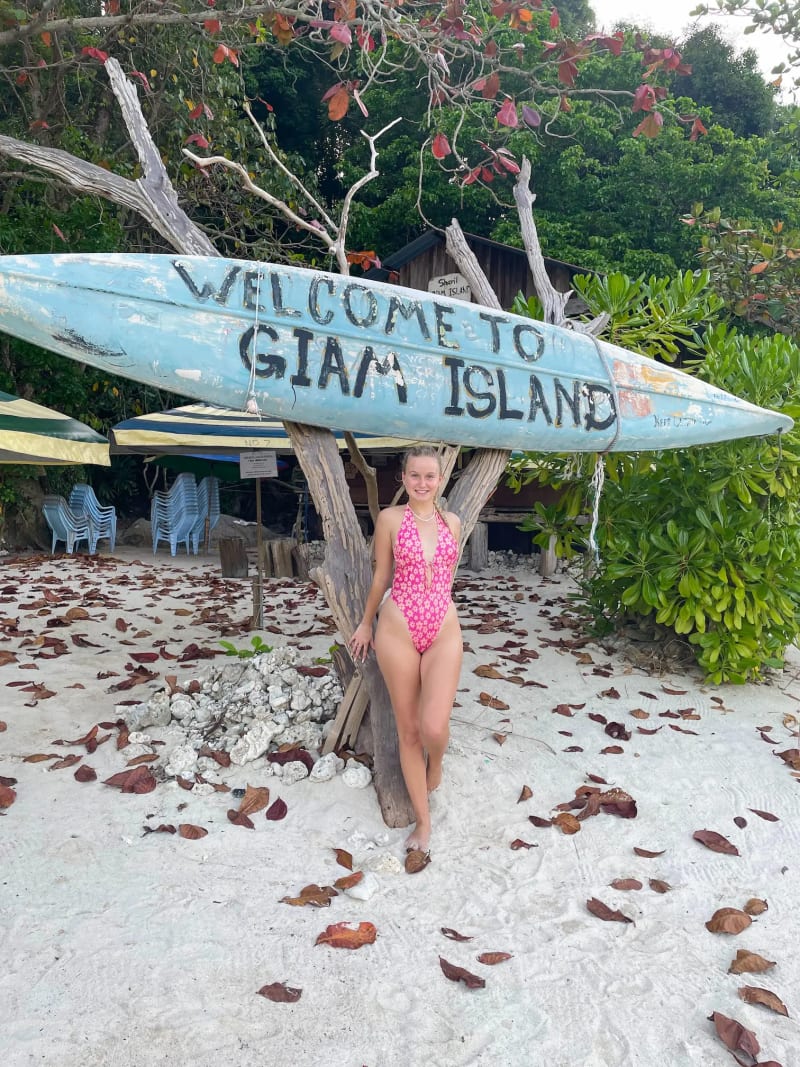
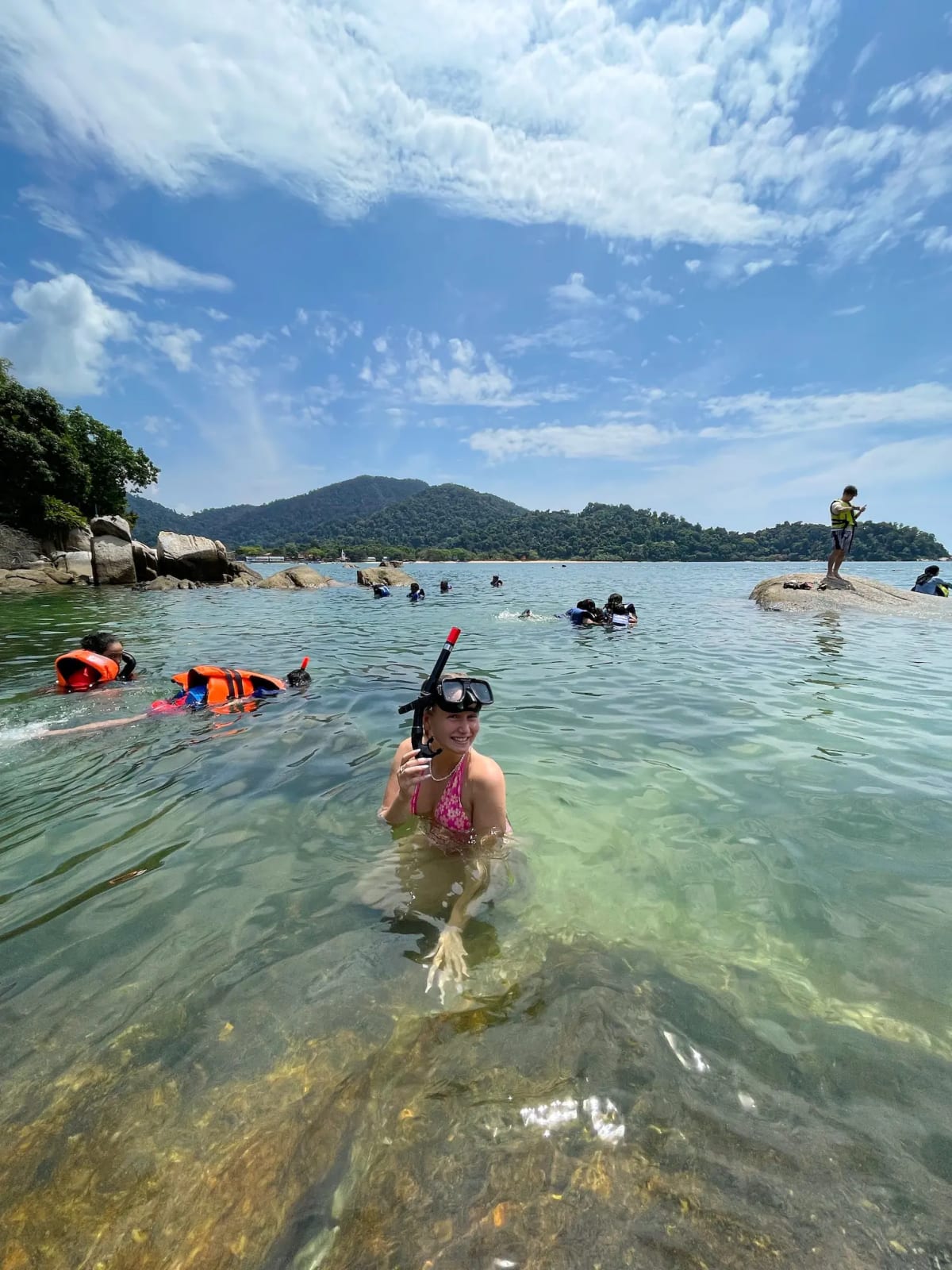
Giam Island is located 500m off the coast of Coral Beach and is less than 30 meters wide. This tiny island has umbrellas and chairs to rent for the day, but other than that, you’re on your own! There are no vendors, so be sure to bring your own food and drinks if you plan to stay for a while. Get there by boat or kayak (rent at Coral Beach for ~$4-5 USD/hour). We kayaked there one day and the next took a boat tour from Teluk Nipah Beach: the driver took us to some offshore islands and snorkel spots, then dropped us off at Giam for a few hours - snorkel gear was included, which was nice because we didn't have our own. There's an abundance of active tropical fish and the water is very clear. I could have floated for hours watching them swim around - this was definitely a highlight of our trip!
3 - Jungle Trek to Pantai Teluk Segadas Hidden Beach
After a short (~15 minute) trek through the jungle you can arrive at the beautiful hidden beach of Pantai Teluk Segadas - the land of azure waters and rope swings! It's often utilized by campers but usually very empty, so the chances are high that you'll have it all to yourself. Be sure to bring water and snacks since it's so secluded.
Getting there can be a bit confusing, so I took a lot of pictures of where to park and how to follow the trail. You have to walk behind houses via a short trail that leads to a second trail through the jungle. The locals that live in the houses are very kind, so if you see someone outside, try to wave and say hello. It can feel strange seemingly walking through their property, but rest assured you're allowed to walk to the beach down this path.
To get there, put “Pantai Teluk Segadas” into your Google Maps app and park in front of the red sign in the dirt parking lot near the road, shown below.
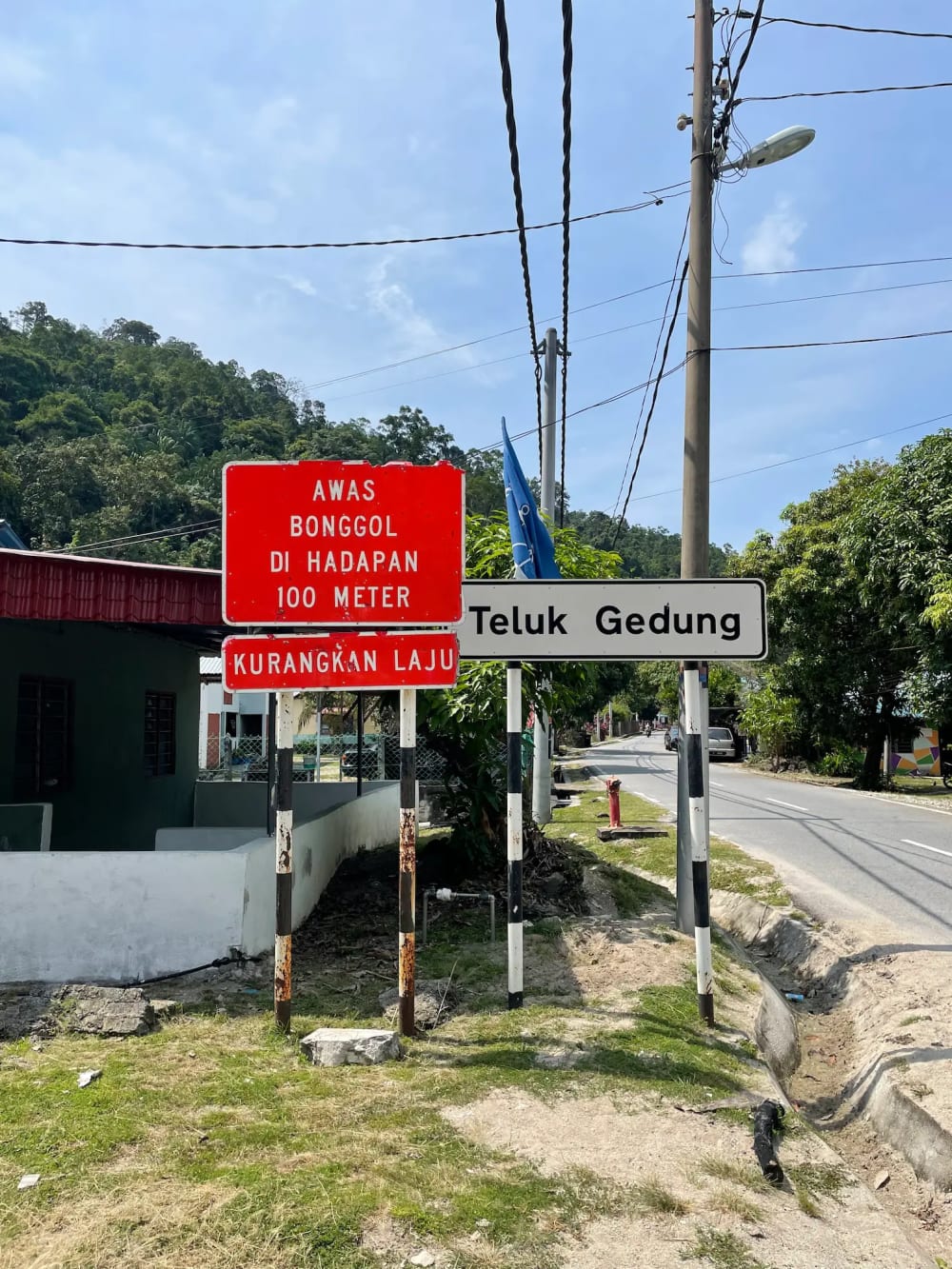
Where to park for Pantai Teluk Segadas
Below are the directions to Pantai Teluk Segadas in order from left to right, top to bottom:
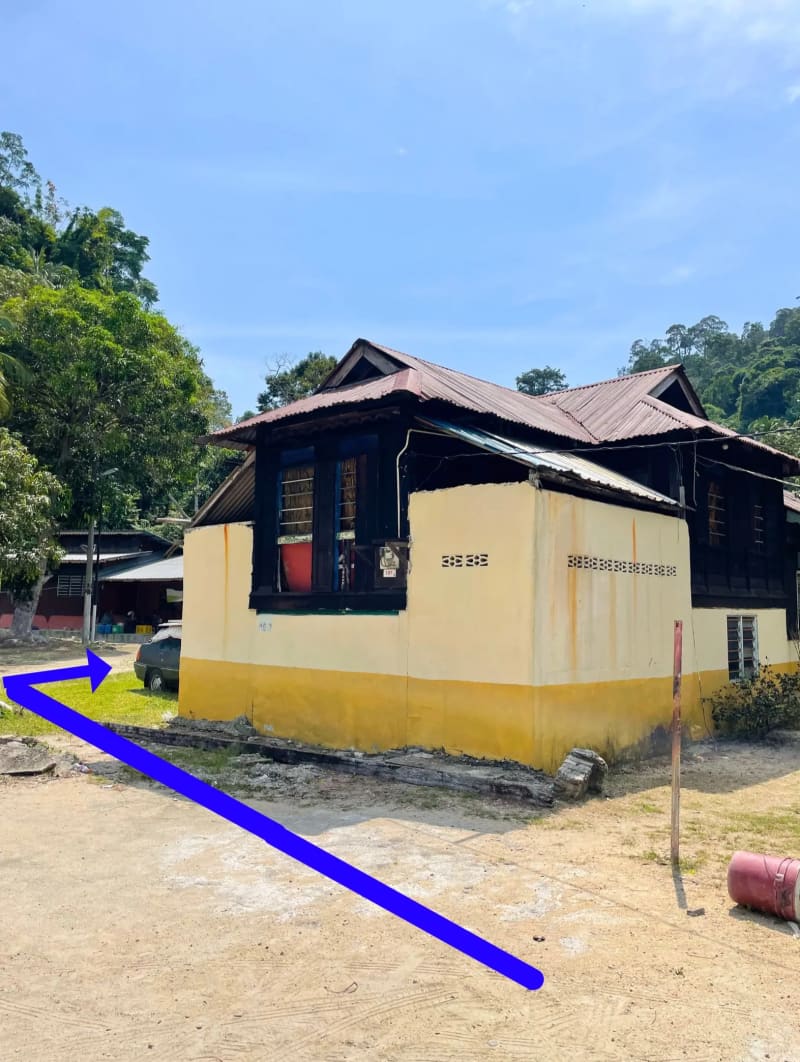
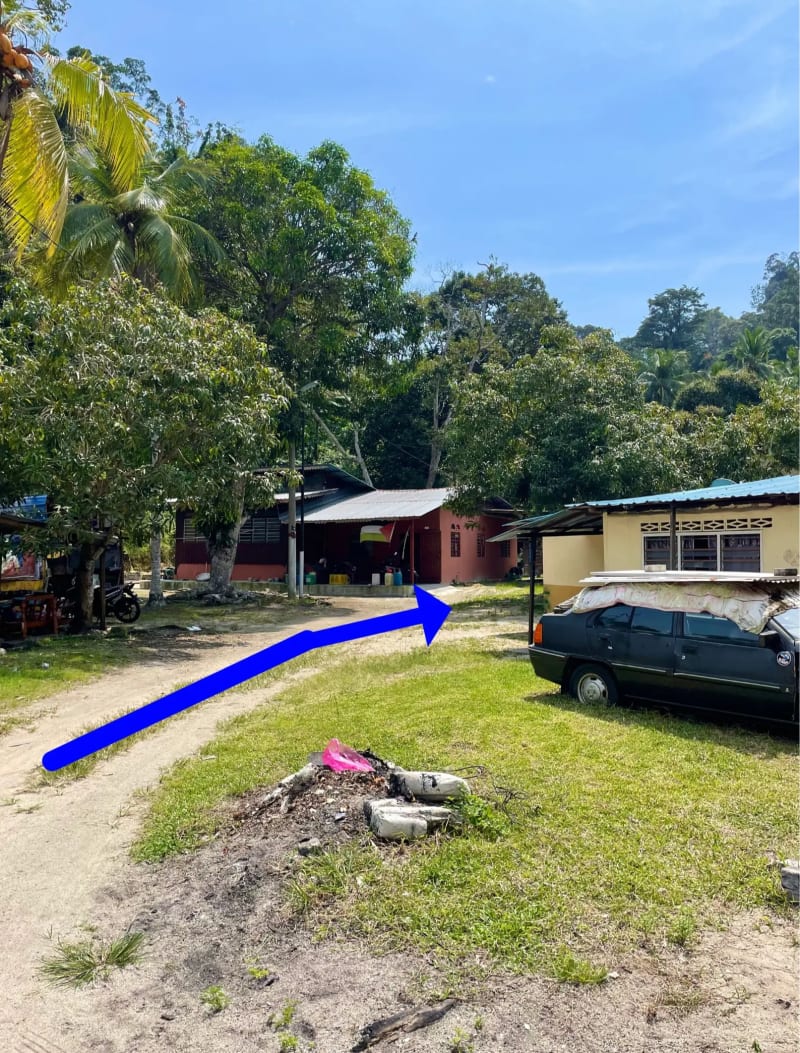
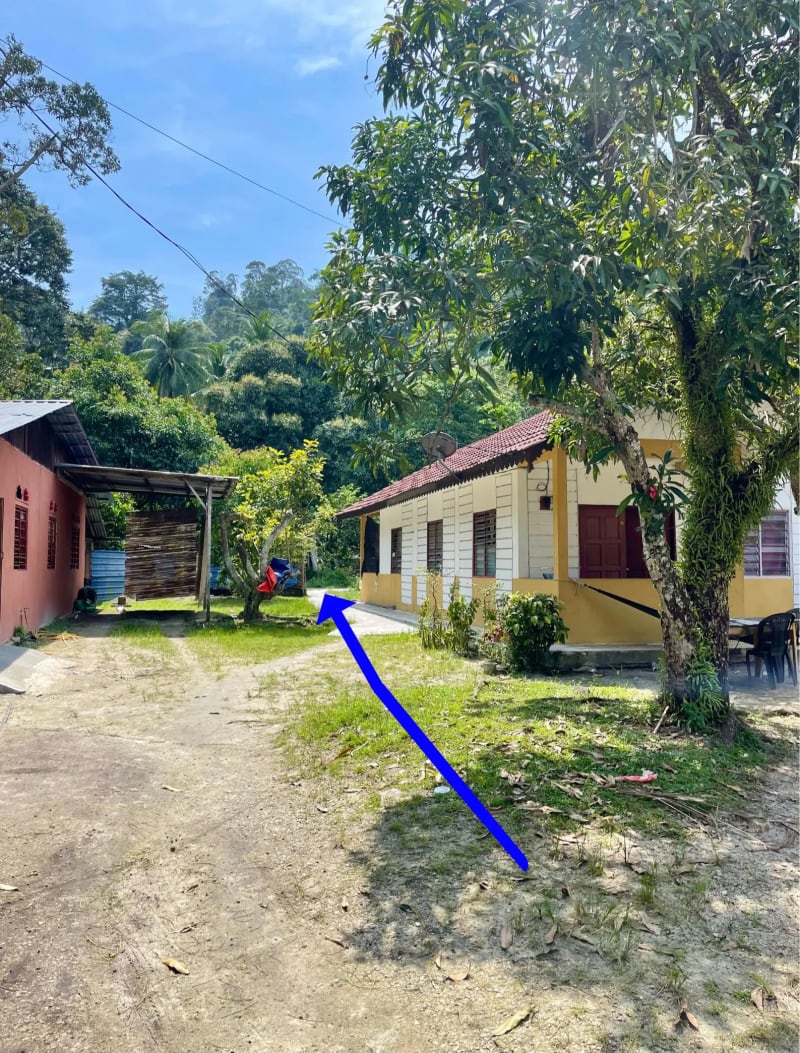
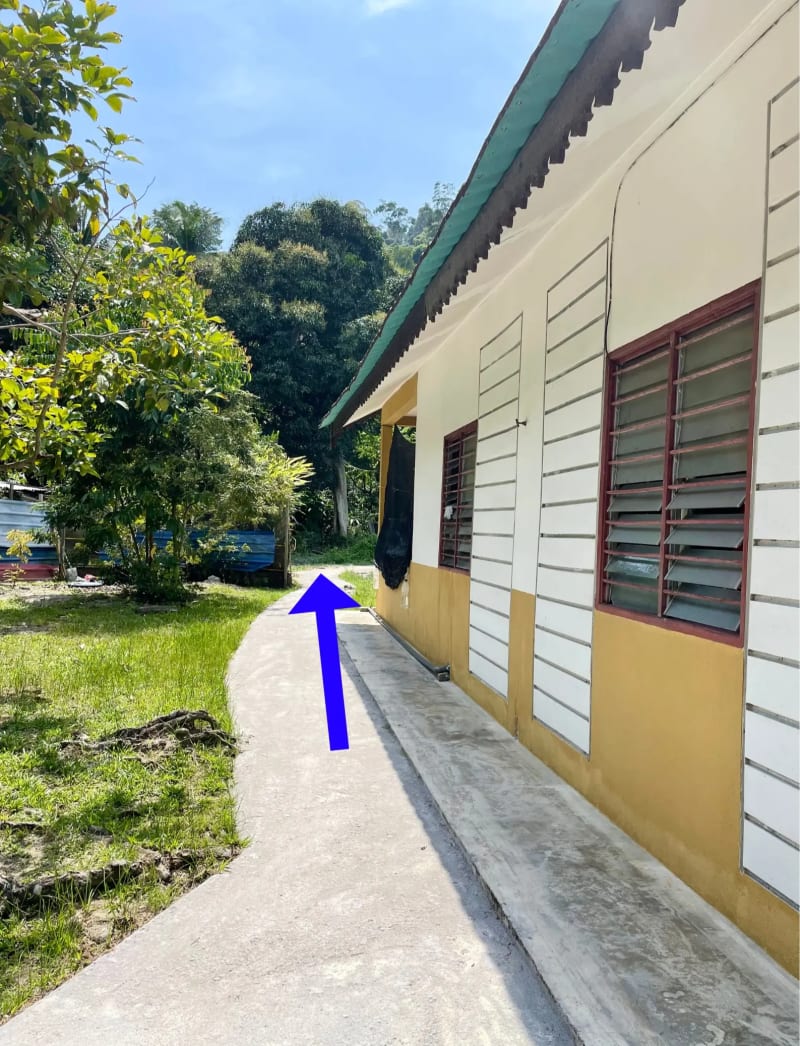
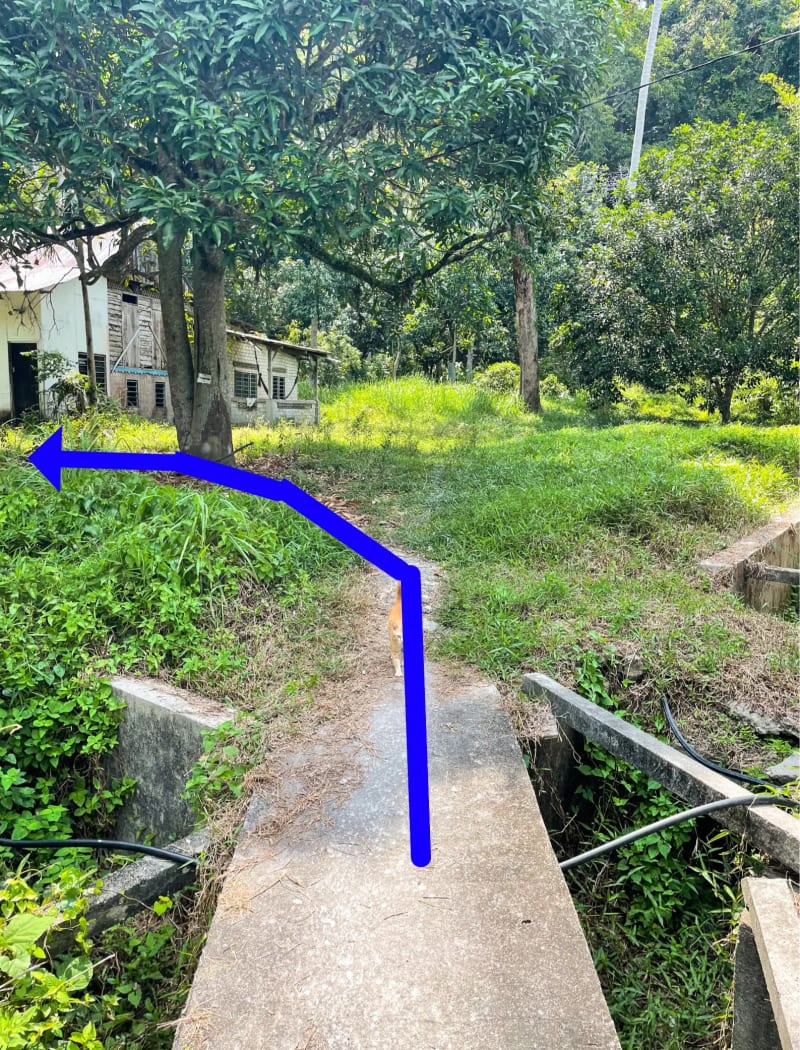
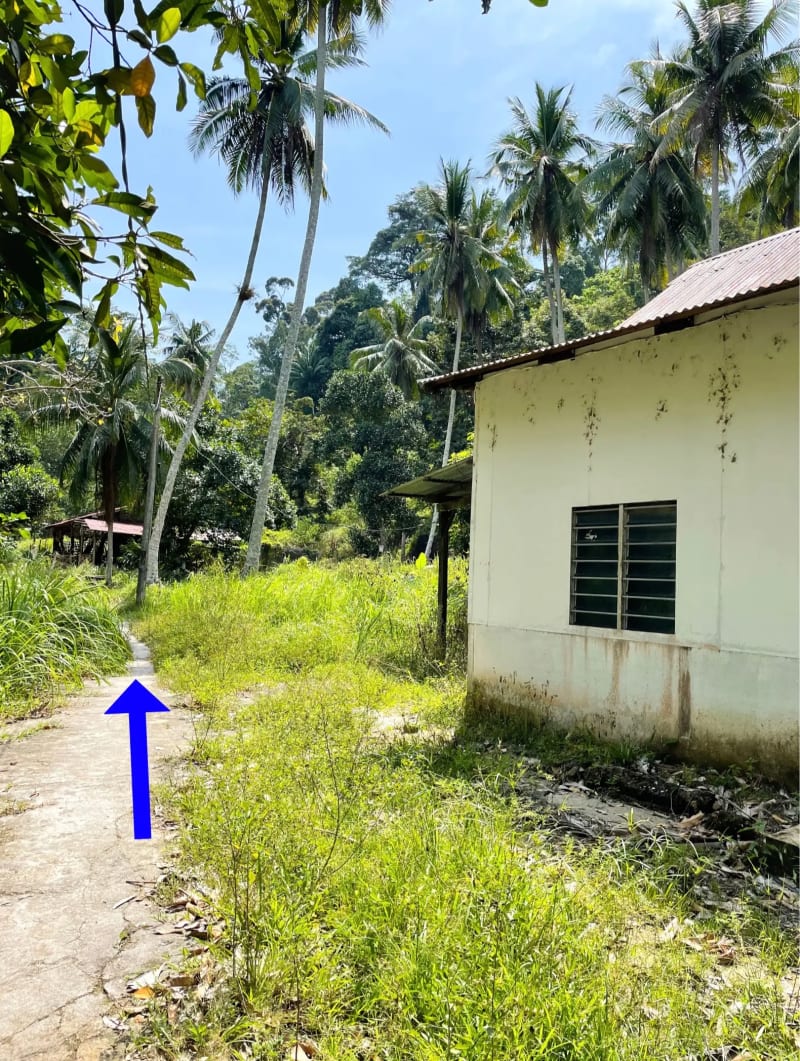
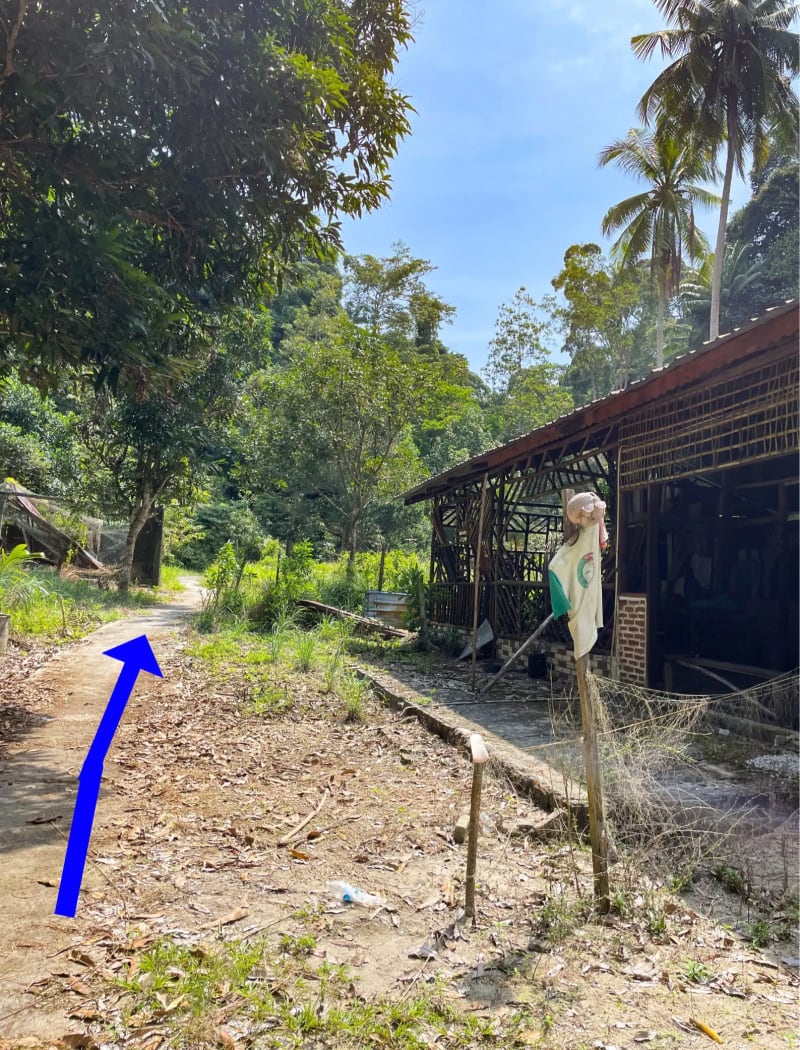
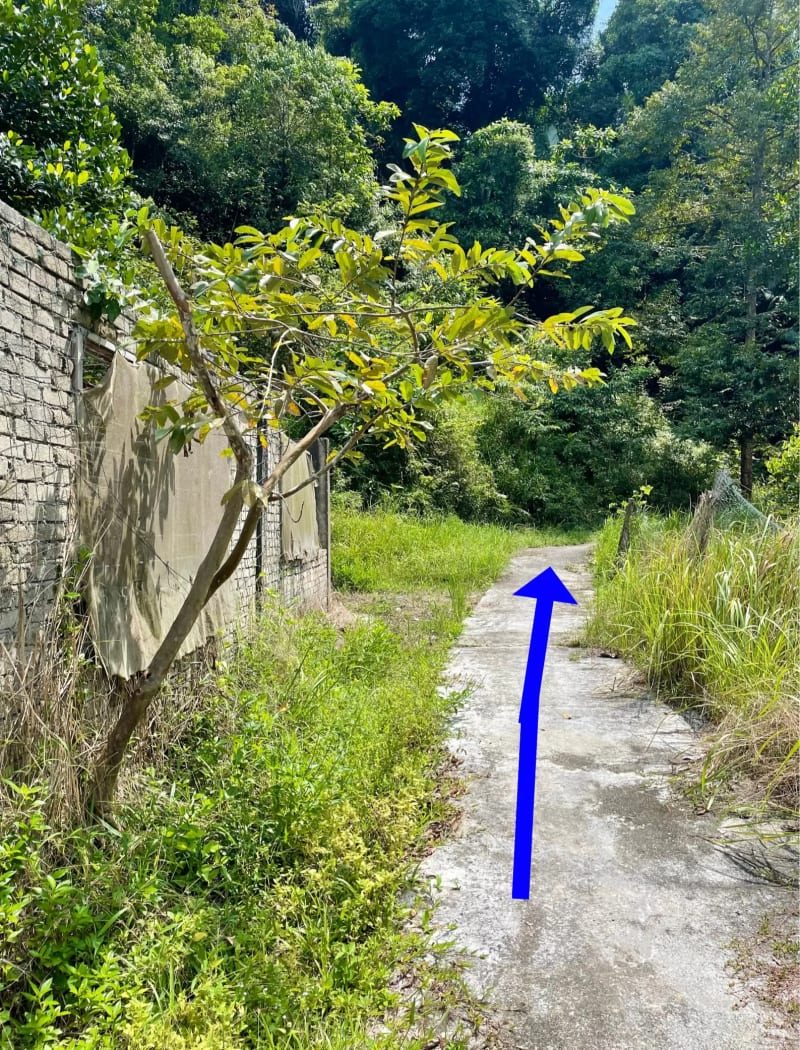
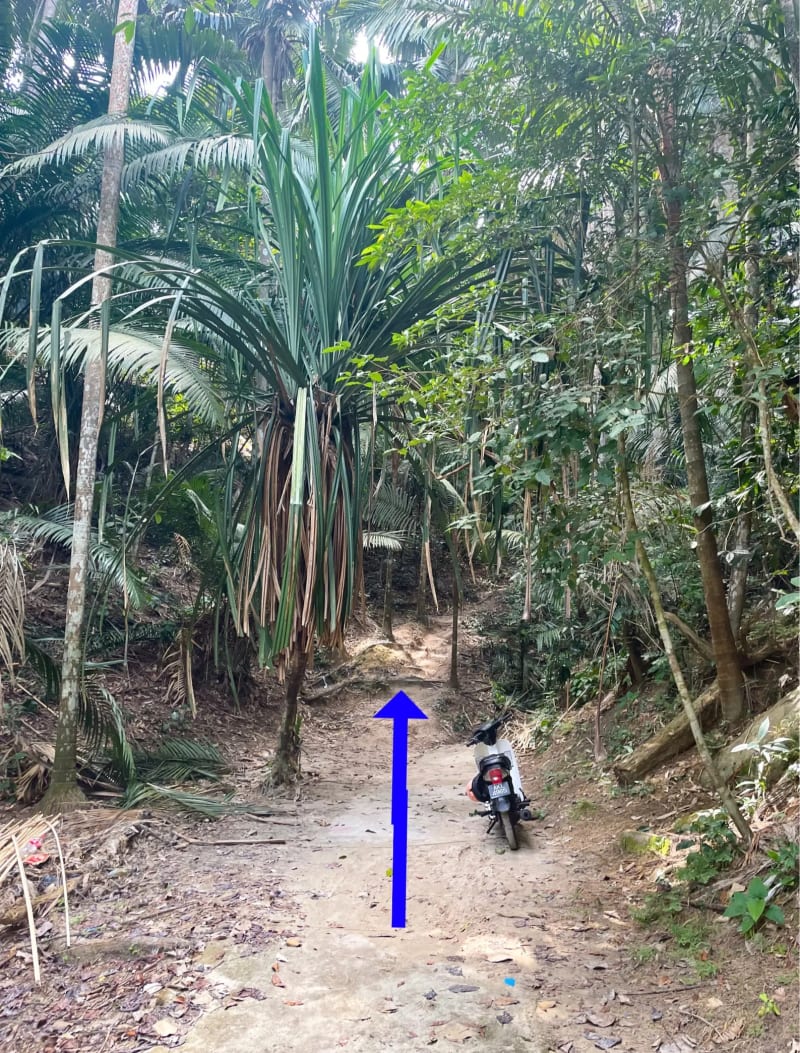
How to get to Pantai Teluk Segadas
Once you get to the jungle, it can be muddy, rocky, and a bit overrun with forest growth, so avoid going in flip-flops. When you come across forks in the path (there were two), follow the one marked with string on the side, then keep walking straight until you come out at the beach! Keep an eye out for monkeys both in the jungle and on the beach. We saw a few long-tailed macaques - they're very bold and cheeky, found all over the island: don't feed these guys because they can become aggressive, but if you mind your own business, they'll mind theirs.
4 - Explore one of the Temples: Fu Lin Kong & Lin Je Kong
Fu Lin Kong is a vibrant Taoist temple in the Chinatown area with colorful statues, a turtle pond, a mini Great Wall replica you can climb for panoramic views, maze-like gardens and indoor Buddha relics. It's a cultural gem blending spirituality and whimsy, perfect for half an hour of exploration.
The seaside Chinese temple of Lin Je Kong is on a peaceful beach along the east coast with clear green waters for swimming. It has intricate architecture and is less crowded than others, perfect for quiet reflection or photos.
5 - Visit the Floating Mosque: Masjid Al-Badr Seribu Selawat
This mosque, on the west coast of the island, appears to float over the sea with intricate Islamic architecture and ocean views. Truly one of the most beautiful mosques I've ever seen! It's free to enter (dress modestly; robes available), and non-Muslims can visit outside prayer times for a cultural experience.
Where to Dine on Pangkor Island
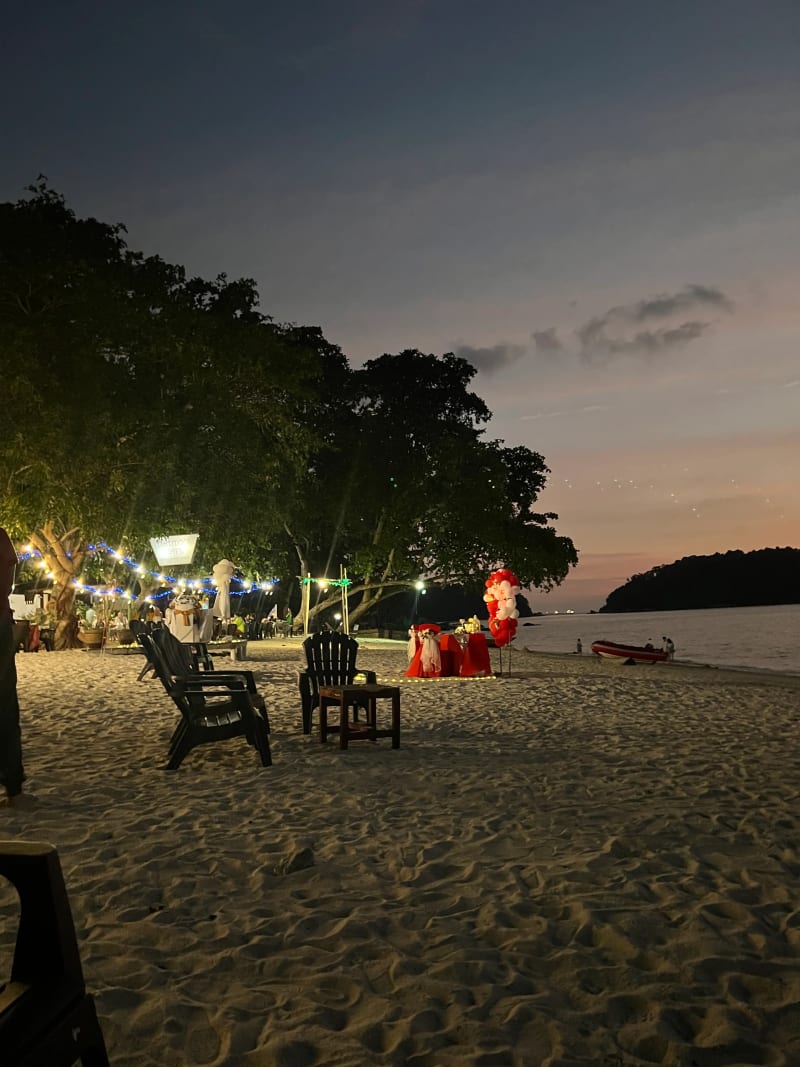
Daddy’s Cafe: One of the most delicious and well-known restaurants on Coral Beach with seating on the sand and beautiful sunset views. We tried multiple dishes and their noodles (every kind) are my favorite; they offer seafood and Malay dishes as well. Open until 11 p.m., you can get drinks to-go and sit on the beach listening to some light music.
If you plan ahead for an event (e.g. anniversary, birthday) they'll make a special beach setup - we watched them prepare a romantic seating platform by the water decorated beautifully with rose petals and fairy lights.
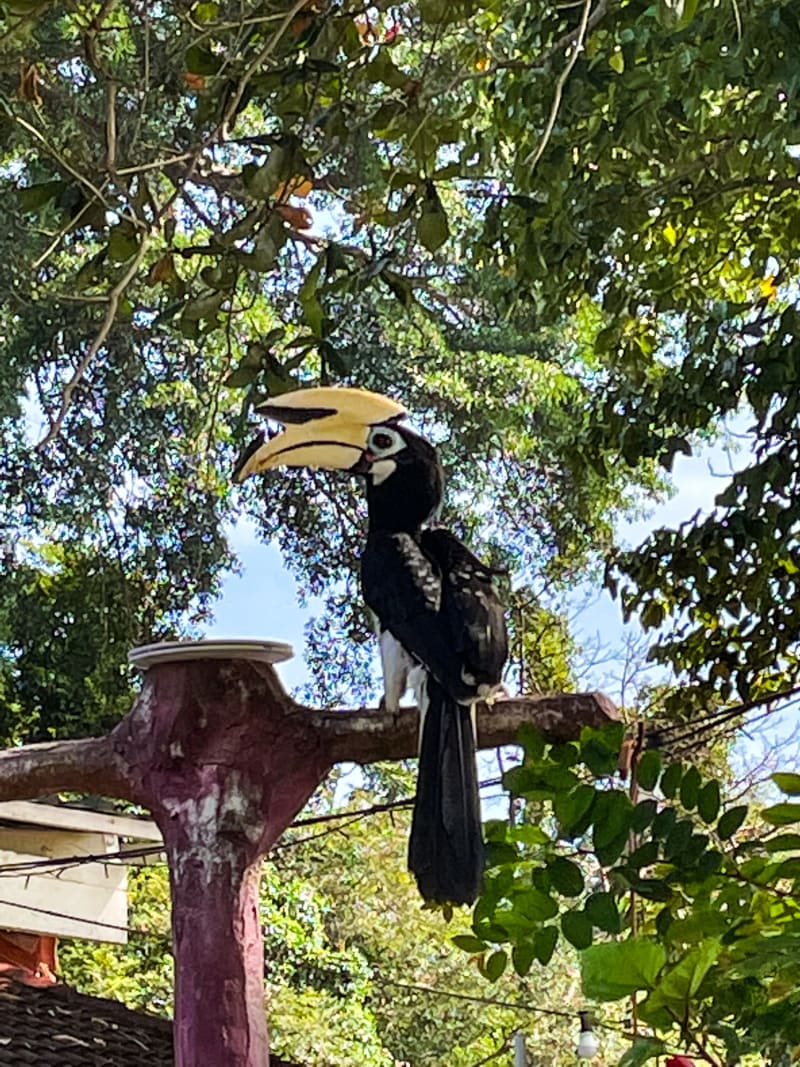
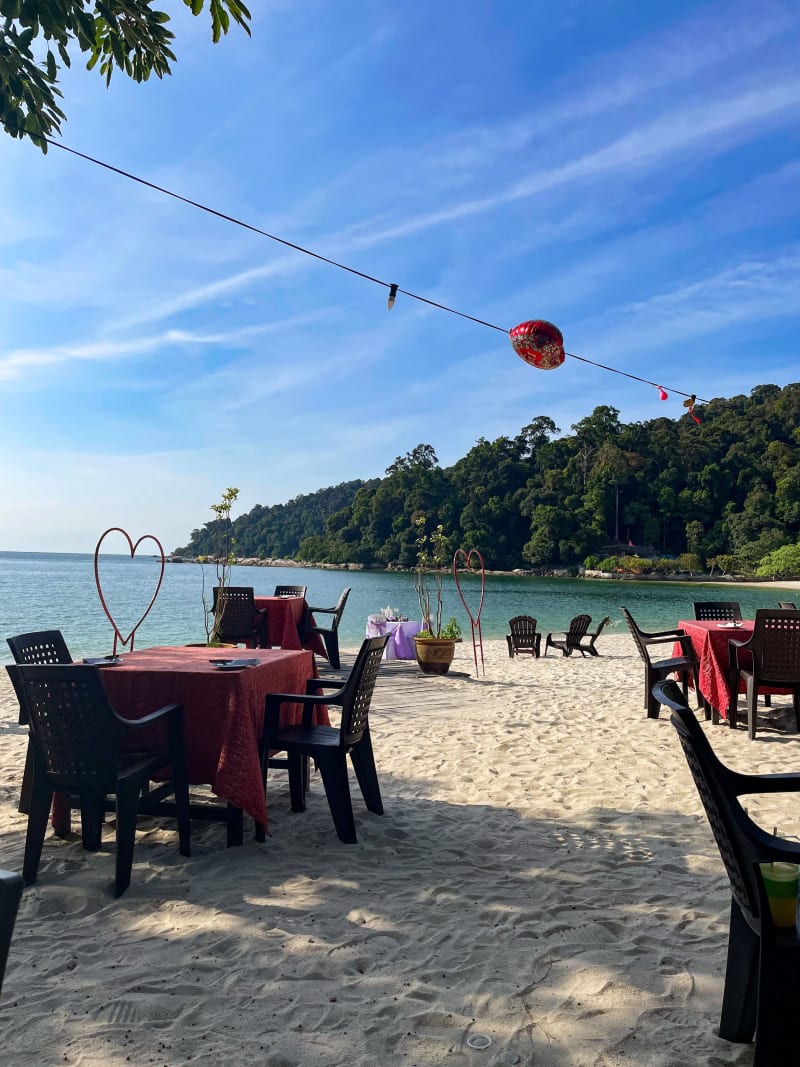
(L) Oriental Hornbill, (R) Daddy's Cafe Seating
Nipah Deli: Located next to Daddy’s Cafe with similar food and drinks. Equally delicious. Between these two restaurants they have a feeding area for Oriental Pied Hornbills - iconic island birds with a black body, white belly and a big pale-yellow beak with a small “casque” (helmet) on top. They're semi-tame because locals and resorts feed them bananas every evening. It’s really cool getting to be so close to them and watch them eat in a free little nature show.
Chef Makbul Kitchen: Halal restaurant on the eastern side of Pangkor, not far from the Pangkor jetty that has incredible food with large portions and the friendliest staff.
DanDan Cafe: Perfect coffee shop with healthy meals and delicious lattes.
While on the island be sure to get some fresh coconuts or coconut smoothies. They sell these on the street near pretty much all of the beaches and they’re so refreshing, especially throughout a long day of exploring, sunning, swimming, and kayaking!
Pangkor Island captures the essence of a laid-back tropical escape, blending pristine beaches, cultural gems, and untouched nature into an unforgettable experience. This west coast haven offers a slice of authentic Malaysian island life away from the crowds. We left feeling refreshed and eager for more — safe travels, and enjoy every moment on this hidden gem! 🌴🛶