What You'll Find in This Post
Turkish Riviera Airports & Transportation Quick Facts
- Airports: Antalya (AYT), Dalaman (DLM), Milas-Bodrum (BJV)
- Transport Methods: Dolmuşes, Intercity Buses, Taxis, Car Rentals
- Data: Maya Mobile eSIM - I use this all the time for my travels!
- Currency: Turkish Lira (TRY, ₺)
- Coach Bus Booking: Obilet, Enuygun, FlixBus/Kamil Koç
Tip: While you can pay with card on most buses and dolmuşes, you should carry cash on you in case the card reader systems aren't working. Plus, taxis only take cash.
Disclaimer: This post contains affiliate links. If you book or buy through these links, I may earn a small commission at no extra cost to you. Thank you for supporting my blog!
Flying into Türkiye via Istanbul
If you're coming from outside of Türkiye, it's very likely you'll have to fly into Istanbul first as your main Turkish entry point before taking a short domestic flight down to the Riviera. During peak summer season, some European cities offer direct flights to the airports in the Riviera without having to go through Istanbul, but I've never had the pleasure of finding one personally so be prepared for Istanbul.
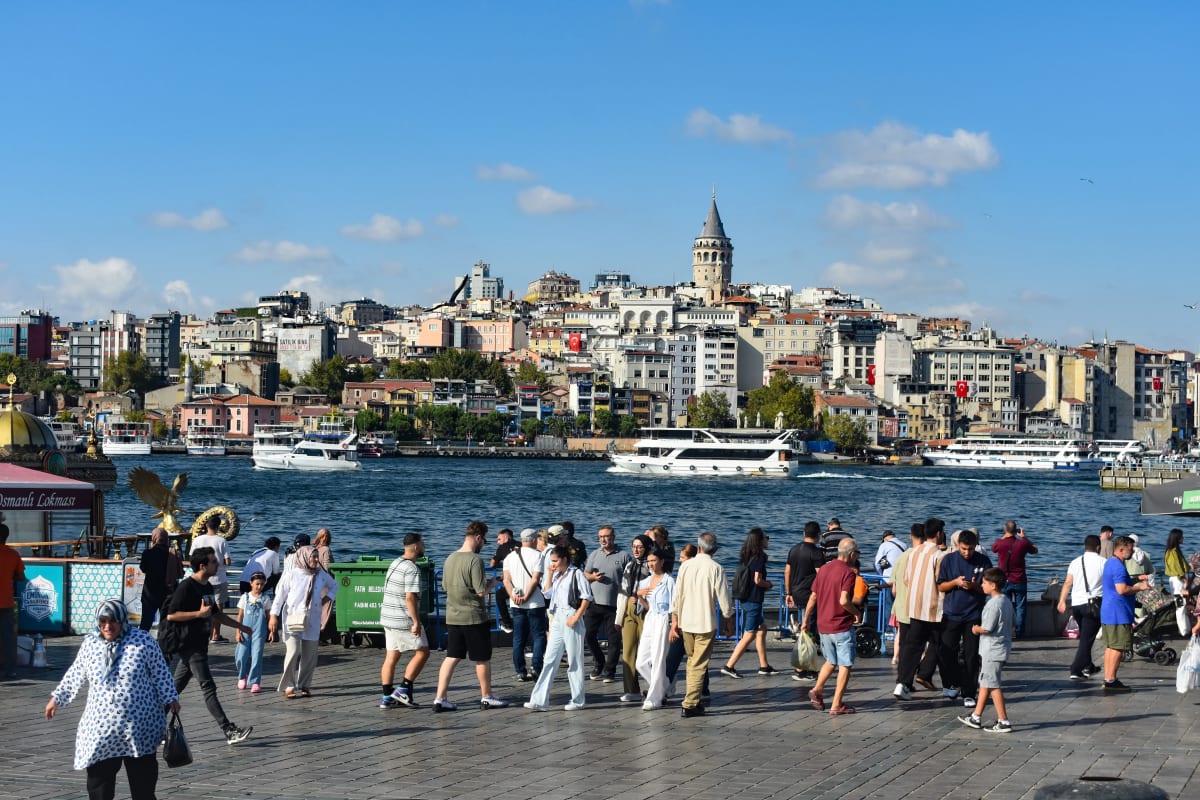
There are two main airports in Istanbul: Istanbul Airport (IST) - the newer one on the European side - and Sabiha Gökçen International Airport (SAW) on the Asian side. Both have super affordable domestic flights down to the Riviera, but IST is dominated by flights from Turkish Airlines (and its partners) with a bit pricier flights. SAW has the more budget airlines like Pegasus Airlines and AJet so you can find the cheapest domestic connections here.
When booking your flights, make sure the airport you fly into in Istanbul matches the one you use to head down to the Riviera, or that you give yourself plenty of transfer time. It can be annoying to have to rush across the city to the opposite airport - it can take between 1.5 to 3 hours depending on traffic and isn't really worth it. That said, if you must transfer between airports, you can take the Havaist airport shuttle buses (specifically the HVİST-13 route), which run directly between IST and SAW.
When you fly in or out of Istanbul I highly recommend spending at least 1 if not more nights there. The city is INCREDIBLE - just a bustling hub of culture, history, and beautiful sights (be sure to check out all of my Istanbul guides!). For this, each airport has a metro that connects directly to the city center!
- IST has a metro line (M11) that runs from the airport terminal into the city. It goes down to Gayrettepe in about 30-35 minutes, and then you can transfer over to the city's main M2 metro line which goes straight down toward Taksim Square and the central hubs.
- SAW's metro line, M4, runs from the airport terminal across the Asian side toward Kadıköy (the major transit and ferry hub on the Asian side). From there you can transfer at stations like Ayrılık Çeşmesi to catch the Marmaray train underneath the Bosphorus, or hop straight onto a ferry across to the European side.
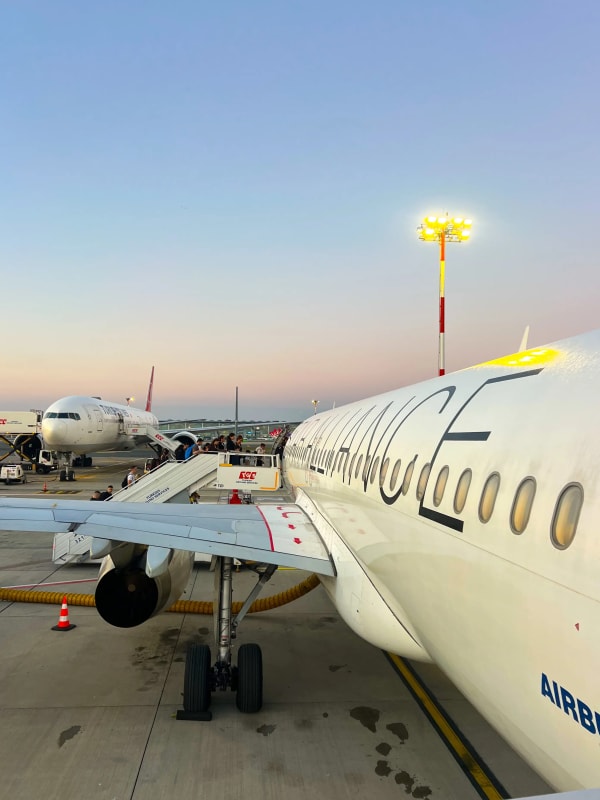
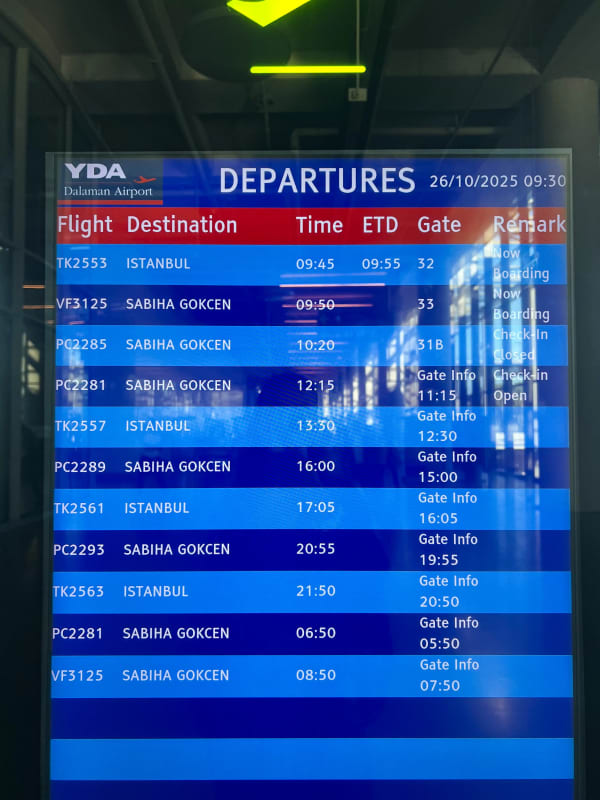
Flying into the Turkish Riviera: Full Airport Breakdown
Whether you're flying out of SAW or IST, there are three main airport options on the Turkish Riviera: Antalya/AYT (furthest eastern hub), Dalaman/DLM (middle point of the Riviera), and Milas-Bodrum/BJV (Northwest anchor).
- Antalya Airport is the absolute furthest eastern major hub for the Turkish Riviera, covering destinations that stretch eastward from Antalya city down into the Mediterranean (like Side, Alanya, and Gazipaşa, though Gazipaşa has its own smaller local airstrip).
- Dalaman Airport serves as the critical middle pivot of the Turkish Riviera and the Turquoise Coast, covering destinations that stretch from Marmaris and the Datça Peninsula in the west, all the way across Fethiye and Ölüdeniz, and down to Kaş and Kalkan in the east before handing off traffic to Antalya in the southeast or Bodrum in the northwest.
- Milas-Bodrum marks the northern/northwestern bookend of this tourism coastal zone, covering the Aegean side up toward Bodrum, Didim, and beyond before handing off traffic further north toward İzmir.
Clearly, which one you fly into depends on which town you're going to! Here's a little breakdown with main examples:
| Destination | Best Airport | Distance to Destination |
|---|---|---|
| Bodrum/Yalıkavak | Milas-Bodrum (BJV) | 30 to 50 mins |
| Datça | Bodrum (BJV) or Dalaman (DLM) | ~2 to 3 hours (via BJV + ferry or DLM drive) |
| Marmaris | Dalaman (DLM) | 1.5 hours |
| Fethiye/Ölüdeniz | Dalaman (DLM) | ~1 hour |
| Kaş/Kalkan | Dalaman (DLM) | ~2 to 2.5 hours |
| Antalya City | Antalya (AYT) | 20 to 40 mins |
| Side/Manavgat | Antalya (AYT) | 1 to 1.5 hours |
| Alanya | Antalya (AYT) (or Gazipaşa (GZP)) | 2 to 2.5 hours from AYT, or 45 mins via GZP |
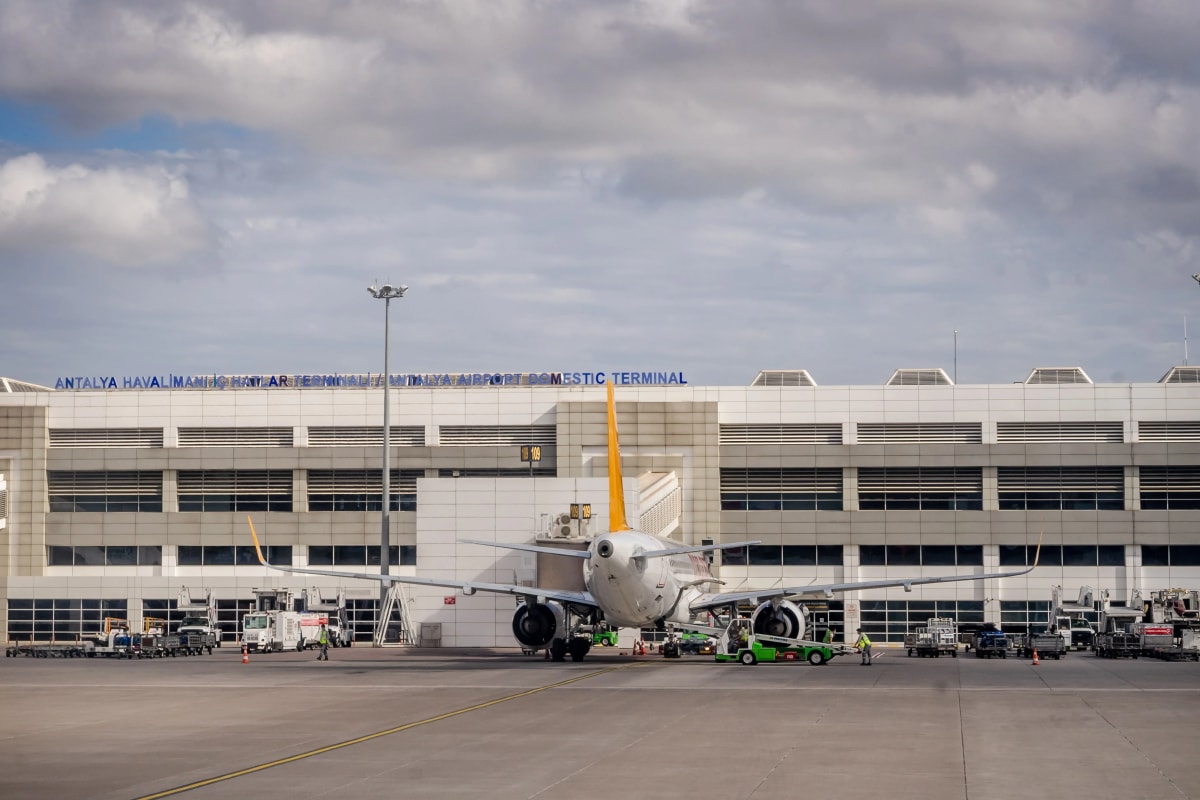
Antalya Airport - photo by Atlantic Ambience
NEXT
After landing at one of the various airports, you'll have to transfer over to the town you're staying at. This can be done in a few ways, ranging from cheap to expensive. You can take...
- 1. Taxi: Most expensive and not recommended for anything other than short trips like Antalya airport to Antalya City
- 2. Pre-Arranged Private Transfers: Pricier but luxurious and the most hassle free
- 3. Car Rental: Best for freedom
- 4. Buses: Cheapest and surprisingly super super easy! This is the only way I use to get around. Read below to learn the bus system!
Airport to Town: The Bus Systems on the Turkish Riviera
Otogar = A major bus station with intercity/regional coaches and dolmuşes | Dolmuş = shared local minibus that runs short-to-medium distances around towns and peninsulas.
The bus systems on the Turkish Riviera are so simple and easy. All cities and towns on the entire coastline are extremely connected via affordable public transportation. Most towns are accessed from the buses right outside the airport. Occasionally, you may need to take a quick taxi or local minibus to a nearby bus station. This happens because while major tourism hubs have direct airport buses, smaller towns or destinations across provincial borders sometimes require an extra quick transfer.
Visit my Turkish Riviera Viator shop to book the BEST tours & activities! ⛵🏛️
More local buses like the ones outside the airports (HAVAŞ and MUTTAŞ) are 'hop on and pay'. You never book these in advance, because they coordinate directly with incoming flight schedules. Walk outside and ask for the bus to your destination or check the name in the front window of the bus, and pay the driver directly with cash or credit card.
When you need to take a larger coach bus (for transport from nearby bus stations or smaller towns with no direct airport transport), you should book in advance online via platforms like Obilet, Enuygun, or FlixBus/Kamil Koç.
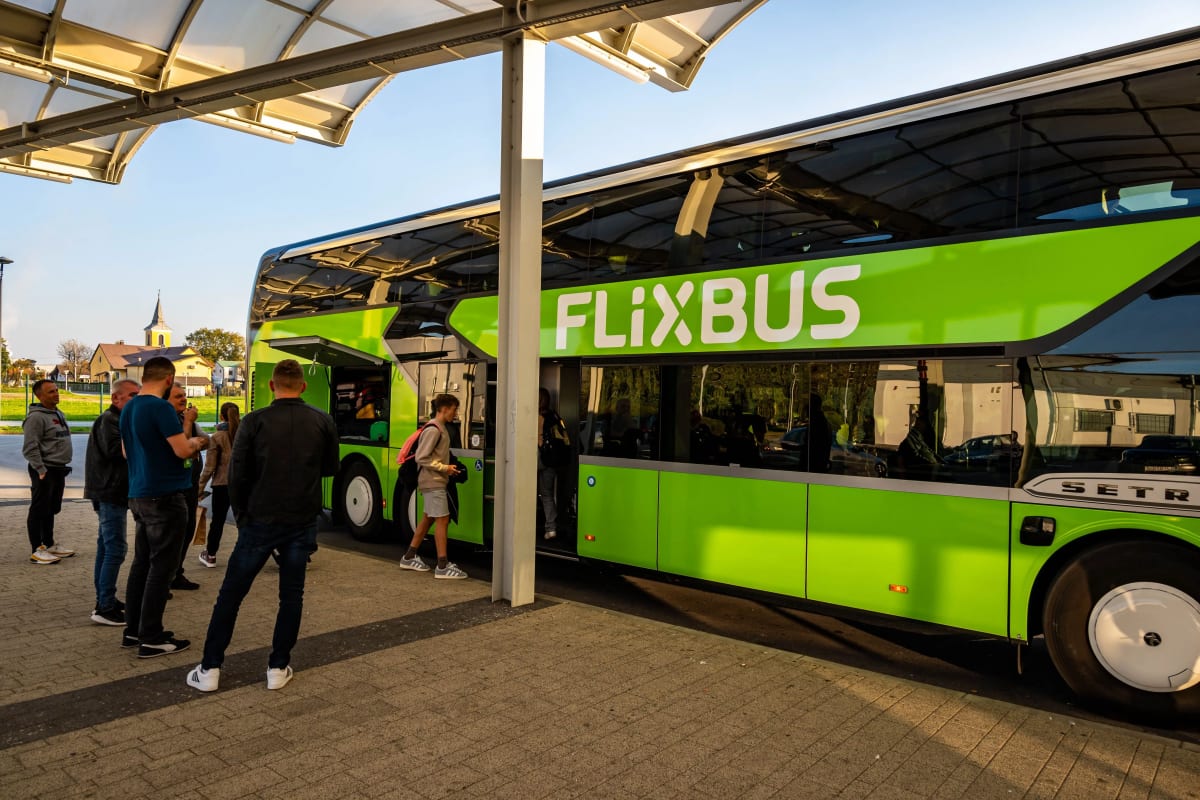
A FlixBus - photo by Vladimir Srajber
I will say 'advance' or 'hop-on' to differentiate between these below.
From Antalya Airport
- Airport buses (HAVAŞ and Antobus) run directly from the airport into Antalya city center and the Antalya Intercity Bus Terminal/Otogar (Antalya Otogarı) (hop-on)
From Dalaman Airport
- Airport buses HAVAŞ and MUTTAŞ run directly from the arrival terminal to Marmaris, Fethiye, Göcek, Köyceğiz, and Gökova (hop-on).
From Milas-Bodrum Airport
- HAVAŞ and MUTTAŞ buses run directly from the terminal to the Bodrum New Intercity Bus Terminal (Torba Otogar) located just north of town (hop on).
Local Transit: Dolmuş, Taxi & Taxi Boat Guide
After you arrive on the Riviera, you don't have to rent a car. Literally ever. At all. The local transit network is extremely efficient and will allow you to get wherever you need to go.
Taking a Dolmuş (Shared Minibus)
This is the most popular and affordable method of transportation along the entire Riviera. The buses run constantly and cover everything from short distances across town to longer peninsula stretches. To catch one, simply look for the blue-and-white "D" signs posted along the main roads, wait at designated bus stops, or flag one down as it's passing by. To flag them, hold your arm out and wave slightly as the minibus approaches. They will pull over if they have space.
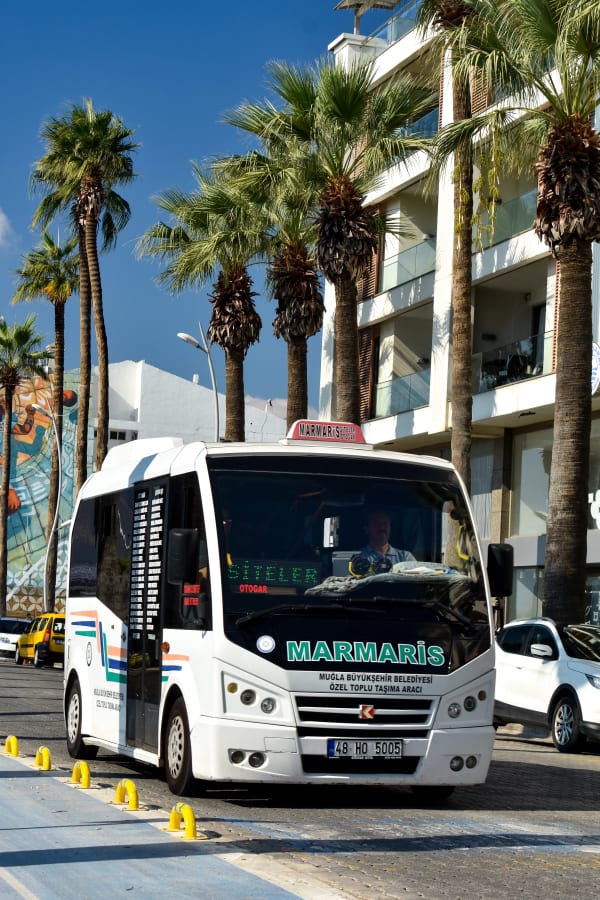
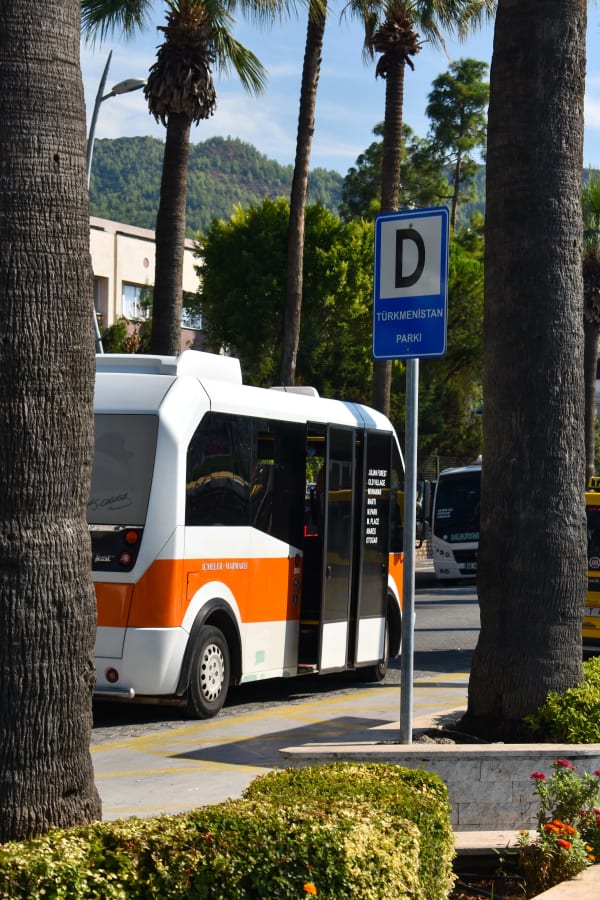
Almost every single coastal town, hub, and major village has a dolmuş network. The only places you won't be able to catch one are extremely secluded mountain areas and luxury resorts isolated on private coves, so you'll have to rely on taxis for the last stretches. That said, really large secluded resorts sometimes have deals with the dolmuş companies to take guests all the way there!
Most local dolmuş lines have transitioned to tap-to-pay municipal cards (like MuglaKART or Antalya Kart) or accept contactless credit cards/cash depending on the municipality, or you can pay with cash directly to the driver. Regardless, it's always smart to keep a few small Turkish Lira bills or coins handy just in case the machines aren't working.
Taxis on the Coast
Taxis are definitely more comfortable and air-conditioned than a packed summer dolmuş, but they are much pricier. For short hops within a town center (or airport-to-city runs like Antalya), they can be convenient. But for longer inter-town stretches (e.g., Fethiye to Kaş, or even Marmaris to Içmeler which are just ~20 min apart), a taxi will cost a small fortune compared to a bus. A taxi once quoted us $20 USD for about a 30 minute drive, while a dolmuş was only around $2.50 - the difference can be crazy and can honestly make a budget trip cost a fortune.
There are designated taxi stands (taksi) at every major street corner, shopping strip, and otogar. You can also flag one as it drives by. They are really everywhere. Once we got stranded at a secluded beach and were walking down the road for maybe only 5 minutes before a taxi pulled up behind us and asked if we needed it!
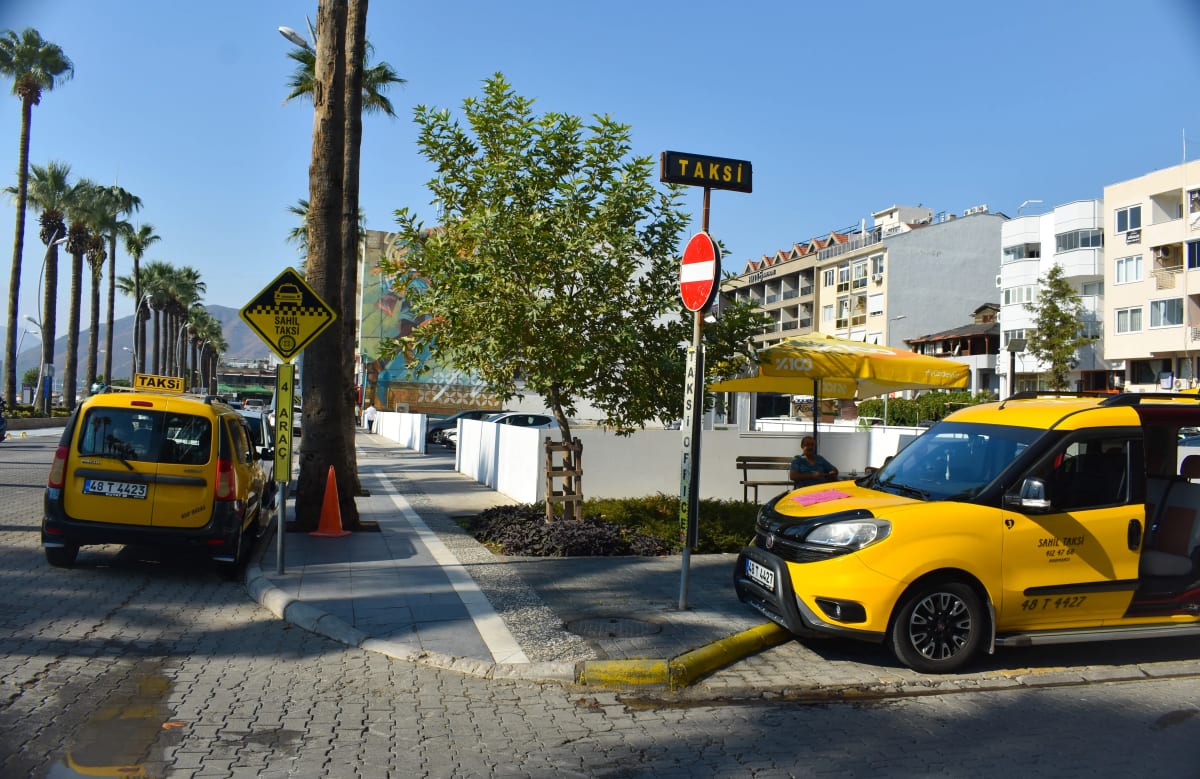
They all use digital meters, so make SURE the driver turns it on when you depart. Seriously. It can be hard to speak up, but if you don't see the meter on in the rearview mirror (or if it's already on and the price says over 150 Lira which is the typical base price), say something or get out. They'll overcharge the hell out of you, and it's hard to argue with them. Also note that taxis only take cash.
Taxi Boats
In some towns like Marmaris, Fethiye, Kaş, and Bodrum, there are actually taxi boats to get to nearby towns, islands, coves, or clubs, some of which are inaccessible by car. It's often faster (and always more fun) than getting around on land. They run on pretty strict schedules but during the on-seasons (typically May to mid/late October) they run frequently - usually around every hour or so.
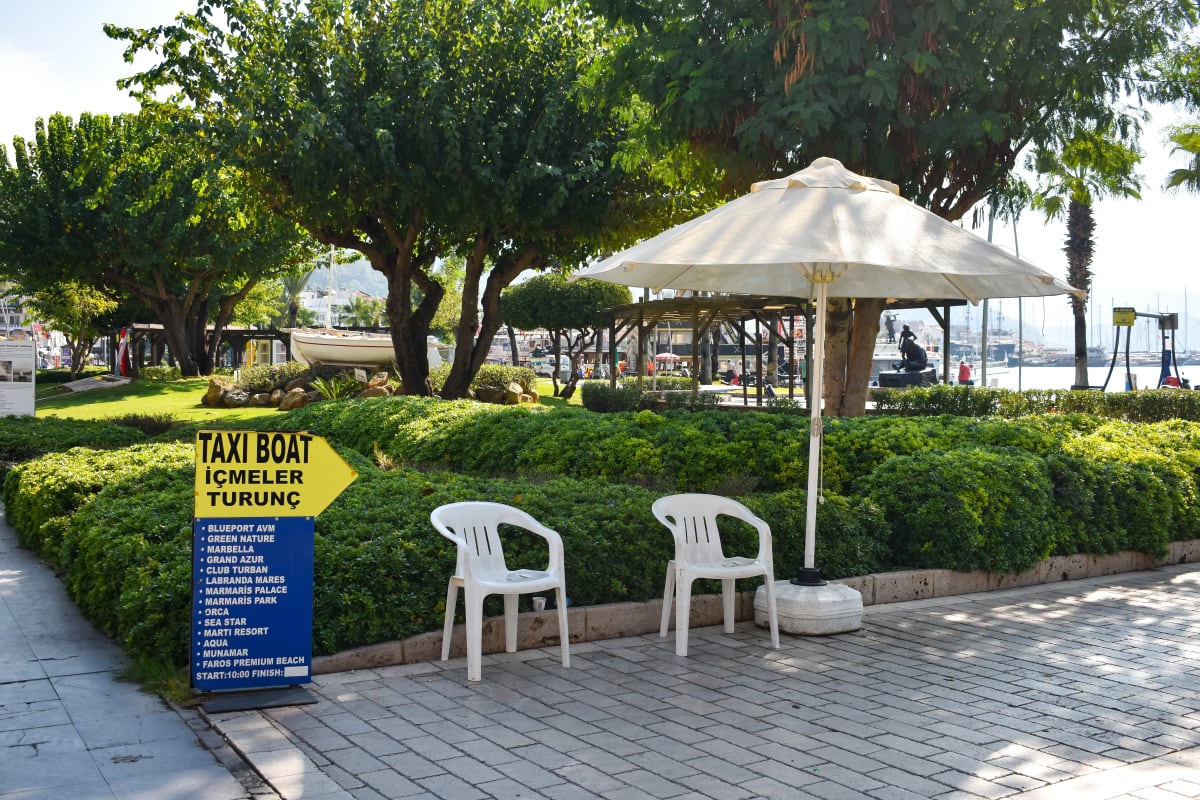
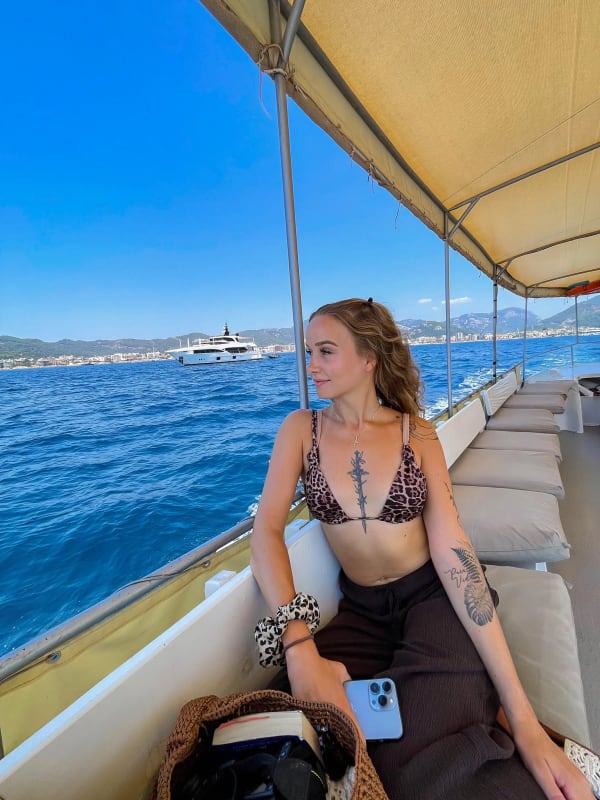
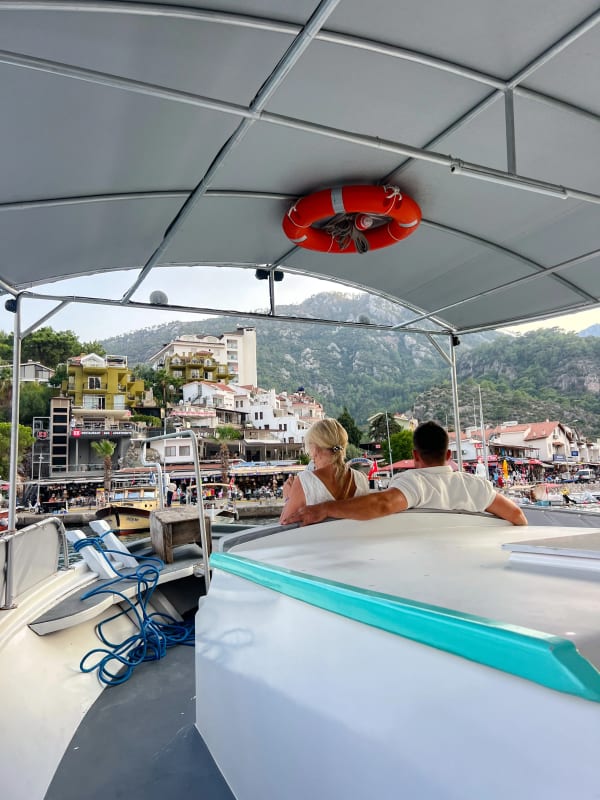
They're like mini boat tours, and the further you're going, the better! It's such a fun way to casually get out on the water while exploring the Riviera. The boats are very easy to spot - there's always large 'Taxi Boat' signs, or walk along the marina and look for booths or boats with signs for the destination you're heading to.
At the end of the day, navigating the Turkish Riviera literally couldn't be easier. Between the buses waiting right outside the airport terminals, convenient intercity coaches, the dolmuş system, and all the taxis, you can completely skip the car rentals and avoid any parking stress. Keep some lira on you, double-check the taxi meter, and make sure you buy the coach tickets in advance.
If you want some extra general information about the Turkish Riviera, go read my post Why You Should Visit the Turkish Riviera! And if you're planning on visiting the country, be sure to check out my other Türkiye travel guides.
You're going to LOVE the Turquoise Coast, so save this post and have FUN! Safe travels! ♥ 🌊